
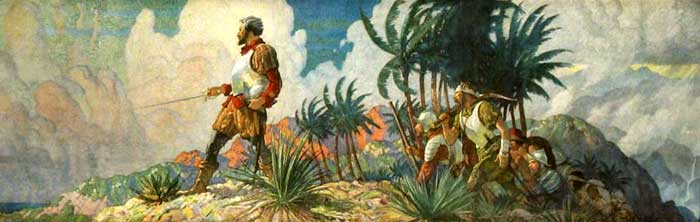
Discoverer by N.C. Wyeth, 1928.
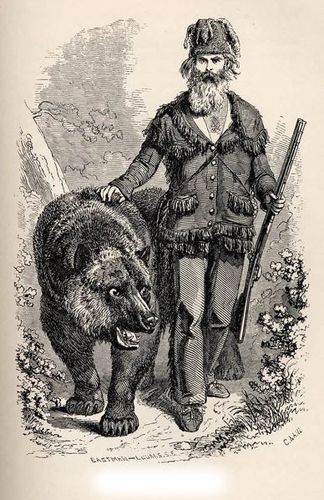
Grizzly Adams, 1860.
John C. “Grizzly” Adams (1812-1860) – Adams was a professional hunter of grizzly bears who became well-known when he became involved in P.T. Barnum’s Circus.
James Aird (1757-1819) – A Scottish fur trader, Aird spent nearly 40 years among the Dakota Sioux in what is now Iowa and Minnesota, becoming a prominent fur trader at Mackinac, Michigan, and Prairie du Chien, Wisconsin.
John David Albert (1810-1899) – John David Albert was a mountain man who made his way west from Pennsylvania and was friends with other important frontiersmen, including Jim Baker and Charles Autobees.
Cyrus Alexander (1805-1872) – A frontiersman, Alexander was a trapper with William Sublette before becoming a miner and agricultural pioneer in California.
Manuel Alvarez (1794-1856) – Manuel Alvarez was a mountain man, trapper, and trader who eventually became a politician in New Mexico.
Louis Ambroise (1801-1842) – Louis Ambroise was a French trapper and fur trader who worked in the Rocky Mountains of Colorado.
American Fur Company (1808-1842) – Founded by John Jacob Astor in 1808, the American Fur Company would become one of the largest businesses in the country at the start of the 19th century.
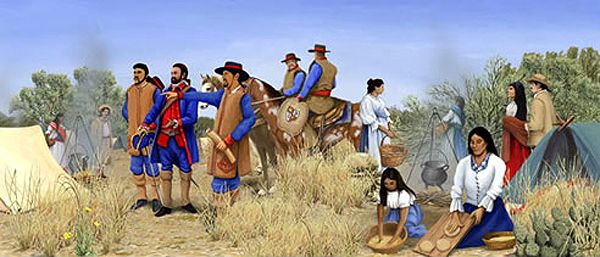
DeAnza Expedition.
Captain Juan Bautista de Anza II (1736-1788) – A Mexican-born trailblazer and explorer, de Anza was the first person of European descent to establish an overland trail from Mexico to the northern Pacific coast of California.
William Henry Ashley (1778-1838) – Co-founder of the Rocky Mountain Fur Company, Ashley led a hundred men on trapping expeditions along the Missouri River. The men became known as “Ashley’s Hundred.”
John Jacob Astor (1763-1848) – Astor, who formed the American Fur Company, was the head of the Astor family dynasty and the first millionaire in the United States.
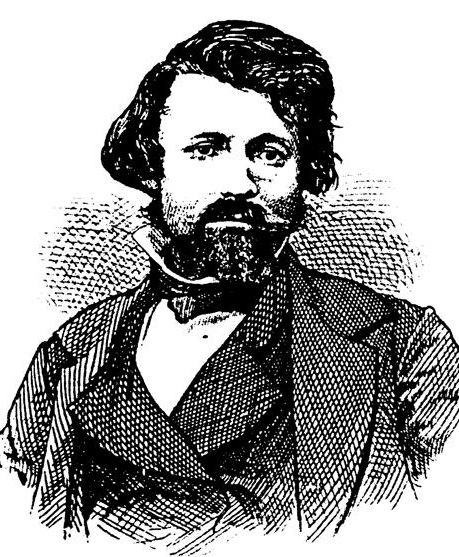
Francis Xavier Aubry.
Francois Xavier Aubry (1824-1854) – Aubry was a French Canadian merchant, wagon train captain, and explorer of the American Southwest. His achievements include setting speed records while riding the Santa Fe Trail and early exploration of the 35th parallel northwest of the North American Continental Divide.
Charles Autobees (1812-1882) – A trader, trapper, and mountain man, Autobees worked with notable figures such as William Bent, Ceran St. Vrain, Kit Carson, James Bridger, and James Beckwourth, as well as several Native American tribes.
Lucas Vazquez de Ayllon (1475-1526) – A Spanish conquistador and explorer who tried to start a colony in North America in 1526. He was the first European colonizer of what is now South Carolina.
B
Marcelino Baca (1808?-1862) – Marcelino Baca was a 19th-century Mexican fur trader who helped to establish the fur trade in the American Southwest.
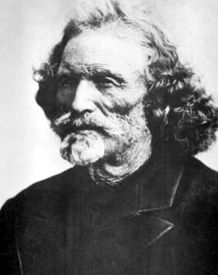
Jim Baker, mountain man.
Jim Baker (1818-1898) – One of the most colorful figures of the Old West, Baker worked as a trapper, scout, and guide, and was a friend of Jim Bridger and Kit Carson.
Vasco Nunez de Balboa (1475?-1519) – Spanish conquistador and explorer Balboa was the first European to see the eastern part of the Pacific Ocean in 1513 after crossing the Isthmus of Panama.
William Becknell (1788-1856) – A frontiersman and trader who established the Santa Fe Trail.
James Pierson Beckwourth (1798-1860) – Generally known as Jim Beckworth, he was an American mountain man, fur trader, and explorer.
Charles Bent (1799-1847) – One of the famous Bent brothers who helped “open the West” by building Bent’s Fort in Colorado in 1833.
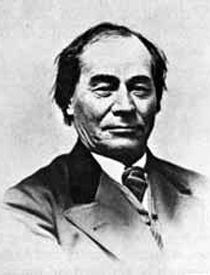
William Bent.
William Bent (1809-1869) – One of the famous Bent brothers who helped “open the West” by building Bent’s Fort in Colorado in 1833.
Bartholomew Berthold (1780-1831) – A prominent St. Louis, Missouri fur trader, Berthold went into business with Pierre Chouteau, Jr. and grew wealthy in the fur trade.
Jefferson Blackwell – A fur trader who worked with John Gannt in the upper Rocky Mountains.
Daniel Boone (1734 – 1820) – An American Pioneer, Daniel Boone was a frontiersman, surveyor, and Indian Fighter who blazed the trail known as the Wilderness Road in 1775. He fought in the French and Indian War and the American Revolution.
Benjamin Louis Eulalie de Bonneville (1796-1878) – A French-born army officer, frontiersman, and explorer of the American West, Bonneville is best known for blazing portions of the Oregon Trail.
Etienne Veniard de Bourgmont (1679-1734) – Bourgmont was a French explorer who documented his travels on the Missouri and Platte Rivers in North America, creating the first European maps of these areas in the early 18th century.
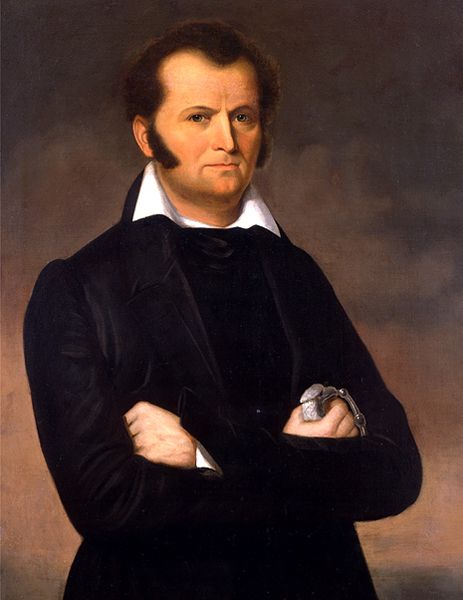
James “Jim” Bowie.
James “Jim” Bowie (1796-1836) – Frontiersman, explorer, and pioneer, Bowie played a prominent role in the Texas Revolution, culminating in his death at the Battle of the Alamo.
Alexander K. Branch (1792-1841) – Alexander K. Branch was a frontiersman and trapper who worked in the American Southwest and in the Rocky Mountains.
Francis Ziba Branch (1802-1874) – Francis Ziba Branch was a sailor, trapper, and trader who worked across the United States.
Elias Brevoort (1822-??) – Frontiersman, trader, and author, Brevoort was well acquainted with the Santa Fe Trail and the Southwest.
James Bridger (1804-1881) – An accomplished trapper, scout, and mountain man, Bridger was one of the first non-Indians to witness the natural wonders of what would become Yellowstone National Park.
C
Jean Pierre Cabanne – A merchant and fur trader, Jean Cabanne was actively involved in trading with the Kanza Indians.
Juan Rodriguez Cabrillo (?-1543) – A Spanish or Portuguese explorer, Cabrillo was the first European to explore the California coast.
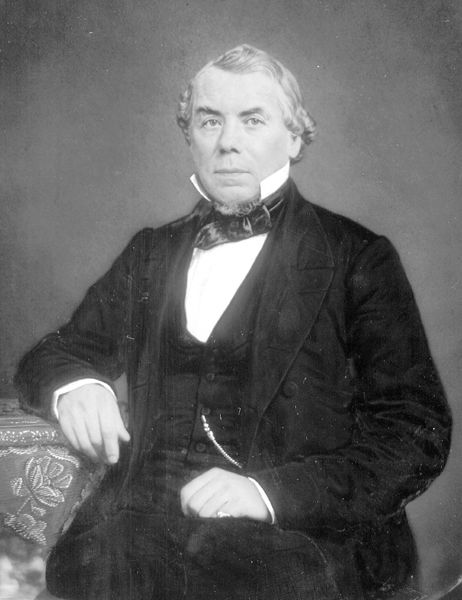
Robert Campbell.
Robert Campbell (1804-1879) – Fur trader, frontiersman, merchant, and Indian Commissioner, Campbell was born in Ireland on February 4, 1804.
Christopher “Kit” Carson (1809-1868) – Carson was a daring and brave explorer, mountain man, trapper, scout, soldier, and buffalo hunter.
Sebastiao Melendez Rodriguez Cermeno (1560?-1602) – A Spanish navigator and explorer, Cermeno was Portuguese by birth.
Samuel de Champlain (1567-1635) – Samuel de Champlain was an explorer, navigator, map maker, soldier, French colonist, and diplomat. He made between 21 and 29 trips across the Atlantic Ocean and founded Quebec and New France on July 3, 1608.
Touissant Charbonneau (1767-1843) – A French-Canadian explorer and trader and a member of the Lewis and Clark Expedition, best known as the husband of Sacagawea.
Francois Auguste Chardon (1795-1848) – A fur trader, Chardon fought in the Battle of New Orleans, the final major battle of the War of 1812.
Pierre Chouteau, Jr. (1789-1865) – A merchant and trader who grew up to run a powerful trading company that monopolized the trade along the upper Missouri River.
The Chouteaus – Early French traders and trappers who operated west of St. Louis, Missouri, in the late 1700s and early 1800s.
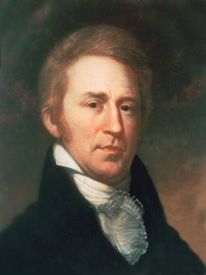
William Clark.
William Clark (1770-1838) – Explorer and geographical expert who co-led the Lewis and Clark Expedition.
John Colter (1774?-1813) – Frontiersman, explorer, fur trapper, mountain man, and army scout credited with being the discoverer of the Yellowstone area.
Christopher Columbus (1451-1506) – Christopher Columbus was an Italian explorer, navigator, and colonizer who discovered* the “New World” of the Americas on an expedition sponsored by King Ferdinand of Spain in 1492.
Columbia Fur Company (1821-1827) – Founded by former members of the North West Company, the firm prospered and was acquired by the American Fur Company in 1827.
Comancheros (1780s-1874) – An ethnically mixed group of New Mexican traders who made their living by trading with the Comanche, Kiowa, and other Plains tribes in the late 18th and 19th centuries, mainly in northeastern New Mexico and West Texas.
Francisco Vasquez de Coronado (1510-1554) – Spanish ruler, explorer, and conquistador. He was the first European to explore the Southwest of North America.
Hernando Cortés (1485-1547) – He was a Spanish Conquistador who led an expedition that caused the fall of the Aztec Empire and brought large portions of mainland Mexico under the rule of the King of Castile in the early 16th century.
William Craig (1807-1869) – A frontiersman and trapper, Craig grew up in West Virginia. Still, he headed west at the age of 18 and spent time in Colorado, Utah, Wyoming, Idaho, and the Pacific Northwest.
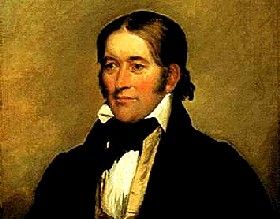
David Crockett.
David “Davy” Crockett (1786-1836) – A frontiersman, explorer, pioneer, folk hero, soldier, and politician, Davy is commonly referred to in popular culture by the epithet “King of the Wild Frontier.”
Alexander Culbertson (1809-1879) – Fur trader and diplomat Alexander Culbertson was born in Chambersburg, Pennsylvania, on May 20, 1809.
D
John Day (1770?-1820) – John Day was a fur trapper and frontiersman who worked for both the Pacific Fur Company and the North West Company.
Andres Dorantes de Carranza (1500?-1550s) – An early Spanish explorer, de Carranza was a native of the southwestern Castilian town of Gibraleon, Spain.
Edward De Morin (1818-1902) – Trapper and Trader who worked for the American Fur Company. Born in Montreal, Canada, in 1818, De Morin grew up to be a trapper, particularly on the Illinois River. In 1836, he went to work for the American Fur Company and later traded for other firms in the Upper Missouri River country. By 1844, he had made his way to California but later returned to the Midwest, where he lived near Fort McPherson, Nebraska, around 1863. He often worked as an interpreter near Fort Robinson, Nebraska. He died in North Platte, Nebraska, on June 16, 1902.
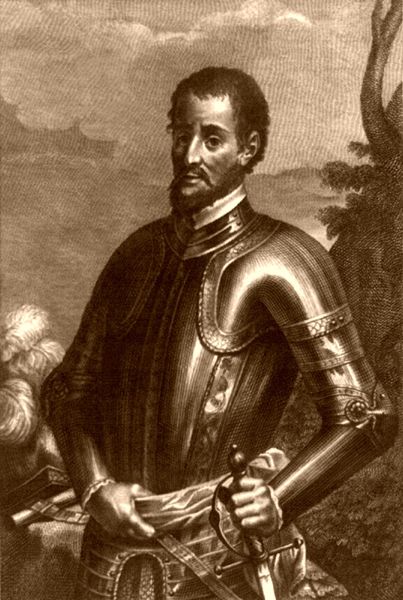
Hernando de Soto.
Hernando De Soto (1496?-1542) – Hernando de Soto was about 36 years old when he was appointed Adelantado of Florida. He was “a gentleman by all four descents” and had recently been created a knight of the Order of Santiago by the Emperor.
Joseph Dickson (1775-1844) – One of the first known mountain men, he, along with Forrest Hancock, followed Lewis and Clark up the Missouri River in 1804.
Joseph Bainbridge Doyle (1817-1864) – Doyle was a trapper, Indian trader, businessman, and Colorado pioneer and politician.
E
Estevanico (1500?-1539) – He was the first known person born in Africa to have arrived in the present-day continental United States.
F
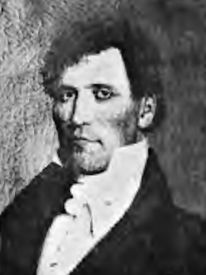
Russel Farnham.
Russel Farnham (1784-1832) – Explorer and fur trader. Farnham was an agent of John Jacob Astor’s American Fur Company.
Mike Fink (1770-1823) – A keel boatman and fur trader, he was also a renowned marksman, roisterer, and champion rough-and-tumble fighter. He joined William Henry Ashley’s first fur-trapping and trading expedition to the upper Missouri River country and was killed in a quarrel the following year.
Thomas Fitzpatrick, aka Broken Hand (1799-1854) – A mountain man and Indian agent, Fitzpatrick was involved in many of the most important events in the opening of the West.
Lucien Fontenelle (1800-1839) – A fur trader, Fontenelle, was associated with several fur companies before becoming part of the American Fur Company.
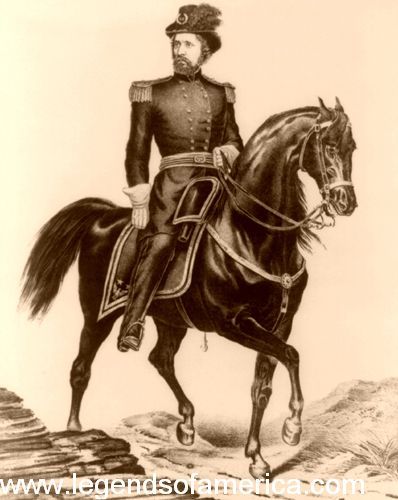
John C. Fremont by Ehrgott, Forbriger and Co.
John Charles Fremont (1813-1890) – Was an explorer, military officer, and politician who led multiple surveying expeditions through the western territory of the United States.
Juan de Fuca (15??-1601?) – A Greek navigator who sailed for Spain under a Spanish name.
G
Joseph Goff Gale (1807-1881) – Joseph Goff Gale was a trapper, trader, pioneer, and politician.
John Gantt (1790-1849) – John Gantt was a soldier, trapper, trader, and guide who primarily worked in the Rocky Mountains.
Father Francisco Tomas Garces (1738-1781) – A Spanish Franciscan priest who was a missionary and explorer.
Hugh Glass (1780?-1833) – A trapper and trader in the American West, he was killed by Arikara Indians.
Antoine Godin (1805?-1836) – A Canadian fur trapper and explorer, who is most noted for the public murder of a Gros Ventre chief, which led to the Battle of Pierre’s Hole in Idaho.
Josiah Gregg (1806-1850) – A trader, explorer, and writer, he is best known for his book “Commerce on the Prairies,” which describes his adventures along the Santa Fe Trail.
John W. Gunnison (1812-1853) – After serving in the Florida War of 1837-1839, Gunnison spent the next ten years surveying the lakes and harbors of the great northwestern United States.
H

Gathering of the Trappers, 1904, Frederic Remington.
Alexander Harvey (1808-1854) – Harvey was one of the boldest men and most reckless desperadoes known to the fur trade. Despite his fierce temper and known cruelty, he worked in the fur industry for years.
John L. Hatcher (1812-1897?) – John L. Hatcher was a frontiersman, explorer, guide, and army scout who traveled throughout the American West in the 19th Century.
Andrew Henry (1775-1832) – Andrew Henry was a military officer, miner, frontiersman, trapper, and businessman who was a co-owner of the Missouri Fur Company and the Rocky Mountain Fur Company.
Valentine Johnson “Rube” Herring (1812-1883) – Herring was a trapper in the American West who settled down to become a government official. In trapping circles, he was universally known as “Old Rube.”
Captain James Hobbs (1819-1880) – Also known as Comanche Jim, Hobbs was the Great-grandson of renowned Shawnee Indian Chief Tecumseh. He spent several years roaming the Southwest with the likes of Kit Carson. He also became a Texas Ranger and fought in the Mexican-American War and the Civil War.
Henry Hudson – An English explorer, Hudson is best known for exploring present-day Canada and parts of the northeastern United States.
Hudson’s Bay Company (1670-present) – Chartered on May 2, 1670, the Hudson’s Bay Company (HBC) is the oldest commercial corporation in North America and is one of the oldest in the world. Its trappers and traders were some of the first explorers of the North American continent.
J
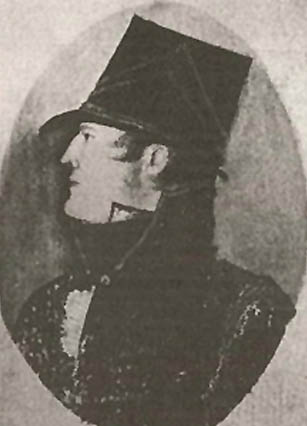
David Edward Jackson.
David Edward Jackson (1790-1837) – Jackson was a pioneer, explorer, trader, and fur trapper well-known in the American West.
Louis Jolliet (1645-1700) – A French Canadian explorer known for his discoveries in North America. Jolliet and Jesuit Father Jacques Marquette, a Catholic priest and missionary, were the first non-Natives to explore and map much of the Mississippi River in 1673.
K
Charles Keemle (1800-1865) – Born in Philadelphia, Pennsylvania, in October 1800, Keemle grew up to become a journalist, fur trader, and Indian fighter.
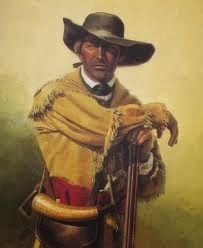
Simon Kenton.
Simon Kenton (1755-1836) – Simon Kenton was a legendary frontiersman and soldier in West Virginia, Kentucky, and Ohio. A large man in stature and strength, his stamina was often tested as he endured the worst that the frontier had to offer.
Mathew Kinkead (1795-18??) – Merchant, trader, and rancher in New Mexico and Colorado, Kinkead finally found wealth in the California goldfields.
Father Eusebio Francisco Kino (1645-1711) – A Jesuit priest, missionary, explorer, mapmaker, mathematician, and astronomer, Kino founded many missions and explored areas in southwestern North America, including areas in what are now northern Sonora, Mexico, southern California, and southern Arizona.
James Kipp (1788-1880) – A fur trader who worked for the North West Company and Columbia Fur Company. He built Fort Piegan, Montana, the first post in the Blackfeet territory.
L
William Laidlaw (1798?-1852) – A fur trader, who, next to Kenneth McKenzie, was said to have been one of the best.
Daniel Lamont (1798-1838) – Fur trader Daniel Lamont was one of three partners of the Upper Missouri Outfit of the American Fur Company and one of the original company men of the Columbia Fur Company.
Charles Larpenteur (1807-1872) – Charles Larpenteur was a French fur trader who traveled the American West working for the Rocky Mountain Fur Company and the American Fur Company.

René Robert Cavelier, Sieur de La Salle.
Rene Robert Cavelier, Sieur de La Salle (1643-1687) – A French explorer, LaSalle explored the Great Lakes region of the United States and Canada, the Mississippi River, and the Gulf of Mexico. La Salle claimed the entire Mississippi River basin for France.
Joaquin Antoine Leroux (1810-1881) – Also known as Watkins Leroux, Antoine was a celebrated 19th-century mountain man, scout, and trail guide based in New Mexico.
Meriwether Lewis (1774-1809) – Explorer, soldier, and public administrator, Lewis was best known for his role as the leader of the Corps of Discovery, which explored the territory of the Louisiana Purchase.
Benjamin “Ben” Vernon Lilly (1856-1936) – Often called the “last of the mountain men,” Ben Lilly was known as the greatest lion and bear hunter in the southwest.
Manuel Lisa (1772-1820) – Frontiersman, explorer, and fur trader, Lisa founded the Missouri Fur Company.
Stephen Harriman Long (1784-1864) – An engineer, explorer, and military officer, Long led what’s known as Long’s Expedition through the Great Plains.
Tristan de Luna y Arellano (1519-1571) – A Spanish conquistador of the 16th century, Arellano served with Vasquez de Coronado on his expedition to the Seven Cities of Cíbola and established Pensacola, one of the earliest European settlements within the present-day United States.
M
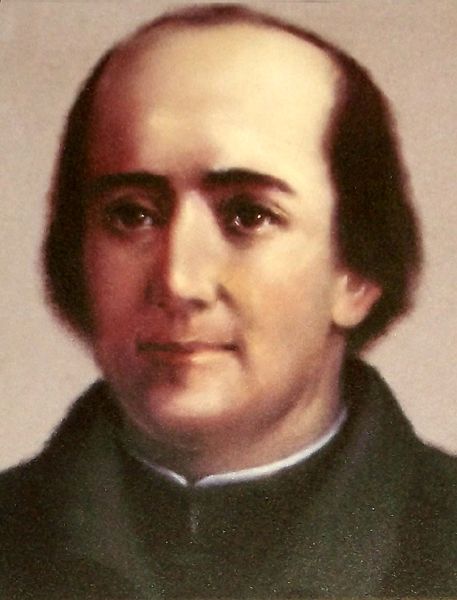
Father Jacques Marquette.
Jacques Marquette (1637-1675) – Sometimes known as Père Marquette or James Marquette, Jacques was a French Jesuit missionary who founded Michigan’s first European settlement, Sault Ste. Marie, and later founded St. Ignace, Michigan.
William E. Mathewson (1830-1916) – Though not as well known in history as the more famous “Buffalo Bill” Cody, the first man to hold the moniker of Buffalo Bill was William E. Mathewson, a daring explorer, hunter, Indian scout, and fighter, who did much to prepare the pathway for western expansion.
Lucien B. Maxwell (1818-1875) – The owner of the largest land grant in American History, a friend of Kit Carson, and a frontier scout and guide, Maxwell, who has been called the “Emperor of the Old West,” died in poverty in New Mexico.
Donald McKenzie (1783-1851) – McKenzie was a Scottish-Canadian explorer and fur trader who worked for several fur companies from the Great Lakes to the Pacific Northwest.
Kenneth McKenzie (1797-1861) – One of the ablest traders that ever worked for the American Fur Company.
Owen McKenzie – (1826-1863) – Owen McKenzie, the son of famed fur trader Kenneth McKenzie and an Indian woman, was born in 1862.
Joseph Lafayette Meek (1810-1875) – Joseph Lafayette “Joe” Meek was a trapper, trader, pioneer, lawman, and politician who was important during the establishment of Oregon Territory.
Captain Pedro Menendez de Aviles (1519-1574) – A brutal Spanish sailor, soldier, explorer, and conquistador, Pedro Menendez was sent by Phillip II of Spain to remove the French from Florida.
Moses Embree “California Joe” Milner (1829-1876) – Scout, frontiersman, and miner, California Joe was George Armstrong Custer’s Chief Scout in 1868.
Missouri Fur Company (1808-1812, 1819-1824) – First established as the St. Louis Missouri Fur Company by several famous explorers and traders, the company prospered until the War of 1812, after which it folded. It was resurrected, however, in 1819, then became simply the Missouri Fur Company, which went bankrupt in 1824.
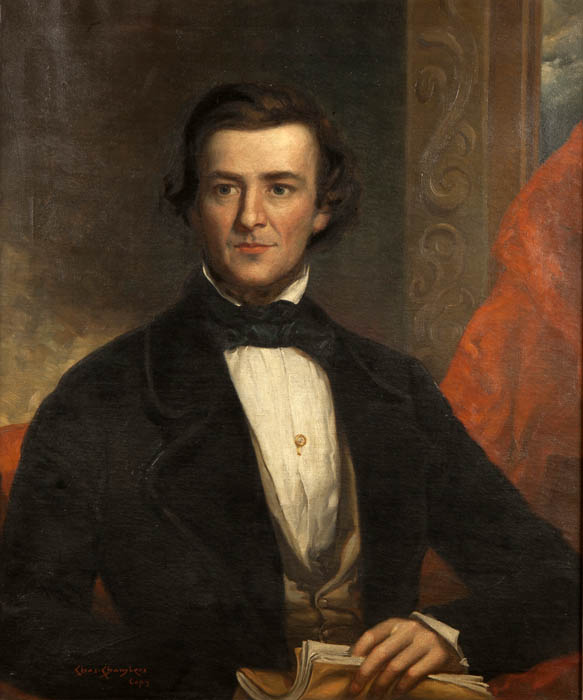
Colonel David Dawson Mitchell, by Charles B. Chambers.
David Dawson Mitchell (1806-1861) – David Dawson Mitchell was a fur trader, soldier, and superintendent of Indian Affairs.
Luis de Moscoso Alvarado (1505-1551) was a Spanish explorer and conquistador who participated in the conquest of present-day Mexico, Guatemala, and El Salvador. After his death, he assumed command of Hernando De Soto’s expedition.
N
Panfilo de Narvaez (1478?-1528) – Spanish explorer and soldier Narvaez helped conquer Cuba in 1511 and led a Spanish royal expedition to North America in 1527.
Fray Marcos de Niza (1495?-1558) – A Franciscan priest who is said to have traveled to the fabled “Seven Golden Cities of Cibola” in the western part of New Mexico.
North West Company (1779-1821) – A Canadian-based fur company, North West Company’s competition with Hudson’s Bay Company was so fierce that it caused armed conflicts, and the British authorities forced them to merge with Hudson’s Bay Company in 1821.
Robert “Doc” Newell (1807-1869) – A trapper, trader, and frontier doctor, he became a politician in Oregon.
O
Juan de Onate (1550?-1626) – A Spanish conquistador who established the colony of New Mexico for Spain and became New Mexico’s first governor.
P
Pacific Fur Company (1810-1813) – Founded in June 1810 by John Jacob Astor, who also owned the American Fur Company, the company was short-lived due to its loss of two ships, an attack by Indians, and the impact of the War of 1812.
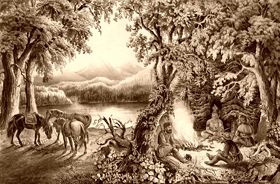
Trappers’ Campfire by Currier & Ives.
Archibald Palmer, aka James A. Hamilton (??-1840) – Thought to have been from England, he was well-educated, and many thought him to have been of noble descent. However, when he arrived in the United States, he went by the name of James A. Hamilton, which led many to suspect that he had something to hide. He went to work for the American Fur Company, though he was said to have hated Indians, a strange attitude given his occupation. Other company employees were said to hold him in awe because he took a bath and wore a clean shirt every day. He was in charge of Fort Union, North Dakota, during much of the 1830s, where he was said to have hosted several intellectual and titled guests in elegant style. By 1840, however, he lived prosperously in St. Louis, Missouri, where he died in February of that year.
Pierre Didier Papin (1798-1853) – Born in St. Louis, Missouri, on March 7, 1798, he grew up to work for the American Furn Company. In 1829, he formed his own company to compete with his former employer, but soon sold out to his rival. He then returned to work for the American Fur Company near the White River in South Dakota until approximately 1842. He then went to Fort Laramie, Wyoming, before working near Fort John, Nebraska. He married a French woman at some point, and the pair had four children. He died at Fort John, Nebraska, in May 1853.
Honore Picotte – A French-Canadian, Picotte came to the Missouri River in about 1820 and joined the Columbia Fur Company. After its union with the American Fur Company, he formed the French Fur Company in 1827. When it was sold to the American Fur Company in 1830, he went to work for their Upper Missouri Outfit, where he remained for some 20 years. He became a partner and eventually gained influence in the company’s affairs. During this time, he married a Sioux woman and gained much influence among the tribe. He was stationed at Fort Pierre for many years.
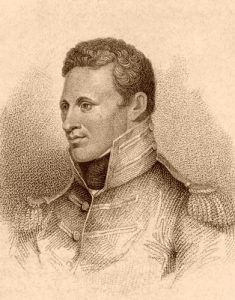
Zebulon M. Pike, early 1800s.
Zebulon Montgomery Pike (1779-1813) – A soldier and explorer for whom Pikes Peak in Colorado is named, Pike mapped much of the southern portion of the Louisiana Purchase.
Joshua Pilcher (1790-1843) – Trapper, trader, and Indian agent, Pilcher was born in Culpeper County, Virginia, on May 15, 1790.
Captain Alonso Alvarez de Pineda (1494-1520) – A Spanish explorer and map-maker, Pineda and his crew were probably the first Europeans in Texas, claiming it for Spain.
Simon Plamondon (1800-1900) – A frontiersman and adventurer, Plamondon was born on the St. Lawrence River in Canada in 1900. When still a mere boy, at the age of 15, he began to range along the Mississippi River and soon spent time on the Great Plains and the Rocky Mountains. By 1818, he had made his way to the Pacific Northwest and joined the North West Company as a voyageur, trapper, and trader. He explored the Columbia River and worked out of Fort Vancouver after Hudson’s Bay Company had absorbed the North West Company. Somewhere along the line, he married an Indian wife, who died in childbirth in about 1827. He then wandered north as far as Eskimo country and the Arctic plains. Afterward, he turned to farming in Washington Territory. He died at Cowlitz, Washington, in 1900 at the age of 100.
Juan Ponce de Leon (1460?-1521) – A Spanish explorer and soldier, he was the first European to set foot in Florida. He also established the oldest European settlement in Puerto Rico and discovered the Gulf Stream.
John Wesley Powell (1834-1902) – John Wesley Powell was an American geologist, U.S. Army soldier, and explorer of the American West, professor at Illinois Wesleyan University, and director of major scientific and cultural institutions. He is famous for his 1869 geographic expedition, a three-month river trip down the Green River and the upper portion of the Colorado River, including the first official U.S. government-sponsored passage through the Grand Canyon.
Charles Preuss – Mapping the Oregon Trail – (1803 – 1854) John C. Frémont’s cartographer was the German Immigrant George Karl Ludwig Preuss, who helped create the original Oregon Trail Map. Historian and author Stephen Schell writes about his important work and the search for a grave that is almost lost.
R
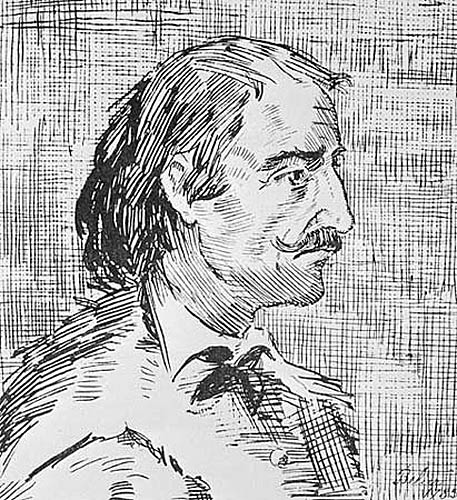
Pierre Esprit Radisson.
Pierre-Esprit Radisson (1640-1710) – Pierre-Esprit Radisson was a French-born explorer, fur trader, and co-founder of the Hudson’s Bay Company.
John Reed (17??-1814) – Mountain man and explorer, Reed hailed from Ireland but made his way to America somewhere along the line. He joined John Jacob Astor’s American Fur Company and went west with the Hunt overland party. After reaching Astoria, he and several other men were sent on March 30, 1812, with dispatches for Astor to cross the continent again to New York. However, the group arrived back at the post on May 11; after having been attacked by Indians, they stole their provisions and the dispatches. In early 1813, Reed explored the Willamette Valley in Oregon and spent the winter in southern Idaho. On January 10, 1814, he and several other trappers along the Boise River were killed by Snake Indians.
Moses B. Reed – A frontiersman who served as a private in the Lewis and Clark Expedition, he soon found that he disliked life along the trail and was reprimanded several times for minor infractions. On August 4, 1804, he deserted the Corps, trying to make his way back to civilization. However, George Drouillard was sent to track him down and bring him back “dead or alive.” He was dishonorably discharged and returned to St. Louis, Missouri, in disgrace in 1805. He was never heard from again.
Tom Reese (18?? 1843) – An African-American fur trader who worked out of Fort McKenzie for the American Fur Company.
Jean “John” Baptiste Richard, Sr. (1810-1875) – A French trapper, trader, and entrepreneur, Richard managed several trading posts in Wyoming, ranched, built bridges, and worked briefly in the Colorado goldfields.
Joseph Robidoux III – A fur trader, Robidoux established the Blacksnake Hills Trading Post, which eventually became St. Joseph, Missouri.
Rocky Mountain Fur Company (1822-1833) – Also known as Ashley’s Hundred, the Rocky Mountain Fur Company was established in St. Louis, Missouri, in 1822 by General William Henry Ashley and Major Andrew Henry.
S

Sacagawea.
Sacagawea (1790?-1812?) A Shoshone Indian woman, she was captured by an enemy tribe who eventually sold her to a French Canadian trapper, with whom she later married. In 1804, Lewis and Clark hired Touissant Charbonneau, her husband, as an interpreter for the expedition. Sacagawea became an integral part of the expedition.
Rufus B. Sage (1817-1893) – A frontiersman, mountain man, and author, Sage was born in Cromwell, Connecticut, where he became a newspaperman when he grew up. Somewhere along the line, he made his way to Independence, Missouri. In September 1841, he left with Lancaster P. Lupton and headed to Fort Platte, Wyoming, where they stayed for the winter before returning to Missouri the following summer. Before long, he was off to the mountains again, where he lived as a mountain man and traveled from Fort Hall, Idaho, to Texas, studiously taking notes. In 1844, he traveled to Ohio and wrote the book “Scenes in the Rocky Mountains.” He died on December 23, 1893.
John Sayer (1750-1818) – An experienced trader with many years of experience, John Sayer became a wintering partner of the North West Company in the 1790s. In 1804 he established the North West Company Fur Trading Post near Pine City, Minnesota.
Hiram Scott (1805-1828) – A mountain man, trapper, and trader, he grew ill and died at Scotts Bluff, Nebraska. The historic monument is named for him.
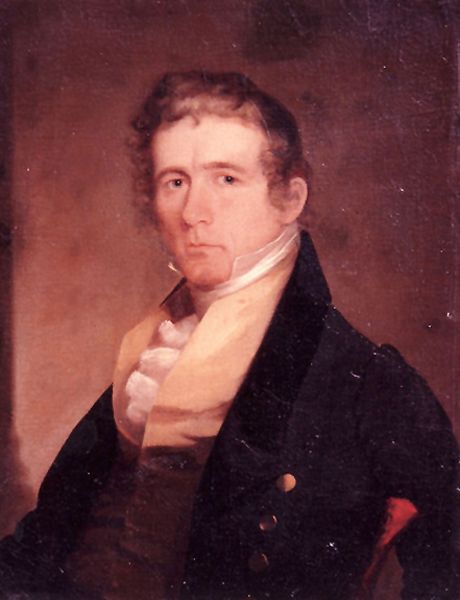
George Sibley.
George C. Sibley (1782-1863) – Explorer, soldier, Indian agent, politician, and educator who led the 1825 Sibley Survey team of the Santa Fe Trail.
George S. Simpson (1818-1885) – A trapper, trader, and adventurer, Simpson helped to form El Pueblo and Hardscrabble in Colorado and Barclay’s Fort in New Mexico.
Alexander Sinclair (1790-1832) – Probably born in Tennessee, he grew up to become a trapper. In 1830, he joined with George Nidever and others, forming the Bean-Sinclair trapping party at Fort Smith, Arkansas. Leading the party, Sinclair and his men joined the rendezvous at Pierre’s Hole in 1832. In the Battle of Pierre’s Hole, he was killed on July 18, 1832.
Prewett Fuller Sinclair (1803-1882) – The younger brother of Alexander Sinclair, he was probably born in Tennessee. He joined the Bean-Sinclair trapping party at Fort Smith, Arkansas, in 1830 with his brother. His older brother was killed two years later at the Battle of Pierre’s Hole in present-day Idaho. Prewett remained in the mountains until 1837, when he became a partner in Fort Davy Crockett at Brown’s Hole, Colorado. He then went to California in 1843. In 1846, he briefly joined one of John Charles Fremont’s expeditions before settling at Corralitos, California. There, he became a prominent pioneer and businessman. He died in 1882.
Jedediah Strong Smith (1799-1831) – A hunter, trapper, fur trader, and explorer of the Rocky Mountains, the West Coast, and the Southwest during the 19th century.
Captain John Smith (1580-1631) – An English soldier, explorer, admiral, and author, Smith established the first permanent English settlement in North America at Jamestown, Virginia, in 1607.
John Simpson Smith, aka Uncle John Blackfeet Smith (1812-1871) – Trader and frontiersman, Smith ranged from the Yellowstone River to the Gila River and from the upper Missouri River to the Rio Grande.
Ceran St. Vrain (1802-1870) – Trader, frontiersman, businessman, and soldier, St. Vrain established Bent’s Fort, Colorado, along with William and Charles Bent.
William L. Sublette (1799-1845) – An explorer, fur trapper, trader, and mountain man, Sublette was part of William Henry Ashley’s trapping group, called Ashley’s Hundred. He went on to acquire part of the business.
T
Levi Talbot (??-1823) – A trapper for the Rocky Mountain Fur Company, nothing is known of Talbot’s early life. However, Talbot responded when William Henry Ashley called for “one hundred young men” to ascend the Missouri River to trap beaver in 1922. Talbot and friends Mike Fink and Bill Carpenter wintered with the Rocky Mountain Fur Company before traveling to Fort Henry, Montana, in the spring of 1823. There, Fink killed Bill Carpenter in a “game” the two were fond of, shooting cups of whiskey off each other’s heads. When Talbot discovered that Fink had deliberately killed Carpenter a few weeks later, Levi shot Mike Fink through the heart. Later that year, Talbot took part in Colonel Henry Leavenworth’s operation against the Arikara tribe in early August. However, on August 25, 1823, Talbot died while attempting to swim across the Bad River, a tributary of the Missouri River in South Dakota.
Edward S. Terrell (1812-1905) – Pioneer, trader, and lawman, Terrell is thought to have hailed from Kentucky or Tennessee before making his way to Texas, where he is said to have been the first white man to have camped on the site of what would later become Fort Worth, Texas. After a treaty with the area Indians in 1843, Terrell became an Indian trader and trapper working at the mouth of the Clear Fork on the Trinity River. He was later captured by the Indians and held for more than a year. He would eventually become city marshal of Fort Worth, Texas, in 1873 and, late that year, its first chief of police. Afterward, he worked as a railroad contractor. He settled finally at Graham, Texas, where he died on November 1, 1905.
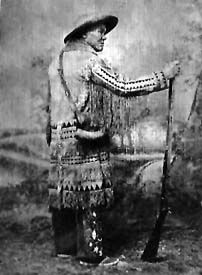
Tom Tobin, frontiersman.
Tom Tate Tobin (1823-1904) – A frontiersman, trapper, mountain man, and scout, he explored and scouted in the New Mexico and Colorado areas.
V
Pierre Gaultier de Varennes, Sieur de La Verendrye(1685-1749) – A French Canadian military officer, fur trader, and explorer, in the 1730s, he and his four sons opened up the area west of Lake Superior. They thus began the process that added Western Canada to the original New France in the Saint Lawrence basin. He was also the first European to reach North Dakota and the upper Missouri River.
William Henry Vanderburgh (1800-1832) – Born in Vincennes, Indiana, he attended West Point but did not graduate. He then went to work for the Missouri Fur Company near Council Bluffs, Iowa, under Manual Lisa and Joshua Pilcher.
Pierre (Luis) Louis Vasquez (1798-1868) – Pierre Louis Vasquez, also spelled Luis Vázquez, was a mountain man and trader involved with other famous frontiersmen of the time, including Jim Bridger, Manuel Lisa, Kit Carson, and Andrew Sublette. He was a partner in Fort Vasquez, Colorado, and Fort Bridger, Wyoming.
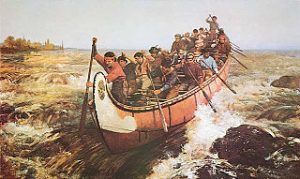
Voyageurs.
Voyageurs – Voyageurs were French Canadians who transported furs by canoe during the fur trade years. Voyageur is a French word meaning “traveler.”
W
Ezekiel Williams (1775-1844) – Fur trapper, frontiersman, and soldier; Williams worked with such men as Manuel Lisa and the Missouri Fur Company.
William Sherley “Old Bill” Williams (1787-1849) – Better known as “Old Bill,” was a Mountain Man, explorer, army scout, and frontiersman.
Richens Lacy “Uncle Dick” Wootton (1816-1893) – American frontiersman, mountain man, trapper, and guide, Wootton was born in Mecklenburg County, Virginia, on May 6, 1816.
Nathaniel Jarvis Wyeth (1802-1856) – Explorer and inventor in the American West.
X-Y-Z
Ewing Young (1796-1841) – A fur trapper and trader from Tennessee, he made his way to Santa Fe, New Mexico. He then worked as a livestock trader in California before becoming one of the first Americans to settle permanently in Oregon.
©Kathy Alexander/Legends of America, updated October 2025.
Also See:
Famous Men on the Santa Fe Trail