
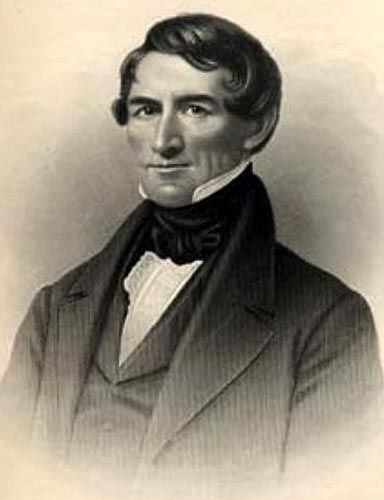
Pierre Chouteau, Jr.
Pierre Chouteau, Jr. was an American merchant and trader who grew up to run a powerful trading company that monopolized the trade along the upper Missouri River.
Pierre Chouteau, Jr. was born into the wealthy Chouteau fur-trading family of St. Louis, Missouri, to Jean Pierre Chouteau and Pelagie Kiersereau on January 19, 1789. As a boy, he was familiarly called “Cadet,” a French Creole term meaning second-born son. He received an elementary education in St. Louis, but before he was 16, he worked as a clerk in his father’s store and traded with the Osage tribe.
He was tall, erect, with coal-black hair, penetrating black eyes, and a pleasant expression.
In 1810, he left St. Louis to oversee his family’s interests in lead mines in Dubuque, Iowa, where he remained until the outbreak of the War of 1812. He then returned to St. Louis, where he opened a store with his brother-in-law, Bartholomew Berthold, and became involved in the fur trade. On June 15, 1813, he married his first cousin, Emilie Gratiot, and the pair would eventually have five children.
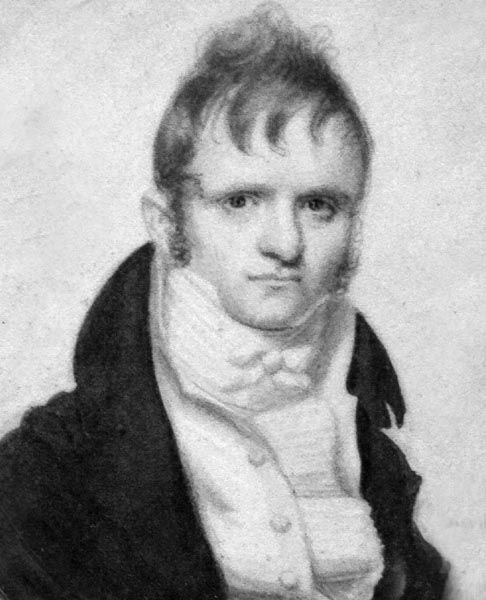
Bartholomew Berthold.
Berthold and Chouteau soon began outfitting traders bound for points west. In 1815, they backed Pierre’s brother Auguste Chouteau, Jules DeMun, and John Sarpy on an expedition to the upper Arkansas River region. The men were arrested in 1817 by the Spanish, who considered that area to be under their control. Auguste and the others were imprisoned in Santa Fe, New Mexico, and their trade goods were confiscated. Although his brother was later released, the event temporarily disillusioned Pierre with the fur trade.
However, Berthold and Chouteau, sometimes referred to as the French Company, continued to operate. In 1819, they supported Manuel Lisa’s trading expedition to the Upper Missouri River, but again suffered heavy losses.
Though they had other successes, Berthold and Chouteau struggled in the increasingly competitive St. Louis fur market. They reorganized in 1822 and added another partner — Bernard Pratte, who was married to Pierre’s cousin. The company then became known as Berthold, Chouteau & Pratte.
All three men then made several expeditions up the Mississippi and Missouri Rivers and built several trading posts on the Missouri River as far north as present-day South Dakota. In about 1827, Chouteau began to prosper when he arranged to purchase furs and supply goods to the Rocky Mountain Fur Company. Pierre Chouteau, Jr. was a driven man, a ruthless competitor, and an innovator who introduced steamboat navigation on the Missouri River in 1832, revolutionizing the scale of the fur trade.
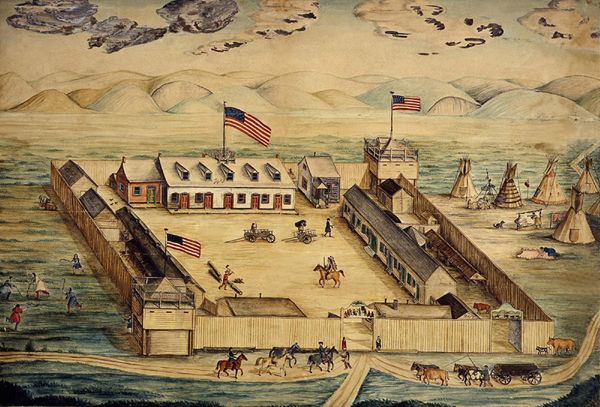
Fort Pierre, South Dakota, was built by Pierre Chouteau, Jr. for the American Fur Company in 1832.
As Chouteau and his partners prospered, they competed with other fur-trading companies, notably the American Fur Company. However, Pierre Chouteau, Bartholomew Berthold, John P. Cabanne, and Bernard Pratte gradually grew closer to John Jacob Astor, who owned the American Fur Company. In 1827, Bernard Pratte & Company joined the American Fur Company’s Western Department as its St. Louis agent.
Pierre was a passenger with Artist George C. Catlin when the Yellowstone completed the first successful steamboat voyage to the upper Missouri River country in 1832.
In 1834, when John Jacob Astor, the owner of the American Fur Company, retired, Bernard Pratte and Pierre Chouteau Jr. purchased the Missouri River interests of the American Fur Company’s Western Department, forming the Pratte, Chouteau, and Company. The northern portion of the American Fur Company’s interests was sold to Ramsay Crooks, who retained the “American Fur Company” name.
Pratte, Chouteau, and Company quickly became a dominant force in the fur trade on the Central and Northern Great Plains, with a network of trading posts stretching from Fort Union, North Dakota, to Fort Laramie. Wyoming.
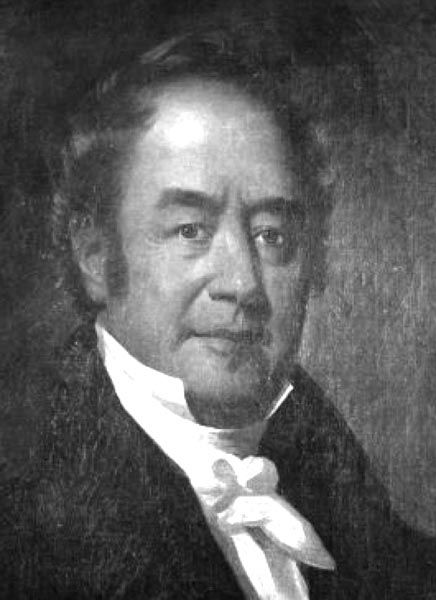
Bernard Pratte.
In 1838, Bernard Pratte retired, and Pierre Chouteau, Jr. gained control of the firm and reorganized it as the Pierre Chouteau, Jr. and Company, which would become the dominating trading company on the Missouri River. The near-monopoly the company enjoyed from the mid-1830s was achieved primarily through the combined use of light-draft steamboats and an illegal distillery at Fort Union, North Dakota. The new company soon discontinued its fur business and focused on buffalo robes, moving hundreds of thousands of robes through St. Louis to the main markets in the eastern United States over the next 25 years.
In 1842, Ramsay Crooks sold his interest in the Red River and upper Mississippi watersheds to Pierre Chouteau, Jr., & Company. In 1845, the financial backers of the Union Fur Company sold their trading posts to their competitor, Pierre Chouteau, Jr.
In 1847, Pierre and his brother Auguste established Fort Benton, Montana, as the last fur trading post on the Upper Missouri River. It was named for U.S. Senator Thomas Hart Benton, with whom the Chouteau family were friends and influential contributors.
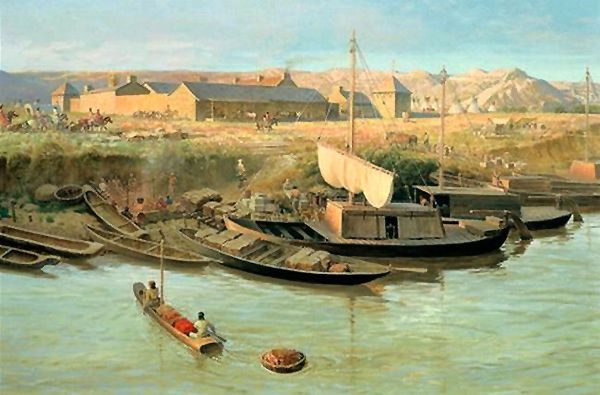
Old Fort Benton, Montana, by John Ford Clymer, 1967.
During these busy years, the Pierre Chouteau, Jr., & Company employed or partnered with several well-known frontiersmen, including Alexander Culbertson, Andrew Dawson, Malcolm Clarke, Kenneth McKenzie, Alexander Harvey, and Louis Rivit.
In 1849, Pierre’s son, Charles, assumed management of the St. Louis fur business, and Pierre focused on several other business interests. He engaged in banking and Iron Mountain deposits in St. Francois County, Missouri, and in 1850, he was a partner in the firm of Chouteau, Harrison & Valle, which operated a rolling mill in North St. Louis. He was one of the original incorporators of the Ohio & Mississippi Railroad of Illinois. As his business interests grew, he was drawn to New York City, where he was one of the country’s leading financiers for many years.
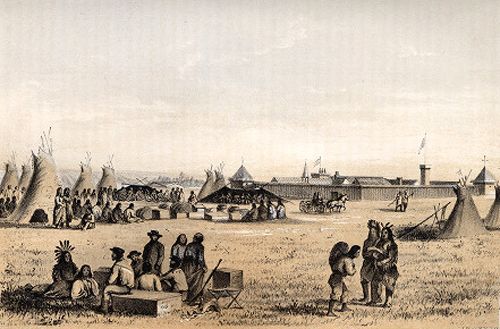
Fort Union, North Dakota.
In the late 1850s, Pierre’s health began to fail, and in 1859, he lost his sight. That same year, the first successful attempt to extend steamboat traffic to the head of navigation of the Missouri River at Fort Benton, Montana, was undertaken by Pierre Chouteau, Jr., & Company on the steamboat Chippewa. The federal government sponsored the voyage to carry the Indian annuity of goods to the upper Missouri agencies. It was transporting a corps of engineers under the command of Captain W.F. Raynolds. Before this voyage, Fort Union, North Dakota, situated at the mouth of the Yellowstone River, had long been the head of navigation.
Three years later, his wife of 50 years, Emilie, died on August 24, 1862. Pierre Chouteau Jr. died in St. Louis, Missouri, two years later, on September 6, 1865. They are buried in a mausoleum at the Calvary Cemetery in St. Louis.
The Pierre Chouteau, Jr., & Company continued until 1864 and was sold in 1865. His children inherited an estate valued at several million dollars.
“As a merchant and a man of business for nearly half a century, Chouteau had no equal in the Mississippi Valley.”
— Elihu B. Washburne, an American politician and diplomat
©Kathy Alexander/Legends of America, updated February 2026.
Also See:
Explorers, Trappers, Traders & Mountain Men
Trading Posts and Their Stories
Sources:
Christensen, Lawrence O., Foley, William E., Kremer, Gary; Dictionary of Missouri Biography, University of Missouri Press, 1999.
Encyclopedia of the Great Plains
Oviatt, Alton B., Steamboat Traffic on the Upper Missouri River, 1859-1869, The Pacific Northwest Quarterly, 1949.
Ravenswaay, Charles Van; St. Louis: An Informal History of the City and Its People, 1764-1865, University of Illinois Press, 1991.
Robertson, Roland; Competitive Struggle: America’s Western Fur Trading Posts, 1764-1865, Caxton Press, 2014.