
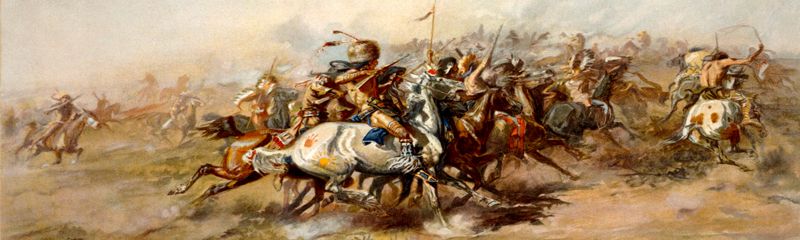
Battle of the Little Bighorn by Charles M. Russell, 1903.
“This war did not spring up on our land; this war was brought upon us by the children of the Great Father who came to take our land without a price, and who, in our land, do a great many evil things… This war has come from robbery – from the stealing of our land.”
– Spotted Tail
From the earliest European visitors to the Westward Expansion of the United States, white settlers frequently encountered Native Americans. Although many of these meetings were peaceful, the cultures often clashed, resulting in hundreds of battles and skirmishes between the Indians and pioneers encroaching on their lands, as well as conflicts between the tribes and the U.S. Army. Although confrontations with the Indians had occurred since the first European explorers and settlers set foot on American soil, the “Indian War period” primarily spanned 1866 to 1890. These many conflicts are often overshadowed by other periods of U.S. history.
Pre-1700 Conflicts
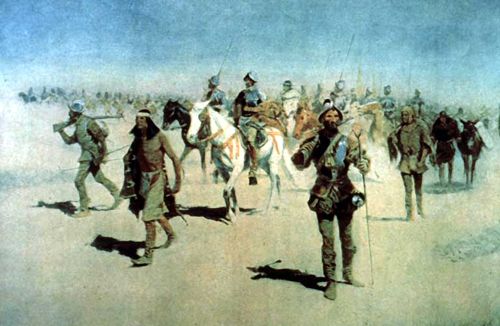
Coronado’s Expedition by Frederic Remington.
1540-1541 – Tiguex War – Fought in the Winter of 1540-41 by the army of Francisco Vasquez de Coronado against the 12 pueblos of Tiwa Indians along both sides of the Rio Grande in New Mexico. It was the first war between Europeans and Native Americans in the American West.
March 22, 1622 – Jamestown Massacre – Powhatan Indians kill 347 English settlers throughout the Virginia colony during the first Powhatan War.
1622-1644 – Powhatan Wars – Following an initial period of peaceful relations in Virginia, a 12-year conflict left many natives and colonists dead.
1636-1637 – Pequot War – Taking place in Connecticut and Rhode Island, the death of a colonist eventually led to the destruction of 600-700 natives. The remainder were sold into slavery in Bermuda.
May 26, 1637 – Mystic Massacre – During the Pequot War, English colonists, with Mohegan and Narragansett allies, attacked a large Pequot village on the Mystic River in Connecticut, killing around 500 villagers.
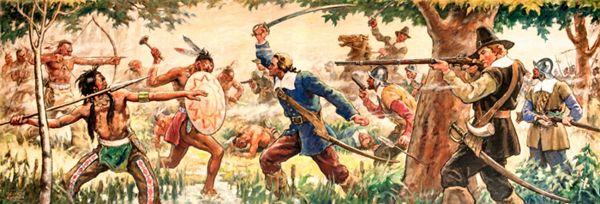
Pequot War.
1675-1676 – King Philip’s War erupts in New England between colonists and Native Americans, sparked by tensions over the colonists’ expansionist activities. The bloody war raged up and down the Connecticut River valley in Massachusetts and the Plymouth and Rhode Island colonies, eventually resulting in 600 English colonials being killed and 3,000 Native Americans, including women and children, on both sides. King Philip (the colonists’ nickname for Metacomet, chief of the Wampanoag) was hunted down and killed on August 12, 1676, in a swamp in Rhode Island, ending the war in southern New England. In New Hampshire and Maine, the Saco Indians continued to raid settlements for another year and a half.
1680-1692 – Pueblo Revolt – In Arizona and New Mexico, Pueblo Indians, led by Popé, rebelled against the Spanish and lived independently for 12 years. The Spanish reconquered them in 1692.
1689–1697 – King William’s War – The first of the French and Indian Wars, King William’s War was fought between England and France, with their respective American Indian allies, in the colonies of Canada (New France), Acadia, and New England. It was also known as the Second Indian War (the first having been King Philip’s War).
February 8, 1690 – Schenectady Massacre – French and Algonquin Indians destroy Schenectady, New York, killing 60 settlers, including ten women and at least 12 children.
1700-1800 Conflicts
February 29, 1704 – Deerfield Massacre – A force comprised of Abenaki, Kanienkehaka, Wyandot, and Pocumtuck Indians, led by a small contingent of French-Canadian militia, sacked the town of Deerfield, Massachusetts, killing 56 civilians and taking dozens more as captives.
1711 – The Tuscarora War in North Carolina, led by Chief Hancock, was fought between the British, Dutch, and German settlers and the Tuscarora tribe. In an attempt to drive the colonists out of their territory, the tribe attacked several settlements, killing settlers and destroying farms. In 1713, James Moore and Yamasee warriors defeated the Indians.
1715-1718 – Yamasee War – In southern Carolina, an Indian confederation led by the Yamasee came close to exterminating a white settlement in their region.
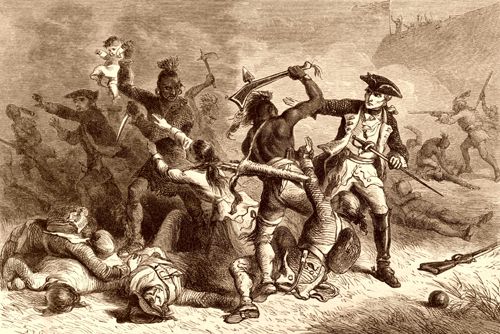
French & Indian War.
1754-1763 – French and Indian War – A conflict between France and Britain over possession of North America. For various reasons, most Algonquian tribes allied with the French, while the Iroquois allied with the British.
August 1757 – Fort William Henry Massacre – Following the fall of Fort William Henry, between 70 and 180 British and colonial prisoners were killed by Indian allies of the French.
1760-1762 – Cherokee Uprising – A breakdown in relations between the British and the Cherokee leads to a general uprising in present-day Tennessee, Virginia, and the Carolinas.
1763 – Pontiac’s Rebellion – War Chief Pontiac and a large alliance drove out the British at every post except Detroit in the Ohio River Valley. After besieging the fort for five months, they withdrew to find food for the Winter.
September 14, 1763 – Devil’s Hole Massacre – Seneca double ambush of a British supply train and soldiers.
December 1763 – Conestoga Massacre – Pennsylvania settlers kill 20 peaceful Susquehannock in response to Pontiac’s Rebellion.
July 26, 1764 – Enoch Brown School Massacre – Four Delaware Indians killed a schoolmaster, ten pupils, and a pregnant woman. Amazingly, two pupils who were scalped survived.
1774 – Lord Dunmore’s War – Shawnee and Mingo Indians raided a wave of traders and settlers in the southern Ohio River Valley. Governor Dunmore of Virginia sent 3,000 soldiers and defeated approximately 1,000 Native Americans.
1776-1794 – Chickamauga Wars/Cherokee Wars – A series of conflicts that continued the Cherokee struggle against white encroachment. Led by Dragging Canoe, known to the colonials as the Chickamauga, the Cherokee fought white settlers in Tennessee, Kentucky, Virginia, North Carolina, South Carolina, and Georgia.
July 3, 1778 – Wyoming Valley Massacre – Following a battle with rebel defenders of Forty Fort, Iroquois allies of the Loyalist forces hunted and killed those who fled, then tortured to death those who surrendered.
August 31, 1778 – Stockbridge Massacre – A battle of the American Revolution that rebel propaganda portrayed as a massacre.
November 11, 1778 – Cherry Valley Massacre – An attack by British and Seneca Indian forces on a fort and village in eastern New York during the American Revolution. The town was destroyed, and 16 defenders were killed.
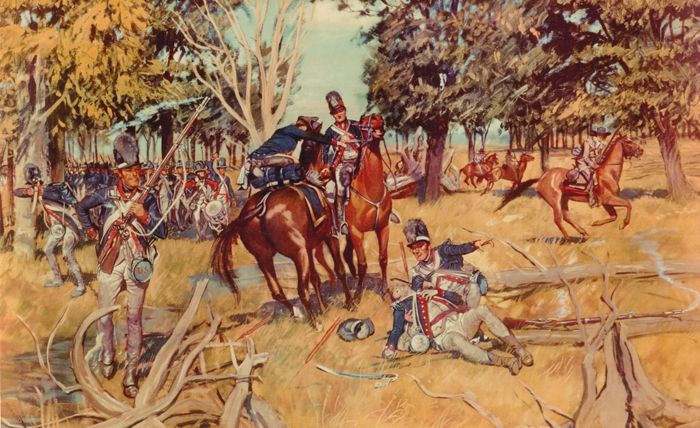
Battle of Fallen Timbers by H. Charles McBarron, Jr, 1953.
March 8, 1782 – Gnadenhutten Massacre – Nearly 100 non-combatant Christian Delaware (Lenape) Indians, primarily women and children, were killed with hammer blows to the head by Pennsylvania militiamen.
1785-1795 – Old Northwest War – Fighting occurred in Ohio and Indiana. Following two humiliating defeats by native warriors, the Americans won a decisive victory under “Mad Anthony” Wayne at the Battle of Fallen Timbers.
1791 – href=”https://www.legendsofamerica.com/st-clairs-defeat/” target=”_blank” rel=”noopener”>St. Clair’s Defeat– A forgotten disaster of the Indian Wars, this defeat was also known as the Battle of the Wabash, or the Battle of a Thousand Slain. It was a battle fought on November 4, 1791, in the Northwest Territory of the United States. The U.S. Army faced the Western Confederacy of Native Americans as part of the Northwest Indian War. It was “the most decisive defeat in the history of the American military” and its most significant defeat ever by Native Americans.
1794 – Nickajack Expedition – Cherokee Chief Dragging Canoe and his followers, who opposed the peace, separated from the tribe and relocated to East Tennessee, where groups of Shawnee and Creek joined them. Engaged in numerous raids on the white settlers for several years, they used Nickajack Cave as their stronghold. In 1894, the military attacked, leaving some 70 Indians dead.
1800-1850 Conflicts

Shawnee Chief Tecumseh.
November 6, 1811 – Battle of Tippecanoe – The Prophet, brother of Shawnee Chief Tecumseh, attacked Governor William Henry Harrison’s force at dawn near the Wabash and Tippecanoe Rivers in Indiana Territory. After hand-to-hand combat, the natives fled.
August 15, 1812 – Fort Dearborn Massacre – American settlers and soldiers are killed in an ambush near Fort Dearborn, at the present-day site of Chicago, Illinois.
January 22, 1813 – Battle of Frenchtown – Also known as the River Raisin Massacre, it was a severe defeat for the Americans during the War of 1812 when they attempted to retake Detroit.
August 18, 1813 – Dilbone Massacre – Three settlers were killed in Miami County, Ohio.
August 30, 1813 – Fort Mims Massacre – Following the defeat at the Battle of Burnt Corn, a band of Red Sticks sacked Fort Mims, Alabama, killing 400 civilians and taking 250 scalps. This action precipitates the Creek War.
September 19 – October 21, 1813 – Peoria War – An Armed conflict between the U.S. Army and the Potawatomi and the Kickapoo occurred in Peoria County, Illinois.
1814 – Creek War – Militiamen, under Andrew Jackson, broke the power of Creek raiders in Georgia and Alabama after the Creek had attacked Fort Mims and massacred settlers. They relinquished a vast land tract. (See Battle of Horseshoe Bend)
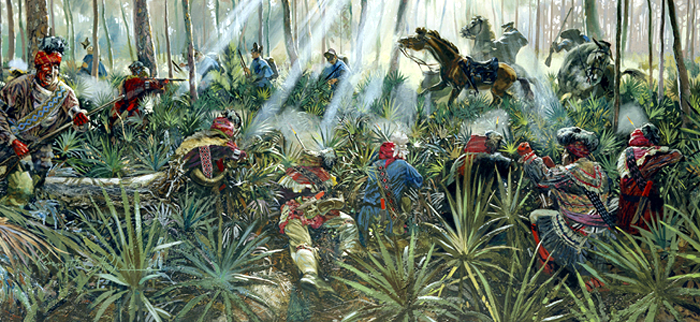
Seminole Wars.
1816-1818 – First Seminole War – The Seminole, defending runaway slaves and their land in Florida, fought Andrew Jackson’s force. Jackson failed to subdue them but forced Spain to relinquish the territory.
Spring, 1817 – Battle of Claremore Mound – Cherokee Indians wiped out Osage Indians led by Chief Clermont at Claremore Mound, Indian Territory.
April 22, 1818 – Chehaw Affair – U.S. troops attacked a non-hostile village during the First Seminole War, killing an estimated 10 to 50 men, women, and children.
June 2, 1823 – Arikara War – Occurring near the Missouri River in present-day South Dakota, Arikara warriors attacked a trapping expedition, and the U.S. Army retaliated. It was the first military conflict between the United States and the Western Native Americans.
1827 – Winnebago War – Also known as the Le Fèvre Indian War, this armed conflict occurred in Wisconsin between the Winnebago and the military. Losses of life were minimal, but the war set a precedent for the much larger Black Hawk War.
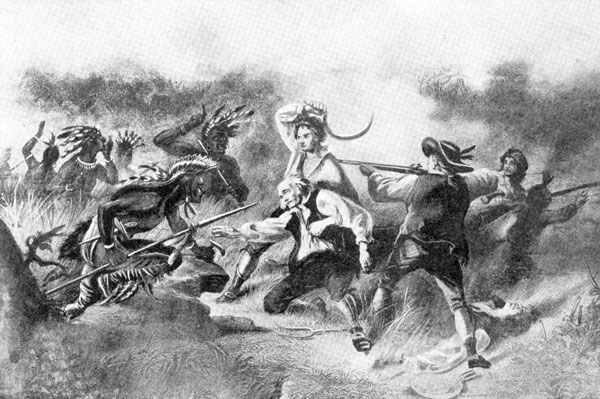
Blackhawk War.
1832 – Black Hawk War – This conflict, which took place in northern Illinois and southwestern Wisconsin, was the last major Native American conflict in the area. Led by Chief Black Hawk, the Sac and Fox tribes attempted to return to their homeland but were unsuccessful.
May 20, 1832 – Indian Creek Massacre – Potawatomi Indians kidnap two girls and kill 15 men, women, and children North of Ottawa, Illinois.
August 1, 1832 – Battle of Bad Axe – Around 300 Indian men, women, and children were killed in Wisconsin by white soldiers.
Spring 1833 – Cutthroat Gap Massacre – Osage Indians wiped out a Kiowa Indian village in Indian Territory.
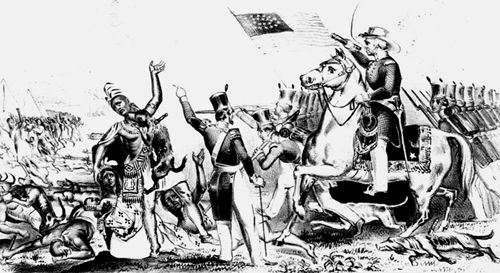
The Seminole Wars.
1835-1842 – Second Seminole War – Under Chief Osceola, the Seminole resumed fighting for their land in the Florida Everglades. Osceola was captured and nearly eliminated.
1836-1875 – Comanche Wars – On the southern plains, primarily in the Texas Republic, there were many conflicts with the Comanche. The U.S. Military instituted official campaigns against the Comanche in 1867.
1836 – Creek War of 1836 – Though most Creeks had been forced to Indian Territory, those that remained rebelled when the state moved to abolish tribal governments and extend state laws over the Creeks.
May 19, 1836 – In the Fort Parker Massacre, six men were killed by a mixed Indian group in Limestone County, Texas. (Also see: Cynthia Ann Parker – White Woman in a Comanche World)
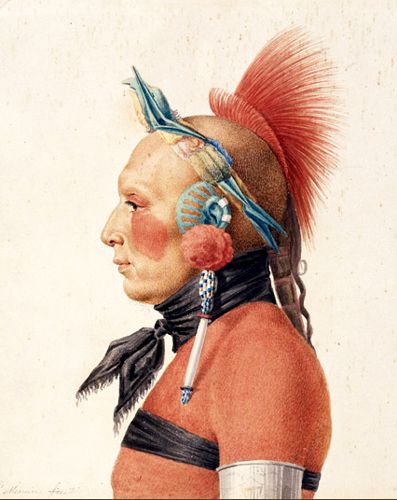
Osage Warrior.
1837 – Osage Indian War – Several skirmishes occurred with the Osage Indians in Missouri.
November 10, 1837 – Battle of Stone Houses – A Texas Ranger Company pursued a band of raiding Kichai Indians up the Brazos River, where they battled near the present-day city of Windthorst, Texas.
October 5, 1838 – Killough Massacre – Indians massacre 18 members and relatives of the Killough family in Texas.
1839 – Cherokee War – This war culminated in friction between the Cherokee, Kickapoo, and Shawnee Indians and the white settlers in Northeast Texas.
July 1839 – Battle of the Neches – The principal engagement of the Cherokee War culminated after the Cherokee refused to leave Texas.
March 19, 1840 – The Council House Fight was a conflict between the Republic of Texas officials and a Comanche peace delegation in San Antonio, Texas. When terms could not be agreed on, a conflict erupted, resulting in the death of 30 Comanche leaders who had come to San Antonio under a flag of truce.
1840 – Great Raid of 1840 – The largest raid ever mounted by Native Americans on white cities. Following the Council House Fight, Comanche War Chief Buffalo Hump raised a huge war party and raided deep into white-settled areas of Southeast Texas.
August 11, 1840 – Battle of Plum Creek – The Penateka Comanche were so angry after the Council House Fight that they retaliated in the summer of 1840 by conducting multiple raids in the Guadalupe Valley. The raids culminated in a battle between the Indians and the Texas volunteer army, along with the Texas Rangers, near the present-day city of Lockhart, Texas. For two days, they battled, and the Comanche were defeated.
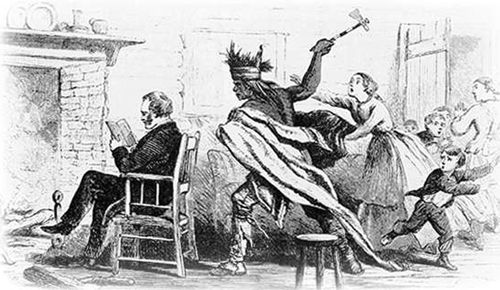
Whitman Massacre.
November 29, 1847 – Whitman Massacre – The murder of missionaries Dr. Marcus Whitman, Mrs. Narcissa Whitman, and 12 others at Walla Walla, Washington, by Cayuse and Umatilla Indians, triggering the Cayuse War.
June 17, 1848 – Battle of Coon Creek – When a company of about 140 soldiers was on their way to join the Santa Fe battalion in Chihuahua, Mexico, they were attacked near the present town of Kinsley, Kansas, by some 200 Comanche and Apache Indians.
1848–1855 – Cayuse War – Occurring in Oregon Territory and Washington Territory, the conflict between the Cayuse and white settlers was partly caused by disease, which led to the Whitman Massacre and the Cayuse War.
1849-1863 – Navajo Conflicts – Persistent fighting between the Navajo and the U.S. Army in Arizona and New Mexico led to their expulsion and incarceration on an inhospitable reservation far from their homelands.
1850-1900 Conflicts
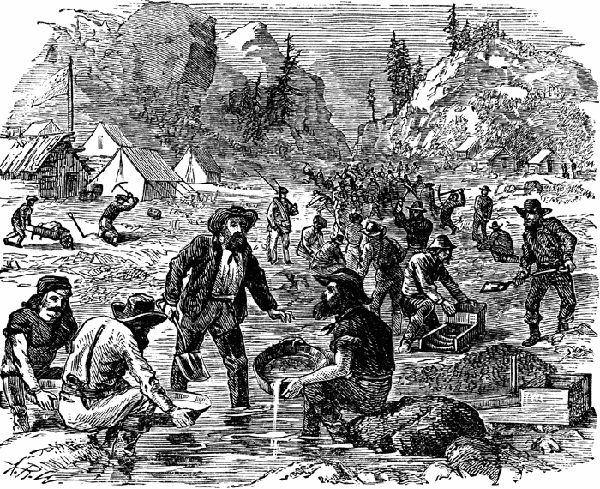
California Gold Rush Miners.
1850-1851 – Mariposa War – Spawned by the flood of miners rushing onto their lands after the California Gold Rush, some tribes, including the Paiute and the Yokut, fought back.
Spring 1850 – Bloody Island Massacre – The murder of up to 200 Pomo people on an island near Upper Lake, California, by Nathaniel Lyon and his U. S. Army detachment in retaliation for the killing of two Clear Lake settlers who had been abusing and murdering Pomo people.
1851-1853 – Utah Indian Wars – Numerous skirmishes throughout Utah culminated in the Walker War.
October 21, 1853 – Gunnison Massacre – In Millard County, Utah, a band of Ute Indians massacred Captain John W. Gunnison’s Pacific Railroad Survey party of seven men.
1853 – Walker War – When the Mormons began settling on the Ute hunting grounds in Utah, the Utes initially welcomed them, but later fought back.
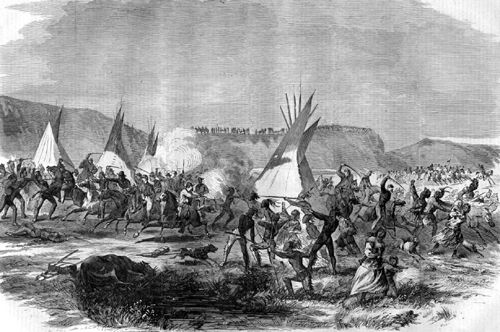
Sioux War, Harper’s Weekly, October 1863.
1854-1890 – Sioux Wars – As white settlers moved across the Mississippi River into Minnesota, South Dakota, and Wyoming, the Sioux, under the leadership of Sitting Bull and Crazy Horse, resisted to preserve their hunting grounds.
August 17, 1854 – Kaibai Creek Massacre – White settlers kill forty-two Winnemem Wintu men, women, and children at Kaibai Creek, California.
August 19, 1854 – Grattan Fight – Twenty-nine U.S. soldiers were killed by Brulé Lakota Sioux Indians in Nebraska Territory.
August 20, 1854 – Ward Massacre – Eighteen of the 20 members of the Alexander Ward party were killed by Shoshone Indians while traveling on the Oregon Trail in western Idaho.
1855 – Snake River War – Fighting occurred at the junction of the Tucannon River and the Snake River in Washington Territory.
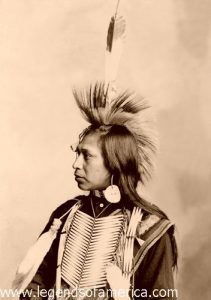
Klickitat brave in Oregon, 1899.
1855 – Klickitat War – This conflict occurred between the Klickitat and Cascade Indians against white settlers along the Columbia River in central Washington. When intimidation and force failed to get the Indians to cede their lands, battles erupted, resulting in the Indians being removed from their lands.
1855-1858 – Third Seminole War – Under Chief Billy Bowlegs, the Seminole mounted their final stand against the U.S. in the Florida Everglades. When Bowlegs surrendered, he and others were deported to Indian Territory in Oklahoma.
1855-1856 – Rogue River Wars – In the Rogue River Valley area of southern Oregon, a conflict between the area Indians and white settlers increased, eventually breaking into open warfare.
1855–1858 – Yakima War – A conflict of land rights in Washington state involving the Nisqually, Muckleshoot, Puyallup, and Klickitat tribes in the state of Washington. The central figure of the war, Nisqually Chief Leschi, was executed.
January-March 1855 – Klamath and Salmon Indian Wars – The Klamath and Salmon River War, also known as the Klamath War or Red Cap War, occurred in Klamath County, California, following rumors of an Indian uprising among local miners, who sought to disarm the Indians. Some of the Native Americans of the Yurok and Karok tribes refused, leading to hostilities resulting in the state militia and U.S. Army involvement.
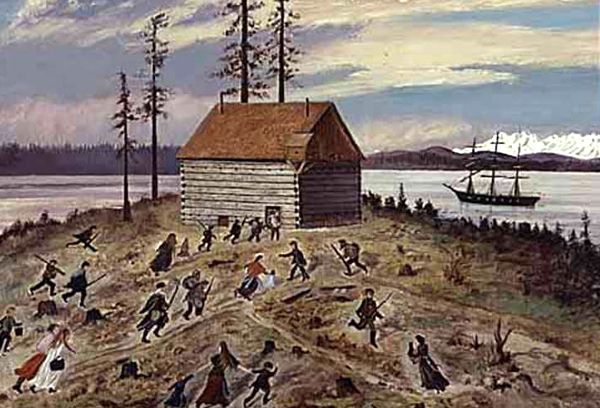
Battle of Seattle by Emily Inez Denny.
January 26, 1856 – Battle of Seattle – Native Americans attacked Seattle, Washington, as part of the Yakima War. The attackers are driven off by artillery fire and by Marines from the U.S. Navy.
February 1856 – Tintic War – A short series of skirmishes occurred in the Tintic and Cedar Valleys of Utah after the conclusion of the Walker War.
January-May,1858 – Antelope Hills Expedition – A campaign by Texas Rangers and members of allied tribes against the Comanche and Kiowa in Texas and Oklahoma.
1858 – Coeur d’Alene War – Also known as the Spokane-Coeur d’Alene-Palouse War, this second phase of the Yakima War was a series of encounters between the Coeur d’Alene, Spokane, Palouse, and Northern Paiute tribes and U.S. forces in Washington and Idaho.
September 1, 1858 – Battle of Four Lakes – Also known as the Battle of Spokane Plains, this conflict was part of the Coeur d’Alene War. A force of 600 military men was sent to subdue the tribes, defeating the Indians.
1859 – Mendocino War – A conflict between settlers and Native Americans in California. Several hundred Indians were killed.
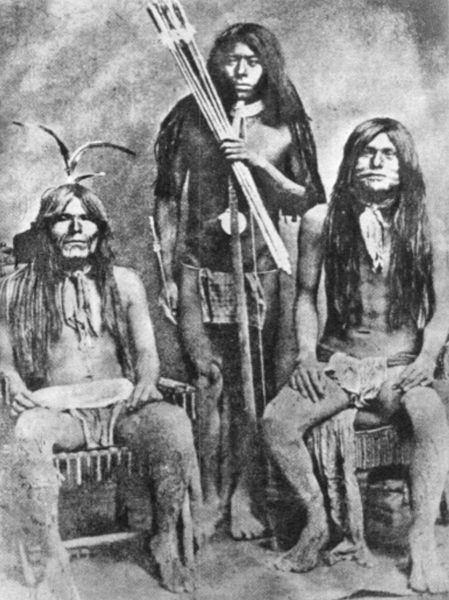
Paiute Indians.
1860 – Paiute War – Also known as the Pyramid Lake War, the conflict was fought between the Northern Paiute, along with some Shoshone and Bannock, and white settlers in present-day Nevada. The war culminated in two pitched battles in which approximately 80 whites were killed. Minor raids and skirmishes continued until a ceasefire was agreed upon in August 1860.
February 26, 1860 – Gunther Island Massacre – Also known as the Humboldt Bay Massacre, local white settlers, without any apparent provocation, attacked four Indian villages, slaying 188 Wiyot Indians, primarily women and children, in Humboldt County, California.
September 9-10, 1860 – Utter-Van Ornum Massacre – In 1860, one of the worst massacres along the Oregon Trail took place in Idaho. No other Oregon Trail wagon train suffered greater losses than the Utter-Van Ornum wagon train of 1860.
December 18, 1860 – Battle of Pease River – Battle between Comanche Indians under Peta Nocona and a detachment of Texas Rangers, resulting in the slaughter of the Indians, including women, when the Rangers caught the camp totally by surprise.
1860-1865 – California Indian Wars – Numerous battles and skirmishes against Hupa, Wiyot, Yurok, Tolowa, Nomlaki, Chimariko, Tsnungwe, Whilkut, Karuk, Wintun, and others.
1861-1864 – Navajo Wars – Occurring in the Arizona and New Mexico Territories, the wars ended with the Long Walk of the Navajo.
1861-1900 – Apache Attacks – In New Mexico, Arizona, and Texas, numerous Apache bands rejected reservation life and, under Geronimo, Cochise, and others, staged hundreds of attacks on outposts. Geronimo finally surrendered in 1886; others fought on until 1900.
August-September, 1862 – Sioux War of 1862 – Skirmishes in the southwestern quadrant of Minnesota resulted in the deaths of several hundred white settlers. In the largest mass execution in U.S. history, 38 Dakota were hanged. About 1,600 others were sent to a reservation in present-day South Dakota.
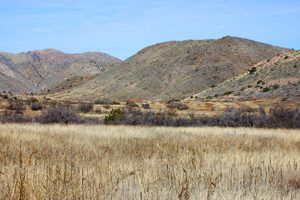
Apache Pass, Fort Bowie, Arizona.
March 1862 – Battle of Apache Pass – A Battle fought in Arizona between Apache warriors and the California Column as it marched from California to New Mexico.
October 24, 1862 – Tonkawa Massacre – Accompanied by Caddo allies, a detachment of irregular Union Indians, mainly Kickapoo, Delaware, and Shawnee, attempts to destroy the Tonkawa tribe in Indian Territory. 150 of 390 Tonkawas survived.
January 29, 1863 – Bear River Massacre – Colonel Patrick Connor leads a regiment in the killing of at least 200 Indian men, women, and children near Preston, Idaho.
April 19, 1863 – Keyesville Massacre – White settlers kill 35 Tehachapi men in Kern County, California.
January 1864 – Battle of Canyon de Chelly – This Navajo citadel was the scene of climactic events in the conquest of the Navajo Indians by the U.S. Army Colonel Christopher C. “Kit” Carson.
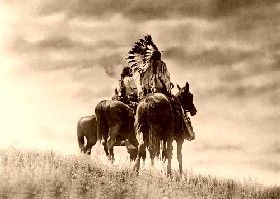
Cheyenne Warriors by Edward S. Curtis.
August-November, 1864 – Cheyenne War of 1864 – In the early 1860s, the Cheyenne and Arapaho tribes suffered terrible conditions on their reservation and, in the summer of 1864, began to retaliate by attacking stagecoaches and settlements along the Oregon Trail.
November 29, 1864 – Sand Creek Massacre – Militiamen kill at least 160 Cheyenne Indians at Sand Creek, Colorado.
1864-1865 – Colorado War – Clashes centered on the Colorado Eastern Plains between the U.S. Army and an alliance consisting mainly of the Cheyenne and Arapaho.
1864-1868 – Snake War – Fought between the U.S. military and the Northern Paiute and Shoshoni (called the Snakes by white settlers) in Oregon, Idaho, and California. The conflict began with the influx of new mines in Idaho, and the Indians rebelled against white encroachment on their lands.
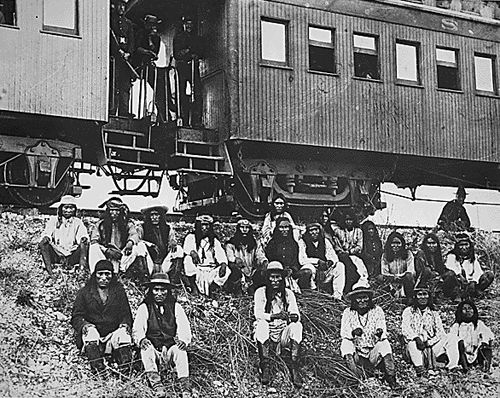
Geronimo and Apache prisoners on the way to Florida.
1864-1886 – Apache Wars – When the Mescalero Apache were placed on a reservation with the Navajo at Fort Sumner, New Mexico, the war began and continued until 1886, when Geronimo surrendered.
July 28, 1864 – Battle of Killdeer Mountain – Fought in western North Dakota, this battle was an outgrowth of the 1862 Sioux discontent in Minnesota. Leading more than 3,000 volunteers, Brigadier General Alfred Sully confronted more than 1,600 Sioux in the North Dakota badlands, representing one of the most significant pitched battles in the history of Plains warfare.
August-November 1864 – Cheyenne War of 1864 – In the early 1860s, the Cheyenne and Arapaho tribes suffered under terrible conditions on their reservation. In August 1864, they began retaliating by attacking stagecoaches and settlements along the Oregon Trail.
November 25-26, 1864 – First Battle of Adobe Walls – Kit Carson led an attack against a Kiowa village in the Texas Panhandle. The next day, the Kiowa, now joined with the Comanche, counter-attacked. Though thousands of Indians attacked the Cavalry, Carson and his men held their position with two howitzers.
February 4-6, 1865 – Battle of Mud Springs – After the Sand Creek Massacre in November 1864 in Colorado, the Sioux, Cheyenne, and Arapaho moved northward, raiding along the way. This skirmish in Nebraska was inconclusive, though the Indians captured some Army horses and a herd of several hundred cattle.
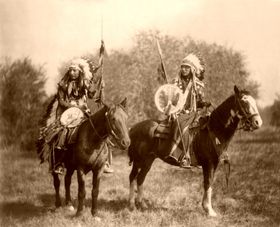
Sioux Indians on horseback, by Heyn, 1899.
February 8-9, 1865 – Following the Battle of Mud Springs, the Sioux, Cheyenne, and Arapaho were pursued by the U.S. Army and engaged in an inconclusive battle on the Platte River in Nebraska.
August-September, 1865 – Powder River Expedition – Also called the Powder River Campaign, Major General Grenville M. Dodge ordered the expedition as a punitive campaign against the Sioux, Cheyenne, and Arapaho for raiding along the Bozeman Trail. Fighting took place in what would become the territories of Wyoming and Montana. It was one of the last Indian War campaigns conducted by U.S. Volunteer soldiers.
1865-1868 – Hualapai or Walapais War – Occurring in Arizona Territory, the Hualapai were disturbed by increased settler traffic upon their lands, which caused several skirmishes over several years.
1865-1872 – Utah’s Black Hawk War – Including an estimated 150 battles between Mormon settlers in central Utah and members of the Ute, Paiute, and Navajo tribes. The conflict led to the abandonment of some settlements and homes, and it postponed Mormon expansion in the region.
1865-1879 – Ute Wars – The Ute nation rose episodically against white settlers in Utah as the Mormons relentlessly took over their lands and exhausted their resources.
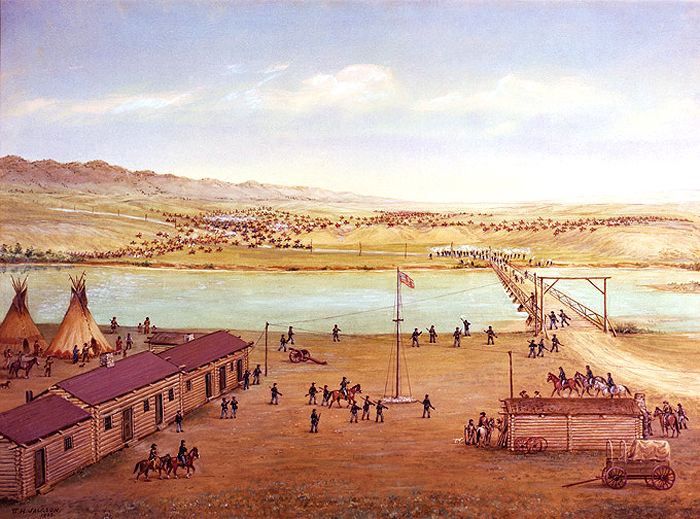
Platte Bridge Station, Casper, Wyoming, by William Henry Jackson.
July 26, 1865 – Battle of Platte Bridge Station – When a wagon train with 25 men under Sergeant Amos Custard’s command was traveling from Sweetwater Station East toward Platte Bridge Station in Wyoming, Sioux and Cheyenne threatened to attack. Lieutenant Caspar Collins and a small detachment of soldiers were sent out from Platte Bridge Station to try to reach the wagon train and escort it to the station. However, upon crossing the bridge to the North, they were overwhelmed by Sioux and Cheyenne Indians. Lieutenant Collins and several of the men were killed.
July 26, 1865 – Battle of Red Buttes – On the same day as the Battle of Platte Bridge Station, a wagon train was attacked by Sioux and Cheyenne Indians. Custer and 21 soldiers were killed.
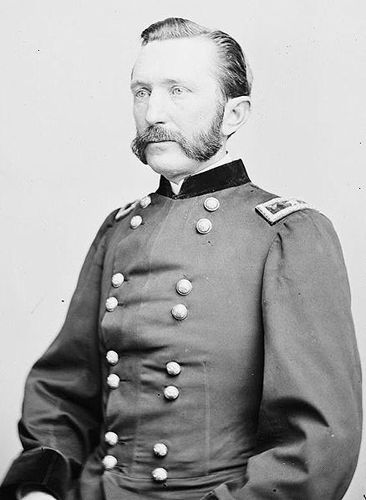
General Patrick Connor.
August 29, 1865 – Battle of Tongue River – The U.S. Cavalry, under the command of General Patrick Connor, attacked Chief Black Bear’s Arapaho outside present-day Ranchester, Wyoming. This attack caused the Arapaho to join forces with the Sioux and Cheyenne.
August 31, 1865 – Sawyers Fight – In retaliation for the attack on Black Bear’s village, Arapaho Indians attacked a surveying expedition on the Bozeman Trail in Wyoming.
1866-1868 – Red Cloud’s War – Lakota Chief Red Cloud conducted the most successful attacks against the U.S. Army during the Indian Wars. By the Treaty of Fort Laramie (1868), the U.S. granted the Lakota a large reservation with no military presence or oversight, no settlements, and no reserved road-building rights. The reservation included the entire Black Hills.
December 21, 1866 – Fetterman Massacre – Fought near Fort Phil Kearny, Wyoming, Sioux and Cheyenne ambushed Captain William J. Fetterman and 80 men, killing every one of them.
1867-1875 – Comanche Campaign – Major General Philip Sheridan, in command of the Department of the Missouri, instituted Winter campaigning in 1868–69 to root out the elusive Indian tribes scattered throughout the border regions of Colorado, Kansas, New Mexico, and Texas.
July 2, 1867 – Kidder Massacre – Cheyenne and Sioux Indians ambushed and killed a 2nd U.S. Cavalry detachment of eleven men and an Indian guide near Beaver Creek in Sherman County, Kansas.
August 1, 1867 – Hayfield Fight – Occurring near Fort C.F. Smith, Montana Territory, the battle pitted a determined group of 31 soldiers and civilians against more than 700 Sioux and Cheyenne warriors.

Wagon Box Fight Site.
August 2, 1867 – Wagon Box Fight – Captain James Powell, with a force of 31 men, survived repeated attacks by more than 1,500 Lakota Sioux warriors under the leadership of Chiefs Red Cloud and Crazy Horse. The soldiers guarding woodcutters near Fort Phil Kearny, Wyoming, took refuge in a corral formed by laying 14 wagons end-to-end in an oval configuration.
August 22, 1867 – Battle of Beaver Creek – Indians attacked the 18th Kansas Volunteer Cavalry in Phillips County, Kansas. Two men were killed, and 12 were seriously wounded.
September 1867 – Battle of Infernal Caverns – Infernal Caverns is the site of an 1867 battle between U.S. armed forces and Paiute, Pit River, and Modoc Indians.
September 17-19, 1868 – Battle of Beecher Island – Northern Cheyenne under war leader Roman Nose fought scouts of the U.S. 9th Cavalry Regiment in a nine-day battle.
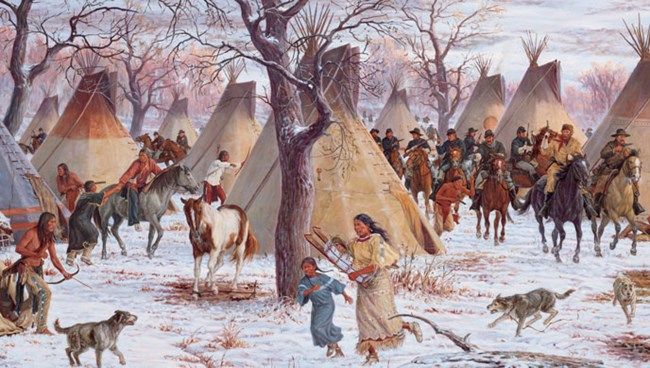
Battle of Washita, Oklahoma, by Steven Lang.
November 27, 1868 – Washita Massacre – Lieutenant Colonel George Custer’s 7th Cavalry attacked the sleeping Cheyenne village of Black Kettle near present-day Cheyenne, Oklahoma. In the battle, 250 men, women, and children were killed.
July 11, 1869 – Battle of Summit Springs – Cheyenne Dog Soldiers led by Tall Bull were defeated by elements of the U.S. Army. Tall Bull died, reportedly killed by Buffalo Bill Cody.
January 23, 1870 – Marias Massacre – White Americans kill 173 Piegans, mainly women, children, and the elderly, in Montana.
April 30, 1871 – Camp Grant Massacre – A mob of angry citizens from Tucson and their Papago Indian mercenaries clubbed, shot, raped, and mutilated 144 Aravaipa Apache people, primarily women and children, near Camp Grant. Their actions were taken in “retaliation” for a Gila Apache raid in which six people had been killed and some livestock stolen.
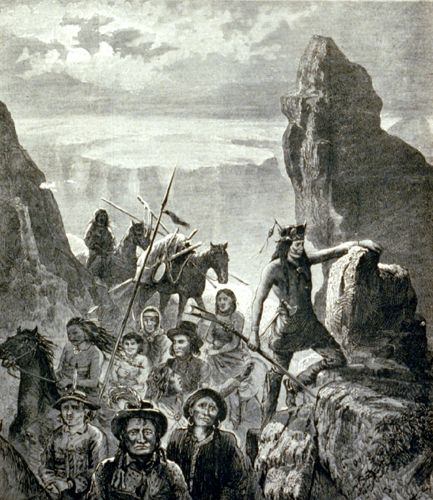
Surrender of the Modoc Indians, 1873, Frank Leslie’s Illustrated Newspaper.
1872-1873 – Modoc War – Fighting in northern California and southern Oregon, Captain Jack and his followers fled from their reservation to the lava beds of Tule Lake, where they held out against soldiers for six months. Major General Edward Canby was killed during a peace conference—the only general to be killed during the Indian Wars. Captain Jack was hanged for the killing.
December 28, 1872 – Salt River Canyon Battle – Also called the Skeleton Cave Battle, the U.S. Army won its most striking victory in the long history of Apache warfare at this site in Arizona. About 75 Indians died, and most of the rest were captured.
March 27, 1873 – Battle of Turret Peak – Fought in south-central Arizona, it was one of the pivotal fights that broke the backs of the Apache and Yavapai in their efforts to resist white encroachment into their lands.
1874-1875 – Red River War – Occurring in northwestern Texas, William T. Sherman led a campaign comprising more than 14 battles against the Arapaho, Comanche, Cheyenne, and Kiowa tribes, culminating in their surrender.
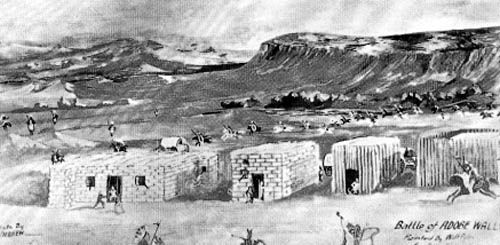
Adobe Walls, Texas.
June 27, 1874 – Second Battle of Adobe Walls – A combined force of some 700 Comanche, Cheyenne, Kiowa, and Arapaho warriors, led by Comanche Chief Quanah Parker and Isa-tai, attacked the buffalo camp at Adobe Walls in the Texas Panhandle. The hunters held the site, and the Indians retreated, a move that soon led to the Red River War.
July 4, 1874 – Bates Battle – In a narrow valley in Hot Springs County, Wyoming, an Arapaho encampment was attacked by U.S. Army forces under Captain Alfred E. Bates. Bates reported his losses were four killed and five or six wounded, and 25 Arapaho were killed and 100 wounded. Other reports indicate the Arapaho suffered as few as ten casualties.
September 28, 1874 – Battle of Palo Duro Canyon – Cheyenne, Comanche, and Kiowa warriors engaged elements of the U.S. 4th Cavalry Regiment led by Colonel Ranald S. Mackenzie in Palo Duro Canyon, Texas.
1876-1877 – Black Hills War – Also known as the Sioux War of 1876, the Lakota, led by Sitting Bull and Crazy Horse, fought the U.S. following repeated violations of the 1868 Treaty of Fort Laramie.
March 1876 – Battle of Powder River – The opening battle of the Black Hills War between the U.S. Army and the Sioux and Cheyenne on the Powder River in Montana.
June 17, 1876 – Battle of Rosebud – The Lakota under Sitting Bull clashed with the U.S. Army column moving to reinforce Custer’s 7th Cavalry.
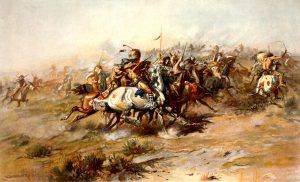
Battle of the Little Bighorn by C.M. Russell.
June 25-26, 1876 – Battle of the Little Bighorn – Sioux and Cheyenne, under the leadership of Sitting Bull and Crazy Horse, defeated the 7th Cavalry under George Armstrong Custer.
July 17, 1876 – Battle at Warbonnet Creek – Three weeks after Custer’s defeat at the Battle of the Little Bighorn, the Fifth U.S. Cavalry skirmished with Cheyenne Indians from the Red Cloud Agency in northwest Nebraska.
September 8, 1876 – Battle of Slim Buttes – Captain Anson Mills’ Third Cavalry troopers attacked the Sioux village of American Horse in South Dakota. American Horse was killed in the ambush.
November 25, 1876 – Dull Knife Fight – After the Battle of the Little Bighorn the previous summer, the U.S. Military began retaliatory campaigns. Colonel Ranald S. Mackenzie’s 4th Cavalry surprised Dull Knife’s Winter camp in Wyoming, killing 25 Indians.
1877 – Nez Perce War – Occurring in Oregon, Idaho, and Montana, the Nez Perce were fighting to keep their home in Wallowa Valley. Chief Joseph retreated from the 1st U.S. Cavalry through Idaho, Yellowstone Park, and Montana after a group of Nez Perce attacked and killed a group of Anglo settlers in early 1877. They surrendered near the border to Nelson Miles’ soldiers.
August 29, 1877 – Battle of the Big Hole – One of a series of engagements between U.S. troops and the fleeing Nez Perce under Chief Joseph in southwestern Montana.
1878 – Bannock War – Elements of the 21st U.S. Infantry, 4th U.S. Artillery, and 1st U.S. Cavalry engaged the natives of southern Idaho, including the Bannock and Paiute, when the tribes threatened rebellion over their land allotments.
1878-1879 – Cheyenne War – A conflict between the United States armed forces and a small group of Cheyenne families.

Squaw’s Den Cave at Punished Woman Fork in Scott County, Kansas.
September 27, 1878 – Battle of Punished Woman Fork – Chiefs Dull Knife and Little Wolf of the Northern Cheyenne led their people in a rebellion and flight from confinement and starvation in Indian Territory to their homelands in the North. The Cheyenne made their final stand in Scott County, Kansas, fighting against the U.S. Cavalry.
September 30, 1878 – Last Cheyenne Raid – Cheyenne ambushed Decatur County, Kansas. A running fight with white settlers occurred. In the end, 17 settlers were killed in the ambush.
1879 – White River War – The war was fought between the Ute Indians and U.S. Army Buffalo Soldiers near the White River, which passes through Colorado and Utah.
January 8, 1879 – Fort Robinson Massacre – Northern Cheyenne under Dull Knife attempt to escape from confinement in Fort Robinson, Nebraska; about fifty survive.
May-August, 1879 – Sheepeater War – On May 1, 1879, three detachments of soldiers pursued the Idaho Western Shoshone throughout central Idaho during the last campaign in the Pacific Northwest.
September 29, 1879 – Meeker Massacre – One of the most violent expressions of Indian resentment toward the reservation system, Ute Indians attacked the White River Indian Agency in Rio Blanca County, Colorado, burning the buildings and killing Indian Agent Nathan C. Meeker and nine employees.
September 29 – October 5, 1879 – Battle of Milk Creek – Following the Meeker Massacre, Ute Indians ambushed a column of 150 troops on the northern edge of the White River Reservation in Moffat County, Colorado.
April 28, 1880 – Alma Massacre – Settlers were killed by Apache led by Victorio at Alma, New Mexico. Likewise, on December 19, 1885, an officer and four enlisted men of the 8th Cavalry Regiment were killed by Apache near Alma, New Mexico.
September 1879 – November 1880 – Ute War – On September 29, 1879, some 200 men, elements of the 4th U.S. Infantry and 5th U.S. Cavalry under the command of Major T.T. Thornburgh, were attacked and besieged in Red Canyon by 300 to 400 Ute warriors. Thornburgh’s group was rescued by forces of the 5th and U.S. 9th Cavalry Regiment in early October, but not before significant loss of life had occurred. The Utes were finally pacified in November 1880.
August 30, 1881 – Battle of Cibecue – When Apache shaman Noch-del-klinne (the prophet) began to teach dances and rites similar to the ghost dance, he was arrested, and fighting erupted along Cibecue Creek, Arizona.
July 17, 1882 – Battle of Big Dry Wash – The battle of Big Dry Wash was the last major fight with hostile Apache in Arizona Territory and marked the end of an era.
September 4, 1886 – Skeleton Canyon – Geronimo and less than 40 Apache surrendered to Brigadier General Nelson Miles at Skeleton Canyon, Arizona, marking the end of the Apache Wars.
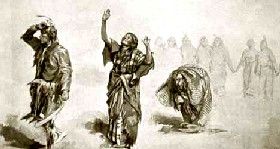
Paiute Ghost Dance.
1890–1891 – Ghost Dance War – An armed conflict between the U.S. government and Native Americans arose from a religious movement known as the Ghost Dance. The conflict included the Wounded Knee Massacre and the Pine Ridge Campaign.
November 1890 – January 1891 – Pine Ridge Campaign – Numerous unresolved grievances led to the last major conflict with the Sioux. A lopsided engagement involving almost half the Regular Army’s infantry and Cavalry led the surviving warriors to lay down their arms and retreat to their reservations in January 1891.
December 29, 1890 – Wounded Knee Massacre – Sitting Bull’s half-brother, Big Foot, and some 200 Sioux were killed by the U.S. 7th Cavalry. Only 14 days before, Sitting Bull had been killed with his son Crow Foot at Standing Rock Agency in a gun battle with a group of Indian police that the American government had sent to arrest him.
October 5, 1898 – Battle of Leech Lake – Considered the last “Indian War,” a Chippewa uprising occurred when one of their tribe members was arrested on Lake Leech in northern Minnesota.
Compiled by Kathy Alexander/Legends of America, updated August 2026.
Also See:
Frontier Skirmishes between the Pioneers & the Indians
Military Campaigns of the Indian Wars
Indian Wars of the Frontier West by Emerson Hough
See Sources.