
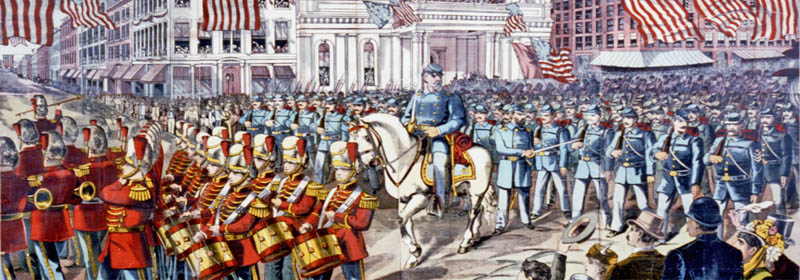
Union soldiers joining the Civil War by Calhoun Printing.
From the American Revolution to the Civil War, Indian Wars, and everything in between, several men, and even a few women, made names for themselves during these historic periods. Many were career soldiers, such as Generals Sherman and Terry; others went on to make names for themselves as explorers, such as Kit Carson and Zebulon Montgomery Pike; sadly, some died in the line of duty, such as Davy Crockett and James Bowie at the Battle of the Alamo, and yet, a few more gained more fame as U.S. Presidents.
Though hundreds of men have fought and continue to risk their lives for our great nation in various American conflicts, this list focuses on some of the most well-known soldiers, sailors, and officers. However, this list is continually updated as new articles are added to Legends of America’s many pages.
A
William “Bloody Bill” Anderson (1839-1864) – best known as one of Quantrill’s Raiders, Anderson fought for the Confederacy during the Civil War.
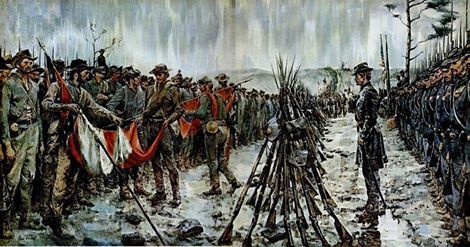
Army of Northern Virginia.
Army of Northern Virginia (1861-1865) – The primary military force of the Confederate States of America in the Eastern Theater of the Civil War, the army most often battled against the Union Army of the Potomac.
Army of the Potomac (1861-1865) – The primary Union fighting force in the Eastern Theater of the Civil War, primarily in Eastern Virginia, Maryland, and Pennsylvania. Its dual mission was to defeat the Confederate Army of Northern Virginia and safeguard Washington, D.C.
Army of the Tennessee (1862-1865) – A Union army in the Western Theater of the Civil War, named for the Tennessee River. When it was first organized in October 1862, it was led by General Ulysses S. Grant.
Benedict Arnold (1741-1801) – An American military officer who served during the American Revolution. He fought with distinction for the American Continental Army and rose to the rank of major general before defecting to the British side of the conflict in 1780.
B
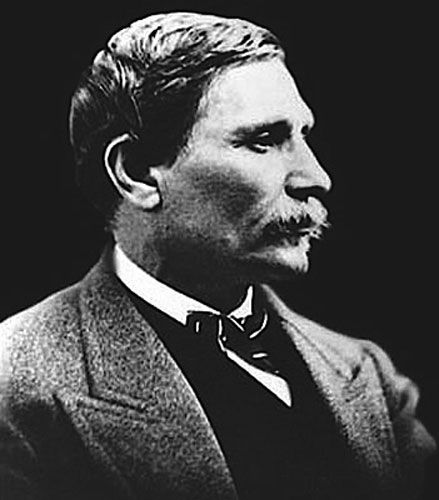
Edward F. Beale.
Edward Fitzgerald “Ned” Beale (1822-1893) – Military Officer, frontiersman, and trailblazer. Edward Beale blazed Beale’s Wagon Road, which the Santa Fe Railroad, Route 66, and I-40 later followed.
General P.G.T. Beauregard (1818-1893) – General Beauregard earned early fame for capturing Fort Sumter, South Carolina, and winning the First Battle of Bull Run, Virginia. After being defeated at Shiloh, Tennessee, other officers found it difficult to work with General Beauregard, who moved through a series of secondary commands.
James Bowie (1796-1836) – An aggressive frontiersman, pioneer, explorer, and commander of the volunteers at the Alamo, where he died.
Braxton Bragg (1817-1876) – A career United States Army officer and then Confederate Army general. He was the principal commander in the Western Theater of the Civil War and later the military adviser to Confederate President Jefferson Davis.
Benjamin Brown (1859-1910) – Buffalo Soldier who fought bandits in the Wham Paymaster Robbery and was awarded the Medal of Honor.
John Brown (1800-1859) – Abolitionist who advocated and practiced armed insurrection to end all slavery. He led the Pottawatomie Massacre in 1856 in Bleeding Kansas and made his name in the unsuccessful raid at Harpers Ferry, West Virginia, in 1859.
Buffalo Soldiers – Though African Americans have fought in various military conflicts since colonial times, they did not receive the nickname “Buffalo Soldiers” until they began fighting Cheyenne warriors in 1867.
C
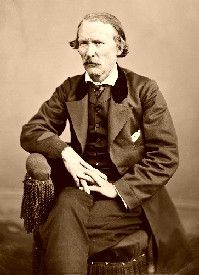
Kit Carson.
Christopher “Kit” Carson (1809-1868) – Carson was a daring and brave explorer, mountain man, trapper, scout, soldier, and buffalo hunter.
Joshua L. Chamberlain (1828–1914) – Chamberlain was a college professor, Civil War General for the Union, Medal of Honor recipient, and the 32nd Governor of Maine.
John M. Chivington (1821-1894) – A hero in the Battle of Glorieta Pass in New Mexico and the infamous Commander of the U.S. Army troops at the Sand Creek Massacre in Colorado, John Chivington was born in Lebanon, Ohio, on January 27, 1821. Growing up, he became a Methodist minister and was appointed to the Payson Circuit in the Illinois Conference, where he served for ten years.
Buffalo Bill Cody (1846-1917) – Army scout, frontiersman, and Old West entertainer.
William Comstock (1842-1868) – A scout on the central plains in the days of the Old West, he was celebrated by contemporaries for his skills but was killed in the line of duty while working as a scout at Fort Wallace, Kansas.
David Crockett (1786-1836) – A frontiersman, explorer, and American folk hero, Crockett represented Tennessee in the U.S. Congress, served in the Texas Revolution, and died at the age of 49 during the Battle of the Alamo.
George Crook (1828-1890) – General Sherman said the most excellent Indian fighter was General Crook, who finished near the bottom of his West Point class.
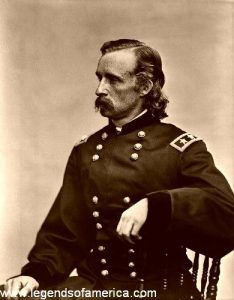
George A. Custer.
George Armstrong Custer – A United States Army officer and cavalry commander in the American Civil War and the Indian Wars. During the Civil War, he developed a strong reputation, and after its conclusion, he was dispatched to the West to fight in the Indian Wars. His disastrous final battle overshadowed his prior achievements. Custer and all the men with him were killed at the Battle of the Little Bighorn in 1876.
D
Jefferson Finis Davis (1808-1889) – An American military officer, statesman, and leader of the Confederacy during the American Civil War, serving as the President of the Confederate States of America for its entire history, from 1861 to 1865.
Grenville Dodge (1831-1916) – Dodge served in the Civil War, obtaining the rank of Major General, and afterward in the Indian campaigns in the West. He later served as a U.S. Congressman and worked as a businessman and railroad executive who helped construct the Transcontinental Railroad.
E
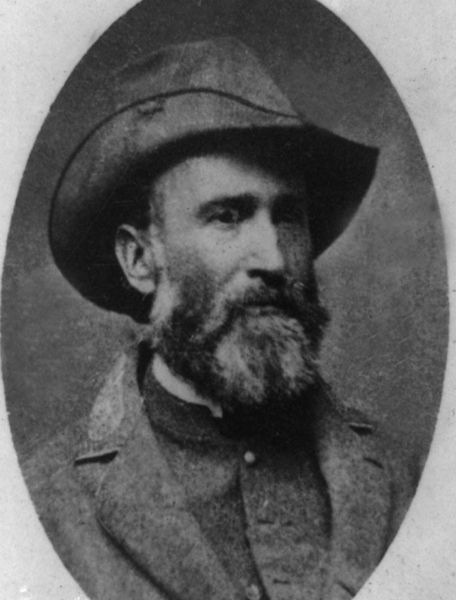
Jubal A. Early.
Jubal A. Early (1816-1894) – A lawyer and Confederate general in the Civil War, he served under Stonewall Jackson and then Robert E. Lee for almost the entire war. He rose to the rank of lieutenant general and commanded an infantry corps in the Army of Northern Virginia. He was the Confederate commander in key battles of the Valley Campaigns of 1864, including a daring raid to the outskirts of Washington, D.C.
Richard Stoddert Ewell (1817-1872) – A career United States Army officer and a Confederate general during the Civil War, he achieved fame as a senior commander under Stonewall Jackson and Robert E. Lee. He fought effectively throughout much of the war, but controversies surrounding his actions clouded his legacy at the Battle of Gettysburg and the Battle of Spotsylvania Courthouse.
Thomas Ewing, Jr (1829-1896) – Military officer, Free State advocate, and first Chief Justice of Kansas.
F
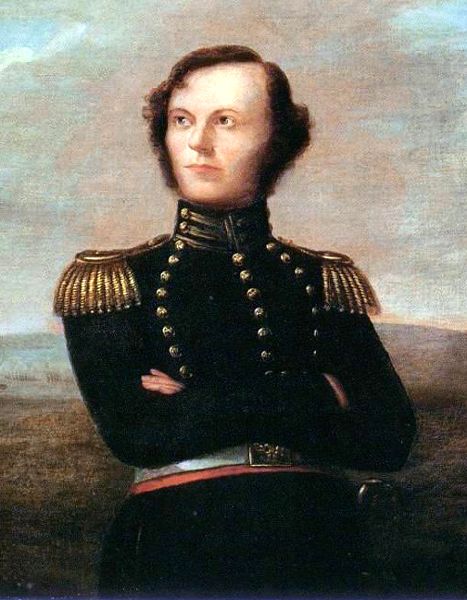
James Walker Fannin.
James Walker Fannin, Jr. (1804-1836) – Fannin was a 19th-century U.S. military figure in the Texas Army and leader during the Texas Revolution of 1835–36.
Nathan Bedford Forrest (1821-1877) – A wealthy plantation owner, Forrest distinguished himself in the Confederate Army during the Civil War. A cavalryman, he saw extensive service in the Western Theater and became one of the most feared Confederate officers in the region. He was a master of mobile warfare and is often remembered for his fast attacks and raids.
John Charles Fremont (1813-1890) – Was an explorer, military officer, and politician who led multiple surveying expeditions through the western territory of the United States.
Johnny Fry (1840-1863) – The first “official” westbound rider of the Pony Express and Union soldier, he was killed during the Civil War.
G
John Brown Gordon (1832-1904) – Serving in the Confederate Army of Northern Virginia, John B. Gordon fought in most of its campaigns and became one of General Robert E. Lee’s most trusted leaders. At Appomattox, John B. Gordon led Confederate forces during the surrender proceedings.
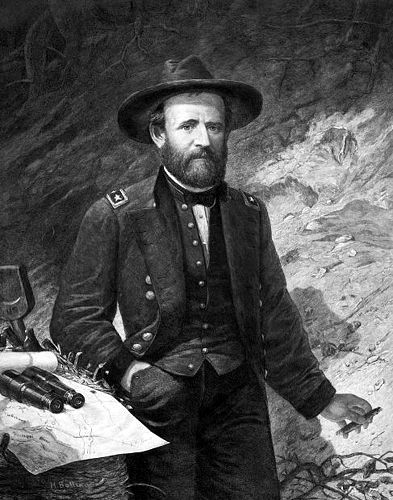
General Ulysses S. Grant in the trenches before the Siege of Vicksburg.
Ulysses S. Grant (1822-1885) – An American General and the eighteenth President of the United States, he achieved international fame as the leading Union general in the Civil War, capturing Vicksburg in 1863 and Richmond in 1865. He accepted the surrender of his Confederate opponent, Robert E. Lee, at Appomattox Court House.
Nathanael Greene (1742-1786) – A major general of the Continental Army in the American Revolutionary War, Greene’s military reputation was second only to General George Washington’s.
Abner “Sharp” Grover (1825?-1869) – Grover was a Chief Scout for the U.S. Army during the Plains Indian campaigns between 1860 and 1878. In 1868, Abner was hired by Lieutenant Frederick H. Beecher to scout the area northwest of Fort Wallace, Kansas, and fought in the Battle of Beecher Island.
John Williams Gunnison (1812-1853) – Gunnison was a military officer and explorer who surveyed and mapped many areas of the American West. Paiute Indians killed him in Utah.
H
Henry W. Halleck (1815-1872) – A loyal defender of the Union, Henry Halleck served first as a senior commander in the Western Theater before becoming the General-in-Chief of Union armies in July 1862.
Ambrose Powell Hill (1825-1965) – A noted Confederate corps commander, Hill rose through the Army of Northern Virginia ranks, seeing action at most of the army’s major battles. He was killed in April 1865 during the final battle for Petersburg, Virginia.
John Bell Hood (1831-1879) – Hood served the Confederacy in the East and West, developing a reputation as an aggressive leader. Wounded several times, Hood led the Army of Tennessee to its destruction in 1864.
Oliver Otis Howard (1830-1909) – A career U.S. Army officer who made peace with Chiricahua Apache leader Cochise and worked to distribute land to African Americans.
Samuel Houston (1793-1863) – A 19th-century statesman, politician, and soldier, Houston was a key figure in the Texas Revolution and served as the first and third President of the Republic of Texas.
J
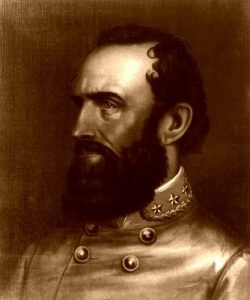
Stonewall Jackson.
Thomas Jonathan “Stonewall” Jackson (1824-1863) – A Confederate general during the Civil War, Jackson was the most revered Confederate commander after General Robert E. Lee.
Charles Ransford Jennison (1834-1884) – A physician, soldier, and anti-slavery Jayhawker.
Albert Sidney Johnston (1803-1862) – The experienced and well-respected Albert Sidney Johnston was the commander of all Confederate army operations in the Western Theater when his army was attacked and nearly destroyed by Union forces led by General Ulysses S. Grant at Shiloh, Tennessee, on April 6, 1862. Johnston was wounded in the battle and did not survive his injuries.
General Joseph E. Johnston – Fighting at First Bull Run, Joseph Johnston led the Confederate army during the 1862 Peninsula Campaign until he was severely wounded at Seven Pines. He later commanded the Department of the West and the Army of Tennessee.
John Paul Jones (1747-1792) – The first well-known naval fighter in the American Revolutionary War.
K
Stephen Watts Kearny (1784-1948) – One of the foremost frontier officers of the U.S. Army, General Stephen Kearny, is remembered for his significant contributions to the Mexican-American War, especially the conquest of California.
Simon Kenton (1755-1836) – A legendary frontiersman and soldier, Kenton saved Daniel Boone’s life, acted as a scout, and participated in the Indian Wars and the War of 1812.
L
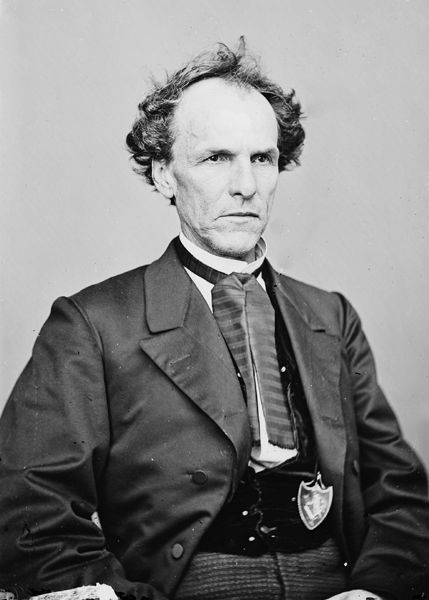
James Lane.
James Henry Lane, aka: “The Grim Chieftain,” Bloody Jim (1814-1866) – The principal leader of anti-slavery forces in Kansas during the Kansas-Missouri Border War and the Civil War.
Lane’s Brigade, aka Kansas Brigade (1861) – Described as little more than a mob of thieves and adventurers, these troops went on a looting and burning rampage in western Missouri in the summer and fall of 1861, in the end, destroying the city of Osceola, Missouri.
Robert E. Lee (1807-1870) – Lee was a career U.S. Army officer and the most celebrated general of the Confederate forces during the Civil War.
Meriwether Lewis (1774-1809) – Explorer, soldier, and public administrator, Lewis was best known for his role as leader of the Corps of Discovery, which explored the Louisiana Purchase territory.
William Henry Lewis (1829-1878) – Army officer who participated in the Civil War and the Indian Wars. He was killed in the Battle of Punished Woman Fork, the last Indian battle in Kansas.
Major Thomas R. Livingston (1820-1863) – Livingston was a Confederate soldier during the Civil War and a participant in the Bleeding Kansas era that preceded the war. He was a wealthy man who was elected captain in the 11th Cavalry Regiment of the Missouri State Guard. He later led a group of Confederate guerrillas called Livingston’s Rangers. He was killed in 1863, and his group disbanded.
James Longstreet (1821–1904) – Known as Old Pete and Lee’s War Horse, Confederate General Longstreet became one of the Civil War’s most controversial figures. Hard-hitting in the attack, he nevertheless sensed the power of the tactical defense in an era of rifled weapons and field fortifications, and preferred to fight from a defensive position. His performance at Gettysburg, Pennsylvania, drew fire from postwar critics who believed that, when General Robert E. Lee rejected his repeated advice to outflank the strong Federal position, Longstreet sulked and thereby cost the South the battle. Yet Lee never directly criticized Longstreet, who stood by him to the end at Appomattox, Virginia. He was one of the most valued and trusted lieutenants to General Lee.
M
Isaiah Mays (1858-1925) – Buffalo Soldier who fought bandits in the Wham Paymaster Robbery and was awarded the Medal of Honor.
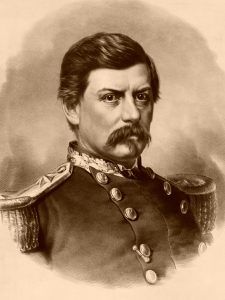
Major General George B. McClellan.
George Brinton McClellan (1826-1885) – Serving in the Mexican-American War, McClellan became a Major General during the Civil War, organized the famous Army of the Potomac, and served briefly as the general-in-chief of the Buffalo Soldier Army.
Thomas Mifflin (1744 – 1800) Thomas Mifflin, a wealthy Philadelphia Quaker merchant, was a member of the Continental Congress, a Revolutionary War officer, and, later, the Governor of Pennsylvania. In 1775, Mifflin was appointed General George Washington’s first aide-de-camp, Quartermaster General of the Continental Army, and given the rank of colonel. He was promoted to Brigadier General in May 1776 and to Major General in February 1777. Resigning these commissions in October 1777, Mifflin became a member of the Pennsylvania Assembly. He later became a member of Congress (1782-1784), President of the Supreme Executive Council of Pennsylvania (1788-1790), and Governor of Pennsylvania (1790-1799) (three terms). In 1795, Fort Mifflin on Mud Island in Philadelphia, Pennsylvania, was officially named after Governor Mifflin.
Nelson Appleton Miles (1839-1925) – A career soldier, Miles served in the Civil War, the Indian Wars, and the Spanish-American War.
David Dawson Mitchell (1806-1861) – David Dawson Mitchell was a fur trader, soldier, and superintendent of Indian Affairs.
Colonel James Montgomery (1814-1871) – A Free-state leader during the Kansas-Missouri Border War and a Colonel in the Union Army during the Civil War.
Brigadier General John Hunt Morgan – One of the Confederacy’s most notorious raiders, Morgan was captured in 1863 after raiding north across the Ohio River. Escaping, he returned to Southern service and was killed in September 1864 at Greeneville, Tennessee.
Colonel John Singleton Mosby – A noted Confederate cavalryman and partisan ranger during the Civil War. Enlisting in the Confederate army, Mosby quickly gained a reputation as a skilled leader and swiftly rose through the ranks. Given command of a partisan ranger unit, John Singleton Mosby became renowned for daring lightning attacks on the Union.
N
Frank Joshua North (1840-1885) – Best known for his organization of a group of Pawnee scouts, North was instrumental in the Indian Wars, protecting the wagon trails and, later, the railroad crews during the construction of the transcontinental railroad.
P
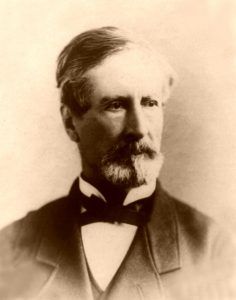
Confederate General John C. Pemberton.
John Clifford Pemberton (1814-1881) – John Clifford Pemberton was a career U.S. Army officer, a Mexican-American, Seminole, and Mormon Wars veteran, and a Confederate General.
Allison J. Pliley (1844-1917) – One of Kansas‘ most distinguished soldiers, Captain Allison J. Pliley was renowned as a skilled scout and cavalry officer during the frontier days.
Major General George Pickett – Commander in the Army of Northern Virginia, he is best remembered for Pickett’s Charge during the Battle of Gettysburg in July 1863. Pickett was defeated at the Battle of Five Forks in the war’s final days.
Zebulon Montgomery Pike (1779-1813) – A soldier and explorer for whom Pikes Peak in Colorado is named, Pike mapped much of the southern portion of the Louisiana Purchase.
Salem Poor (1747–1802) – An African-American slave who purchased his freedom, became a soldier, and rose to fame as a war hero during the American Revolution.
Pottawatomie Rifles (1855) – The Pottawatomie Rifles were a group of about 100 abolitionist Kansas settlers of Franklin and Anderson Counties.
Sterling Price, aka “Old Pap” (1809-1867) – A lawyer, politician, and general from Missouri, he fought in the Mexican-American War and for the Confederate Army during the Civil War.
Q
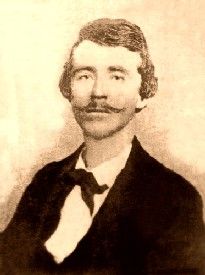
William Quantrill.
William C. Quantrill (1837-1865) – A guerrilla fighter for the Confederate Forces, active in the Kansas-Missouri border war.
R
Marcus A. Reno – (1834-1889) – A career military officer in the Civil War and the Black Hills War against the Lakota Sioux and Northern Cheyenne, Reno is most noted for his role in the Battle of the Little Bighorn.
William S. “Old Rosy” Rosecrans (1819-1898) – An inventor, business executive, diplomat, politician, and United States Army officer. After several prominent battles in the Western Theater, he gained fame as a Union general during the Civil War. However, his military career ended after his disastrous defeat at the Battle of Chickamauga in 1863.
S
William Tecumseh Sherman (1820-1891) – A career military man, Sherman served in the Civil War before becoming an Indian Fighter.
Philip Henry Sheridan (1831-1888) – A career military officer, Sheridan served in the Civil War, becoming a Union General. In 1865, his cavalry pursued General Robert E. Lee and was instrumental in forcing his surrender at Appomattox. Later, he became involved in the Indian Wars, tarnishing his reputation with some historians who have accused him of racism.
Simpson “Jack” Stilwell (1850-1903) – Stillwell was a United States Army Scout, U.S. Deputy Marshal, police judge, and U.S. Commissioner in Oklahoma.
James Ewell Brown “J.E.B.” Stuart (1833-1864) – Better known as “Jeb,” Brown was a soldier from Virginia who served as a Confederate general during the Civil War. He was killed on May 12, 1864, during the Overland Campaign at the Battle of Yellow Tavern.
T
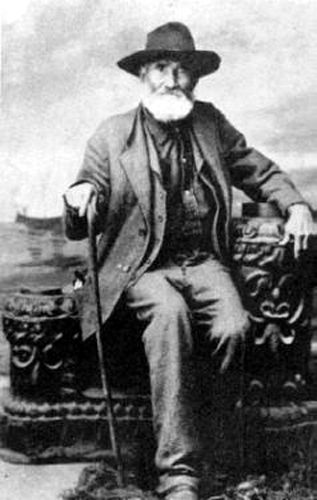
Creed Taylor.
Creed Taylor (1820-1906) – A career soldier and Texas Ranger, Taylor fought in the Texas Revolution, the Mexican-American War, and against Indians during his time as a Ranger.
Zachary Taylor (1784-1850) – A distinguished general and the 12th President of the United States, Taylor served in the War of 1812 and the Mexican-American War, earning the nickname “Old Rough and Ready.” He was elected president in 1848, the first to have never held any previous elected office. He was also the last President to hold slaves while in office. Just two years into his presidency, he died.
Alfred Howe Terry (1827-1890) – Terry was a Union general in the Civil War and the military commander of the Dakota Territory from 1866 to 1869 and again from 1872 to 1886.
William B. Travis (1809-1836) – A lawyer who settled in Texas from Alabama, Travis strongly disliked Mexican rule and fought in the Texas Revolution. He was killed at the Alamo Battle, fighting with James Bowie and Davy Crockett.
V
Earl Van Dorn (1820-1863) – A West Point graduate and career U.S. Army officer, Earl Van Dorn fought with distinction in the Mexican-American War but resigned his commission in 1861 to join his native state of Mississippi in the Confederate cause. He would make the ultimate sacrifice for his beliefs.
W
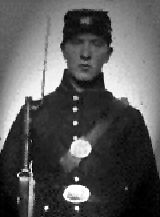
Sarah Rosetta Wakeman, aka Private Lyons Wakeman.
Sarah Rosetta Wakeman, aka Private Lyons Wakeman (1843-1864) – Disguising herself as a man, Wakeman fought in the Civil War for the Union.
Stand Watie (1806-1871) – Also known as Standhope Oowatie, Degataga “Stand Firm,” and Isaac S. Watie, he was a leader of the Cherokee Nation and a brigadier general of the Confederate States Army during the Civil War.
Major General Joseph Wheeler – Serving in the Western Theater of the American Civil War, Joseph Wheeler participated in most of the significant actions in that region. Returning to the U.S. Army after the war, Joseph Wheeler later was a key commander during the Spanish-American War.
Cathay Williams (1842-??) – When Congress passed an act establishing the first all-Black military units, later known as “Buffalo Soldiers,” Cathay Williams became the first and only female Buffalo Soldier.
©Kathy Alexander/Legends of America, updated February 2026.
“They do not know what they say. If it came to a conflict of arms, the war would last at least four years. Northern politicians will not appreciate the determination and pluck of the South, and Southern politicians do not appreciate the North’s numbers, resources, and patient perseverance. Both sides forget that we are all Americans. I foresee that our country will pass through a terrible ordeal, a necessary expiation, perhaps, for our national sins.”
— General Robert E. Lee
Also See:
The Army and Westward Expansion
See Sources.