Summaries: A B C D E-I J-K L-M N O P Q-R S T-V W X-Z

Caddo Indian.
Caddo – The modern Caddo people are the descendants of many tribes that once inhabited Louisiana, southern Arkansas, Oklahoma, and Texas as far West as the Brazos River.
Cahokia – The Cahokia were an Algonquian-speaking tribe of the Illinois Confederacy, often associated with the Tamaroa. At the time of European contact with the Illinois Indians, they were located in what would become the states of Illinois, Iowa, Missouri, and Arkansas. They have since been absorbed into the Peoria, and the Cahokia tribe is now considered extinct.

Cahuilla Woman by Edward S. Curtis, 1905.
Cahuilla – The Cahuilla people are natives of the inland areas of southern California. Uto-Aztecan people arrived in southern California about 2,000-2,500 years ago. They originally ranged over the San Bernardino Basin, the San Jacinto Mountains, the Coachella Valley, and portions of the southern Mojave Desert.
Cajuenche – A Yuman tribe speaking the Cocopa dialect that resided on the Colorado River’s East bank, below the Gila River’s mouth in the late 1700s. Their villages also extended into south-central California. At that time, they were said to have numbered about 3,000 and were bitter enemies of the Cocopa tribe. Later, they disappeared, thought to have been due to constant wars with the Yuma.
Calapooya – A Kalapuya Family division formerly occupied the watershed between the Willamette and Umpqua Rivers in Oregon. The term “Calapooya” has long been used to include all the bands speaking dialects of the Kalapuya language and is synonymous with the family name. This double use of the term, and the scant information about the division, caused much confusion in classifying the bands.
Callam – Their name means “strong people.” The Callam were a Salish tribe living on the South side of Puget Sound, Washington, extending from Port Discovery to the Hoko River. Later, they occupied Chimakum territory and established a village at Port Townsend. A comparatively small number crossed to the south end of Vancouver Island, where they built a large village on Victoria Harbor. They were said to be more closely related to the Songish than any other tribe. By the mid-1800s, many had joined the Puyallup Reservation in Washington.
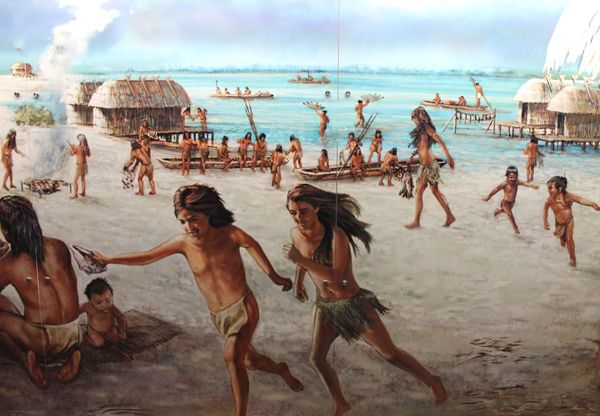
Calusa Tribe of Florida.
Calusa – An important tribe of Florida, they formerly held the Southwest coast from about Tampa Bay to Cape Sable and Cape Florida, together with all the outlying keys, and extending inland to Lake Okeechobee. The tribe is extinct today.
Canarsee – Formerly one of the leading tribes on Long Island, New York, the tribe once occupied most of what is now Kings County and the shores of Jamaica Bay. At the time of the Dutch settlement of New York, they were apparently paying tribute to the Iroquois. They were also at war with the Mohawk, from whom they had asserted their independence. However, after the Dutch settled on the island, the Mohawk attacked them again and nearly exterminated them. They also suffered considerably during the war between the Long Island tribes and the Dutch. The city of Brooklyn was obtained from them. The last known survivor of the tribe died about 1800.
Caparaz – A small tribe or band documented in 1674 as having been located on the Apalachee coast of Florida, along with two other bands called Amacano and Chine. They may have been survivors of the Capachequi encountered by Hernando De Soto in 1540. The three bands are estimated to have numbered 300 people.
Cape Fear Indians – These Native Americans once lived on the Cape Fear River (now Carolina Beach State Park, North Carolina). In 1715, their population was just over 200 people, and they lived in five villages. By the early 19th Century, they were totally gone.
Capinans – A small tribe or band documented in 1699, together with the Biloxi and Pascagoula tribes in Mississippi. The three tribes then numbered 100 families.

Catawba Indians, 1913.
Catawba – The Catawba, also known as Issa, Essa, or Iswa, have lived along the Catawba River for thousands of years. Their ancestral lands spanned the Piedmont region of North and South Carolina and extended into southern Virginia. Today, the Catawba Indian Nation is the only federally recognized Indian tribe in South Carolina.
Cathlacomatup – A Chinookan tribe that, according to Lewis and Clark, lived on the South side of Sauvies Island in present-day Multnomah County, Oregon, in 1806. They were estimated to have about 170 people at the time.
Cathlacumup – A Chinookan tribe formerly living on the West bank of the lower mouth of the Willamette River in Oregon. Lewis and Clark estimated their number at 450 in 1806. They were later mentioned in 1850 as associated with the Namoit and Katlaminimim tribes.
Cathlakaheckit – A Chinookan tribe living at the cascades of the Columbia River in Oregon in 1812, when their number was estimated at 900.
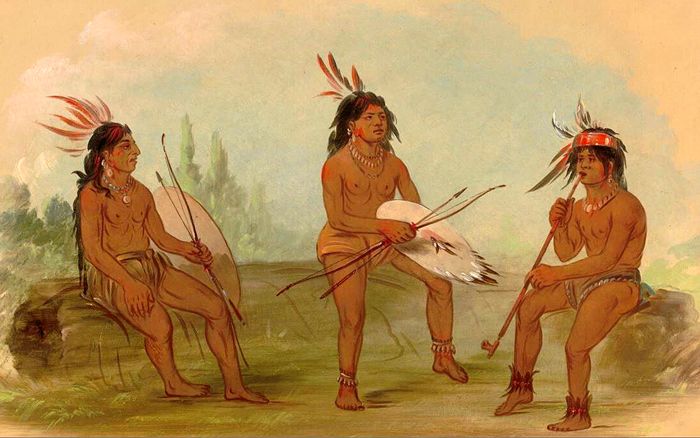
Chinook Men by George Catlin.
Cathlamet – A Chinookan tribe formerly residing on the South bank of the Columbia River near its mouth in Oregon. They adjoined the Clatsop and claimed territory from Tongue Point to the neighborhood of Puget Island. In 1806, Lewis and Clark estimated their population at 300. In 1849, their numbers were reported as 58, but by the early 20th Century, they were extinct.
Cathlanahquiah (‘people of the river, Nagoaix’). A Chinookan tribe living in 1806, according to Lewis and Clark, on the Southwest side of Wappatoo (now Sauvies Island), Multnomah County, Oregon, numbering 400 souls.
Cathlapotle – A Chinookan tribe formerly living on the lower part ofthe Lewis River and the Southwest side ofthe Columbia River in Clarke County, Washington. In 1806, Lewis and Clark estimated their population at 900, living in 14 large wooden houses. Their main village was Nahpooitle.
Cathlathlalas – A Chinookan tribe living on both sides of the Columbia River, just below the Cascades, in Oregon. Their number was estimated at 500 in 1812.
Cathlakaheckit – A Chinookan tribe living near the Columbia River Cascades in Oregon. Their number was estimated at 900 in 1812.
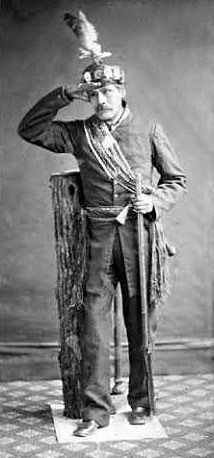
Cayuga Man.
Cayuga – A tribe of the Iroquoian Confederation; they formerly occupied the shores of Cayuga Lake, New York. Its local council was composed of four clan kinship groups, which became the pattern of the Iroquoian Confederation. In 1660, they were estimated to number 1,500, but by 1778, they had been reduced to 1,100. Today, four Cayuga bands primarily live in Canada, New York, and Oklahoma.
Cayuse – Of the Waiilatpuan language stock, the Cayuse tribe was originally located in northeastern Oregon and southeastern Washington.
Chactoo – A band of Indians, possibly related to the Atakapa, documented in 1753 as living in Louisiana. In 1805, they lived on Bayou Boeuf, about ten miles South of Bayou Rapide, toward Opelousas, and numbered 30 men. They were not Choctaw, and in addition to their own language, they also spoke the Mobile trade language.
Chakankni – A Molala band formerly settled in the Cascade Range, northwest of Upper Klamath Lake, on the headwaters of Rogue River in Oregon. By the 1880s, they were rapidly becoming absorbed by the neighboring tribes and had practically given up their own language for that of the Klamath.
Chakchiuma – A tribe speaking a Choctaw–Chickasaw dialect that formerly lived on the Yazoo River in Mississippi. At that time, they were probably the most populous of the Yazoo tribes. They lived in a walled town during Hernando de Soto’s Expedition in 1540-41. In the 18th Century, they were part of the Chickasaw Confederacy and had a reputation for being warlike. Later, they moved to the East side of the Mississippi River with the Choctaw and Chickasaw and settled on the Tallahatchie River.
Chatot – Related to the Choctaw, this band lived South of Fort St. Louis in Mobile Bay, Alabama, in 1709 when French colonizer Sieur de Bienville wanted to establish a settlement there. The Chatot spoke both French and Choctaw. Another band by the same name also lived in the upper Apalachicola River and Chipola River basins in Florida. This group had a Muskogean language, which may have been the same as that of the Pensacola tribe. By 1675, the Spanish had established several missions for the Chatot.
Chaui – A tribe of the Pawnee Confederacy, they held a prominent place in the Council of the Confederacy, their head chiefs outranking all others. In 1833, they ceded to the United States their lands South of the Platte River, Nebraska, and in 1857, all lands on the North side of the river when the Pawnee Reservation on the Loup River in mid-central Nebraska was established. After Nebraska was admitted to the Union, the state government extinguished the tribe’s rights to the land. It soon sold the land and used the proceeds to pay for land in the Indian Territory for a new reservation in 1876. The tribe was then relocated to Oklahoma. In 1892, their land was again taken in severalty, and tribal members became citizens of the United States. Later, in 1964, the Pawnee Nation was paid $7,316,096.55 for undervalued land ceded in the previous Century.
Chaushila – A Yokut tribe that formerly lived in central California, North of the Fresno River, probably on the lower Chowchilla River. Their northern neighbors were of Moquelumnan stock. Extinct today, they are often confused with, but distinct from, the Chowchilla tribe.

Chitimacha Indians by François Bernard, 1870.
Chawasha – The Chawasha people are an Indian tribe of Louisiana who formerly lived on Bayou La Fourche and eastward to the Gulf of Mexico and across the Mississippi River. Today, they are part of the federally recognized Chitimach tribe.
Chehalis – A collective name for several Salishan tribes that lived on the Chehalis River and its affluents and on Grays Harbor in Washington. Today, the Confederated Tribes of the Chehalis Reservation is a federally recognized tribe that includes the Upper and Lower Chehalis, Klallam, Muckleshoot, Nisqually, and Quinault peoples.
Chelamela – A small Kalapuya Family division formerly living on Long Tom Creek, a western tributary of the Willamette River in Oregon. They were included in the 1855 Dayton Treaty. Nothing is known about their customs, and they are now extinct.
Chelan – The Chelan Indians were an interior Salish people who spoke the Wenatchi dialect and originally lived on the outlet of Lake Chelan in Washington. They are now one of the twelve bands or tribes that make up the federally recognized Confederated Tribes of the Colville Reservation.

Chemehuevi Indians of the Colorado River Region in 1861.
Chemehuevi – The Chemehuevi people, a branch of the Southern Paiute tribe, were nomadic residents of the Mojave Desert’s mountains and canyons and the Colorado River shoreline in Arizona and Colorado for thousands of years. The Chemehuevi reservation encompasses approximately 32,000 acres, including 30 miles of the Colorado River. It includes more than 700 members of the Chemehuevi tribe. It is located in Havasu Lake, California.
Chepenafa – A Kalapuya tribe, sometimes regarded as a subdivision of the Lakmiut, formerly lived at St. Mary’s Creek, forks, near Corvallis, Oregon. They were nearly wiped out by disease by the 1830s, and in 1855, the few left were removed to the Grand Ronde Reservation, which still exists today. By 1870, they numbered just 49 people, and in 1910, only 24. The Grande Ronde Reservation, officially known as Marys River Indians, consists of 27 Native American tribes.
Cheraw – The Cheraw were an important tribe in their region, probably of Siouan stock. They formerly ranged East of the Blue Ridge, from about present-day Danville, Virginia, southward to the Cheraw, South Carolina neighborhood. The tribe is extinct today.
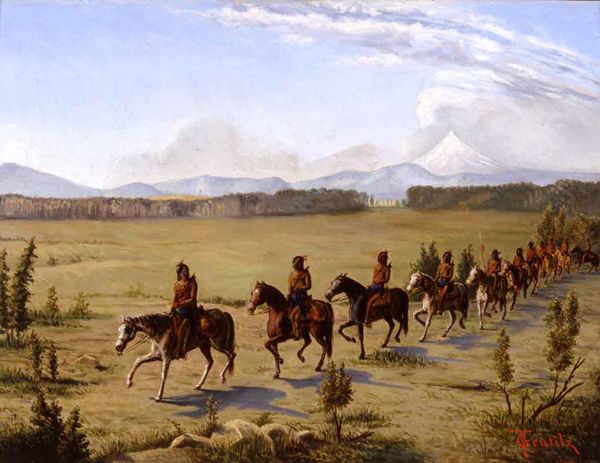
Cherokee horsemen of Texas.
Cherokee – (also called Tsalagi) The Cherokee first lived in the American Southeast, mostly in Tennessee and Georgia. Depending upon natural resources for survival, they built homes from branches and stalks woven together to make frame buildings. The Cherokee lived throughout the Southeast in about 200 villages, each with as many as 60 houses. Hunting game for meat, they were also considered to be excellent farmers. The Cherokee were forcibly deported to Oklahoma along the infamous Trail of Tears.
Chesapeake – Less known than its name suggests, it was designated for the small Powhatan tribe that once resided in Princess Anne and Norfolk Counties of Virginia. In 1608, their principal village was situated on the Lynnhaven River in Princess Anne County, and at that time, they were estimated to have about 350 people. Half a Century later, they had entirely disappeared as distinct people.
Chetco – A group of former Athapascan villages situated on each side of the mouth of and about 14 miles up the Chetco River in Oregon. The people then lived in nine villages and were closely allied with the Tolowa of California, from whom they differed only slightly in language and customs.
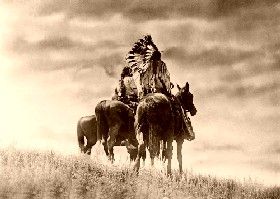
Cheyenne Warriors by Edward S. Curtis
Cheyenne – Originally residents of Minnesota, the Cheyenne ranged West into the Dakotas, South into Wyoming and Colorado, and even as far as Kansas. Before migrating, the Cheyenne lived in permanent villages of earthen lodges and dome-shaped wigwams. However, as they adopted a more migratory lifestyle and followed the buffalo, they lived in teepees.
Chickahominy – A tribe of the Powhatan Confederacy, they formerly lived on the Chickahominy River in Virginia. It was one of the most important tribes in the state, numbering 250 warriors and probably about 900 people. Today, the tribe of approximately 840 people primarily lives in Charles City County, Virginia, near their tribal center.
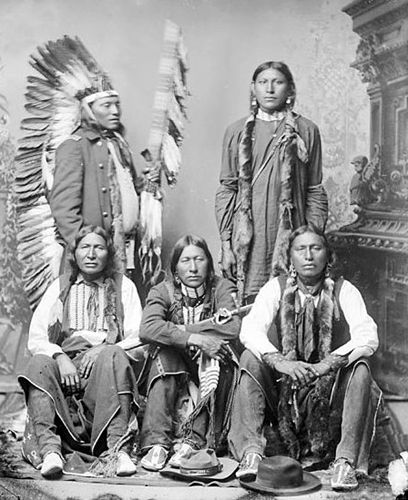
Cherokee Indians
Chickamauga – The Chickamauga was a band of Cherokee who supported the English cause in the American Revolution. They separated from the main Cherokee group and moved far down the Tennessee River. There, under the leadership of Chief Dragging Canoe, they established 11 new settlements on Chickamauga Creek near present-day Chattanooga, Tennessee.
Chickasaw – Although generally the least known of the Five Civilized Tribes (Chickasaw, Cherokee, Choctaw, Creek, Seminole), no other tribe played a more significant role in Britain’s victory over France for control of North America.
Chilliwack – A Salish tribe that lived on the river of the same name in British Columbia. They spoke the Cowichan dialect.
Chilluckittequaw – A Chinookan tribe formerly living on the North side of the Columbia River in Klickitat and Skamania Counties of Washington. In 1806, Lewis and Clark estimated their population at 2,400. A remnant of the tribe lived near the mouth of White Salmon River until 1880, when they were removed to the Cascades, where a few still resided in 1895.
Chilula – A small Athapascan division that occupied the northwest portion of the Valley of Redwood Creek in northern California and Bald Hills, dividing it from Klamath Valley. They were cut off from the immediate coast by the Yurok, who inhabited villages at the mouth of Redwood Creek. Living above them on Redwood Creek was the related Athapascan group known as Whilkut or Xoilkut. Chilula descendants have since been incorporated into the Hupa.
Chimakuan – A linguistic family consisting of two tribes and languages spoken on the Olympic Peninsula in northwestern Washington. Of the two languages, Chemakum is extinct, and Quileute is endangered. The situation of these two tribes and certain traditions indicate that the family may have been more powerful in former times and once occupied the entire region South of the Strait of Juan de Fuca, from which the Clallam and Makah drove them out. This, however, is uncertain. They had a high reputation among their Indian neighbors for warlike qualities but, for the greater part, were on friendly terms with the white settlers.
Chimakum – A Chimakuan tribe that is now extinct. They formerly occupied the peninsula between Hood’s Canal and Port Townsend, Washington. The tribe resembled the Challam in customs but was constantly at war with them and other Salish neighbors, and because of their inferiority in numbers, suffered extremely at their hands. By 1855, they were reduced to just 90 people. They were included in the Point No Point Treaty of 1855 and placed upon the Skokomish reservation. Their population continued to diminish, and by 1890, one report indicated only three individuals spoke the language. However, the language continued to exist until the 1940s.

Sally Noble was the last speaker of thimariko
Chimariko – A small tribe comprising the Chimarikan family, who formerly lived on the Trinity River near the mouth of New River in Northern California. They adjoined the Hupa downstream and the Wintu upstream. In the 2010 census, 60 people claimed Chimariko ancestry, and 19 were full-blooded.
Chine – A small tribe or band associated with two others, Amacano and Caparaz, in a village established on the coast of the Apalachee country called San Luis. Other evidence suggests Chine may have been the name of a Chatot chief. Later, they may have moved into Apalachee country, for a mission list dated 1680 includes a mission called San Pedro de los Chines. This tribe, along with the Amacano and Caparaz, was said to have numbered 300 individuals in 1674.
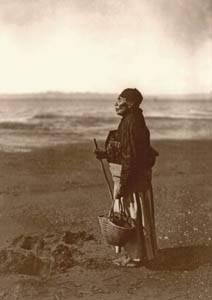
Chinook woman on the beach by Edward S. Curtis, 1910.
Chinookan -The Chinookan peoples include several groups of Native Americans of the Pacific Northwest who shared closely related Chinookan languages and traditionally lived in Washington and Oregon, from the mouth of the Columbia River to The Dalles. The Chinookan tribe was officially recognized by the U.S. Government in 2001, but it was revoked the following year. Tribe members today continue to work to secure recognition of tribal status by the U.S. federal government.

No-Tin, a Chippewa chief, by John T. Bowen, 1842.
Chippewa – Also known as the Ojibway, Ojibwe, and Anishinaabe, the Chippewa tribe is one of the largest and most powerful nations. They have nearly 150 different bands throughout their original homelands in the northern United States, primarily Minnesota, Wisconsin, and Michigan, and southern Canada, especially Ontario, Manitoba, and Saskatchewan.
Chiricahua – The Chiricahua “great mountain” Apache were called such for their former mountain home in Southeast Arizona. They, however, called themselves Aiaha. The most warlike of the Arizona Indians, their raids extended into New Mexico, southern Arizona, and northern Sonora, Mexico. Some of their most noted leaders included Cochise, Victorio, Loco, Chato, Naiche, Bonito, Mangas Coloradas, and Geronimo.
Chitimacha – Living along the Mississippi River delta in south-central Louisiana, the Chitimacha lived in framed houses made of poles covered with leaves or mud, with thatched roofs. Agriculture made up most of their diet. To enhance their appearance, the Chitimacha flattened their male children’s foreheads. Socially, the Chitimacha were divided into matrilineal (descent traced through the mother) and totemic (named for an animal) clans.
Choctaw – This Muskogean tribe, also known as Chakchiuma or Chatot, traces its roots to the Mississippi Valley and some parts of Alabama. The Choctaw were among the first of the “Five Civilized Tribes” to reluctantly accept expulsion from their native lands and move to Oklahoma. See Full Article HERE.
Choula – A small tribe of 40 individuals who lived on the Yazoo River in Mississippi. Their name means “fox” in Chickasaw and Choctaw.
Chowanoc – An Algonquian tribe that formerly lived on the Chowan River in northeast North Carolina, near the junction of the Meherrin and Nottoway Rivers. They were said to have been a sedentary hunter/farmer tribe who spoke the Powhatan language. In 1584-85, when first known, they were the leading tribe in that region. One village, Ohanoak, was said to have 700 warriors. They gradually dwindled and, by 1701, were reduced to a single village on Bennett’s Creek. They joined in the Tuscarora War against white settlers in 1711-12, and at its close, the remnant, estimated at 240, were assigned a small reservation on Bennetts and Catherine Creeks. By 1820, they had been entirely absorbed into the Tuscarora tribe.
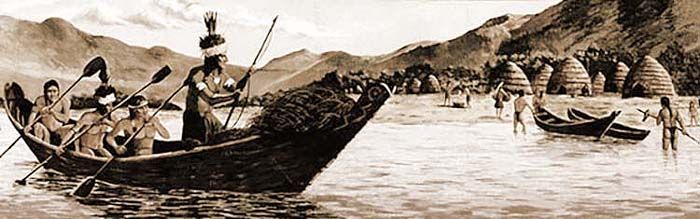
Chumash Indians.
Chumash – The Chumash are a linguistic family that traditionally lived on the coast of southern California. They are also known as Santa Barbara Indians. Today, an estimated 5,000 people identify themselves as Chumash.
Clackama – A Chinookan tribe that formerly occupied several villages on the Clackamas River in Clackamas County, Oregon. In 1806, Lewis and Clark estimated their population at 1,800. They also claimed the country on theEastt side of the Willamette River from a few miles above its mouth, nearly to Oregon City and East as far as the Cascade Mountains. The Dayton Treaty of 1855 ceded this territory to the United States, and the people were later removed to the Grande Ronde Reservation in Oregon, where they were said to number about 60. Their descendants today belong to the Confederated Tribes of the Grand Ronde Community of Oregon.
Clatskanie – Belonging to the Athapascan linguistic stock, they lived on the prairies bordering the Chehalis River, Washington, at the mouth of the Skookumchuck River. However, when the game became scarce, they crossed the Columbia River and occupied the mountains about the Clatskanie River. For a long time, they exacted a toll on all who passed up or down the Columbia River. They were estimated to have numbered 1,600 in 1780, but by 1851, they had been reduced to less than a dozen.
Clatsop – A Chinookan tribe that formerly lived on the South side of the Columbia River and extended up the river as far as Tongue Point and South along the coast to Tillamook Head, Oregon. In 1806, Lewis and Clark estimated their population at about 200. In an 1851 treaty, the Clatsop tribe ceded 90 percent of their land to the U.S. Government. This treaty was one of many in the Northwest that Congress never ratified. Unlike other tribes, the members were not required to move to a reservation; in fact, they were the only tribe in Oregon that was not removed to a reservation. Today, about 200 members have recently organized the Clatsop-Nehalem Confederation. The members are scattered across Oregon and southwestern Washington.

Clowwewalla – This tribe belonged to the Clackamas division of the Chinookan linguistic stock and lived at the falls of the Willamette River in Oregon. Subdivisions may have included the Cushook, Chahcowah, and Nemalquinner. Lewis and Clark estimated the Cushook population at about 650 in 1806. The 1829 epidemic greatly reduced them, and by 1851 they numbered 13. They are now apparently extinct.
Coahuiltecan – A linguistic family that included numerous tribes in southwestern Texas and in Mexico. Most of the so-called Tamaulipecan family in Mexico were likely related to this, and the Karankawan and Tonkawan groups were also connected, albeit more distantly. They were spread across eastern Coahuila, Mexico, and almost all of Texas West of the San Antonio River and Cibolo Creek. The tribes of the Lower Rio Grande may have belonged to a distinct family, but the Coahuiltecans reached the Gulf coast at the mouth of the Nueces River. Northeast of that point, the Karankawan tribes succeeded them. Toward the North, the Coahuiltecans likely extended far before the Apache and Comanche displaced them.
Coaque – A tribe formerly living on Malhado Island, off the coast of Texas. Spanish explorer Álvar Núñez Cabeza de Vaca found two tribes, the Han and the Coaque, living there, each with its own language. They subsisted on a root taken from the shoal water, on fish, and visited the mainland for berries and oysters. The houses of the Coaque were made of mats and were set up on a “mass of oyster shells.” The men wore a piece of cane, half a finger thick, inserted in the lower lip, and another longer piece thrust through one or both nipples. They are said to have spoken a Karankawa dialect. In 1778, approximately 20 families resided between the Colorado and Brazos Rivers, opposite the island of La Culebra. They are extinct today.
Cochimi – A term originally used to designate a Yuman dialect. It was once spoken in Baja California, but has not been spoken since the 1800s, and the Cochimi people no longer exist as a distinct people.
Cochiti – The Cochiti are a Keresan-speaking tribe whose pueblo is located on the West bank of the Rio Grande, about 35 miles Southwest of Santa Fe, New Mexico. Today, the Pueblo de Cochiti contains about 53,779 acres of reservation land and sustains about 1,200 pueblo members.
Cocopa – A division of the Yuman family which, in 1604-05, lived in nine villages on the Colorado River of Arizona. Later, they also extended into the mountains of Lower California and Mexico. They were estimated to number about 3,000 in 1775, but by the turn of the 20th Century, they were reported to have only about 800 people. They were less hostile than the Yuma or the Mohave, who frequently raided their villages but were sufficiently warlike to retaliate when necessary. They resembled the Yuma in arms, dress, manners, and customs. They depended chiefly on corn, melons, pumpkins, and beans for subsistence, which they cultivated, supplemented by native grass seeds, roots, and mesquite beans. The Cocopah Reservation was established in 1917, about 13 miles South of Yuma, Arizona. The reservation comprises approximately 6,500 acres, and about 1,000 tribal members live and work on or near the Reservation today. In 1964, the Tribe founded its first Constitution and established a Tribal Council. For more information, see the Cocopa Indian Tribe.
Colville – A division of the Salish who lived between Kettle Falls and the Spokane River in eastern Washington. Speaking the Wenatchi dialect, they were estimated to number 2,500 when Lewis and Clark visited them in 1806. They are now one of the twelve bands or tribes that make up the federally recognized Confederated Tribes of the Colville Reservation.
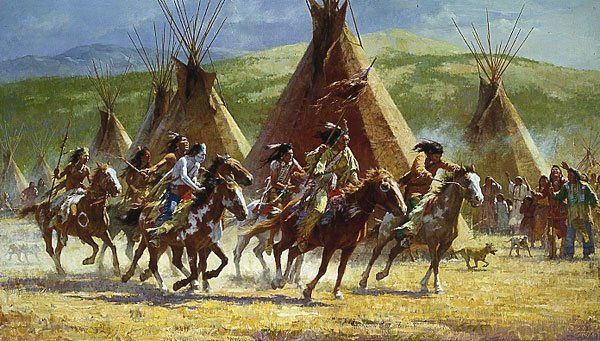
Comanche Indians.
Comanche – A nomadic offshoot of the Eastern Shoshoni, the Comanche lived on the Southern Great Plains of North America during the 1800s-1900s. The word “Comanche” is believed to come from the Spanish “interpretation” of their Ute name, “Kohmahts, “meaning those who are against us or want to fight us.
Conestoga – See Susquehannock
Congaree – A small tribe, supposedly of the Siouan language group, who formerly lived in South Carolina. In 1693, the Cherokee complained that the Shawnee, Catawba, and Congaree took prisoners from among them and sold them as slaves in Charleston. In 1701, they were found on the northeast bank of the Santee River below the junction of the Wateree. However, a 1715 map placed them on the South bank of the Congaree River, opposite the site of Columbia. A fort bearing the tribal name was established near the village in 1718. They were a small tribe, losing many to tribal feuds and even more to Smallpox. The Congaree, like their neighbors, took part in the Yamasi War in 1715; they were so reduced that they were compelled to move upcountry and join the Catawba, with whom they were still living in 1743.
Conoy – An Algonquian tribe related to the Delaware, from whose ancestral stem they apparently sprang. However, their closest relations were with the Nanticoke, with whom they were probably united in late prehistoric times, forming a single tribe. Their language is supposed to have been somewhat closely allied to that spoken in Virginia by the Powhatan. The Conoy were a sedentary hunter-farmer tribe who lived between the Potomac River and the western shore of the Chesapeake Bay in Maryland. In 1670, they were devastated by a Smallpox epidemic. Most were forced to confederate with other tribes because of white settlement. Their descendants today number about 200 and belong to the Maryland Indian Heritage Society, Piscataway Conoy Confederacy, and the Piscataway Indian Nation.
Coos – When first encountered, there were 40-50 villages in the Coos tribe situated around the Coos Bay and North Bend area of Oregon. Most of them were hunters, fishermen, and gatherers. Today, they are one of the three Confederated Tribes of Coos, Lower Umpqua, and Siuslaw Indians living on the Pacific coast of Southwest Oregon. The Coos language is nearly extinct.
Copalis – Belonging to the coastal division of the Salishan linguistic family, they lived on the Copalis River and the Pacific Coast between the mouth of Joe Creek and Grays Harbor of Washington. Lewis and Clark estimated that they numbered about 200 in 1805. Though their name has been perpetuated in the Copalis River and the Copalis Beach, the tribe itself is long gone.
Coree – Possibly Algonquian, the Coree formerly occupied the Neuse River peninsula in Carteret and Craven Counties, North Carolina. They were described early on as bloody and barbarous people and, by 1696, were greatly reduced in a war with another tribe. In 1701, they lived in two villages with a population of about 125. However, they engaged in the Tuscarora War of 1711. In 1715, the remnants of the Coree and Machapunga were assigned a tract on Mattamuskeet Lake in North Carolina, where they lived in one village until they became extinct.
Costanoan – See Ohlone.
Coushatta, aka Koasati – A Muscogean tribe of the southern United States. Along with other Muscogean-speaking tribes, the Creek, Hitchiti, and Alabama formed the Creek Confederacy. The Coushatta were traditionally agriculturalists, growing maize and other food crops and supplementing their diet by hunting game. They are also known for their basketry skills. In the 20th Century, they began cultivating rice and raising crawfish on tribal-owned farms. Today, they live primarily in Allen Parish, Louisiana, and some share a reservation near Livingston, Texas, with the Alabama tribe.
Cowichan – One of the principal dialectic groups of the coastal division of the Salishan linguistic stock. They were closely connected with the Salishan Indians, who occupied the Fraser River valley from its mouth nearly to Spuzzum, British Columbia. They lived primarily on the Southeast coast of Vancouver Island, between Nanoose Bay and Saanich Inlet, in Canada.

Cowlitz Indian with baskets.
Cowlitz – Their language belongs to the Salishan family of languages among Northwest Coast Indigenous peoples. The Cowlitz were federally acknowledged in February 2000 and reaffirmed in 2002. The 152-acre Cowlitz Reservation was established in 2010 near Ridgefield, in Clark County, Washington.
Cree – One of the largest Native groups in North America, the name “Cree” comes from “Kristineaux,” or “Kri” for short, a name given by French fur traders. The Cree are an Indigenous people from Manitoba, Canada; however, one branch moved Southwest and adopted a buffalo culture. This group is referred to as the Plains Cree. Although warlike, the Cree were friendly to fur traders, and their history closely follows that of the Hudson’s Bay and North West fur companies.

Me-Na-Wa. A Creek Warrior, by McKenney and Hall, 1837.
Creek – Also called the Muskogee, comprised several separate tribes that occupied Georgia and Alabama in the American Colonial Period. It is believed that Creek culture originated as a way to protect against larger, conquering Indian tribes in the region.
Croatan – The designation in North Carolina for a people of mixed Indian and white blood found in the state’s coastal areas. For many years, they were classed with the free blacks but steadily refused to accept such classification, claiming to be the descendants of the early native tribes and white settlers who had intermarried with them. They may have been a branch of the larger Roanoke tribe or allied with them. Now extinct as a tribe, they were one of the numerous Carolina Algonquian peoples at the time of English encounters in the 16th Century. The Roanoke territory also extended to the mainland, where they had their chief town on the western shore of Croatan Sound.
Crow – In their own language, the Crow tribe of southeastern Montana calls itself Absaroka, or the “bird people.” Early French explorers and voyageurs knew the Crow as the “handsome men” because of their beautifully crafted garments and long, flowing black hair that sometimes reached the ground.
Cuñeil – A Yuman tribe inhabiting the territory between San Diego, southern California, and the Colorado River in the late 18th Century. They were friendly with the Cocopa. Given their habitat and similar names, they may seem identical, but early reports described them as distinct.
Cupeño – Speaking a dialect belonging to the Luiseno-Cahuilla branch of the Shoshonean division of the Uto-Aztecan linguistic stock, they traditionally lived about 50 miles inland and 50 miles North of the modern-day U.S.-Mexico border in the Peninsular Range of Southern California. They were estimated to number about 500 in 1770 and about 150 in 1910. Today, they are part of the Pala Band of Luiseno Mission Indians, Morongo Band of Cahuilla Mission Indians, and Los Coyotes Band of Cahuilla and Cupeño Indians.