
Jump to: Links to Full Articles
Jump to: Outlaw Summaries (name begins with) A B C D E F G H I J K L M N O P Q R S T U V W X Y Z
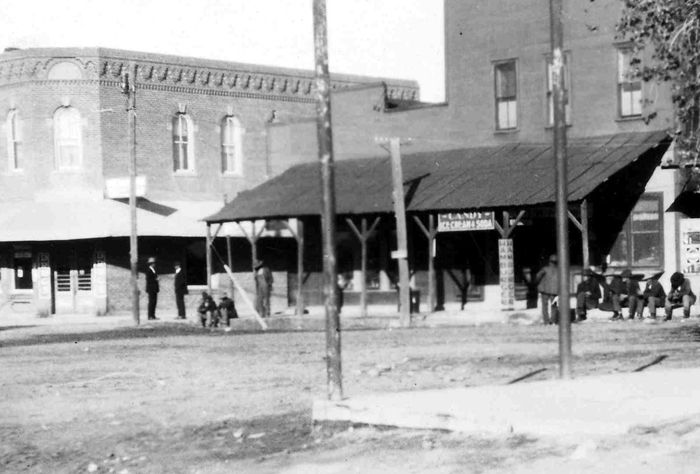
Historic Socorro, New Mexico.
Abran Baca – Outlaw Baca, along with two of his brothers, murdered Anthony Conklin in Socorro, New Mexico, in 1880. He was soon captured. His brother, Antonio, was killed while attempting to escape. After his brother, Onofre, was acquitted and Abran was awaiting his trial, he was lynched by a vigilante committee, obviously unhappy with Onofre’s release.
Antonio Baca – Antonio, along with two of his brothers, murdered Anthony Conklin in Socorro, New Mexico, in 1880. He was soon captured, and while trying to escape the jail on December 29, 1880, he was killed by authorities.
Onofre Baca – Outlaw Baca, along with two of his brothers, murdered a man named Anthony Conklin in Socorro, New Mexico, in 1880. His brother, Antonio, was killed while attempting to escape. Onofre later stood trial but was acquitted in 1881.
Celso Baca – A murderer who beat Jose de la Cruz Sandoval to death in 1884 at Santa Rosa, New Mexico.
Cruz Baca – A murderer, Baca killed W.H. Allen of Hillsboro, New Mexico, in February 1887.
Jose Baca – A multiple offender, Baca was sent to prison for the fifth time on November 19, 1906.
Manuel Baca – Outlaw member of Vicente Silva’s White Caps Gang in the 1890s. His “job” in the gang was to act as the “Judge” who ordered the execution of disloyal gang members.
Patricio Baca (18??-1875) – One of the most notorious horse thieves in northern New Mexico Territory, he was killed in Chimayo in December 1875.
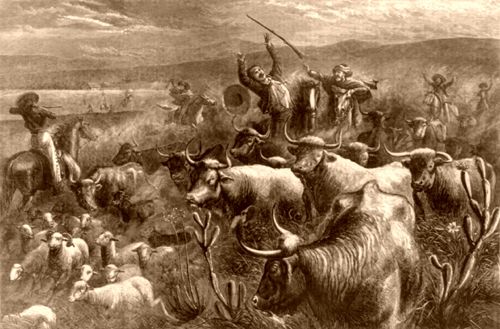
Cattle Rustlers.
John Bailey – A cattle rustler, Bailey was shot and killed by Texas Ranger P.E. Baird in Edward County, Texas, on July 29, 1884.
Alex Baker – Oklahoma outlaw Baker was captured and brought in by U.S. Deputy Marsha Bass Reeves.
Cullen Montgomery Baker (1839-1868) – Baker was a cold-blooded and ruthless killer who left a long trail of bodies across the American Frontier. After the Civil War, he didn’t want to give up the fight and ambushed reconstructionists, killed former slaves, and generally terrorized the states of Texas and Arkansas.
Frank Baker (18?? -1878) – An outlaw member of the Jesse Evans Gang and a lawman, Baker served as a deputy sheriff in Lincoln County, New Mexico. Embroiled in the Lincoln County War, he rode in the posse that killed John Tunstall. He was killed by Billy the Kid on March 10, 1878.
Thurman “Skeeter” Baldwin (1867-19??) – Oklahoma outlaw and member of the Cook Gang. He was captured after a bank robbery.
“Cherokee” Bangs – A Utah cattle rustler, Bangs led a gang in the 1890s that sometimes included Matt Warner.
“Kid” Bannister – Bannister was killed by a saloon proprietor, Tom Cook, in Oklahoma City.
Claude Barbee – A wanted Texas outlaw, Barbee was tracked down to a west Texas ranch by Deputy Hamilton, which erupted into a gunfight, and the lawman was killed. Barbee fled and was captured but escaped. Pat Garrett pursued him but gave the lawman the slip, making it out to California, where he lived under another name and died in the 1940s.
John Barber – After robbing a bank in Cisco, Texas, in 1887, Barber fled to Oklahoma. U.S. Deputy Marshals Captain Gideon White and Barney Connelly later killed him.
John Barbour – Outlaw member of the Whitley-Cornett Gang of Texas in the 1880s. He was later killed in Indian Territory.
Santos Barela – A New Mexico outlaw, Barela was hanged on May 20, 1881, in Mesilla.
Clinton Barkley, aka Bill Bowen (18??-??) – A Texas gunman wanted for murder, he soon found himself amid the Horrell-Higgins Feud.
Wesley Barnett – An outlaw in Indian Territory in the 1880s, he was killed by lawmen in 1889.
Johnny Barnes (18??-1882) – Member of the Clanton Gang in Arizona, Barnes was shot and killed in 1882, some say by Wyatt Earp.
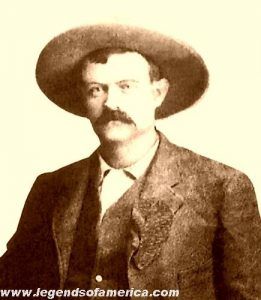
Seaborn Barnes.
Seaborn Barnes, aka “Nubbin’s Colt” (1849-1878) – Barnes joined the Sam Bass Gang in 1878. He was killed with Bass at Round Rock, Texas, in 1878.
Calisto Barrera – A New Mexico outlaw, Barrera murdered John D. Bohn on August 16, 1882, near Sapello, New Mexico.
Will Barry – See William Doolin
Richard “Rattlesnake Dick” Barter, aka Dick Woods (1834-1859) – A California outlaw, Barter made his living stealing horses and robbing mining camps. He was killed in a gunfight with a posse near Auburn, California, at the age of 26.
“Kid” Barton – A New Mexico outlaw, Barton led a stage-robbing gang that operated at Raton Pass. He killed several people and was hanged in the late 1860s.
Jerry Barton – A gunfighter, Barton ran a saloon in Charleston, Arizona. At some point, he killed his partner and, later, a Mexican man in 1881. He was imprisoned for the second killing.
Tucker Basham – Outlaw member of the James Gang.
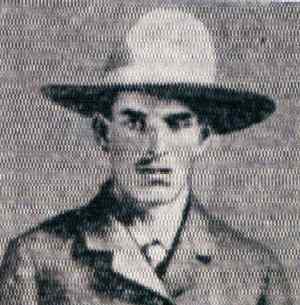
Sam Bass.
Samuel “Sam” Bass (1851-1878) – The leader of the Sam Bass Gang, Bass robbed stages in South Dakota and trains in Texas. He and another gang member, Seaborn Barnes, were killed at Round Rock, Texas, in 1878.
Anne Bassett (1878-1956) – The daughter of ranch owners at Brown’s Hole, near the Wyoming, Colorado, and Utah border, Bassett became a “member” of Butch Cassidy’s Wild Bunch.
Captain Andrew T. Baugh – A Texas outlaw and cattle rustler, Baugh was lynched in 1885 when caught with a herd of stolen cattle.
Melvin Baughan – When 32-year-old Pony Express employee Baughan committed murder, he was hanged on September 18, 1868, in Nemaha County, Kansas.
Edward H.O. “Ole” Beck, aka Edward Welch (18?? -1912) – After meeting Ben Kilpatrick in jail, Beck joined the Wild Bunch. He and Kilpatrick were killed during a train robbery on March 13, 1912.
Frank Beck – An outlaw, Beck helped murder Joe Hickson on October 28, 1884, at Good Hope, New Mexico.
William “Cyclone Bill” Ellison Beck – An outlaw who became a suspect in the robbery of an Army paymaster on May 11, 1889.
Courtney Belmont – A gunman and outlaw, Belmont rode with Matt Zimmerman in the 1880s in Nebraska.
Dick Belmont – A gunman and outlaw, Dick rode with Matt Zimmerman but went to Kansas after Matt was killed. He was later shot and killed.
“Choctaw” Bell – An outlaw member of the Langford Gang of Texas in the early 1880s, Bell was killed by a posse in 1881.
Tom Bell – See Thomas J. Hodges
Santos Benavides – Horsethief and murderer Benavides was lynched in Albuquerque, New Mexico, on December 29, 1880.
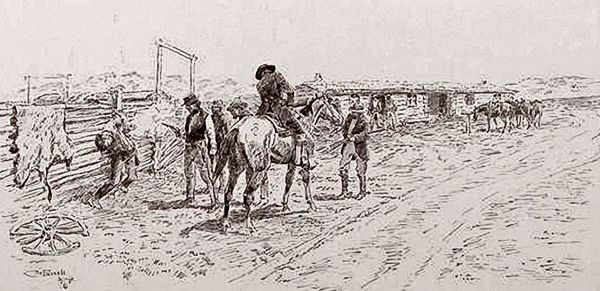
Jack Slade killing Jules Beni, by Charles Russell.
Jules Beni (18?? -1861) – Jules Beni (sometimes referred to as Jules Reni) was a western outlaw who was the corrupt manager of the Central Overland, California & Pike’s Peak Express Company in Old Julesburg, Colorado.
George Bennett – An Outlaw member of the Bill Dalton gang, Bennett was killed in 1893 at Longview, Texas, during a bank robbery.
Charley Bentley – A New Mexico outlaw, Bentley escaped from jail at White Oaks, New Mexico, in March 1881.
James “Jim” F. Berry (1838-1877) – Outlaw member of the Black Hills Bandits, Berry was caught by lawmen after the train robbery at Big Springs, Nebraska.
Benjamin F. Bickerstaff (18?? -1869) – A veteran Confederate guerrilla soldier, Bickerstaff looted Federal supplies throughout Texas. He was shot and killed by the citizens of Alvarado in April 1869.
Charles Bill – Charles Bill was run out of the New Mexico Territory on February 6, 1906.
John Billee (18?? -1890) – An outlaw operating in Indian Territory, Billee murdered W.P. Williams with the help of Thomas Willis. Wanted for robbery and murder, he was captured by U.S. Deputy Marshals Will Ayers, James Wilkerson, and Perry DuVall and taken to Fort Smith, Arkansas. He was hanged on January 16, 1890.
Billy the Kid – See William Bonney
Bil Bivins – A Wyoming, Bivins was jailed for train robbery near Atlantic City in 1877.
Lige Bivins – Bivins was a member of a gang of raiders in Bell, Texas, during the Civil War.
Black Bart – See Charles E. Bolton
H. J. Bassett – A member of Selman’s Scouts following the turmoil of the Lincoln County War in New Mexico. He disappeared sometime after late November 1878.
Tom Bell – See Thomas J. Hodges
Isaac “Ike” Black (18?? -1895) – An outlaw in Kansas and Oklahoma, Black was killed by a posse during a shootout in Oklahoma on August 1, 1895.
Jim Black – A train robber in the New Mexico Territory.
Pope Black – A New Mexico outlaw, Black was shot and killed in the Florida Mountains while resisting arrest in December 1882.
Robert “Arkansaw” Black – When vigilantes caught up with this, Black eluded lynching by challenging them to a fight.
Duncan “Tom” Blackburn (18??-??) – Robbed stagecoaches in 1877 in Deadwood, South Dakota. He disappeared after Boone May killed four bandits.
James Blackwell – A New Mexico outlaw, Blackwell shot and killed W.B. Foster in Raton, New Mexico, on August 8, 1882.
Joe Blain – A New Mexico outlaw, Blain shot and killed Joe Pitman in Luna Valley, New Mexico, on February 18, 1888.
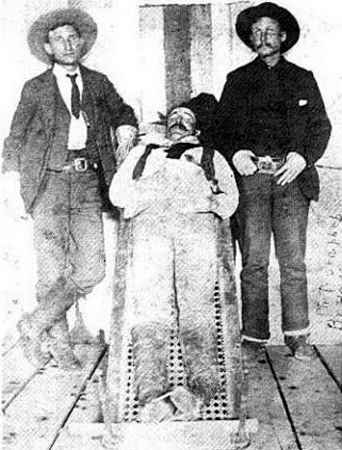
Tulsa Jack Blake Dead.
William “Tulsa Jack” Blake (18?? -1895) – Blake was a cowboy in Kansas during the 1880s, but later, he wandered south into Oklahoma, and by late 1892, he had joined up with Bill Doolin’s Wild Bunch. During the next two years, he would be involved with several train and bank robberies with other gang members. The gang was finally tracked down in Major County, Oklahoma, on April 4, 1895, and U.S. Deputy William Banks killed them.
M. Blevins, aka: F.C. Marklin – After this Texas outlaw was captured and imprisoned, he escaped from the Texas penitentiary in 1884, at the age of twenty.
Kenry Blun – A New Mexico outlaw, Blun shot George C. Quaries on September 20, 1884, at Fairview, New Mexico.
Charley Bobtail – An Oklahoma bootlegger and horse thief, Bobtail was arrested by Heck Thomas.
Dan Bogan – Having committed several crimes in Wyoming, Bogan later made his way to Texas, where he was indicted for murder in 1881.
Gus Bogles (18?? -1888) – Convicted of murdering J.D. Morgan, Bogles was hanged at Fort Smith, Arkansas, on July 6, 1888.
William James Bolt – A New Mexico outlaw, Bolt was hanged in Lincoln, New Mexico, on June 18, 1886.
G.C. Bolton – An Oklahoma cattle rustler, Bolton was captured by Sheriff Lake and Deputy Canton. Convicted, he was sent to prison in Lansing, Kansas.
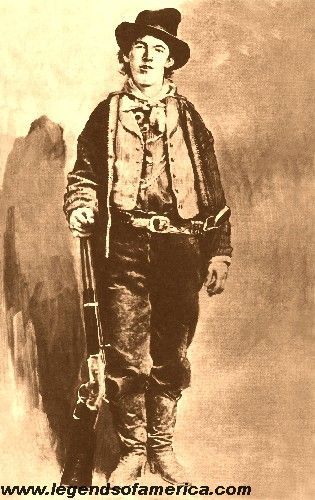
Billy the Kid.
William Bonney, aka Billy the Kid, Henry Antrim, Kid Antrim, William Antrim, Henry McCarty (1859-1881) – Billy the Kid was an outlaw and gunfighter who participated in the Lincoln County War in New Mexico. According to legend, he killed 21 men, but he is generally accepted to have killed between four and nine. Sheriff Pat Garrett killed him on July 14, 1881.
William James “Joe” Boot (18??-??) – Little is known about this “one-hit” outlaw, whose name is remembered in history only because of his stage robbery with the lady bandit Pearl Hart. Though Hart was sentenced to just five years, Boot was sentenced to 30 years in the Yuma Territorial Prison. In 1901, he drove his wagon through the gate and disappeared. He was thought to have fled to Mexico, stayed there, and was never heard from again.
Narciso Borjoques (18?? -1871) – A California killer and robber, Borjoques usually murdered his victims with a shot in the head. He was shot and killed in a saloon brawl in 1871 while on the run for murdering and burning the bodies of a rancher & his family.
Dutch Henry Borne (1849-1921) – The leader of a group of horse and mule thieves who operated in Kansas, Texas, and Indian Territory in the 1870s.
William Boucher – An outlaw and cowboy of Tombstone, Arizona, Boucher was suspected of stage robbery and killed on March 25, 1888, by Sheriff Billy Breakenridge’s posse.
Charles “Charlie” Bowdre (1848-1880) – A friend to Billy the Kid, Charlie fought alongside him in the Lincoln County War. Though not known to have been involved in outlaw activities, his relationship with the gang made him suspect.
Ben Bowlegs, aka Ben Billy Williams – Oklahoma outlaw captured by Bass Reeves.
Charley Bowlegs – Son of Seminole Chief Billy Bowlegs, Charley was wanted for murder. He committed suicide.
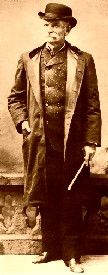
Black Bart, Outlaw.
Charles E. Bowles, aka Black Bart, Charles E. Boles, T.Z. Spalding (1830-1917?) – Best known as Black Bart, this Old West outlaw was noted for his poetic messages left after his robberies. He was a gentleman bandit and one of the most notorious stagecoach robbers to operate in and around Northern California and southern Oregon during the 1870s and 1880s.
Reuben “Rube” H. Boyce – An outlaw in Kimble County, Texas, Boyd led a gang of rustlers. He was arrested for murder on January 24, 1878.
Thomas M. Boyd, Jr. – A New Mexico outlaw, Boyd shot and killed John Foundation in Lake Valley on August 15, 1884.
Robert H. Boyle, aka Homsburg – A New Mexico outlaw, Boyle shot Pat Slavin in Magdalena, New Mexico, on May 28, 1881.
“Sport” Boyle – A gunman and outlaw, Boyle was a member of the Dodge City Gang in Las Vegas, New Mexico.
Adam Brady – An outlaw in Indian Territory, Brady was brought in by U.S. Deputy Marshal Bass Reeves.
Jack Brady – An outlaw in 1892, Brady stole $50,000 from a Wells Fargo stagecoach and was killed by a detective.
Abner Brasfield – At 22, Brasfield killed Arkansas Justice of the Peace Bill Hamm when the two were arguing over land. The fleeing murderer was later captured and served four years in an Arkansas prison. After his release, he served as a peace officer in Eufaula, Oklahoma.

William Whitney Brazelton, outlaw.
William Brazelton (18??-1878) – William Whitney Brazelton, also known as “Brazen Bill,” was a stagecoach robber who operated in Arizona and New Mexico in the days of the Wild West.
Henry Brent – Brent was run out of Bannack, Montana, by vigilantes. He was later killed during a fight with Indians.
Joseph Brinster – Texas outlaw hanged in Isleta, Texas, on July 5, 1883.
Richard “Dick” Broadwell, aka Texas Jack, John Moore (18?? -1892) – A member of the Dalton Gang, Broadwell was killed in the Coffeyville, Kansas raid on October 5, 1892.
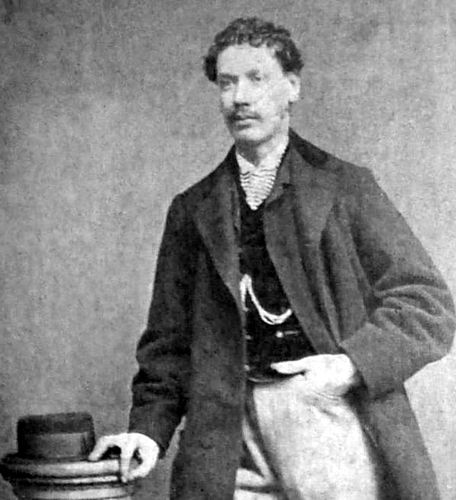
Curly Bill Brocius
William B. “Curly Bill” Brocious (1845-1882) – An outlaw leader of the Clanton Gang of Arizona, Curly Bill was a vicious, drunken gunman, cattle rustler, and murderer. After the Gunfight at the O.K. Corral, Brocious attempted to kill Virgil Earp and succeeded in assassinating Morgan Earp. Wyatt soon caught up with him and killed him on March 24, 1882.
Leonard Brock, aka Calvert Brock, Will Waldrip, Joe Jackson, and Henry Davis (1860-1890) – Born on July 13, 1860, Brock and his brother, W.L., joined the Burrow Gang in 1888 and aided the notorious brothers in several train robberies in Texas and Alabama.
“Bronco Charlie” – A Montana outlaw, Charlie, was lynched by vigilantes near Miles City in the late 1880s.
William “Billy” L. Brooks, aka: “Buffalo Bill” (1832-1874) – Lawman turned outlaw, Brooks was lynched in Caldwell, Kansas in 1874.
Hank Brophy – Cattle rustler in New Mexico.
Ben Brown – Oklahoma member of the Christian Gang.
George W. Brown (18?? -1864) – An alleged outlaw, Brown was said to have been associated with Henry Plummer’s gang of Innocents. On January 4, 1864, he and Erastus “Red” Yager were the first two victims of the newly formed Montana Vigilantes. They were hanged in Laurin, Montana, about 11 miles northwest of Virginia City.
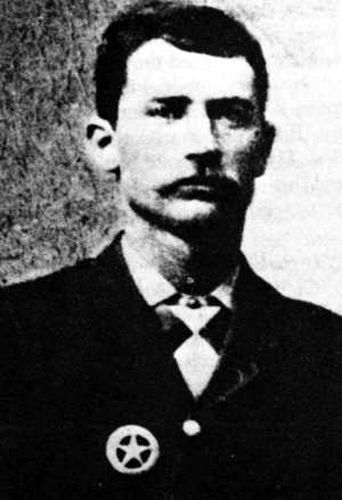
Henry Newton Brown
Henry Newton Brown (1857-1884) – A member of Billy the Kid’s Gang, Brown eventually became a lawman and became the city marshal of Caldwell, Kansas. Later, he turned again and was hanged.
Hoodoo Brown (18??-??) – See Hyman G. Neill
Joseph Brown (18?? -1844) – Along with John McDaniel, he plundered Mexican wagon trains on the Santa Fe Trail and was hanged in St. Louis, Missouri, on August 16, 1844.
Robert C. “Bob” Brown – Brown, along with a gang of thieves, attempted to rob a train at Fairbanks, Arizona, in 1900. He was captured and sent to prison at Yuma. After his release, he disappeared.
“Long-Haired Sam” Brown – A gunman and outlaw in the Nevada mining camps, Brown killed 15 men and was shot and killed on July 7, 1861.
W.E. Brown – Texas Brown was shot and killed by Sheriff Turnbo on September 6, 1887, in Pecos, Texas.
William “Billy” Brown – A gunman, Brown killed his best friend, Robert Tate, on August 19, 1880, near Fort Sill, Oklahoma. Brown claimed that he was trying to defend himself against a man who had threatened his life and fired at a shadowy figure moving toward him, not knowing that it was his friend. Later, he was arrested in Texas and hanged at Fort Smith, Arkansas, on September 9, 1881.
William Browning – A train robber in Illinois in the 1900s, Browning was killed in Texas while robbing a bank.
“Tex” Brunton – With the law on his tail, Brunton fled from Texas to California and Oklahoma.
Charles “Charlie” Bryant, aka Black Face Charlie (18?? -1891) – A member of the Dalton Gang, Bryant was killed in a gunfight with U.S. Deputy Marshal Edward Short, which left both men dead.
Roscoe “Rustling Bob” Bryant – A former John Kinney Gang member, he became a member of Selman’s Scouts following the turmoil of the Lincoln County War in New Mexico. He was shot and killed by other members of Selman’s Scouts in October 1878 near Seven Rivers, New Mexico.
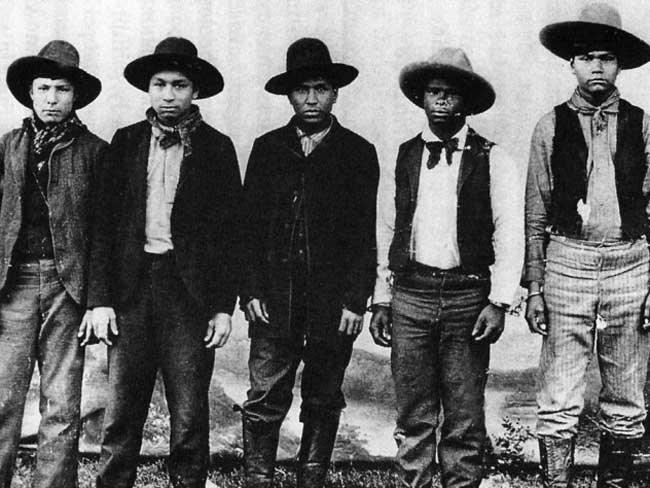
Rufus Buck Gang. Left to right: Maoma July, Sam Sampson, Rufus Buck, Lucky Davis, Lewis Davis.
Rufus Buck (18?? -1896) – A Creek Indian who had served time for minor offenses in the Fort Smith, Arkansas jail, Buck decided to make a name for himself in the summer of 1895. Forming the Buck Gang, he and four other men began to stockpile weapons before going on a ten-day murder and robbery spree in Indian Territory. All five members were hanged at Fort Smith on July 1, 1896.
James “Coal Oil Jimmy” Buckley (18?? -1871) – A stage robber and murderer in northern New Mexico. In 1871, he called Elizabethtown, New Mexico, home and led a series of stagecoach holdups on the road to Cimarron. His career was cut short when the town posted a $3,000 “dead or alive” reward. He was soon shot down for the reward.

Laura Bullion, Ben Kilpatrick’s girlfriend.
Laura Bullion, aka Della Rose, Rose of the Wild Bunch (1876?-19??) – The girlfriend of Ben Kilpatrick, Bullion rode with the Wild Bunch. She was imprisoned in 1901. When she was released, she lived the last years of her life in Memphis, Tennessee
Eugene Bunch, aka Captain J. F. Gerard (18?? -1892) – A schoolteacher who turned to train robbery, Bunch was always a gentleman during his four years of train robberies.
William “Billy” Bunton – Montana stage station manager; Bunton was thought to have been the second-in-command of Henry Plummer’s gang of Innocents. Montana Vigilantes hung him.
William Burbridge – New Mexico Burbridge shot and killed William Heine on April 12, 1881, in San Marcial.
Pete Burleson – Burleson shot and killed Tom Driscoll in Springer, New Mexico, on January 16, 1884. Driscoll died 16 days later.
Jim Burrow (18?? -1888) – Brother of Rube Burrow, Jim was captured and jailed in 1888. He died in jail of natural causes.
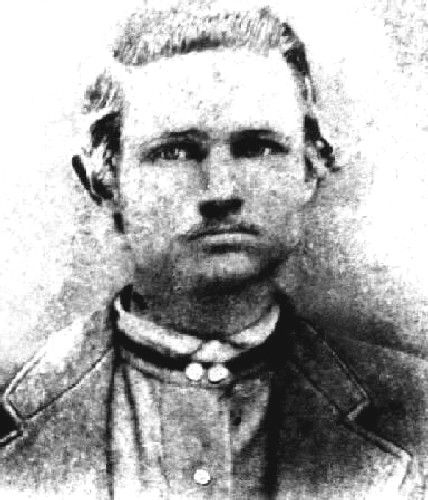
Rube Burrow.
Reuben “Rube” Houston Burrow (1854-1889) – Leader of the Burrows Gang, who operated in Texas, Arkansas, Missouri, and Alabama. He was killed on October 7, 1890.
Sam Burt – Montana Vigilantes lynched Burt on December 17, 1875.
Matthew “Matt” Burts (18??-??) – A lawman and outlaw, Burts rode with Burton Alvord, Billie Stiles, and the Owens brothers. He was murdered in California in 1925.
Sheppard Busby – An ex-deputy marshal, Busby shot and killed U.S. Deputy Marshal Barney Connelly when the lawman tried to arrest him for adultery. Busby was hanged at Fort Smith, Arkansas, on April 27, 1892.
John Buster – New Mexico Buster killed William Holland in Seven Rivers in December 1884.
©Kathy Alexander/Legends of America, updated April 2026.
Jump to: Links to Full Articles
Jump to: Outlaw Summaries (name begins with) A B C D E F G H I J K L M N O P Q R S T U V W X Y Z
Also See:
Outlaw & Scoundrel Photo Galleries
Story of the Outlaw – Study of the Western Desperado
See Sources.