
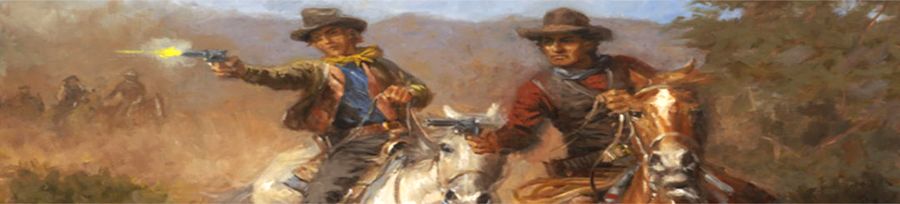
Gunfighters
Outlaw gangs go as far back in history as the beginning of man, with the word “thug” (Thugz) dating to 1200 A.D., when gangs in India pillaged many of the country’s towns. These gangs oftenusedd hand signs, rituals, symbols, and slan, as they clustered together for force and protection.
During the 1800s, Americans were fascinated by gangs and their members, such as the James Gang, Billy the Kid’s Gang, the Doolin-Dalton Gang, the Wild Bunch, and dozens of others that ruled the Wild West.
Though the history of these Old West gangs is often romanticized, we should not forget that they were, in fact, nothing more than thugs.
Outlaws – Produced by Dave Alexander, music by Scott Buckley
Outlaw Gang List:
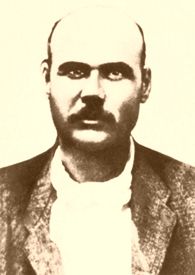
Burton Alvord – Lawman and Outlaw.
Alvord-Stiles Gang (1899-1904) – Led by two ex-lawmen, Burton Alvord and Billy Stiles, this gang of train robbers operated in Arizona Territory at the turn of the Century.
Archer Gang (the 1880s) – Much like the Reno Brothers, who operated two decades earlier, the Archer brothers—Thomas, Mort, John, and Sam —raided Orange and Marion Counties in Indiana for several decades.
Sam Bass Gang (1877-1878) – Led by Sam Bass, this gang robbed trains and banks in Texas. For South Dakota and Nebraska robberies, see the Black Hills Bandits.
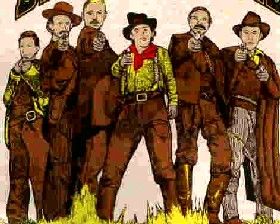
Billy the Kid’s Gang.
Billy the Kid’s Gang, aka The Rustlers (1876-1880) – Led by Billy the Kid, this gang formed out of the conflict of the Lincoln County War in New Mexico.
Black Hills Bandits (1876-1877) – Comprised of Sam Bass, Joel Collins, and four other men, they robbed stagecoaches in the Deadwood, South Dakota area and pulled off the Big Springs train robbery in Nebraska.
Blonger Brothers (1890’s-1922) – Louis H. “The Fixer” Blonger led one of the longest-running confidence rings in the American West.
Bummers Gang (1855-1860) – Operating in Denver, Colorado, the Bummers Gang began “raiding” the town in the mid-1850s.
Burrow Gang (1887-1890) – Reuben “Rube” Burrow, his brother Jim, and other members began robbing trains after Rube’s crops failed in Texas.
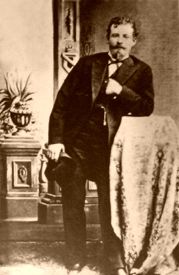
Ike Clanton.
Clanton Gang, aka The Cowboys (1870s) – The Clanton family and their ranch hands were a loosely organized gang of outlaws who operated along the Mexican border of Arizona, stealing cattle, robbing stagecoaches, ambushing teamsters, and committing murder.
Cook Gang (1894) – Led by Bill Cook and Cherokee Bill, these outlaws terrorized the Indian Territory (Oklahoma) in 1894. Ruthless, they shot anyone who got in their way.
Brack Cornett Gang – See Bill Whitley Gang
Dalton Gang (1891-1892) – Led by brothers Bob and Grat Dalton, the Dalton Gang robbed banks and trains throughout Kansas and Oklahoma until they were killed in the Coffeyville, Kansas, Raid.
Daly Gang (1862-1864) – For two years, the Daly Gang terrorized Aurora, Nevada.
Dodge City Gang (1879-1881) – In the summer of 1879, a gang of desperadoes known as the Dodge City Gang masqueraded as lawmen in Las Vegas, New Mexico.
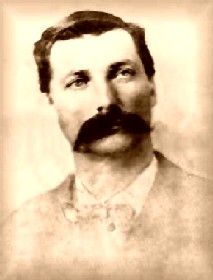
Bill Doolin.
Doolin-Dalton Gang, aka Oklahombres, the Wild Bunch (1892-1895) – Led by Bill Doolin, the gang specialized in robbing banks, stagecoaches, and trains in Arkansas, Oklahoma, and Kansas.
Espinosa Gang – Bitter at the killing of six family members during the Mexican-American War, the Espinosas took their revenge on Colorado residents and travelers, murdering them viciously.
The Five Joaquins (1850-1853) – The Five Joaquins were said to be responsible for most cattle rustling, robberies, and murders committed in the Mother Lode area of the Sierra Nevadas between 1850 and 1853.
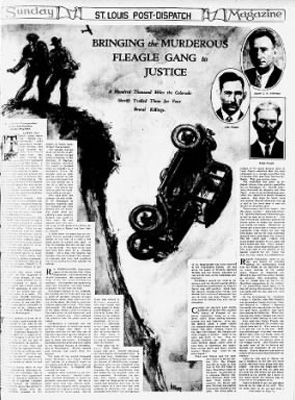
Fleagle Gang in the Newspaper
Fleagle Gang (1920s) – The Fleagle Gang robbed banks and murdered in Kansas, Colorado, and California during the 1920s. They were found, executed, or killed after robbing the First National Bank in Lamar, Colorado.
Flores-Daniel Gang (1856-1857) – Led by Juan Flores and Pancho Daniel, the gang raided southern California, stealing horses and cattle and robbing travelers along the roadways, sometimes leaving their victims dead.
High Fives Gang (1890s) – Also referred to as the Christian Gang, led by “Black Jack” Will Christian and his brother, Bob, from Oklahoma. The gang operated in New Mexico and Arizona after the Christian brothers escaped from an Oklahoma jail in 1895.
Hole-in-the-Wall Gang–Active in the 1880s-1890s in the Hole-in-the-Wall Pass of the Bighorn Mountains in Wyoming, the Hole-in-the-Wall Gang was not one organized gang of outlaws but several separate groups and individuals who made their hideouts in the pass in Johnson County, Wyoming.
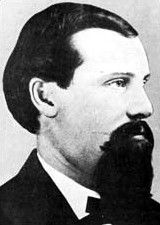
Henry Plummer.
Innocents Gang – The Innocents were an alleged gang of outlaw road agents in Montana Territory who operated during the gold rush of the 1860s, preying on shipments and travelers carrying gold between Bannack and Virginia City.
James Gang (1879-1882) – Three years after the demise of the James-Younger Gang, when the Youngers were arrested in Northfield, Minnesota, Jesse James put together another group to continue with his criminal career. The James Gang lasted from 1879 to 1882, when Bob Ford killed Jesse on April 3, 1882.
James-Younger Gang (1866-1882): After the Civil War, the James and Younger brothers teamed up and robbed banks, trains, and stagecoaches for ten years, becoming the most famous outlaw gang in American history.
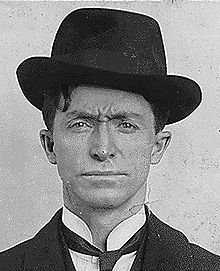
Al Jennings.
Jennings Gang (1897) – This short-lived gang operated for only a few months, making several failed train robbery attempts in Oklahoma in 1897 before all were arrested or killed.
Jesse Evans Gang – The Boys (1872-1879) – Led by Jesse Evans, this gang was actively involved in cattle rustling and armed robbery in New Mexico in the early 1870s.
Ketchum Gang (1896-1899) – Black Jack Ketchum led the Ketchum Gang, which consisted of a revolving list of members and robbed retail businesses, post offices, and trains in New Mexico.
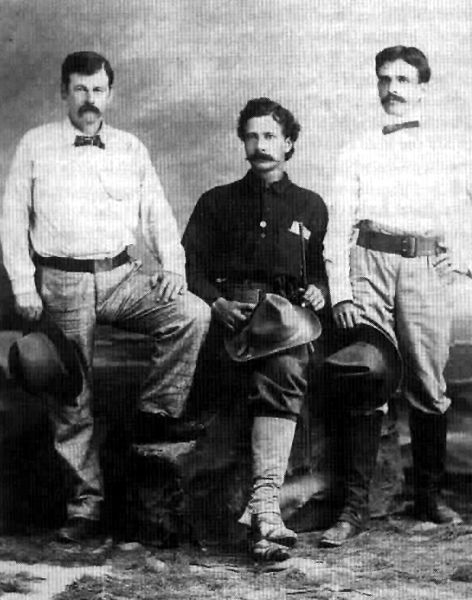
John Kinney at Left.
John Kinney Gang (1870s-1883) – Also known as the Rio Grande Posse, the Kinney Gang were successful cattle rustlers, robbers, and hired gunmen in New Mexico.
Lee Gang (1885) – In the mid-1880s, Cooke County, Texas, on the northern border of the Lone Star State and the Chickasaw Nation just north in Indian Territory, was plagued by a gang of horse and livestock thieves led by James Lee and his brothers, Tom and Pink.
McCanles Gang – Led by David McCanles (or, by some accounts, McCandless), this group of men was allegedly wanted for robbing banks and trains, cattle rustling, murder, and horse theft in the early 1860s.
McCarty Gang (1892-1893) – The McCarty Gang was run by Tom McCarty, who was one of the first to introduce Butch Cassidy to the life of banditry. The gang robbed banks until several members were killed.
Mes Gang – This bunch of primarily Hispanic outlaws and gunmen were a rival of the John Kinney Gang, both operating out of New Mexico.
Musgrove Gang (1867-1868) – A gang of horse thieves and cattle rustlers who operated throughout Southern Wyoming and Northern Colorado in the late 1860s.
Oklahombres – See Doolin-Dalton Gang
Henry Plummer Gang – See the Innocents
Red Jack Gang – Led by “Red Jack” Almer, also known as Jack Averill, this gang preyed on Arizona stagecoaches during the early 1880s, particularly along the San Pedro River.

The Reno Gang of Indiana were train robbers.
Reno Gang (1866-1868) – Four of the five Reno Brothers terrorized the state of Indiana for two years before they were tracked down and hanged by the Southern Indiana Vigilance Committee in 1868.
Reynolds Gang (1863-1864) – A group of Confederate sympathizers that rampaged the South Park, Colorado, area to raise money for the Confederate government.
Rogers Brothers Gang (1890s) – The Rogers Brothers Gang, led by Bob Rogers, terrorized Oklahoma and Kansas in the 1890s. The gang stole horses, rustled cattle, and robbed stores, post offices, banks, and trains.
Rufus Buck Gang (1895-1896) – A gang of ruthless outlaws who preyed on victims in Oklahoma; five of them were hanged at Fort Smith, Arkansas.
Selman’s Scouts (1878) – An outlaw gang in Lincoln County, New Mexico, led by John Selman. For two months, during September and October 1878, the gang members terrorized the county by rustling cattle and horses, killing innocent men and boys, pillaging businesses and homes, and raping women.
Seven Rivers Warriors – (1870s) – Made up mostly of small-time ranchers from the Seven Rivers area of southeastern Lincoln County, New Mexico. They supported the Tunstall/McSween faction against Dolan and Murphy in the Lincoln County War of New Mexico.
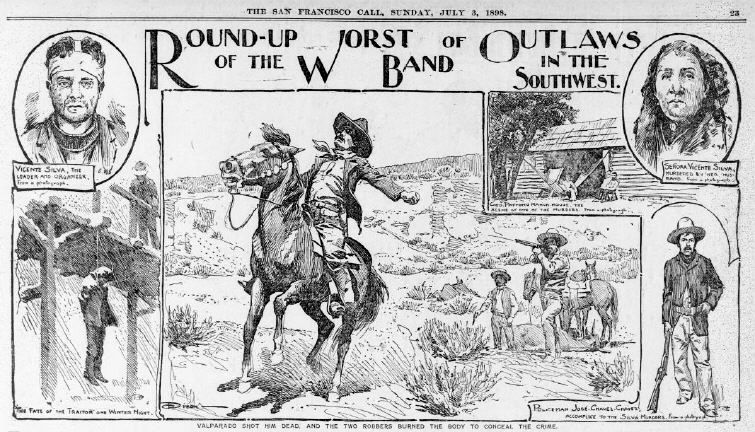
Silva Gang.
Silva’s White Caps, aka Forty Bandits, Society of Bandits (1879-1893) – Silva’s White Caps were a vicious outlaw gang that operated in Las Vegas, New Mexico, from about 1879 to 1893. They were a mafia-like organization led by Vicente Silva.
Smith-Dixon Gang – A Gang of horse thieves and whiskey peddlers operating in Indian Territory (Oklahoma), its members included Dave Smith, a former member of the Belle Starr Gang; his brother-in-law, Leander “Lee” Dixon; and a man teenager of about 17 years-old named William “Billy” Towerly.
Soapy Smith Gang (1879-1898) – Led by Jefferson Randolph “Soapy” Smith, the gang operated in Denver and Creede, Colorado, before moving to Skagway, Alaska, running several con games against unsuspecting citizens.
Stockton Gang (1878-1881) – Led by Ike Stockton, this gang of cattle rustlers terrorized the area of northern New Mexico while posing as “gentleman cowboys” in Durango, Colorado.

Waldo-Sailors Diggings, Oregon in the 1890s.
Triskitt Gang – Known for having conducted several robberies and killings in Northern California, the gang killed 18 people in Sailor’s Diggings, Oregon, and stole $75,000 in gold.
Vasquez Gang (1860s-1875) – Led by Tiburcio Vasquez, the gang committed armed robbery and rustled horses and cattle up and down central and southern California for years.
Bill Whitley or Brack Cornett Gang (1887-1888) – Comprised of about 12 outlaws, the gang was led by Texas desperadoes Bill Whitley and Brack Cornett, robbing Texas banks and trains in the late 1880s.
Wild Bunch (1896-1901) – Led by Butch Cassidy, the Wild Bunch terrorized the states of Colorado, Wyoming, Montana, Idaho, Utah, and Nevada for five years.
Wolcott’s Regulators (1892) – One of the most feared bands of gunfighters and outlaws in Wyoming was Wolcott’s Regulators, who preyed on homesteaders in 1892, frequently leaving dead bodies in their wake.
“I wasn’t the leader of any gang. I was for Billy all the time.”
— Billy the Kid to a Las Vegas reporter after his capture at Stinking Springs.
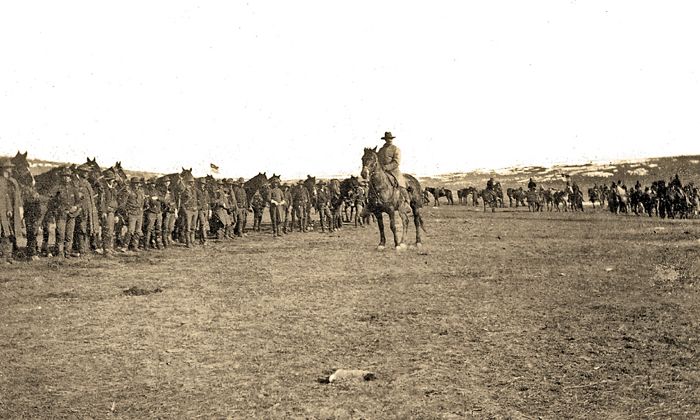
Wolcott’s Regulators surrendering at the T.A. Ranch in Wyoming.
© Kathy Alexander/Legends of America, updated October 2026.
Also See:
See Sources.