
Lawman Summaries (name begins with) A B C D E F G H I J K L M N O P Q R S T U V W X Y Z
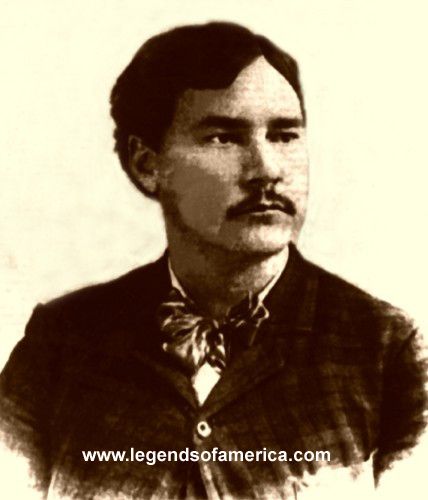
Elfego Baca.
Elfego Baca (1865-1945) – Socorro County, New Mexico lawman, attorney, and U.S. Deputy Marshal.
Mitchell Bader – U.S. Deputy Marshal commissioned in the Western District of Arkansas in 1892 by Marshal Jacob Yoes.
J. Baer – U.S. Deputy Marshal and Court Crier in the Fort Smith, Arkansas Western District.
William “Billy” Bailey, aka Bill Wilson, William Baylor (18??-1871) – A lawman and cowboy, Bailey was working in Newton, Kansas, when he was killed by Mike McCluskie, which prompted the famous Hyde Park Gunfight.
Wood E. Bailey – U.S. Deputy Marshal commissioned in the Western District at Fort Smith, Arkansas, by Marshal Jacob Yoes.
Charles Baird – U.S. Deputy Marshal commissioned in the Central District by Marshal J. J. McAlester in June 1895.
P.C. Baird (18??-1928) – Mason County, Texas Sheriff, and Texas Ranger.
Allen Baker – U.S. Deputy Marshal, commissioned on October 1, 1894, for the Northern District of Indian Territory.
A.R. Baker – A lawman, served as a Texas Ranger under Captain Frank Johnson in 1906.
Benjamin F. Baker – U.S. Deputy Marshal in Arizona Territory, commissioned on April 8, 1882.
Frank Baker (18??-1878) – An outlaw member of the Jesse Evans Gang and a lawman, Baker was involved in the Lincoln County War and was killed by Billy the Kid on March 10, 1878.
Isaac Baker – U.S. Deputy Marshal, commissioned on July 9, 1869, under Marshal William A. Britton of the District Court in Van Buren, Arkansas.
J.H. Baker – A lawman, Baker served in Company C of the Texas Rangers around 1907.
James Baker – U.S. Deputy Marshal commissioned in the Western District of Arkansas in 1897 by Marshal Solomon F. Stahl.
John Baker – U.S. Deputy Marshal commissioned in the Western District at Fort Smith, Arkansas.
William Baker – U.S. Deputy Marshal commissioned in the Western District of Arkansas on October 1, 1894, by Marshal George C. Crump.
William Bales – U.S. Deputy Marshal commissioned in the Southern District Court of Indian Territory at Paris, Texas, in 1894 by Marshal Shelby Williams.
Andrew “Andy” W. Balfour (or Belfour) (18??-1891) – A Deputy Sheriff in Kiowa County, Kansas, Balfour was tracking notorious outlaw Zip Wyatt when he was shot and killed.
William Ball – U.S. Deputy Marshal commissioned in the Western District at Fort Smith, Arkansas, under Marshal Jacob Yoes on April 13, 1892.
Charles Ballard – A deputy marshal in Roswell, New Mexico.
William Ballard – U.S. Deputy Marshal working in Muskogee County, Oklahoma.
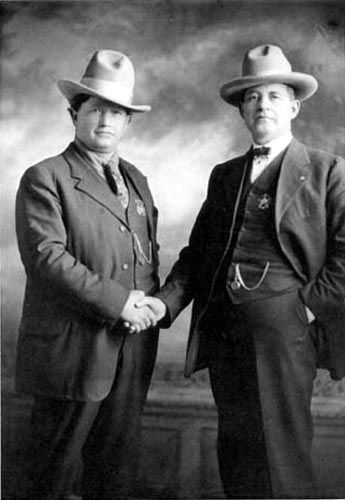
Deputy Bud Ballew and Sheriff Buck Garrett.
David Monticello “Bud” Ballew (1877-1922) – A noted gunfighter and lawman. After killing several men, he was shot down by Wichita Falls, Texas, Police Chief on May 5, 1922.
William “Bill” Dudley Banks – U.S. Deputy Marshal commissioned in Oklahoma Territory and assigned by Marshal Evett Nix to the Cheyenne District on July 15, 1893.
Benjamin Gray Barbee (1871-1943) – U.S. Deputy Marshal in Oklahoma Territory.
W.H. Barbee – U.S. Deputy Marshal commissioned in the Western District at Fort Smith, Arkansas, on December 14, 1891, by Marshal Jacob Yoes. By 1895, Barbee was living in Braggs, Oklahoma. In April 1895, outlaws Sam “Verdigris Kid” McWilliams, George Sanders, and Sam Butler, who were wanted for robbery and murder, rode into town, ordering everyone to put up their hands. The trio of outlaws quickly marched their prisoners to Madden General Store, and when the store clerk panicked and ran into the street, the outlaws shot him down. As their hostages waited, the thieves robbed the general store and exchanged their clothing and boots for new ones. One of the hostages was then sent to bring a horse to the store, exchanging it for one of the thieves’ horses. Fortunately, the store owner was not present but could see the robbery and quickly reported it to two law officers, one of whom was U.S. Deputy Marshal Barbee. When the two officers arrived, they shot the Verdigris Kid, and Deputy Marshal Barbee opened fire on the rest of the gang. George Sanders was also killed, and Sam Butler, though wounded, escaped.
L.E. Barbee – U.S. Deputy Marshal in Arizona Territory, commissioned on February 1, 1882.
Mariano Barela (18??-18??) – Mesilla County, New Mexico Sheriff, and U.S. Marshal.
Old West Lawmen book
Dudley S. Barker – While serving as a Texas Ranger in Company B, he helped break up a gang terrorizing the town of San Saba in 1897.
William “Bill” Barker – U.S. Deputy Marshal commissioned in the District Court at Muskogee, serving under Deputy Marshal Leo Bennett in 1898. Barker rode with Bud Ledbetter, Dave Adams, and Lon Davis to capture the Hughes Gang near Bristow, Oklahoma.
W.L. Barler – Served as a Texas Ranger and as the sheriff and tax collector of Terrell County, Texas,
Frank R. Barling – U.S. Deputy Marshal commissioned in the Western District at Fort Smith, Arkansas, on July 1, 1880, serving under Marshal Valentine Dell.
Jerry Kannady Barling – U.S. Deputy Marshal commissioned in the Western District at Fort Smith, Arkansas, on April 17, 1888, serving under Marshal Jacob Yoes. That same month, he was appointed as court bailiff of the Fort Smith federal court.
Robert F. Barling – U.S. Deputy Marshal commissioned in the Western District at Fort Smith, Arkansas, before 1896, under Marshal John Carrol.
John Barnell – U.S. Deputy Marshal commissioned in the Western District at Fort Smith, Arkansas, by Marshal Jacob Yoes. He rode with U.S. Deputy Marshals.
C. W. Barnett – U.S. Deputy Marshal, commissioned on June 21, 1893, in the Western District at Fort Smith, Arkansas, under Marshal George Crump.
Joe I. Barnett (18??-1882) – A Creek Light Horse policeman, Barnett was part of the National Constitutional Party during what was known as the “Green Peach War,” a civil war in the Creek Nation of Indian Territory in 1882. On July 30, 1882, Barnett was one of a group of Creek Light Horse policemen who tried to arrest a group of “Loyal Creeks” (the opposing party) when the officers were attacked. Both Officer Barnett and the officers’ leader, Captain Sam Scott, were killed.
John W. Barnett – U.S. Deputy Marshal commissioned in the Western District at Fort Smith, Arkansas.
A.S. Barnhill – U.S. Deputy Marshal working in Indian Territory, appointed at Fort Smith, Arkansas, in 1884 under Marshal Thomas Boles.
Charles Barnhill – U.S. Deputy Marshal working in Indian Territory, appointed at Fort Smith, Arkansas, on August 5, 1896.
C. M. Barnes – U.S. Deputy Marshal commissioned in the Western District at Fort Smith, Arkansas, on September 3, 1884, under Marshal Thomas Boles. Barnes served as chief deputy, handling prisoners in the Fort Smith jail. In March of 1886, Deputy Barnes retired from his office as chief deputy.
Edward Barnes – U.S. Deputy Marshal commissioned in the Western District at Fort Smith, Arkansas.
Harry C. Barnes – U.S. Deputy Marshal commissioned in the Western District of Arkansas in 1899 by Marshal Solomon F. Stahl.
Preston Barnes – U.S. Deputy Marshal, commissioned on May 11, 1892, in the Western District at Fort Smith, Arkansas, under Marshal Jacob Yoes.
Race Barnes – U.S. Deputy Marshal, commissioned in the Western District at Fort Smith, Arkansas, by Marshal Jacob Yoes.
W. H. Barrick – U.S. Deputy Marshal, commissioned on October 5, 1889, in the Western District at Fort Smith, Arkansas, under Marshal George Crump.
Adolph P. Barrier (1844-??) – Deputy Sheriff of San Miguel County, New Mexico, during the Lincoln County War. Barrier saved two men’s lives.
J.C. Barringer – Served as a Texas Ranger in 1886 under Captain G.H. Schmidt.
James Barry – U.S. Deputy Marshal commissioned in the Western District of Arkansas in 1899 by Marshal Jacob Yoes.
Dan Bartell – U.S. Deputy Marshal commissioned in Oklahoma Territory in 1894 under Marshal Evett Dumas Nix.
Sam Bartell – U.S. Deputy Marshal under E. D. Nix, Oklahoma Territory.
Sidney A. Bartelson – U.S. Deputy Marshal in Arizona Territory, commissioned on July 1, 1896.
C.C. Bartley – Served as the sheriff of Val Verde County, Texas, in 1909.
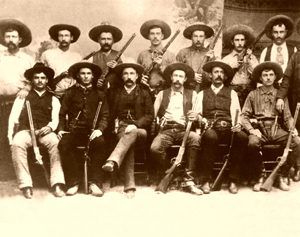
Texas Rangers.
Charles Barton – Served in Company D of the Texas Rangers in 1887.
James R. Barton – Served as Los Angeles County, California Sheriff from 1852-55, and again in 1857. He and three others were killed by the Flores-Daniels Gang when they attempted to arrest them.
J.A. Bascom (1832-1912) – Utah lawman, Provo Chief of Police, Mona town constable.
John W. Bascom (1869-1947) – Utah lawman, Uintah County Deputy Sheriff.
J. E. Basham – U.S. Deputy Marshal commissioned in Oklahoma Territory in 1895, where he served under Marshal Evett Nix.
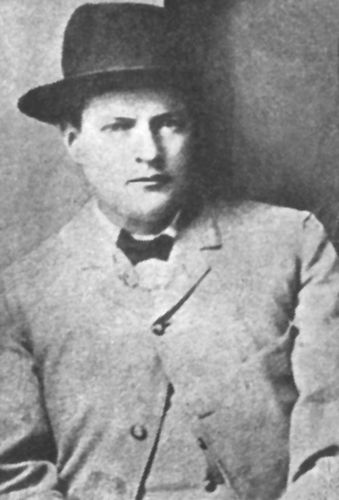
Charlie Bassett, Dodge City Lawman.
Charles “Charlie” C. Bassett (1847-1896) – Ford County Under Sheriff to Bat Masterson and later, Sheriff; Dodge City, Kansas Marshal with Wyatt and James Earp working as deputies.
F. B. Batteries – U.S. Deputy Marshal commissioned in the Western District at Fort Smith, Arkansas.
George Battles – U.S. Deputy Marshal commissioned in the Western District on July 1, 1894, under Marshal George J. Crump.
Henry Baughman – U.S. Deputy Marshal in the Fort Gibson area of Oklahoma.
Wes Bauman – U.S. Deputy Marshal in Indian Territory, working out of Judge Isaac Parker’s courtroom in the 1880s and 1890s.
C.N. Baxter – U.S. Deputy Marshal, commissioned on December 2, 1885, in the Western District at Fort Smith, Arkansas, under Marshal George J. Crump.
J. M. Baxter – U.S. Deputy Marshal who worked as a Fort Smith, Arkansas jailer. He was on duty when Crawford Goldsby, alias Cherokee Bill, tried to escape with a gun smuggled to him by a trustee. There was a gun battle between Bill and the prison guards, in which one of the guards was killed. However, the guards could not disarm Bill, and it was a standoff. Also jailed was outlaw Henry Starr, an acquaintance of Cherokee Bill. Henry offered to disarm Bill if the guards would, in turn, promise not to kill Cherokee Bill afterward. The guards made the promise, and Henry entered the cell, telling his friend he could not escape. Cherokee Bill gave up his revolver, and Starr turned it over to the guards. This incident later helped Henry acquire his freedom.
James M. Baxter – U.S. Deputy Marshal commissioned on December 2, 1885, in the Western District of Arkansas, serving under Marshal John Carroll.
Joseph Baxter – U.S. Deputy Marshal commissioned in the Western District at Fort Smith, Arkansas.
Mitchell Baxter – U.S. Deputy Marshal under Marshal Jacob Yoes, commissioned on June 23, 1892, in the Western District at Fort Smith, Arkansas.
Monta Baxter – U.S. Deputy Marshal under Marshal George J. Crump, commissioned on October 5, 1893, in the Western District at Fort Smith, Arkansas.
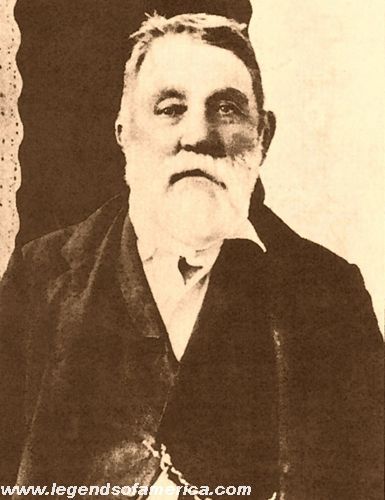
Judge Roy Bean.
Judge Roy Bean (1825-1903) – An eccentric Texas saloon-keeper and Justice of the Peace who called himself “The Law West of the Pecos.”
Wickliff Bean – U.S. Deputy Marshal based in Fort Smith, Arkansas.
Addison M. Beck (18??-1883) – U.S. Deputy Marshal commissioned out of the Fort Smith, Arkansas, court about 1875. In the summer of 1883, he promised his wife that he would resign his commission and take a safer job after one more trip to Indian Territory. He would never return. On September 27, 1883, he rode with posseman Lewis Merritt to find a Cherokee Indian named John Bart, who was wanted for whiskey violations. They came upon him East of Webbers Falls, working in a cornfield with a man named Johnson Jacks. However, Bart had been warned, and as the officers approached, Bart and Jack opened fire, killing Beck with a shot to the head. Lewis Merritt returned fire but was hit in the chest. However, he hit Johnson Jacks twice in the stomach before receiving another shot in the head. While lying almost dead on the ground, Jacks then approached the prone man, shooting him several more times and beating his head in with a gun. Bart then helped the wounded Jacks to a nearby cabin before making his escape. The U.S. Deputy Marshals were then out in full force and later arrested Jacks, who confessed to killing both officers.
Gabe L. Beck – U.S. Deputy Marshal commissioned in the Northern District of Indian Territory assigned to the Muskogee Court in April of 1895.
John Beckwith (1853-1879) – A native of New Mexico, John was born on January 14, 1853, and, along with his older brother Robert, ran a cattle ranch on the East side of the Pecos River in Lincoln County. John and his brother worked as deputies under Sheriff William Brady when a posse was sent to attack rival faction leader John Tunstall’s cattle. When the posse met up with Tunstall, the rancher refused to give over his herd and was killed on February 18, 1878. This event set off the infamous Lincoln County War. Billy the Kid and the rest of the McSween “Regulators,” including John’s brother, Robert, were killed during the climactic battle in Lincoln in 1878. John was shot to death the following year by John Jones.
Robert “Bob” W. Beckwith (1850-1878) – The son of a rancher, Bob was born on October 16, 1850, and grew up working as a rancher with his younger brother John in Lincoln County, New Mexico. By 1876, the pair had established their own ranch. When the bitter rivalry that would spark the Lincoln County War began, the two joined the Dolan–Murphy faction and were deputized. On February 18, 1878, the brothers were with a group of deputies who stopped rancher John Tunstall, killing him and setting off the infamous Lincoln County War. Bob was killed in the climactic battle in Lincoln on July 19, 1878.
Charley Beers – Peace Officer, Oklahoma Territory
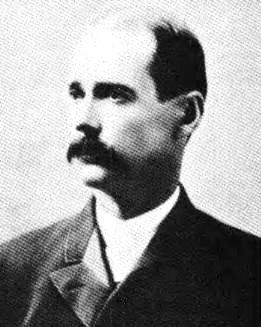
Sheriff Johnny Behan.
Johnny Behan (1845-1912) – The Corrupt Sheriff of Cochise County, Arizona, sided with the Cowboy faction against the Earps in Tombstone.
Bob Bell – Served in Company D of the Texas Rangers in 1887.
Hamilton Butler Bell (1853-1947) – Sheriff of Ford County, Kansas, for three decades following lawman Bat Masterson. He arrested more alleged outlaws with a warrant than any other lawman in the West.
John X. Beidler (1831-1890) – Born in Mount Joy, Pennsylvania, Beidler grew up in Chambersburg. Later, he made his way West, landing in Kansas, where he became friends with the abolitionist John Brown and fought with him during the Kansas-Missouri Border War. He later moved to Montana, where he worked as a U.S. Deputy Marshal and joined the Montana Vigilantes.
James W. Bell, aka Lone Bell (18??-1881) – Bell served as a Texas Ranger in the mid-1870s in San Saba County, Texas. Sometime later, he moved to New Mexico, where he worked as a deputy under Pat Garrett in Lincoln County during the Lincoln County War. When Garrett apprehended Billy the Kid in December 1880, the outlaw was convicted and sent to Lincoln County to await execution. The following year, while Billy was being held at the jail, Bell befriended the young outlaw and was extraordinarily kind and considerate. But for Bell, his consideration wouldn’t matter. In April, while Pat Garrett was away on business, Deputies Bell and Bob Ollinger were left in charge of Billy. Somehow, Billy obtained a smuggled gun, and on April 28, 1881, he killed both deputies and escaped.
Leo E. Bennett – U.S. Marshal in the Western District of Arkansas; Bennett was also a physician who cared for prisoners in the Fort Smith, Arkansas, jail.
Sam Bernard (1880-1964) – Lincoln County, New Mexico, deputy to Pat Garrett.
Morris Berstein – A deputy sheriff in the New Mexico Territory.
Phil Best – A Texas Ranger with Company B in 1889 under Captain Sam McMurry.
George Bingham – A Texas Ranger killed by Jesse Evans.
Steve Birchfield – Served as deputy sheriff of Cochise County, Arizona, under Sheriff C.S. Fly. He rode with the posse that battled the Black Jack Ketchum Gang at Mud Springs.
B.C. Birchfield – U.S. Deputy Marshal commissioned in the Western District at Fort Smith, Arkansas. He was with Deputy Marshal Newton La Force when La Force was killed by outlaws Buss Luckey and Tom Root on December 5, 1894.
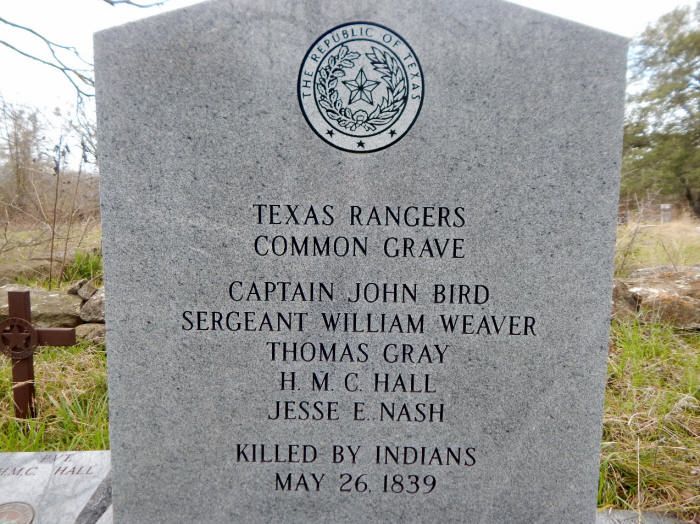
Texas Rangers killed in battle marker.
John Bird (1795-1839) – Born in Tennessee in 1795, Bird served with the Jackson and Creek campaigns during the War of 1812. In 1829, he married, and the couple had four children. He later moved his family to Texas, where he received a land grant in Burleson County. In 1836, Bird fought the Mexicans during the Texas Revolution. Having already acquired a reputation as an Indian Fighter and soldier, he joined the Texas Rangers in 1839 and was immediately made a captain. After serving only one month, Bird commanded a company of about 35 Rangers on May 26, 1839, when they attempted to catch up with some Comanche braves whom they believed had been raiding the area. Unable to catch the Indians, they retreated only to be ambushed by about 200 Comanche, Caddo, and Kickapoo Indians at what would later become known as Bird’s Creek. Fighting a fierce battle, the Rangers reported having killed about 30-40 Indians and wounded about as many. However, five Texas Rangers also lost their lives, including John Bird.
W. D. Blackard – U.S. Deputy Marshal commissioned in the Northern District of Indian Territory, assigned to the Muskogee court in July 1890.
Leslie F. Blackburn – A U.S. Deputy Marshal in Tombstone, Arizona, in 1881-82, Blackburn reportedly killed a “bad man” named Dunne in Virginia City, Nevada, before coming to Tombstone in 1881. He was appointed a U.S. Deputy Marshal in March 1881 and served alongside Virgil Earp in that capacity. Blackburn’s primary duties were working as a Customs Collector for Judge Wells Spicer, the U.S. Court Commissioner for southeastern Arizona, but they also had other duties. In the summer of 1881, he formerly charged Doc Holliday with attempting to rob the U.S. Mail, and though Holliday was briefly jailed, nothing came of it.
Doc Blust – U.S. Deputy Marshal commissioned in Oklahoma Territory, who worked with fellow Deputy Marshal B. L. Nutting at Perry, protecting the claim office during the 1889 land rush.
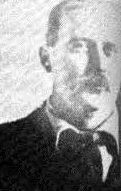
Gus Bobbitt.
Allen Augustus “Gus” Bobbitt (1862-1909) – U.S. Deputy Marshal commissioned in 1888 under Marshal John Hammer. He was killed by “Deacon” Jim Miller on February 7, 1909.
John R. Boston – A full-blood Cherokee who served as a U.S. Indian policeman, he was killed in the line of duty.
Riley Boston – A lawman, Boston served in Company D of the Texas Rangers in 1887.
William Bouden – U.S. Deputy Marshal commissioned in the Western District at Fort Smith, Arkansas. In 1894, he captured two members of the infamous Cook Gang – Jim Price and Perry Brown. Later, he rode with Deputy Marshal Milo Creekmore twice to capture Ned Christie but was unsuccessful.
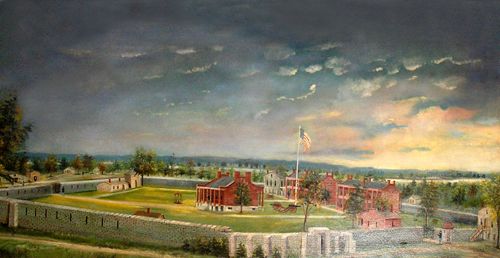
Fort Smith, Arkansas, during its heyday.
Joe Bowers – U.S. Deputy Marshal commissioned in the Western District at Ft. Smith, Arkansas, under Marshal Thomas Boles. In May 1887, U.S. Deputy Marshal Dan Maples was killed, and the murder was blamed on Cherokee Indian Ned Christie. For five years, Christie avoided capture, but on October 12, 1892, a posse of 25 men stormed his cabin in the Going Snake District. In the melee, Joe Bowers was seriously injured in the leg, U.S. Deputy Marshal John Fields was killed, and the elusive outlaw was assassinated. Years later, it would be found that Christie had not killed Marshal Dan Maples in 1887. In December 1898, when Bowers got into an argument with ex-U.S. Deputy Marshal Joe Pentecost in the Ritterbusch Saloon at Guthrie, Oklahoma, Pentecost shot and killed him.
H. E. Bowling – U.S. Deputy Marshal commissioned in the Southern District of Indian Territory at Paris, Texas, under Marshal Sheb Williams. Living just North of Allen, Oklahoma, Bowling came to Indian Territory in 1894, where he was headquartered at Stonewall, Chickasaw Nation, and later moved to Center, also in the Chickasaw Nation. Bowling was working with Deputy Marshal Bill McCall in the mid-1890s when the pair came across a mean hombre named Bruner. Of Native American and African-American descent, Bruner denied his black heritage and was one of the toughest and meanest men in the territory. When Marshal McCall gave chase to the man into the woods, Bruner shot him in the back. Though McCall initially appeared to be only slightly wounded, he ended up dying of the gunshot.
Wes Bowman (or Baughman) (18??-1857) – U.S. Deputy Marshal in Indian Territory, Bowman was one of the sixteen deputy marshals that rode to Ned’s Mountain Fort, Cherokee Nation, where Ned Christie was killed on November 3, 1892. When Christie’s fort was blown up, he tried to escape and fired his Winchester rifle hastily at Bowman as he ran past. The rifle was so close to Bowman’s face that he received powder burns. Bowman fired at the escaping Christie, striking him behind the ear, killing him on the spot.
Elihu R. Box – U.S. Deputy Marshal commissioned on July 9, 1889, in the Western District at Fort Smith, Arkansas, serving under Marshal Jacob Yoes. On June 26, 1890, he was killed by R. E. Boutwed and John C. Ball in the Chickasaw Nation while trying to serve a warrant of arrest. Both men were convicted and sentenced to be executed on December 19, 1890, in Paris, Texas.
Reuben Hornsby Boyce (1853-1927) – Lawman, Texas Ranger, and miner. Boyce traveled the West before settling in Texas. Boyce was born in Williamson County, Texas, on January 8, 1853, the oldest of ten children. Growing up when Texas was still in its infancy, Boyce was rugged and joined the Texas Rangers sometime before 1878. As a Ranger, Boyce quickly developed a reputation for always “getting his man” and was an active Indian Fighter, participating in the Battle of Horse Head Crossing on the Pecos River in 1878, in which the entire Indian band was annihilated. Boyce later said he had been a lawman in New Mexico, Arizona, and El Paso, Texas, before heading northwest around 1890. In 1898, he headed to Alaska during the Klondike gold rush, where he tried to find his fortune for three years. Later, he reportedly lived in British Columbia for a time before returning to Texas. He died in Coahoma, Texas, on May 23, 1927.
W. C. Boyer – U.S. Deputy Marshal commissioned in the Southern District Court in Paris, Texas, in 1897. He served under Marshal John S. Hammer for four years and was assigned to the Ardmore area. After serving as a field marshal, Boyer became a jailer at Purcell and served for four years.
Joe Boyle – U.S. Deputy Marshal commissioned in the Western District at Fort Smith, Arkansas, under Marshal George C. Crump. He was killed while on duty in 1896.
J.W. Bracken – Served as a Texas Ranger in Company B in 1889 under Captain Sam McMurry.
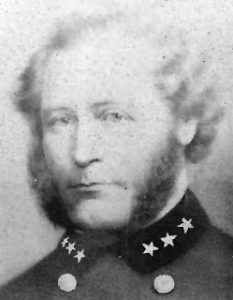
Cyrus P. Bradley.
Cyrus P. Bradley (1919-1865) – Sheriff and first Chief of Police in Chicago, Illinois; Bradley was born in Concord, New Hampshire. He moved to Chicago in 1837. In 1849, he was appointed a tax collector in South Chicago, where he worked with a local fire company. He served two terms as the Cook County Sheriff before becoming Chicago’s first police chief on May 26, 1855. Bradley and the Chicago Police Department were credited with solving every crime reported during its first three months in operation. When a new mayor abolished the police chief position, Bradley was let go, and in 1860, he began his first of two terms as fire marshal. However, in 1861, the police chief position was restored, and Bradley resumed service. He was also appointed provost marshal of the army after the outbreak of the Civil War. During his tenure, Bradley made several improvements to Chicago’s police force, including increasing its size, dividing the city into distinct precincts, and creating the department’s first detective division. He died in Chicago, Illinois, on March 6, 1865.
Abner Brasfield – An outlaw and lawman, Brasfield, at the age of 22, killed Arkansas Justice of the Peace Bill Hamm when the two were arguing over land. The fleeing murderer was later captured and served four years in an Arkansas prison. After his release, he served as a peace officer in Eufaula, Oklahoma.
Samuel Bradshaw – U.S. Deputy Marshal, commissioned on July 30, 1872, in the Western District at Fort Smith, Arkansas, serving under Marshal Logan S. Roots.
R.G. Brady – U.S. Deputy Marshal in Arizona Territory, commissioned on August 17, 1896.
William J. Brady (1825-1878) – Served as the sheriff in Lincoln County, New Mexico, during the Lincoln County War. He was killed by Billy the Kid and the Regulators.
George Bravin (1862-1918) – Bravin served as a Tombstone Deputy Sheriff, a U.S. Deputy Marshal for Arizona Territory on September 25, 1895, and a Pearce, Arizona Constable.
Ed N. Brazell – U.S. Deputy Marshal who served in the Central District of Oklahoma in 1894 and 1895 under Marshal James J. McAlester.
James L. Brazell – U.S. Deputy Marshal commissioned in the Western District at Fort Smith, Arkansas, serving under Marshal Jacob Yoes. Later, he became a wealthy and influential citizen of the Choctaw Nation, where he owned a lumber company and a bank.
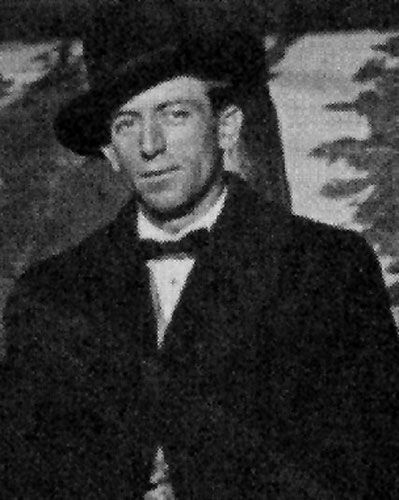
Dow Braziel.
Dow Braziel (18??-1919) – Braziel served as a U.S. Deputy Marshal and an IRS Officer before he was killed in Ardmore, Oklahoma, by Deputy Sheriff Bud Ballew.
William Milton Breakenridge (1846-1931) – Cochise County, Arizona, Deputy Sheriff under Johnny Behan during the Gunfight at the O.K. Corral. He served as a U.S. Deputy Marshal, a surveyor, and a detective for the Southern Pacific Railroad.
James R. Brent – A buffalo hunter and lawman, Brent served as chief deputy to John Poe in the mid-1880s when Poe succeeded Pat Garrett as sheriff of Lincoln County, New Mexico.
F. M. Brewer – U.S. Deputy Marshal commissioned on August 4, 1886, in the Western District at Fort Smith, Arkansas, serving under Marshal John Carroll.
Richard M. Brewer (1850-1878) – A gunman and lawman, he worked for John Tunstall as leader of the Regulators in New Mexico’s Lincoln County War. As a deputy sheriff, he captured the Jesse Evans Gang. Brewer was killed at Blazer’s Mill by Buckshot Roberts on April 4, 1878.
Elijah “Lige” S. Briant – A school teacher, surveyor, sheep owner, and Sutton County, Texas, Sheriff. On April 2, 1901, he killed Wild Bunch member Will Carver and wounded Ben Kilpatrick in a gun battle.
Ben Kilpatrick – A lawman in Kansas City and Dodge City and a U.S. Deputy Marshal in Hays and Wichita.
James Abijah Brooks (18??-1944) – Joined the Texas Rangers in 1882 and served with Companies A and F. He became captain in May 1889, resigned in 1906, and died on January 15, 1944.
William L. “Buffalo Bill” Brooks (1832-1874) – Lawman turned outlaw, Brooks served as Marshal in Newton and Dodge City, Kansas, before being arrested for horse theft. He and two other men were lynched by a vigilante mob in Caldwell, Kansas, on July 29, 1874.
Angus Brown, aka Arapaho Red – While serving as sheriff of Buffalo, Wyoming, in 1892, he was killed by two young cowboys.
George S. Brown – Served as the city marshal of Caldwell, Kansas, and was killed on June 22, 1882, by Jim Bean.
Henry Newton Brown (1857-1884) – Fought with the Regulators in the Lincoln County War of New Mexico. He then worked as a sheriff in Tascosa, Texas, and a marshal in Caldwell, Kansas. While serving as a lawman, he attempted to rob a bank in Medicine Lodge, Kansas, on April 30, 1884. He was immediately captured and hanged the same day by vigilantes.
John L. Brown – U.S. Deputy Marshal commissioned on October 22, 1894, in the Western District at Fort Smith, Arkansas. In December 1898, John arrested a murderer, Moses Miller, who had such a bad reputation that few lawmen wanted to come up against him.
John P. Brown – U.S. Deputy Marshal working out of the Western District of the Fort Smith federal court. He was remembered as a deputy marshal who usually got his man, having the credit of killing four men.
Neal “Skinny” Brown (1850-??) – Half Cherokee Indian, Brown was a Dodge City, Kansas, Assistant Marshal and member of the “Dodge City Peace Commission,” who helped out Luke Short during the bloodless Dodge City War. Brown moved to Indian Territory from Dodge City at about the same time as Bill Tilghman and was commissioned as a U.S. Deputy Marshal under Marshal Evett Dumas Nix. He was with Bill Tilghman when he chased the Doolin Gang.
Reuben “Rube” H. Brown (1851-1875) – The son of Palestine T. and Miriam Brown, Rube was born in Texas on November 28, 1851. Well-educated, he grew up working on his father’s farm and worked as a farmhand in his late teens. However, by the early 1870s, he had become the City Marshal of Cuero, Texas, as the Sutton-Taylor Feud heated up in the area, and Brown sided with the Sutton Faction. In January 1874, he shot and killed a man named James Gladney McVea in McGanan’s Bar in Cuero. After William Sutton was killed in March 1874, Brown became the leader of the Sutton Faction, and the lawman soon arrested Billy Taylor for the killing of William Sutton and received not only a $500 reward but also wide recognition. However, Brown soon resigned in June 1874 for unspecified reasons, perhaps out of fear of Taylor’s retribution. In the end, it wouldn’t matter. He was shot down in a Cuero, Texas, saloon on November 17, 1875. Though no one was arrested for the murder, he was thought to have been killed by John Wesley Hardin.
Eli Hickman “Heck” Bruner (1859-1898) – U.S. Deputy Marshal commissioned in 1880 in the Western District of Arkansas, assigned to the Cherokee Nation, serving under Marshal Jacob Yoes. He drowned in the line of duty in 1898.
J. H. Bryant (1855-1898) – A prominent Choctaw Indian commissioned as a U.S. Deputy Marshal.
Dave Buchanan (18??-1894) – U.S. Deputy Marshal commissioned in the Southern District of Indian Territory in the Paris, Texas Court. Buchanan was killed in the line of duty on May 5, 1894, by Poley Empson. Empson and several other men who took part in the killing were arrested and taken to jail in Paris, Texas.
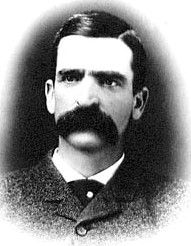
Seth Bullock.
Seth Bullock (1849-1919) – Lewis and Clark County, Montana Sheriff; Lawrence County, South Dakota Sheriff; and U.S. Deputy Marshal in Dakota Territory.
S.M. Burche – Appointed as a U.S. Deputy Marshal by C.H. Thompson of Guthrie, Oklahoma, Burche was one of the few women appointed as a deputy during the 19th Century.
A.F. Burke – Deputy sheriff in Tombstone, Arizona in the 1880s.
J. Steve Burke – U.S. Deputy Marshal commissioned at Guthrie, Oklahoma Territory by Marshal Evett Nix in 1893. On September 1, 1893, Burke was one of the 13 deputy marshals who rode into Ingalls, Oklahoma, and confronted the Bill Doolin Gang in what is known as the “Battle of Ingalls.”
James Burkitt – U.S. Deputy Marshal commissioned in the Western District of Arkansas on July 13, 1892, under Marshal Jacob Yoes. He was one of the sixteen deputy marshals who stormed Ned Christie’s home near Tahlequah, Cherokee Nation, in November 1892.
Charles Burns – U.S. Deputy Marshal commissioned in the Western District of Fort Smith, Arkansas. He served as a jailer in the Fort Smith federal jail from 1871 to 1882. In this capacity, Burns foiled an escape attempt by Orpheus McGee, shooting the prisoner. McGee was crippled until he was later executed.
Holm O. Bursum – Served as sheriff of Sorocco County, New Mexico Territory, in the 1890s.
John Millard Burton – U.S. Deputy Marshal commissioned in the Southern Indian Territory Court at Ardmore, Oklahoma. Assigned to Mill Creek, a hell-raising cattle town in the Chickasaw Nation, he replaced U.S. Deputy Marshal John Poe, who was killed by whiskey dealers. Another deputy marshal had also been wounded by men running illegal alcohol in Mill Creek, who had declared war on the marshal’s force because they were not allowed to operate freely. When Marshal Benjamin H. Colbert of the Southern District wanted to stop the liquor flow, he enlisted Deputy Marshal Burton, who successfully stopped illegal liquor operations.
Matthew “Matt” Burts (18??-??) – A lawman and outlaw, Burts rode with Burt Alvord, Billie Stiles, and the Owens brothers. He served briefly as a deputy town constable in Pearce, Arizona, in 1899. He was imprisoned for robbery and killed by a ranching neighbor in California in November 1925.
W.M. Burwell – Served as a Texas Ranger in 1896.
Shepherd “Shep” Busby (18??-1892) – A U.S. Deputy Marshal commissioned in the Western District of Arkansas, Busby was first assigned to the Cherokee Nation of Indian Territory. Busby was hanged after killing another deputy marshal.
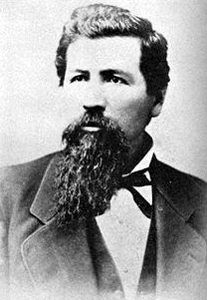
Edward “Ned” Bushyhead.
Edward “Ned” Wilkerson Bushyhead (1832-1907) – Bushyhead was a Cherokee miner, publisher, and lawman who traveled on the Cherokee Trail of Tears to Oklahoma and later became the Chief of Police in San Diego, California.
W. Hesson “Hess” Bussey – W. Hesson “Hess” Bussey was a U.S. Deputy Marshal in Indian Territory (Oklahoma) during the Wild West.