
Outlaw Summaries (name begins with) A B C D E F G H I J K L M N O P Q R S T U V W X Y Z

Western manhunt by John W. Newton appeared in The Story of the Outlaw.
Cat Mace – An outlaw and gambler, he was wanted for killing two men in Texas. Jim McClease killed him in Colorado in the 1890s.
John W. Mackey, aka: “Buttermilk John” – Outlaw member of the Christian Gang in Oklahoma, he was captured in 1895, a short time after the killing of Deputy Sheriff W.C. Turner.
Juanito Maes – An outlaw, he stole horses around Boquilla, New Mexico
Patricio Maes – Outlaw member of Vicente Silva’s White Caps Gang of Las Vegas, New Mexico. He was hanged by the gang on October 23, 1892, as a suspected traitor.
Zenon Maes – Outlaw member of Vicente Silva’s White Caps Gang of Las Vegas, New Mexico.
German (Herman) Maestas – Outlaw member of Vicente Silva’s White Caps Gang of Las Vegas, New Mexico. He was hanged on May 25, 1894, in Las Vegas for killing his common-law wife and her lover.
Tomas Madril (18??-1875) – A member of the Mes Gang, which competed with the John Kinney Gang in New Mexico. On August 8, 1875, Madril, along with Jermin Aguirre, Jesus Mes, and Pas Mes, were ambushed and killed by the John Kinney Gang and Jessie Evans near the San Augustin Ranch.
John Mahoney – An outlaw, Mahoney was one of the gang that killed Jock Harriman in December 1883 in Wallace, New Mexico.
Manuel Maldonado – Outlaw member of Vicente Silva’s White Caps Gang of Las Vegas, New Mexico.
Smoker Mankiller – A Cherokee Indian outlaw, he shot and killed his neighbor in Indian Territory. He was hanged at Fort Smith, Arkansas, on September 3, 1875.
Abler Manley – When Ellis McVay, an Oklahoma farmer, provided shelter for the night of December 3, 1880, for Abler and his brother, Amos, the two were unappreciative. Before they left, they killed McVay and cut off his hired man’s hand. Their motive was unknown. Tried and convicted of murder, both were hanged at Fort Smith, Arkansas, on September 9, 1881.
Hilario Mares – Outlaw member of Vicente Silva’s White Caps Gang of Las Vegas, New Mexico.
Marlowe Brothers – Outlaw brothers Boone, Alf, Epp, Charley, and George were horse thieves who killed a lawman in 1889. During the gunfight that ensued, Alf and Epp were shot and killed. Bounty hunters later poisoned Boone, and George and Charley fled to California.
Stephen Marshland – A road agent in Montana, and thought to have been a member of Henry Plummer’s gang of Innocents. The Montana Vigilantes hung him.
William Martin, aka Wild Bill, Jones – An outlaw in Lincoln County, New Mexico, who John Perry killed in June 1887.
Samuel “Wolfman” Mason – Getting his start as an honorable man, Samuel Mason served as a militia captain in the American Revolution. Later, he would turn pirate on the Ohio and the Mississippi Rivers and lead highwaymen along the Natchez Trace.
Robert Massey (18??-1883) – As Massey and a man named Edmond Clark were driving a cattle herd from Dodge City to Dakota territory in the summer of 1881, Massey shot Clark in the back of the head. Massey took Clark’s possessions and the proceeds from the cattle sale. He was arrested the following April, tried and convicted of murder and robbery, and hanged at Fort Smith, Arkansas, on April 13, 1883.
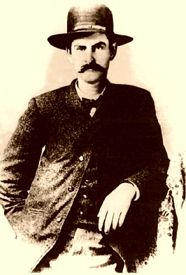
Mysterious Dave Mather.
Dave H. Mather, aka Mysterious Dave (1851-1930?) – Known as both a lawman and an outlaw, Mather tended to lean towards the lawful side, serving as a Dodge City, Kansas Marshal; El Paso, Texas Assistant Marshal, and a U.S. Deputy Marshal in New Mexico. However, he was also involved with the lawless Dodge City Gang in Las Vegas, New Mexico, and was suspected several times of horse and cattle rustling.
Clarence L. “Gunplay” Maxwell, aka: James Bliss, Thomas Bliss, William Seaman (1860?-1909) – Actually born James Otis Bliss, this outlaw/gunfighter is best known as “Gunplay” Maxwell. A bank and stagecoach robber, gunfighter, and miner, Maxwell was killed in Price City, Utah, by Deputy Sheriff Edward Johnstone in August 1909.
John McCall, aka Jack, Broken Nose Jack, Bill Sutherland – A gunman, he shot and killed Bill Hickok on August 2, 1876. He was hanged for murder on March 1, 1877.
David C. McCanles (18??-1861) – McCanles owned the property upon which the Rock Creek Station sat on the Oregon Trail in Nebraska. On July 12, 1861, McCanles would be shot and killed by Bill Hickok, giving rise to Wild Bill’s frontier legend and labeling the affair as the “McCanles Massacre.” McCanles bought the Rock Creek property when he was on his way to the Colorado goldfields in the spring of 1859. However, after meeting several miners returning from Colorado with nothing in their pockets but disappointment, he decided to take up “road ranching” instead. There are several variations on the tale of McCanles’ killing, which are still in debate today. His “outlaw” persona comes from Hickok, who said he was a ruthless killer who led the vicious McCanles Gang throughout the region. However, other versions of the tale say that while he was the local bully and perhaps an unethical businessman, he was not an outlaw. In any event, McCanles and at least two other men were shot and killed by Bill Hickok after an altercation at the ranch. More …
Bill McCarty – An outlaw, brother of Tom McCarty, and brother-in-law of Matt Warner, he joined his brother in the McCarty Gang, and was killed during the Delta, Colorado bank robbery.
Henry McCarty, aka Billy the Kid — an outlaw and member of the Albee gang in South Dakota — was frequently confused with New Mexico’s Billy the Kid, who also used the name as an alias.
Patrick McCarty (18??-1887) – McCarty killed Thomas Mahoney and his brother in the Cherokee Nation. The two victims had been working on the railroad, and McCarty was traveling with them as they returned to Kansas. While the men were sleeping, he shot one and bludgeoned the other with an ax, taking their teams, wagons, and $200. He was captured, convicted of murder, and hanged at Fort Smith, Arkansas, on April 8, 1887.
Tom McCarty (1855-1900?) – Raised on a Mormon ranch in Utah, McCarty began his outlaw life at an early age and is credited with introducing Butch Cassidy to the life of banditry. When he was 18, he married Teenie Christianson, the sister of Willard Christianson, aka Matt Warner, who was also a Mormon. Somewhere around 1892, he and his brother, Bill McCarty, and brother-in-law, Matt Warner, held up a bank in Roslyn, Washington. However, when an angry crowd approached him, he opened fire, wounding two men. The following year, the McCarty brothers and their nephew, Fred McCarty, robbed a bank in Delta, Colorado, where Tom shot and killed the cashier, A.T. Blachey. When citizens heard the gunfire, they rushed to the bank and shot and killed Tom’s brother, Bill, and his nephew. Tom McCarty escaped and settled in Montana, where he worked as a sheepherder. However, around 1900, he was killed in a gunfight in Bitterroot County.
Arthur C. McCoy (1825-1880?) – Born in Ireland in 1825, McCoy immigrated to the United States, first settling in California during the gold rush. However, by the 1850s, he was living in St. Louis, Missouri, where he worked as a coppersmith. In 1855, he married Louisa Gibson, and the couple would eventually have five children. He then formed a partnership and started a painting business called “Farmer and McCoy.” During the Civil War, he became a captain under Confederate General Jo Shelby and was said to have worked as a spy. After the war, he became involved with the James-Younger Gang and was thought to have been involved in several robberies and the killing of a Pinkerton Agent named Joseph Whicher in 1874. He then moved his family to Texas, where he began working as a rancher. He was believed to have died around 1880.
“One-Legged Jim” McCoy – An outlaw, he killed Sheriff Charles McKinney in La Salle County, Texas, and was hanged in San Antonio in 1887.
J. McDaniels – Outlaw member of the Pitts-Yeager Gang, he was killed in 1884 in Texas.
John McDaniel (18??-1844) – Reportedly a soldier for the Texas Republic, McDaniel plundered Mexican wagon trains on the Santa Fe Trail. he was hanged in St. Louis, Missouri, on August 16, 1844.
William “Bud” McDaniels – An outlaw and former Quantrill’s Raider during the Civil War, he rode with the James Gang.
J. McDonald – A gunman, he shot and killed his friend Robert Taylor on January 13, 1890, in Clayton, New Mexico.
Walter McDonald – A gunman, he shot Thomas Richards in 1884 in Coeur d’Alene, Idaho.
Annie McDougal (or McDoulet), aka Cattle Annie – An outlaw at eighteen, she associated with the Doolin Gang and was suspected of stealing livestock and selling whiskey. Steve Burke captured her, and Bill Tilghman caught her partner, Little Britches, and they were sent to reform school.
“Three-Fingered Jack” McDowell (18??-1864) – An outlaw, he led a gang of violent offenders and was lynched in Aurora, Nevada, in February 1864.
Orpheus McGee (18??-1876) – Orpheus McGee shot and killed Robert Alexander on April 20, 1874, in Oklahoma. He claimed that Alexander had murdered his friend, and the shooting was out of revenge. He was hanged at Fort Smith, Arkansas, on April 21, 1876.
Patrick McGowen – Though McGowen claimed self-defense in killing a man in Oklahoma, he was found guilty of murder and hanged at Fort Smith, Arkansas, on September 9, 1881.
James McIntire (1846-1902) – A Texas gunman and lawman from 1860, he was a Texas Ranger, city marshal of Las Vegas, New Mexico, deputy sheriff, cowboy, hunter, gambler, and outlaw with a $1,000 reward on his head for the deaths of two men near Silver City, New Mexico.
Amos McIntosh – Said to have killed U.S. Deputy Marshal Lee Atkins, McIntosh was arrested by Grant Johnson.
William J. McGrew – McGrew might have been a hero, but turned out to be a scalawag instead. Author Sue Moore tells the story of his demise in Montgomery, Texas.
Robert McKemie, aka Little Reddie (18??-??) – Outlaw member of the Sam Bass Gang, who ran with them in the Dakotas in the 1870s.
M. “Red” McLaughlin – An outlaw robber, he escaped jail in Springer, New Mexico, on July 4, 1884.
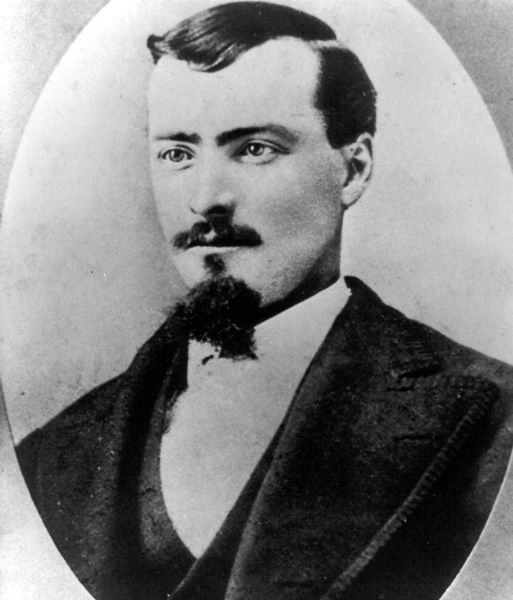
Frank McLaury.
Frank McLaury (1848-1881) – A member of the Clanton Gang, he was one of the three cowboys killed by the Earps in the Gunfight at the O.K. Corral on October 26, 1881.
Tom McLaury (1853-1881) – A member of the Clanton Gang, he was one of the three cowboys killed by the Earps in the Gunfight at the O.K. Corral on October 26, 1881.
Irving McManus – An outlaw, he rode with the Black Jack Ketchum gang in the 1890s.
Sherman W. McMasters (1853-??) – McMasters was an outlaw turned lawman who would become one of the six men involved in the Earp Vendetta Ride. It is unknown when or how he died.
Bill McNew – A gunman and accused rustler, he fought with Oliver Lee in the Lee-Good feud in Tularosa, New Mexico.
Martin McRose – An outlaw, he rustled cattle and was killed by EI Paso city marshal Jeff Milton.
Sam McWilliams, aka The Verdigris Kid (1876?-1895) – An outlaw and member of the Bill Cook Gang who operated in Indian Territory. Lawmen killed him in 1895.
Harvey Meade – A road agent in Montana, and thought to have been a member of Henry Plummer’s gang of Innocents. Montana Vigilantes hung him.
“Colonel” Thomas Means (??-1867) – Means was lynched on January 1, 1867, in Taos, New Mexico, for almost killing his wife and for being a bully in general.
John Medlock – An outlaw, he was hanged on May 25, 1906, in Raton, New Mexico.
Florentino Medran – Outlaw member of Vicente Silva’s White Caps Gang of Las Vegas, New Mexico.
Henry Wilbur “Bob” Meeks – An outlaw member of the Wild Bunch, he was imprisoned in the 1900s. He died in an insane asylum on November 22, 1912, in the State Hospital in Evanston, Wyoming.
Augustus “Gus” Menczer (1856-1882) – A gunman and saloon owner, he killed several men after a shoot-out with his business partner in Raton, New Mexico, in 1882. A mob lynched him on June 28, 1882.
Nica Meras – An outlaw, he stole horses in Lincoln County, New Mexico, and was shot in 1877.
Charles Merideth – An outlaw, he killed “Red” Dent Kyes in Clayton, New Mexico, in March 1890
David Merrill – An Oregon outlaw, Merrill rode with Harry Tracy, who killed him in 1899 after escaping prison.
Cruz Mes – An outlaw and horse thief, he was killed along with Roman and Pancho Mes on a road near White Sands, New Mexico, in 1876.
Jesus Mes (18??-1875) – A member of the Mes Gang, which competed with the John Kinney Gang in New Mexico. On August 8, 1875, Mes, along with Jermin Aguirre, Pas Mes, and Tomas Madril were ambushed and killed by the John Kinney Gang and Jessie Evans near the San Augustin Ranch.
Pancho Mes – An outlaw horse thief, he was killed with Roman and Cruz Mes on a road near White Sands, New Mexico, in 1876.
Pas Mes (18??-1875) – A member of the Mes Gang, which competed with the John Kinney Gang in New Mexico. On August 8, 1875, Mes, along with Jermin Aguirre, Jesus Mes, and Tomas Madril were ambushed and killed by the John Kinney Gang and Jessie Evans near the San Augustin Ranch.
Roman Mes – An outlaw horse thief, he was killed with Pancho and Cruz Mes on a road near White Sands, New Mexico, in 1876.
“Wild Bill” Metcalfe – An outlaw, he fled Lorna Parda, New Mexico, in November 1877 after killing a man. He was later jailed and lynched by a mob.
Mexican Frank – A road agent in Montana and thought to have been a member of Henry Plummer’s gang of Innocents. Montana Vigilantes hung him.
Chas Middleton – An outlaw, he was wanted by the sheriff of Bastrop County, Texas, in 1886.
John Middleton – An outlaw and cousin of Jim Reed, he rode with Quantrill’s Raiders during the Civil War. Later, he killed Sheriff J.H. Black in Texas and was shot and killed southwest of Fort Smith, Arkansas.
John Middleton – An outlaw and gunman who, along with Billy the Kid, became a part of the posse of Regulators in Lincoln County, New Mexico. They ambushed Sheriff William Brady and George Hindman on April 1, 1878.
David Charles “Doc” Middleton, aka James Riley, Texas Jack Lyons (1851-1913) – Outlaw member of a gang of horse thieves in Nebraska in the 1870s-1890s. He died in 1913.
Pantaleon Miera – An outlaw, he stole horses and killed several men in New Mexico. He was lynched in Albuquerque, New Mexico, on December 29, 1880.
“Wild Bill” Miller – An outlaw, he was killed by lawmen in Corwell County, Texas, on January 13, 1869.
Bill Miller, aka: Bill Smith, Bill Bryant, Martin Roers – (18??-1905) – A notorious murderer and horse thief of Jacksboro, Texas, Miller was killed near Wilburton, Indian Territory on July 18, 1905, by U.S. Deputy Marshal Davis.
Edward “Ed” T. Miller (1856?-1881) – The younger brother of Clell Miller, Ed and his brother joined the James-Younger Gang. He is thought to have participated in the Muncie, Kansas train robbery in 1874, the Glendale, Missouri train robbery in 1879, and the Blue Cut, Missouri train robbery in 1881. However, he somehow got on the bad side of Jesse James, who killed him in December 1881. Some sources said he was killed because he talked too much.
Eli “Slick” Miller – A New Mexico outlaw, he was captured by A.J. Fountain.
James B. Miller, aka: Killin’ Jim, Killer Miller, Jim the Killer, Deacon Miller (1866-1909) – One of the worst of the many violent men of the Old West, James B. Miller was seemingly one of those “bad seeds” from an early age. Often impeccably dressed and well-mannered, he didn’t smoke or drink and attended church regularly, earning him the nickname “Deacon Miller.” But he was a wolf in sheep’s clothing. Miller became a hired gun in the 1880s, a “career” he would continue for the next two decades. Said to have committed as many as 50 murders, he was hanged by vigilantes in Ada, Oklahoma.
McClelland “Clell” Miller (1850-1876) – Born on January 9, 1850, Miller grew up to be a member of Quantrill’s Guerrillas under William “Bloody Bill” Anderson. After the Civil War, he joined the James-Younger Gang. He participated in several robberies with the gang, including a 1871 robbery at a bank in Corydon, Iowa. In this heist, the outlaws made off with $40,000. Miller was captured and tried for the crime but was later acquitted. Continuing his outlaw ways, he was with the gang when they attempted to rob a bank in Northfield, Minnesota, on September 7, 1876. However, when citizens realized a robbery was in progress, they took up arms. When the smoke cleared, Clell Miller and William Stiles, aka Bill Chadwell, were dead. The remaining members of the gang fled. Though Frank and Jesse James escaped, Cole, Jim, and Bob Younger were captured and sent to prison. Miller was first buried in a potter’s field in Minnesota but was later re-interred at the Muddy Fork Cemetery, north of the James farm in Kearney, Missouri.
William Miller, aka Bill Zeke – A bank robber and bootlegger in Indian Territory, he rode with Choc Floyd and George Birdwell.
William “Bill” Miner, aka: Old Bill (1847-1913) – An outlaw, he robbed stages for decades before being arrested and sent to a Georgia prison, where he died in 1913.
William Mitchell, aka John W. King – An outlaw, he killed several men in a Hood County, Texas, feud, for which he received a life sentence and was sent to a Texas prison in 1912. He escaped from prison at the age of 70.
Jose F. Montoya – Outlaw member of Vicente Silva’s White Caps Gang of Las Vegas, New Mexico.
Narciso Montoya – An outlaw, he killed Luis Gallegos and was lynched in Taos, New Mexico, on June 10, 1881.
Jim Moon – An outlaw, he led a gang that stole mules from Texas and New Mexico army posts in 1870.
Charlie Moore – A member of Selman’s Scouts following the turmoil of the Lincoln County War in New Mexico. He was robbed and killed by unknown persons in the White Sands, New Mexico Territory, in December 1878.
Jim Moore (18??-1875) – A hardened killer, Moore had allegedly killed seven people before he murdered Officer William Spivey. He was hanged at Fort Smith, Arkansas, on September 3, 1875.
William Moore, aka: Outlaw Bill (18??-1881?) – An outlaw, Moore rode with John Casey in New Mexico, stealing horses and committing murder. He later fled to Alaska.
William “Gad” Moore – A road agent in Montana, and thought to have been a member of Henry Plummer’s gang of Innocents. Montana Vigilantes hung him.
Frank Morgan – An outlaw, he held up the San Marcial, New Mexico, stage on May 15, 1881, and was killed.
Ed Morrell – An outlaw, he aided the escape of Chris Evans from a California jail in 1893.
George Morris – Along with his son, George murdered a man named Ed Davis in Oklahoma. Heck Thomas arrested both killers. George was sentenced to life in prison, and his son, to a long prison term as an accessory.
Harvey Morris – A gunman in the Lincoln County War of New Mexico, he was killed during the McSween gunfight on July 19, 1878.
W.C. Morris – A gunman, Morris, dueled with “Editor Shannan” and killed him at Visalia, California, in 1860.
Peter Morrissey – A New Mexico outlaw, was killed in June 1877 by a posse.
William Morton – A gunman in the Lincoln County War of New Mexico, he rode with the posse that killed John Tunstall in February. He was killed by Billy the Kid in March 1878.
“Scar Face” Mosely – An outlaw, he was killed by the Montana Stranglers near Glendive, Montana, in 1884.
Henry Mosier – A gunman who participated in the killing of Jock Harriman in Wallace, New Mexico, on December 10, 1883.
George Moss (18??-1888) – A black outlaw, he killed a rancher named George Taff on the Red River of Oklahoma after stealing his cattle. He was hanged in Fort Smith, Arkansas, on April 27, 1888.
Ace Moyer – A gunman and founder of Laramie, Wyoming, he was hanged with his brother Con in 1868.
Con Moyer – A gunman and founder of Laramie, Wyoming, he was hanged with his brother Ace in 1868.
Herman Webster Mudgett (1861-1896) – See H.H. Holmes
Redmond “Red” Munkirs (or Munkers) (1845-1867) – Born in Missouri on March 26, 1845, he was the son of Solomon Munkirs and Sarah Ferril from Tennessee. He was thought to have ridden with Quantrill’s Raiders during the Civil War and afterward joined the James-Younger Gang. He was with the gang in their first robbery of the Clay County Savings Association in Liberty, Missouri on February 13, 1866. After marrying Martha Elizabeth “Mattie” Marton, he got into a conflict with the Missouri State Militia in Clay County, Missouri, and at the age of 21, was shot and killed by them on his front porch on May 18, 1867. His only child, daughter Lorene Redmond Munkirs, was born five weeks later on June 22, 1867.
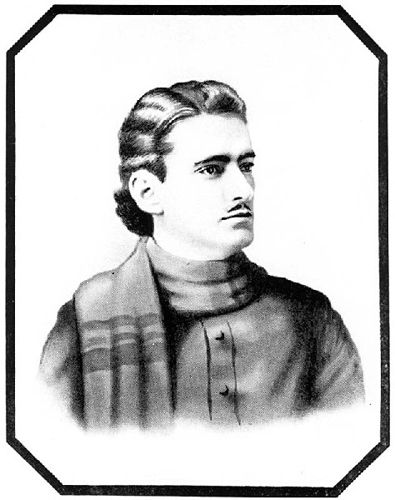
Joaquin Murrieta.
Joaquin Murrieta (1830-1853) – The half-mythical “King of the California Outlaws,” he reportedly killed former Texas Ranger Harry Love before he was killed in 1853 by a posse.
Procopio Murietta – An outlaw and nephew of Joaquin Murrieta, he terrorized Santa Cruz, California, and rode with Timbucio Vasquez in the late 1860s.
Zeke Murillo – An outlaw, he led a gang of rustlers headquartered in Shakespeare, New Mexico.
Jim Murphy (1861-1879) – A member of the Sam Bass Gang in Texas, Murphy turned informer, causing the deaths of Sam Bass and Seaborn Barnes. When another gang member threatened to kill him, he mysteriously died of poisoning.
John A. Murrell, aka The Great Western Land Pirate – Murrell was lionized in fictional tales that described him as The Great Western Land Pirate. However, he was nothing more than a vicious cutthroat and robber who operated along the Natchez Trace.
George West Musgrave, aka Jeff Davis, Jesse Miller, Jesse Johnson, Jesse Williams (1874-1947) – An outlaw member of the High Fives Gang, Musgrave, a cheerful and soft-spoken man, was also a cattle rustler, robber, and killer.
Lee H. Musgrove (?-1868) – An outlaw who operated in the American West, he was charged with several murders and the theft of horses. A vigilante mob hung him.
Jump to: Links to Full Articles
Outlaw Summaries (name begins with) A B C D E F G H I J K L M N O P Q R S T U V W X Y Z
©Kathy Alexander/Legends of America, updated November 2025.
Also See: