
Index of Tribes – A B C D E-I J-K L-M N O P Q-R S T-V W X-Z
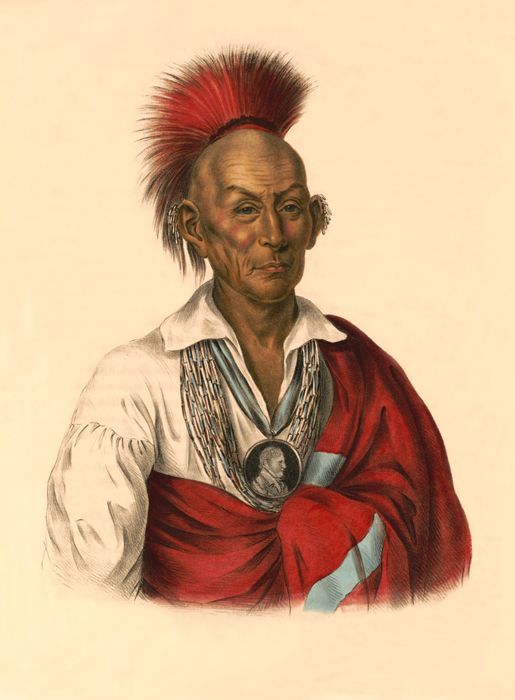
Sac Chief Black Hawk by John T. Bowen, 1838.
The Sac or Sauk tribe was one of several Algonquian tribes whose earliest known location was on the Michigan Peninsula, along with the Potawatomi, Mascouten, and Fox. Their name, Osakiwug, means “people of the yellow earth. They later merged with the Fox Tribe, becoming the Sac and Fox Tribe.
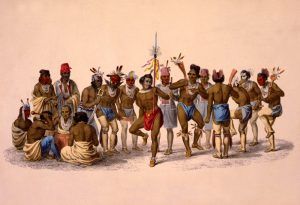
War Dance of the Sauk and Fox, by Peter Rindisbacher, about 1830.
Sac and Fox – The historic Sac and Fox were once two separate tribes, both Algonquian tribes whose earliest known location was on the Michigan peninsula. The separate tribes of the Sac and Fox were always closely allied and spoke a very similar Algonquian language. Today, they are part of one tribe that lives in Oklahoma, Kansas, Nebraska, and Iowa.
Saconnet – A small tribe living near Sakonnet Point, Rhode Island, connected with the Wampanoag or the Narraganset. Under the leadership of the woman chief, Ashawonks, they sided with the English in King Philip’s War of 1675, and later, their land was purchased by white settlers. In 1700, they numbered approximately 400, but by 1763, an epidemic had considerably reduced their numbers. By 1803, they had dwindled to only about a dozen people living near Compton.
Sahehwamish – Belonging to the coastal division of the Salishan linguistic stock, they lived in several bands on the innermost inlets of Puget Sound. They were estimated to have numbered about 1,200 in 1780 but had been reduced to about 780 by 1907.
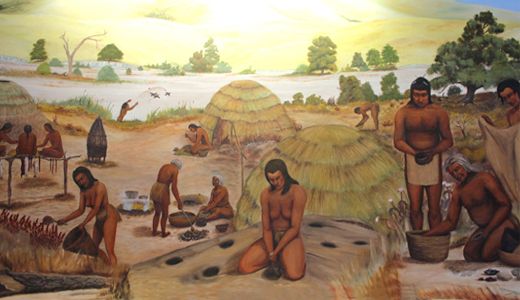
Salinan Village.
Salinan People – The Salinan people were a linguistic stock of California living along the Salinas River in San Luis Obispo and Monterey Counties. After missions were established for them in the late 1700s, their numbers drastically declined, and by the early 1900s, they numbered only about 20 people. Today, Salinan descendants live in California, but there are no federally recognized tribes.
Salish/Flathead – This large and powerful division of the Salishan family, to which they gave their name, inhabited much of western Montana centered around Flathead Lake and valley. Today, the Salish, along with the Pend d’Oreille and the Kootenai tribes, ceded their lands in Montana and Idaho to the United States by the Treaty of Hell Gate on July 16, 1855. Today, they form part of the Confederated Salish and Kootenai tribes who live on the 1,317 million-acre Flathead Reservation in northwest Montana.
Saluda – A small tribe that originally lived on the Saluda River in South Carolina, they moved to Pennsylvania in the early 18th century. They may have been connected with the Shawnee tribe.
Samish – A Salishan division formerly on a river and bay of the same name in Washington. They were moved to the Lummi Reservation in western Whatcom County, Washington.
Sanpoil – A group of Salishan Indians who lived on the San Poil and Columbia Rivers below Big Bend, Washington. They were comprised of a band of the Spokane and a band of the Okanagan tribes. In 1905, they were reported to number 324 living on the Colville Reservation; however, by 1909, their population had been reduced to only 178, which may have been due to a clerical error. No treaty was ever made with these Indians for their lands when the Government took possession of their country.
Santiam – A Kalapuyan tribe formerly residing on the river of the same name, an eastern tributary of the Willamette River in Oregon. They were removed to the Grande Ronde Reservation, where, in 1906, they numbered only about 23. Just three years later, in 1909, they reported that there were only five people left, the remainder having received patents for their lands and become citizens.
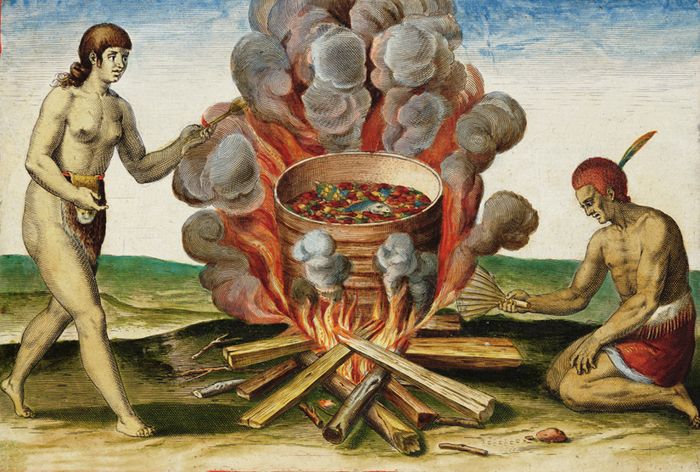
Early Saponi Indians.
Saponi/Sappony – The Saponi or Sappony are an eastern Siouan tribe that has long lived in North Carolina and Virginia. Their language appears to have been the same as the Tutelo to the extent that the people of the two tribes could readily understand each other. Today, three groups of Saponi are recognized by the state of North Carolina.
Saturiba – A Timucuan tribe in Florida occupied both sides of the lower St John River northward to the Satilla River in Georgia in 1565. They were at war with the Timucua, their nearest neighbors higher up on the river, and afterward, also warred with the Spaniards. However, they welcomed and aided the French during their short stay there. Their chief was said to rule 30 sub-chiefs, each perhaps representing a different village. The name may have been that of the head chief rather than the tribe, the two being frequently confused by early explorers. Franciscan missionaries Christianized all the Indians of this region before the end of the 16th century.
Satsop – A Salish division that lived on the Satsop River in Washington. They are usually classed under the collective name of Lower Chehalis.
Saturiwa – Connected with the Utina tribe, they lived about the mouth of the St. Johns River in Florida and, perhaps, on Cumberland Island. The chief of this tribe ruled over 30 subchiefs, but it is uncertain whether these subchiefs represented villages belonging to allied tribes, the Saturiwa tribe, or both. They were visited by Jean Ribault in 1562 and probably by earlier explorers. Fort Caroline was built in the territory of the Saturiwa, who were friendly with the French until Spain dispossessed them of their land. The chief, known as Saturiwa at this time, assisted Dominique De Gourgues in 1567 to avenge the destruction of his countrymen. The Spaniards espoused the cause of the Utina tribe against Saturiwa ten years later. The tribe soon submitted to Spain, however, and was one of the first to be missionized, its principal mission being San Juan del Puerto. Like the other Florida Indians, they suffered severely from disease in 1617 and 1672. The name of their chief appears among those involved in the Timucua Rebellion of 1656, and the names of their missions appear in the Bishop Calderon list of 1680. However, nothing more of them was recorded afterward.
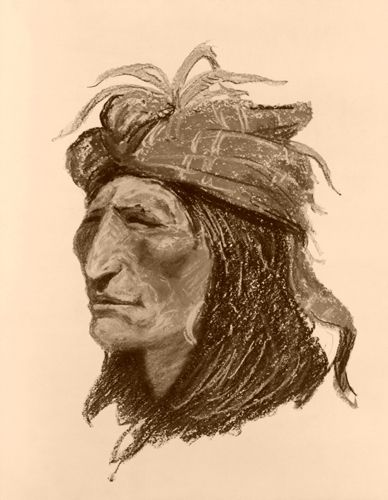
Creek Warrior by Frederic Remington, 1906.
Sawokli – Belonging to the Muscogean linguistic stock, they formerly lived on the Chattahoochee River in the northeastern part of Barbour County, Alabama. A Spanish mission, Santa Cruz de Sabacola, was established in one section of the tribe by Bishop Calderón of Cuba in 1675. Missionaries were sent to a larger body among the Creek tribe in 1679 and again in 1681. Most of the Indians surrounding these, however, soon became hostile, and those who had been Christianized withdrew to the junction of the Chattahoochee and Flint Rivers, where they were settled not far from the newly established Chatawa missions. The Sawokli appear to have remained in the same general region until 1706 or 1707, when they were displaced by hostile Indians, probably of the Creek tribe. In the early 1700s, they split into several settlements but followed the fortunes of the Lower Creek Indians. In 1750, they were reported to number approximately 50 men living in four settlements, and by 1832, their population had grown to around 187 people.
Seechelt – A Salish tribe that lived on the Jervis and Seechelt inlets of Nelson Island and the south part of Texada Island, British Columbia, Canada. They spoke a distinct dialect that historians believed made them related to the Lillooet. By the early 1900s, they all lived in one town called Chatelech, around the mission founded by Bishop Dnrieu, who converted them to Roman Catholicism. Their population in 1902 was reported to be around 300.
Sekani – A group of Athapascan tribes who lived in the valleys of the upper Peace River and its tributaries and on the west slope of the Rocky Mountains in British Columbia, Canada. Their name means “dwellers on the rocks.” At one time, they were united into a single large tribe, but due to their nomadic ways, they gradually split into small, distinct tribes, with no affiliation. Although slightly built and of shorter stature than neighboring tribes, they were described as having great savagery. Their complete isolation in the Rocky Mountains and their reputation for merciless and cold-blooded savagery cause them to be dreaded by other tribes. Though nomadic, they didn’t sleep in tents but in brush huts that were often open to the weather. Subsisting on wild game, they didn’t fish, considering it an unmanly occupation. They had no chiefs, but each band’s oldest and most influential was looked upon for counsel. In 1893, they were divided into nine tribes, each composed of several bands.
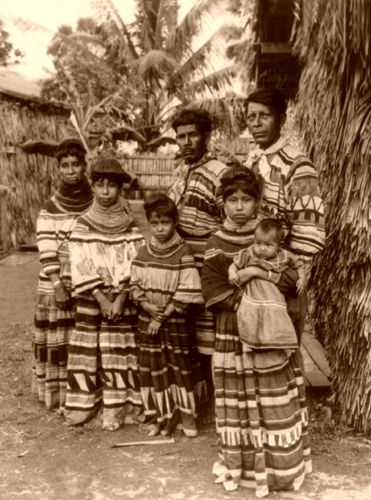
Seminole Indians in Miami, Keystone View Co., 1926.
Semiahmoo – A Salishan tribe who lived around Semiahmoo Bay in northwest Washington and southwest British Columbia. In 1843, there were approximately 300 members, and by 1909, the number had decreased to 38 on the Canadian side.
Seminole – One of the Five Civilized Tribes and part of the Creek Confederation, the Seminole originally consisted of emigrants from the Lower Creek towns on the Chattahoochee River, who migrated to Florida following the destruction of the Apalachee and other Native American tribes. They were initially classified with the Lower Creek tribe, but began to be known under their present name around 1775.
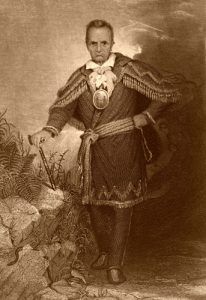
Seneca Chief Red Jacket, R.W. Weir, 1800s.
Seneca – The Seneca tribe was divided into two separate entities: the Northeastern Seneca Indians, located in New York, and the Seneca Indians from Ohio.
Senijextee – A Salishan tribe formerly residing on both sides of the Columbia River from Kettle Falls to the Canadian boundary; they also occupied the Valley of Kettle River, Kootenay River from its mouth to the First Falls, and the region of the Arrow Lakes, British Columbia. In 1909, the number of those in the United States on the Colville Reservation, Washington, was 342.
Serrano – A Shoshonean division located primarily in the San Bernardino Mountains of southern California; their name is Spanish for “highlander” or “mountaineer.” They also ranged north of Los Angeles, extended down the Mohave River to present-day Daggett, California, and occupied the San Bernardino Valley. Fray Francisco Garcés, in 1775, described them as living near Tejon Creek, under their Mohave name of Cuahajai or Cuabajay, in large square communal houses made of toile mats on a framework of willow limbs. They crafted small baskets, flint knives, and vessels inlaid with mother-of-pearl, and conducted extensive trade with the coastal natives near Santa Barbara. He also called the Serrano on the upper waters of the Santa Ana River by their Mohave name – Jenequich. Fray described them as approachable, quiet, inoffensive, and having good hearts. Physically, he said they were of medium stature, round-faced, flat-nosed, and rather ugly. The men generally went naked while the women covered themselves with deerskins. The Serrano were brought under the jurisdiction of the San Gabriel and San Fernando Missions. In 1885, there were 390 Serrano counted under the Mission agencies, but afterward.
Sewee – A small tribe formerly living in eastern South Carolina, occupying the lower part of the Santee River and the westward coast to the Ashley River’s divide. Nothing is known of their language, but judging by their alliances and final incorporation with the Catawba, they are assumed to have been Siouan. Explorer John Lawson met them in 1701 when they were living at the mouth of the Santee River and reported that they had been a large tribe, but had been decimated by alcohol and smallpox. Lawson also stated that the Sewee undertook to send a fleet of canoes to England, along with most of their able-bodied men, for trade. However, a storm swamped most of the canoes, and the survivors were rescued by an English ship and sold as slaves in the West Indies. In 1715, there remained but one village of 57 souls. The Yamasee War of that year probably ended their separate existence as a tribe, forcing the survivors to join the Catawba.
Shakori – A small tribe associated with the Eno and Adshusheer in North Carolina in the 17th century. Their physical characteristics make it doubtful whether they were of Siouan stock, though they were allied with Siouan tribes. As the Shakori were constantly associated with the Eno, they were probably linguistically related to them. They are first mentioned by explorer Francis Yardley in 1654, who reported that a Tuscarora Indian described to him a “great nation called Cacores,” which was of dwarfish stature yet exceedingly brave and fierce in battle, so that even the powerful Tuscarora were unable to conquer them. Explorer John Lederer encountered them in 1672, finding the Shakori and Eno villages close to each other. When Surveyor General John Lawson encountered them in 1701, the Shakori and Eno had confederated and brought the Adshusheer tribe into their alliance. At that time, they lived just northeast of present-day Durham, North Carolina.
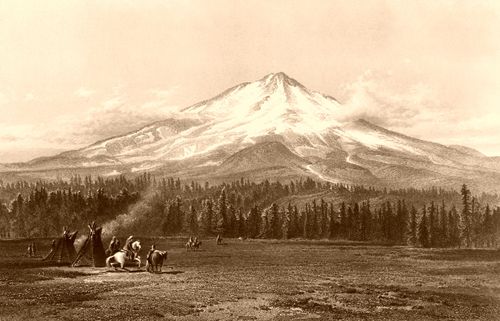
Mount Shasta has cultural significance for the Shasta Tribe.
Shasta – The Shasta Indians were a group of small tribes or divisions that formed the Shastan linguistic family, which was located in northern California and extended into southwestern Oregon. Their language was of the Hokan family. The Shasta called themselves “Kahosadi” or “plain speakers.” Today, many of the tribe’s descendants live on three reservations in California and Oregon.
The Shawnee, an Algonquian tribe, were the original inhabitants of modern-day Ohio, but were a far-ranging people with villages located as far north as New York State and as far south as Georgia. Their name translates to “Southerners.” During the French and Indian War, most Shawnee fought alongside the French. During the Revolutionary War, the Shawnee fought alongside the British. Most Shawnee today live in Oklahoma, but the Shawnee Nation United Remnant Band, a remnant of the Eastern Shawnee, has been officially recognized in Ohio.
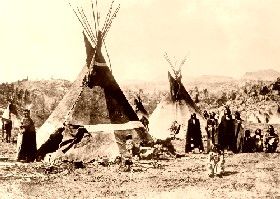
Shoshone Camp, about 1900.
Shoshone – One of the Great Basin tribes, the Shoshone occupied a vast area from Oregon to Southern Colorado. They were a hunter-gatherer tribe and also domesticated horses, which were used for buffalo hunts. The Shoshone were close relatives of the Ute, Paiute, Gosiute, and Bannock Indian tribes, with whom they shared land and intermarried.
Shinnecock – An Algonquian tribe who lived primarily on Long Island, New York, occupying the south coast from Shinnecock Bay to Montauk Point. Many of them joined the Brotherton Indians in New York. Early on, they were provided a reservation about three miles west of Southampton. Today, the Shinnecock Nation is among the oldest self-governing Native American tribes in the United States and has been a state-recognized tribe for over 200 years. In 2005, they received federal recognition. Today, they number about 1,300 people, many of whom still live on the 1,200-acre reservation.
Shuswap – Also known as Secwepemc, the Shuswap were the most significant Salishan tribe in British Columbia, Canada. They formerly held most of the territory between the Columbia and Fraser Rivers, including the basin of the Thompson River and extending north to include Quesnel Lake. By the early 1900s, they occupied several minor village reservations and numbered about 2,100 people. The Shuswap Nation continues to exist today, with its people occupying a significant portion of the land in the interior of British Columbia.
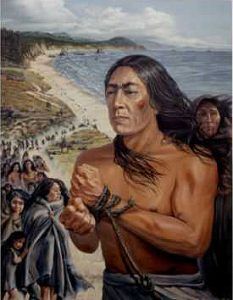
Ahnkuttie Tillicums by Peggy O’Neal.
Siletz – A Salishan tribe who occupied the Siletz River in northwest Oregon but ranged from northern California to southwest Washington. It was the southernmost Salishan tribe on the coast. Later, the name was extended to designate all the tribes on the Siletz Reservation in Oregon, which belong to the Athapascan, Yakonan, Kusan, Takilman, Shastan, and Shahaptian linguistic families. Today, they are the Confederated Tribes of Siletz Indians, a federally recognized confederation of 27 Native American tribal bands. They have some 4,500 enrolled members and own and manage a 3,666-acre reservation along the Siletz River in the Central Oregon Coast Range.
Sinagua – A pre-Columbian cultural group occupying an area in central Arizona between Flagstaff and Phoenix, Arizona, including the Verde Valley and significant portions of the Mogollon Rim country between approximately 500 A.D. and 1425 A.D. Early Sinagua sites consisted of pit houses, and later structures more closely resembled the pueblo architecture found in other cultures throughout the southwestern United States. They survived as hunter-gatherers and as early farmers. The last known record of Sinagua’s occupation was at Montezuma Castle National Monument around 1425 AD. The reasons for abandoning their habitation are unknown, but warfare, drought, and clashes with the newly arrived Yavapai people have been suggested. Several Hopi clans trace their roots to immigrants from the Sinagua culture, who believe their ancestors left the Verde Valley for religious reasons.
Sinkiuse-Columbia – Meaning “between people,” they belonged to the interior division of the Salishan linguistic people who lived between the Columbia and the Grand Coulee Rivers in Washington. Their nearest relatives were the Wenatchi and Methow. During the beginning of the reservation era, the Sinkiuse were located at the Columbia Reservation. After its closure, they were placed on the Colville Indian Reservation.
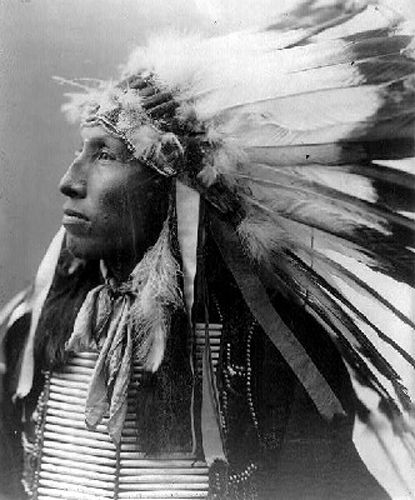
James Lone Elk – Sioux.
Sioux – The Sioux are part of a group of seven tribes that speak three distinct dialects: Lakota, Dakota, and Nakota. The Lakota are the most western of the three groups, occupying North Dakota and South Dakota. The Dakota live mainly in Minnesota and Nebraska, while the smallest of the three, the Nakota, reside in South Dakota or Canada. There were approximately 20,000 Sioux in the mid-18th century, which had increased to about 70,000; of these, about one-third still speak their ancestral language. The Sioux were defeated slowly by the wholesale slaughter of the buffalo by the U.S. Army, military police actions herding all Indians onto reservations, and enforcing government food distribution policies to ‘friendlies’ only, culminating 14 years later in the killing of Sitting Bull.
Sissipahaw – A former small tribe of North Carolina, presumably Siouan, from their alliance and associations with known Siouan tribes. The site of their former village, known in 1728 as Haw Old Fields, was noted as the largest body of fertile land in the area. It was probably situated near the present-day Saxapahaw on the Haw River, in the lower part of Alamance County, North Carolina. Nothing more is known of them beyond the general statement that they and other tribes of the region joined the Yamasee against the English in the war of 1715.
Native American Symbols, Totems & Their Meanings – Digital Download
Siuslaw – A small Yakonan tribe formerly living on and near the Siuslaw River in western Oregon. By the early 1900s, the tribe was nearly extinct, with its few survivors living on the Siletz Reservation.
Skaddal – A small tribe numbering 200 persons, found by Lewis and Clark in 1806 on the Klickitat River in present-day Washington. They subsisted by hunting deer and elk and traded with the Emeeshur and Skilloot for prepared fish. They were classed as a division of the Pisquow, later as living near Boston Creek and Kahchass Lake at the head of the Yakima River.
Skagit – A band of Salish who lived on the Salish River in Washington, particularly about its mouth and on the middle portion of Whidbey Island. They numbered approximately 300 in the mid-1800s and relocated to the Swinomish Reservation.
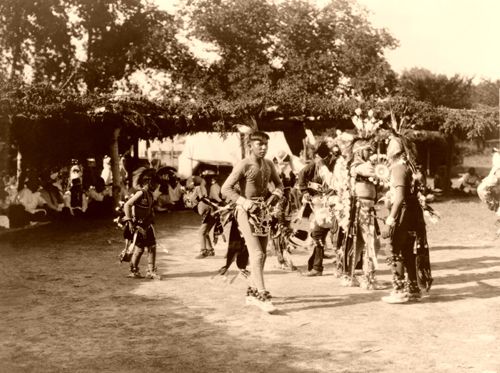
Skidi and Wichita dancers, Edward S. Curtis, 1927.
Skidi – A tribe of the Pawnee Confederacy, they were sometimes referred to as the Wolf Pawnee. Their language, however, differed slightly from that of the other Pawnee tribes. According to tradition, the Skidi and Arikara were once united. Still, they became separated during their northward migration, with the Arikara remaining in the Missouri Valley and the Skidi settling in Loup, Nebraska, where three other Pawnee tribes later built their villages. Their villages included supernatural underground dwellings of mythic animals that “presided” over the ceremonies of their secret societies. Part of the Skidi tribe moved southward in about 1770, approaching the Texas border. During the two centuries preceding their relocation from Nebraska to Indian Territory in 1874, the Skidi, like the other Pawnee tribes, fought to maintain their hunting grounds against intruders and strove for the possession of horses to that end.
Securing these animals became the primary incentive for war parties, which was a sign of wealth. The history of the Skidi does not differ materially from that of the other Pawnee tribes. They joined in the treaties with the United States, served as scouts in its army, and followed the rest of the Pawnee to Oklahoma.
Skilloot – A Chinookan tribe found by Lewis and Clark in 1806, residing on both sides of the Columbia River in Washington and Oregon, numbering about 2,500 people. They were among the tribes almost wiped out by the 1823 fever epidemic. Later, their principal village was Cooniac, at Oak Point, Washington. In 1850, they had been reduced to only about 200, and as an individual tribe, they disappeared from history a few years later.
Snake – A name applied to many different bodies of Shoshonean Indians, but most persistently to those of eastern Oregon, to which the following synonyms refer. These Indians form one dialectic group with the Paviotso of western Nevada and the Mono of southeast California. The principal Snake tribes were on the Walpapi and Yahooskin.
Snohomish – A Salish tribe formerly living on the south end of Whidbey Island, Puget Sound, and the mainland opposite the mouth of the Snohomish River in Washington. Their population was 350 in 1850. What was left of them moved to the Tulalip Reservation in Washington, where they were mixed with other broken tribes.
Snoqualime/Snoqualmie – Belonging to the Nisqually branch of the coastal division of the Salishan linguistic family, they lived on the Snoqualmie and Skykomish Rivers in Washington. They were reported to have numbered 225 in 1857.
Soacatino – Also known as Xacatin, they were a tribe encountered by the companions of Hernando de Soto in northwestern Louisiana or northeastern Texas. They were likely Caddo, but this has not been definitively determined.
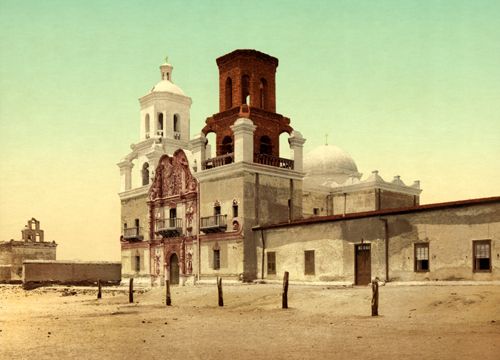
Mission San Xavier del Bac, Detroit Photographic Co, 1902.
Sobaipuri – A Piman tribe, they formerly inhabited the central and tributary valleys of the San Pedro and Santa Cruz Rivers, as well as the Gila River between the mouth of the San Pedro River and the ruins of Casa Grande, and possibly eastward of this area in southern Arizona. Missions were established among them by the Spaniards in the latter part of the 17th century and the beginning of the 18th century at Guevavi, Suamca, and San Xavier del Bac. They were said to have been driven out of Aravaipa Canyon by the Apace and were forced to flee to the Pima. The Apache also caused them to give up their homes on the San Pedro River and merge into the Papago tribe, who, in later years, at least one of the former Sobaipuri towns — San Xavier del Bac.
Spokane – A name applied to several small bands of Salishan who lived on and near the Spokane River in northeast Washington. The Skitswish initially employed the name to designate a band living at the river’s forks called the Smahoomenaish. However, white settlers extended the name to cover several allied divisions. Lewis and Clark estimated their population in 1805 to be about 600 people living in 30 houses. At the turn of the century, approximately 300 “Lower Spokane” and 238 “Upper Spokane” individuals resided on the Colville Reservation in Washington, and nearly 100 lived on the Coeur d’Alene Reservation in Idaho.
Squaxon or Squakson – Belonging to the Nisqually branch of the coast division of the Salishan linguistic family, they lived on the North Bay of Puget Sound. They numbered approximately 1,000 in 1780, but by the early 1900s, they had been reduced to less than 100.
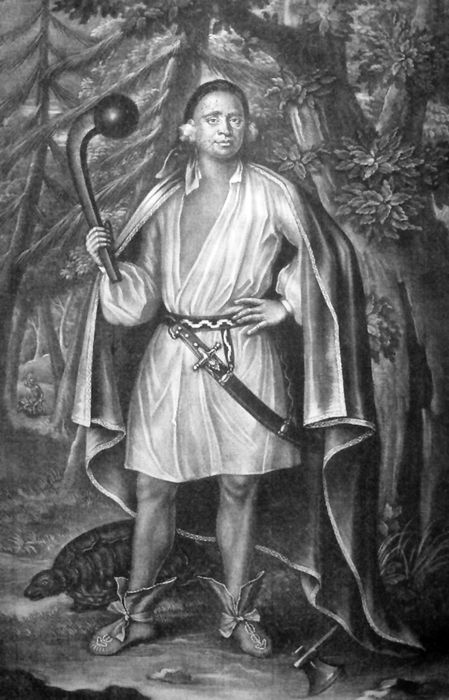
Mohican Indian.
Stockbridge – The Stockbridge are a tribe of the Mohican Confederacy that was first known under the name Housatonic. They occupied part of the Housatonic River valley in southern Berkshire County, Massachusetts. They later merged with the Munsee Indians to become the Stockbridge-Munsee Band of Mohican Indians. Many live in Shawano County, Wisconsin, on a 22,000-acre reservation today.
Stehtsasamish – A division of the Salishan people who lived on Budds Inlet near the present site of Olympia, Washington. In 1854, they numbered only about 20 people.
Stillaquamish – A Salishan people who lived on the Stillaguamish River in northwest Washington. They were a branch of, or closely related to, the Snohomish and moved to the Tulalip Reservation.
Stony – See Assiniboine
Sugeree – A small tribe, supposed to have been Siouan, that lived near the Waxhaw in Mecklenburg County, North Carolina, and York County, South Carolina. They occupied a fertile district where many settlements had been made. They were significantly reduced by the Yamasee War of 1715 and later merged with the Catawba tribe.
Siuslaw – Belonging to the Siuslawan division of the Yakonan linguistic stock, they lived on and near the Siuslaw River in Oregon. By 1910, they were reported to number only seven people.
Suquamish – A Salishan division that lived on the west side of Puget Sound, Washington. They claimed the land from Appletree Cove in the north to Gig Harbor in the South. Seattle, who gave his name to the city, was chief of this tribe and the Duwamish in 1853. In 1857, they numbered 441, but by 1909, their numbers had been reduced to approximately 180 people.
Surruque – They were probably of the Timucuan linguistic group and lived near Cape Canaveral, Florida. When trouble arose between them and the Spaniards, their village was attacked. Sixty people were killed, and another 54 were captured. Later, they probably united with the Timucua people.
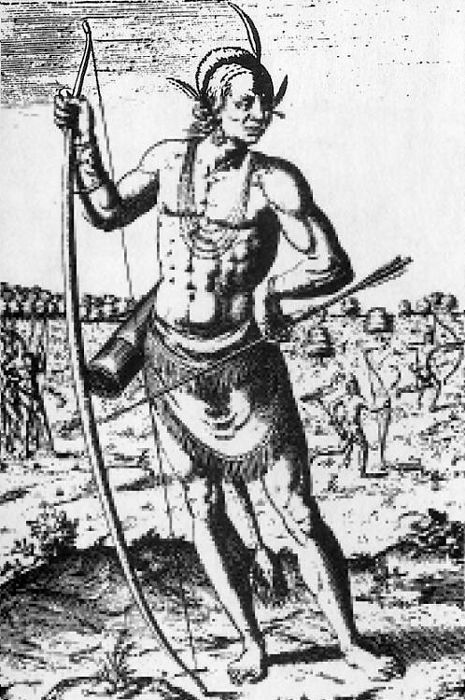
Susquehannock Warrior.
Susquehannock/Conestoga – The tribe occupied the Susquehanna River and its tributaries from the northern end of the Chesapeake Bay in Maryland, across Pennsylvania, into southern New York. Called noble and heroic, they were also described as aggressive, warlike, imperialistic, and bitter enemies of the Iroquois. Today, the tribe is gone, but their descendants can be found among the Iroquois and Lenape.
Sutaio – An Algonquian tribe that lived along the James River in South Dakota in the 18th century. They were at war with the Cheyenne, their eastern neighbors, with whom they shared a close linguistic relationship. However, the two tribes finally allied and crossed the Missouri River together to the west. The Sutaio rapidly declined but kept their separate identity until about 1850, when the Cheyenne absorbed them.
Swallah/Swalash – A band of Salish Indians who lived on Orcas Island in northwest Washington. They were later removed to the Lummi Reservation.
Swinomish – A Salish tribe that lived on the south end of Whidbey Island, Puget Sound, and on the mainland opposite the mouth of the Snohomish River, Washington. Their population in 1850 was 350. They were removed to the Tulalip Reservation, where they lived with other broken tribes.
Index of Tribes – A B C D E-I J-K L-M N O P Q-R S T-V W X-Z
Compiled by Kathy Alexander/Legends of America, updated September 2025.
Also See:
Indians and Emigrants on the Overland Trails
Native Americans – First Owners of America
Native American Photo Galleries
Native American Proverbs & Wisdom
See Sources.