
Lawman Summaries (name begins with) A B C D E F G H I J K L M N O P Q R S T U V W X Y Z
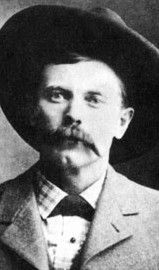
George Scarborough.
George W. Scarborough (1859-1903) – Was elected sheriff of Jones County, Texas, in 1885 and served for several terms. Later, he became a U.S. Deputy Marshal, during which time he killed John Selman in 1895 in El Paso, Texas. Will Carver killed him on April 5, 1900.
John Henry Selman (1839–1896) – A Texas lawman and an outlaw, Selman rustled cattle around Fort Griffin, Texas, with John Larn. He befriended Billy the Kid during the Lincoln County War and killed John Wesley Hardin in August 1895. George Scarborough killed him on April 6, 1896.
Lafayette “Lafe” Augustus Shadley (1844-1893) – Lafayette “Lafe” Augustus Shadley was the Sheriff of Montgomery County, Kansas, and later was appointed as a U.S. Deputy Marshal in Oklahoma Territory. He was killed in a bloody gunfight at Ingalls, Oklahoma, with the Doolin-Dalton Gang.

Charles Shibbell, Arizona lawman.
Charles A. Shibell (1841-1908) – A teamster, miner, businessman, and Arizona lawman and a contemporary of the Earp brothers.
Ed Short (18??-1891) – Served as a lawman in Stevens County, Kansas, in 1888, when the county was embroiled in a vicious county seat war. Next, he served as a U.S. Deputy Marshal in Oklahoma, and in August 1891, he arrested Charles Bryant, a member of the Dalton Gang. As he was transporting Bryant to the federal district court in Wichita, Kansas, the pair got into a gunfight, and both were killed.
Albert Sieber (18??-1907) – A U.S. Deputy Marshal and Indian scout, he employed the Apache Kid, Frank Leslie, and Tom Horn at different times. He died in 1907.
Edward A. Sieker – Served as a Texas Ranger in Company D under Dan Roberts and led the attack against the Jesse Evans Gang in 1880.
Frank Sieker (18??-1885) – Served in the Texas Rangers in Company B and was shot and killed in a battle with Mexican horse thieves in May 1885.
Lamartine “Lamb” P. Sieker (18??-1914) – Served in the Texas Rangers in Company B and in 1884 was made quartermaster general. He served as a Ranger for nineteen years and died in 1914.
Tom Sieker – Served as a Texas Ranger.
Pink Simms – A cowboy and lawman, he pursued the Wild Bunch with Charles Siringo.
Benjamin Sippy – Served as the city marshal of Tombstone, Arizona, until January 1881, when Virgil Earp replaced him. However, in the next election, Earp lost to Sippy.
Charles Angelo Siringo (1855-1928) – A gunman and one of the most famous detectives of the Pinkerton National Detective Agency, Siringo also served as a lawman for many years and became an author. He died in California in 1928.
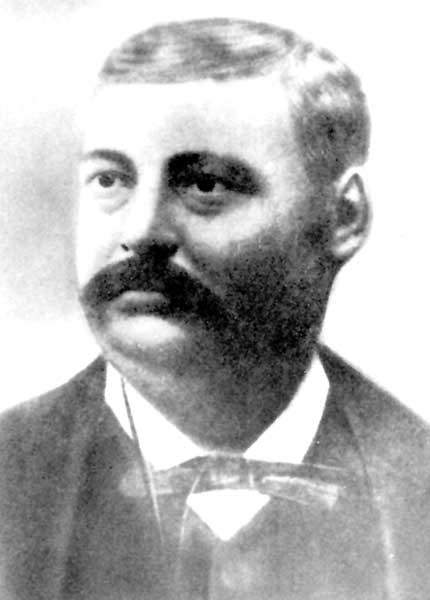
Sam Sixkiller.
Sam Sixkiller (1842-1886) – A Captain of the U.S. Indian Police and U.S. Deputy Marshal in Indian Territory.
“Texas” John Horton Slaughter (1841–1922) – A Texas Ranger, Slaughter later became the Sheriff of Cochise County, Arizona. With his six-shooter and a sawed-off shotgun, he cleaned up the Arizona Territory more than any other individual. He died on February 15, 1922.
James L. “Whispering” Smith (18??-1914) – A gunfighter and a lawman, Smith served as a New Orleans Police Detective, a Railroad Detective for several companies, a stock detective, and the Chief of Indian Police.
J.D. Smith – Served as a U.S. Deputy Marshal in the New Mexico Territory and was shot to death while in pursuit of the outlaw Samuel Ketchum.
Thomas J. Smith, aka Bear River (1830–1870) – Served as Kit Carson, Colorado Marshal; a police officer in Bear River, Wyoming, during the “Bear River troubles” and as the first marshal of Abilene, Kansas, in 1870, where he was known as the “No gun marshal.” On November 2, 1870, he was shot and killed while trying to arrest a murderer.
A.J. Sowell (18??-1922) – Served as a Texas Ranger in 1870-71 and later wrote and published several Texas history books.
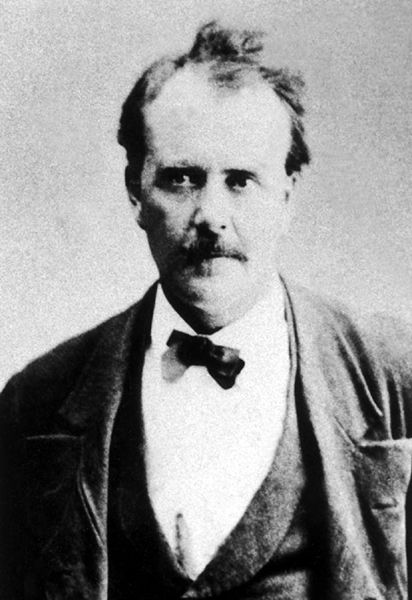
Judge Wells Spicer.
Wells Spicer (1831-1887) – Related to the Earps, Spicer served as Tombstone’s Justice of the Peace when the Gunfight at the O.K. Corral took place. After Sheriff Johnny Behan arrested the Earp brothers – Virgil, Wyatt, Morgan, and Doc Holliday – a pre-trial hearing was held on November 29, 1881, where Spicer decided that the defendants had been justified in their actions.
Con Stapleton (1848–1879) – Stapleton was made Deadwood, South Dakota Marshal, shortly after Jack McCall shot Bill Hickok. Later, he moved to Leadville, Colorado, and was found dead in Denver in 1879.
Frank C. Stillwell (1857-1882) – Known as both a lawman and an outlaw, Stillwell hooked up with the Clanton Gang and began cattle rustling. Thief or no, Johnny Behan appointed Stillwell as a Cochise County Deputy Sheriff in 1881. After the Gunfight at the O.K. Corral, the Earps suspected Stillwell, along with Ike Clanton, of having been the killers of Morgan Earp. Two days later, Wyatt and Warren Earp, along with Doc Holliday, ambushed Stillwell at the Tucson Train Station. His bullet-ridden body was found the next morning.
Simpson “Jack” Stilwell, aka Comanche Jack (1850-1903) – Stilwell was a United States Army Scout, U.S. Deputy Marshal, police judge, and U.S. Commissioner in Oklahoma.
Port Stockton (William Porter, aka Porter Stogden) – An outlaw, lawman, and brother of Ike, he shot and killed Juan Gonzales in October 1876 in Cimarron, New Mexico, and was killed on January 10, 1881, by Alfred Graves.
Dallas Stoudenmire (1845–1882) – A lawman and gunfighter, Stoudenmire joined the Texas Rangers in 1874 and was the city marshal of El Paso, Texas, in 1881. He killed several men in that capacity. In 1882, he resigned as marshal and became a U.S. Deputy Marshal. On September 18, 1882, he was killed by James and Doc Manning in El Paso.
Michael Sughrue (1844-1901) – Deputy under his twin brother and sheriff Patrick Sughrue in Dodge City, Kansas; he later served as sheriff of Clark County, Kansas. He and his brother were seen as two of the most courageous lawmen in the West.
Patrick F. Sughrue (1844-1906) – Dodge City, Kansas, lawman during the final days of the cattle era and twin brother to Michael Sughrue, also a Kansas lawman. Both men were seen as two of the most courageous lawmen in the West.
William E. “Billy” Sutton (1846-1874) – A gunfighter and lawman, Sutton was the leader of a band of “Regulators” in DeWitt County, Texas, involved in the Sutton-Taylor feud.
©Kathy Alexander/Legends of America, updated October 2026.
Also See:
Lawmen of the Old West (main page)
See Sources.
Lawman Summaries (name begins with) A B C D E F G H I J K L M N O P Q R S T U V W X Y Z