
Jump to: Links to Full Articles
Jump to: Outlaw Summaries (name begins with) A B C D E F G H I J K L M N O P Q R S T U V W X Y Z
Christopher “Kit” Dalton, aka Charles Bell, Thomas Mabry (18??-1920) – An outlaw and second cousin of the Dalton brothers, Kit robbed and looted along the North-South border during the Civil War and claimed he rode with both the James and Bass Gangs. He died in 1920.
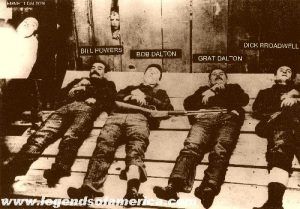
Daltons Dead.
Emmett Dalton, aka Charley McLaughlin (1871-1937) – Outlaw member of the Dalton Gang, he survived the raid on Coffeyville, Kansas, but was shot and captured while attempting to rescue his brother Bob. He served over fourteen years in prison, moved to Hollywood, California, and wrote a book about the Dalton Gang.
Grattan “Grat” Dalton (1865-1892) – Served as a Kansas deputy marshal before turning outlaw, robbing banks and trains with the Dalton Gang. He was killed during the Coffeyville, Kansas bank robbery attempt on October 5, 1892.
Robert “Bob” Dalton (1868-1892) – He served as a lawman before forming the Dalton Gang in 1891. He was killed during the Coffeyville, Kansas bank robbery attempt on October 5, 1892.
William “Bill” Dalton (1866-1894) – Serving in the California Legislature before turning outlaw, Bill joined Bill” Doolin’s Gang after the death of his brothers. He became a leader of the Doolin-Dalton Gang and was killed by lawmen on June 8, 1894.
J. Frank Dalton, aka Happy Jack – An outlaw who was wanted in Limestone County, Texas, in 1886 for horse theft. He later claimed he was Jesse James.
John Daly (1839-1864) – Daly was a vicious thug who, along with “Three-Fingered Jack” McDowell, ran a saloon in the mining camp of Aurora, Nevada, and terrorized the town’s citizens.
Boston Damewood – A California outlaw and highwayman, he was lynched by a mob of 200 in Los Angeles. Bill Daniels – Led a gang of outlaws who robbed the Tucumcari, New Mexico, bank and shot a boy who was holding his hands in the air.
Pancho Daniel (18??-1858) – Along with Juan Flores, led the Flores-Daniels Gang in raids of southern California during the mid-1850s. He was hanged for his crimes on November 30, 1858.
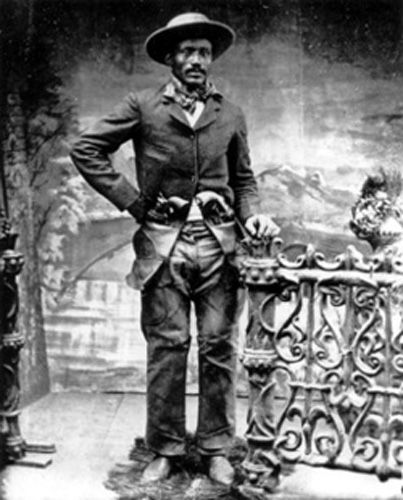
Isom Dart.
Isom Dart, aka Ned Huddleston (1849-1900) – Born into slavery in Arkansas, Dart drifted into Texas, then Colorado, where he began to rustle cattle. He was shot dead on October 3, 1900, by Tom Horn.
Emmet R. Daugherty – The nephew of Henry Starr, Daugherty attempted murder in Oklahoma.
Roy Daugherty “Arkansas Tom Jones” (1871-1924) – An outlaw and member of the Doolin-Dalton Gang, he was captured at Ingalls, Oklahoma, and served seventeen years in prison. Upon his release, he returned to a life of crime and was killed by law officers on August 16, 1924.
Jim Davenport – Texas outlaw and cowboy Davenport was accused of killing Elk Hereford. When the Texas Rangers tried to apprehend him in Cotulla, Texas, in 1899, he fought them and was killed.
Andrew Jackson “Big Jack” Davis (??-1877) – A stagecoach and train robber, he was killed by a Wells Fargo shotgun messenger while trying to rob a stagecoach in Nevada.
George Davis – See Dolly Graham
Frog Davis – Killed Sheriff Jim Musgrove in the Cherokee Nation of Indian Territory. He was convicted and hanged for the crime.
Jack Davis (1845?-1879?) – An outlaw and friend of Bill Longley, Davis robbed trains with Sam Bass and Joel Collins.
John Davis (18??-1884) – Killed a boy named William Bullock at Brownswood, Texas. Arrested by Heck Thomas, he was convicted and hanged at Fort Smith, Arkansas, on July 11, 1884.
Lewis Davis – (18??-1896) – Creek Indian outlaw and member of the Rufus Buck Gang. On July 1, 1896, he was hanged at Fort Smith, Arkansas, for murder, robbery, and rape.
Lucky Davis (18??-1896) – Creek Indian outlaw and member of the Rufus Buck Gang. He was hanged on July 1, 1896, at Fort Smith, Arkansas, for murder, robbery, and rape.
Curtis Dayson – An outlaw and member of the Cook Gang in Indian Territory, captured after a bank robbery.
Pony Deal (or Diehl) – A former member of the John Kinney Gang, Diehl joined the Jesse Evans Gang during New Mexico’s Lincoln County War. Afterward, he went to Arizona and joined the Clanton Cowboys. Wyatt Earp sought him during the Earp Vendetta Ride, but he wasn’t found. He claimed to have killed John O’Rourke in 1882 after O’Rourke allegedly killed his friend, Johnny Ringo.
Ollie “Big Nose George” Deetz (1850-1889) – Deetz became the marshal of Manhattan, Colorado, in May 1887. Manhattan was a gold mining camp in the foothills of the Rocky Mountains in northwestern Larimer County. Like other mining camps of the time, it had a lawless element, and city authorities hired Deetz to “get rid of it.” He seemingly happily complied, killing three men his first night on the job and collecting a $100 bounty on each man. He continued to “rid” the town of its seedier characters, hanging some of them after planting evidence. A year later, he moved northward to Wyoming, and following an alleged bank robbery, he was lynched at Rock Creek on October 5, 1889.
William E. Delaney, aka Bill Johnson; Mormon Bill (1856-1884) – An outlaw suspected of murder in Pennsylvania, he fled west, where he joined a gang in Arizona. He was captured by Deputy Ben Daniels and hanged in Tombstone in March 1884.
Tom Deloach – Shot and killed Joe Holland in September 1885 outside of El Paso, Texas.
Dan Demmons – Led an outlaw gang in Texas and New Mexico in the 1870s. He was captured in 1880.
Boyd Dempster – A New Mexico outlaw, he was shot and killed in Georgetown, New Mexico, on December 26, 1881, by Deputy Sheriff Glasgow.
Patas de Rana, aka El Coyote – Outlaw member of Vicente Silva’s White Caps Gang in Las Vegas, New Mexico. He shot and killed Vicente Silva on orders of the gang on May 19, 1895. The gang’s breakup came after one of them was ordered hanged by the gang court.
James Devine, aka Jones, James Johnson, Curran – New Mexico outlaw lynched in Raton on April 16, 1881.
Timmie Dick – A Creek Indian outlaw in Indian Territory, Dick was convicted of murder and executed in 1906.
James Diggs (18??-1878) – An Oklahoma murderer, Diggs killed J. C. Gould, a cattle drover, for $27.00. He was hanged on December 20, 1878, at Fort Smith, Arkansas.
Jerry Dillon – A New Mexico outlaw who killed Captain Paul Dowlin on May 5, 1877, near Fort Stanton.
Lee Dixon – Outlaw member of the Smith-Dixon Gang. Deputy James Cole wounded him upon his capture, and he later died in the jail hospital at Fort Smith, Arkansas.
Cornelius “Lame Johnny” Donahue, aka: John A. Hurley (1850-1878) – A road agent operating in the Black Hills, he was arrested, but before he could be taken to jail, he was hanged by a vigilante.
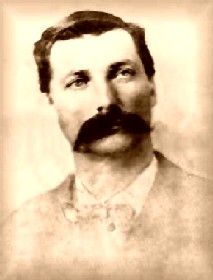
Bill Doolin.
William M. “Bill” Doolin, aka Will Barry (1858-1896) – Leading the Doolin-Dalton Gang that robbed trains and banks in Oklahoma, New Mexico, Missouri, and Kansas, Doolin was shot and killed by U.S. Deputy Marshal Heck Thomas on August 24, 1896.
John Dorsey – A New Mexico outlaw, Dorsey was lynched after killing Constable Joe Carson in Las Vegas, New Mexico.
Bob Dossay – An Oklahoma outlaw, Dossay was killed by Caesar Payne in the Seminole Nation of Indian Territory.
Charley Dotson – Outlaw member of the Cookson Hills Gang who participated in the bank robberies at Haskell, Oklahoma, and York, Nebraska, in 1933.
Daniel Dowd – An outlaw companion of Bill Delaney, Dowd was hanged in March 1884 in Tombstone, Arizona.
William Downing – An Outlaw member of the Alvord-Stiles Gang, he also served as the crooked sheriff of Willcox, Arizona, allowing the gang to escape after a train robbery. He killed over thirty men and was shot dead by Sheriff Billy Speed in August 1900 at Willcox.
Robert “Bob” Dozier (1800-1878) – Farmer turned outlaw; Bob Dozier was accused of multiple crimes in Indian Territory before being tracked down by famed U.S. Deputy Marshal Bass Reeves.
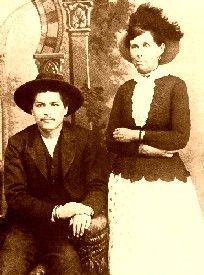
Bell Starr and Blueford Duck.
Bluford “Blue” Duck 18??-1895) – Born in the Cherokee Nation, Blue Duck’s Indian name was Sha-con-gah. Blue Duck was said to have been a member of a small gang involved in stage Hold-up and rustling.
Dell Dublin – A Texas outlaw captured in Coryell, Texas, after committing murder.
Dick Dublin – A Texas outlaw captured in Coryell, Texas, after committing murder.
Thomas Duffy – A New Mexico outlaw jailed in Las Vegas for killing Thomas Bishop in Liberty, New Mexico. When he tried to escape on September 19, 1880, he was shot and killed.
Giovanni Dugi, aka Dagi, Duque – A New Mexico outlaw who was lynched on June 4, 1879, in Las Vegas, New Mexico.
Dick Duncan – An outlaw and nephew of Thomas “Black Jack” Ketchum, he was hanged for murder at Eagle Pass, Texas, in 1891.
Jack Dunlap (or Dunlop), aka Three-Fingered Jack (18??-1900) – In the 1890s, Dunlap robbed banks and trains in Arizona before being arrested. Following his release in 1895, he joined Black Jack Christian’s gang, the High Fives, and later the Alvord-Stiles Gang, again holding up trains. He died after being shot during a train robbery in Fairbank, Arizona.
Dunn Brothers of Ingalls, Oklahoma – In the 1890s, William B. Dunn and his brothers, Bee, Calvin, Dal, and George, ran a road ranch near Ingalls, Oklahoma, for travelers looking for a place to eat and rest. Sometimes, these travelers who made the mistake of stopping were robbed, killed, and never seen again.
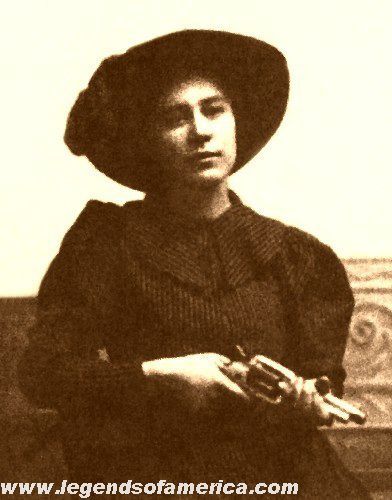
Rose Dunn, aka The Rose of Cimarron.
Rose Dunn, aka The Rose of Cimarron – Outlaw lover of George Newcomb and friend of the Dalton-Doolin Gang. She helped Newcomb escape from a gun battle outside Ingalls, Oklahoma, and served time in a U.S. reformatory.
John Dupont – New Mexico outlaw who shot and killed Bartole Garcia on January 14, 1883, in La Joya, New Mexico.
Grover Durrell – Oklahoma outlaw who rode with Al Spencer and Jelly Nash in Indian Territory.
©Kathy Alexander/Legends of America, updated October 2026.
Jump to: Links to Full Articles
Jump to: Outlaw Summaries (name begins with) A B C D E F G H I J K L M N O P Q R S T U V W X Y Z
Also See:
Outlaw & Scoundrels Photo Gallery
See Sources.