
Lawman Summaries (name begins with) A B C D E F G H I J K L M N O P Q R S T U V W X Y Z
Allen R. Maddox – Served in Company B of the Texas Rangers in 1896.
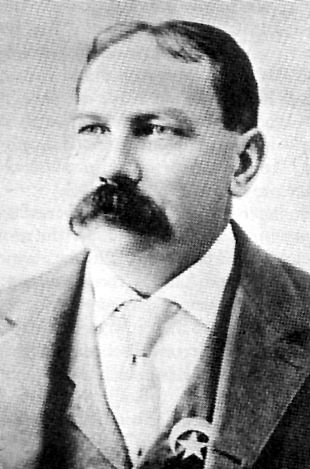
Chris Madsen
Christian “Chris” Madsen (1851–1944) – A U.S. Deputy Marshal in Oklahoma Territory, Madsen worked closely with Heck Thomas and Bill Tilghman. Known as the Three Guardsmen, they were largely responsible for wiping out lawlessness in Indian Territory.
George Maledon, aka Prince of Hangmen (1830-1911) – Maledon worked as a deputy sheriff in Fort Smith, Arkansas, before he was appointed a “special deputy” in charge of executing prisoners whom Judge Isaac Parker had condemned. For the next 22 years, he executed more than sixty criminals, earning him the moniker “Prince of the Hangmen.”
Bryan Marsh (1833-1901) – Born in Alabama in 1833, Marsh later moved to Texas and settled near Tyler. During the Civil War, he served with distinction as a captain in the Texas Cavalry. In the Battle of New Hope Church, Georgia, he was wounded in 1864, resulting in the loss of his right arm. However, that did not stop him from becoming the Captain of Company B, Frontier Battalion of the Texas Rangers, in 1880. In February 1881, the company quelled a riot situation in San Angelo. When budget restrictions disbanded his company in 1881, Marsh returned to Smith County, where he served as sheriff for many years. He died March 25, 1901, in Tyler. Ranger Jeff Milton described his Captain this way: “… he would drink right smart and scrap right smart. He was an old Confederate war colonel with one arm shot off at the shoulder, and the other hand almost gone. But he would fight his shadow; wa’n’t afraid of anything.”
Barney Mason – A gunman and lawman, he was a deputy under Pat Garrett in Lincoln County, New Mexico. He killed John Farris in self-defense at Fort Sumner, New Mexico, in 1880.
Milt Mast – Sheriff of Nacogdoches County, Texas, who captured Wild Bill Longley on June 26, 1877.
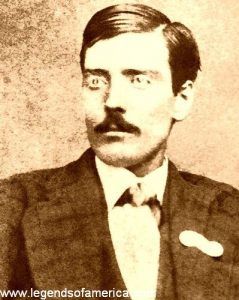
Ed Masterson.
Edward J. Masterson, aka Little Ed (1852–1878) – Brother of Bat Masterson and Dodge City, Kansas Marshal, killed in the line of duty by cowboys on April 9, 1878.
James “Jim” P. Masterson (1855–1895) – Brother of Bat Masterson, James was a lawman in Dodge City and Ingalls, Kansas. He later served as a U.S. Deputy Marshal in Indian Territory. He fought the Doolin Gang and was part of the posse that forced Arkansas Tom Jones to surrender.
Robert Masterson, aka Smiling Bob – Another brother of Bat Masterson, Robert was a marshal in Trinidad, Colorado, in 1882. He reportedly killed twenty-one men.
William Bartholomew “Bat” Masterson (1856?-1921) – Ford County, Kansas Deputy Sheriff and sheriff; Trinidad, Colorado marshal; Dodge City peace commissioner; U.S. Deputy Marshal in New York. Later a reporter for a newspaper. Died of natural causes in 1921.
Dave H. Mather, aka Mysterious Dave (1851-1930?) – Known as both a lawman and an outlaw, Mather tended to lean toward the lawful side, serving as a Dodge City, Kansas Marshal; El Paso, Texas Assistant Marshal; and a U.S. Deputy Marshal in New Mexico. However, he was also involved with the lawless Dodge City Gang in Las Vegas, New Mexico, and was suspected several times of horse and cattle rustling.
Jacob B. Matthews (18??-1904) – A gunman and lawman, he served in the Tennessee Cavalry in the Civil War and was later a deputy sheriff under Sheriff Brady during the Lincoln County War in New Mexico.
D. Boone May (1852-1910) – A gunman, stage guard, and U.S. Deputy Marshal in Deadwood, South Dakota, and Cheyenne, Wyoming, he killed several stage robbers in the 1870s.
Thomas P. McCall – The first sheriff of Medina County, Texas, in 1858. Later, he served as a deputy sheriff in Bexar County before becoming sheriff and serving for ten years.
William McCauley – Served as a Texas Ranger in the 1890s and, in 1897, helped break up a gang terrorizing San Saba, Texas.
Robert McClure – Served as a Texas Ranger in the 1890s and, in 1897, helped break up a gang terrorizing San Saba, Texas.
Mike McCluskie, aka: Arthur Delaney, Art Donovan (18??-1871) – A little-known gambler and occasional lawman, McCluskie was an Irishman from Ohio and a rough man by anyone’s standards. He made his way to Kansas by working for the Santa Fe Railroad as a Night Policeman. Earlier in the year 1871, he had been charged with garroting a man to death in Newton, but the charges were dismissed. While in Newton, McCluskie befriended an 18-year-old man who was dying of tuberculosis. The young man, James Riley, often called “McCluskie’s Shadow,” would play a major role in the famous Hide Park Gunfight. McCluskie primarily made his living as a gambler, but during the August elections, he was hired by the Newton authorities as a Special Policeman to help keep order. During the elections, he got into an argument with another Special Policeman named Billy Bailey. The argument led to violence, and McCluskie ended up killing Bailey. It was this event that instigated the Hide Park Gunfight, in which McCluskie was shot in the neck and back by Hugh Anderson during the gunfight. He died six hours later on August 19, 1871.
Myron McCord – Appointed as a U.S. Marshal in Arizona Territory on June 6, 1901.
O.W. McCuiston -In 1894, while sheriff of Raton, New Mexico, he became embroiled in a railway strike.
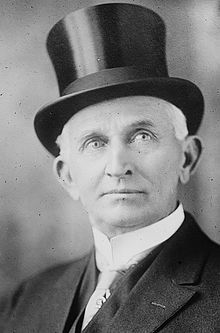
William Jesse McDonald.
William Jesse McDonald (1852-1918) was a deputy sheriff in Mineola, Texas; a U.S. deputy marshal in the Indian Territory; and a captain in the Texas Rangers. Died of pneumonia in 1918.
James “Jim” McIntire (or McIntyre) (1846-1902) – A Texas gunman and lawman from 1860, he was a Texas Ranger, city marshal of Las Vegas, New Mexico, deputy sheriff, cowboy, hunter, gambler, and outlaw with a $1,000 reward on his head for the deaths of two men near Silver City, New Mexico.
T.W. McIntosh – Served as a deputy marshal in Prescott, Arizona.
Joseph “Joe” W. McKidrict (1871-1894) – A twenty-three-year-old Texas Ranger, McKidrict was shot and killed by U.S. Deputy Marshal Bass Outlaw on April 5, 1894, in El Paso, Texas. When the U.S. Marshal created a disturbance at Tillie Howard’s brothel and his gun accidentally went off, Constable John Selman and McKidrict quickly arrived. As the lawmen were trying to calm down the drunken Bass, he pointed his gun at McKidrict and shot him in the head and back, killing him instantly. Outlaw then fired at Selman, nearly striking him in the face and causing deep powder burns. Selman returned fire, hitting Outlaw just above the heart. As Bass staggered back, he fired two more shots, hitting Selman above the right knee and in the thigh. Bass then staggered into the street and surrendered to Texas Ranger Frank McMahon. He died four hours later. McKidrict was buried in the Oakwood Cemetery in Austin, Texas.
Joseph McKinney (18??-1850) – After serving only five months as Sheriff of Sacramento County, California, McKinney and his deputies tried to arrest several squatters who had taken over land during the California Gold Rush. At this time, numerous confrontations occurred between property owners and miners illegally occupying their property. On August 14, 1850, a city assessor was killed by squatters, and the following day, Sheriff McKinney, along with 20 deputies, rode to Brighton, California, where several squatters had barricaded themselves in a house. As the officers attempted to enter the house, gunfire erupted, and when the smoke cleared, Sheriff McKinney and two squatters were killed. The other squatters surrendered.
Thomas L. “Tip” McKinney – A New Mexico gunman who was also a lawman, accompanied Pat Garrett when he killed Billy the Kid on July 14, 1881.
Sherman W. McMasters (1853-??) – An outlaw turned lawman who became one of the six men involved in the Earp Vendetta Ride. It is unknown when or how he died.
Francis Marion McMahon (18??-1940) – Served in Company D of the Texas Rangers under John Reynolds Hughes in September 1893 and arrested Bass Outlaw on April 4, 1894. He later served as a U.S. Deputy Marshal.
Leander H. McNelly (1844–1877) – A Texas lawman, McNelly was commissioned as Captain of the state police on July 1, 1870, and commanded the “Special Ranger Force” in 1874, which patrolled the Mexico border. He died on September 4, 1877.
John McPherson (18??-1879) – McPherson served as the Police Chief in Las Vegas, New Mexico, until the Dodge City Gang showed up and wanted to take control of the town. The gang’s leader, a man who went by the name of Hoodoo Brown, soon got himself installed as mayor and Justice of the Peace and had McPherson sacked. But that wasn’t enough for Brown, who sent a man named Charles “Slick” Karl to engage McPherson in a gunfight and get rid of him permanently. On August 6, 1879, the gunfight occurred, and McPherson was killed, and Kyle was wounded.
Mike Meagher (1844–1881) – Wichita, Kansas Marshal, U.S. Deputy Marshal in Indian Territory, and Caldwell, Kansas Mayor.
Joseph Lafayette Meek (1810-1875) – Born in Washington County, Virginia, on February 7, 1810, Meek was propelled westward at an early age by a disagreeable stepmother. He first went to Lexington, Missouri, where he joined two of his brothers. By 1829, he had signed on with William Sublette as a Rocky Mountain trapper, and for the next eleven years, he lived the strenuous life of a mountain man. By 1840, the trapping industry was waning, and Meek, along with his third Indian wife, traveled to Oregon’s Willamette Valley. He first worked for various farmers before becoming sheriff. By 1845, he was a prosperous farmer and won a seat in the Legislature. Following the Whitman Massacre in November of 1847, Meek led a delegation to Washington, D.C., asking for protection and urging territorial status for Oregon. The following year, Congress approved his requests, and Meek was appointed the territory’s federal marshal, a post he held for the next five years. In 1855, he played a leading part in the Yakima War, organizing the Oregon Volunteers and winning the rank of major for his service. In June of 1875, Joe died at his home.
Hod Miles – An outlaw turned deputy sheriff, who in January 1888 killed Jake Gibson, who was allegedly his fifth victim.
F.M. Miller – Female U.S. Deputy Marshal. Commissioned out of the federal court at Paris, Texas, she was the only female deputy working in the Indian Territory in 1891. Known for always wearing a cowboy hat and a gun belt filled with cartridges and a Colt pistol, she had a reputation as a fearless, efficient officer who locked up numerous outlaws.
James B. Miller, aka Killin’ Jim, Killer Miller, Jim the Killer, Deacon Miller (1866-1909) – Killing his first man when he was just 18, Miller became a hired gun in the 1880s, a “career” he would continue for the next two decades. He occasionally served as a lawman in Pecos, Texas. He killed Sheriff Bud Frazer and was suspected of forty other killings, including Pat Garrett and A.A. Bobbitt. On April 19, 1909, he was hanged by vigilantes in Ada, Oklahoma.
Alexander Hamilton Mills (1837-1882) – Known as a “crack-shot,” Mills was the sheriff of Lincoln County, New Mexico, during the Horrell War. He later faced embezzlement and manslaughter charges in 1875. He was killed by Mexicans in 1882.
Jeff Davis Milton (1861-1947) – Milton was an Old West lawman who served for more than 50 years.
David Montgomery – Serving as Chief Deputy Marshal of Lincoln County, New Mexico, in 1878.
John “Happy Jack” Morco – A semiliterate and drunken brawler in California, Morco fled the state after killing four unarmed men. He next turned up in Ellsworth, Kansas. Exaggerating that he had killed 12 men in gunfights, he was soon appointed to the police force to help control the rowdy cowtown. There, he got into a quarrel with gunman Ben Thompson, which led to the death of Sheriff C. B. Whitney. Afterward, Morco was fired. Morco was later killed in a gunfight with Ellsworth Policeman J.C. Brown.
Joe Morgan – A gunman and lawman, he fought Deputy Sheriff Ben Williams in Las Cruces, New Mexico, on September 15, 1895, with Albert Fall. He later served as a deputy sheriff and an Oliver Lee supporter.
Jeff B. Moore – A cowboy, mercenary, and lawman, he fought Indians in Argentina before he served several terms as sheriff of Crockett County, Texas.
Joe Morgan – A gunman and lawman, he was in a gunfight with Ben Williams in Las Cruces, New Mexico, on September 15, 1895. Both he and Williams were wounded.
W.T. “Brack” Morris (18??-1901) – Served in Company D of the Texas Rangers in 1882 and was sheriff of Kames County, Texas, when he was killed on June 13, 1901.
Alexander L. Morrison, Jr. – Served as chief deputy to his father in Santa Fe County, New Mexico.
Alexander L. Morrison, Sr. – Appointed marshal of Santa Fe, New Mexico, in March 1882.
Harry N. Morse (1835–1912) – From New York, Morse came to California with the rest of the miners during the California Gold Rush. When he didn’t strike it rich, he turned to other work. In 1863, he was elected Sheriff of Alameda County, where he quickly earned a reputation as a determined manhunter. Among the many outlaws he captured was the notorious Tiburcio Vasquez in 1871. In 1878, he retired as sheriff and soon founded a detective agency in San Francisco. In 1883, his agency arrested the elusive stage robber Black Bart. He diversified into real estate, publishing, and mining and was very successful. He died peacefully in Oakland, California, at the age of 76.
George Nelson Moses (1844-1911) – A U.S. Deputy Marshal in Arizona and New Mexico, and later the first sheriff of Barton County, Kansas. He later became the mayor of Great Bend, Kansas.
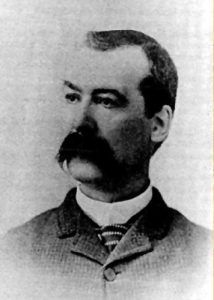
Captain Burton Mossman of the Arizona Rangers.
Burton C. Mossman (1867–1956) – Managed the Hashknife Outfit of Arizona to stop the rampant cattle rustling before becoming the first captain of the Arizona Rangers in 1901.
George W. Mowbray— In the early 1890s, he worked as a posseman under Heck Thomas, Bill Tilghman, and Chris Madsen and was later appointed a U.S. Deputy Marshal himself. Over the years, he fought the Cook gang, the Doolin Gang, the Buck Gang, and Cherokee Bill’s gang.
©Kathy Alexander/Legends of America, updated October 2026.
Also See:
Adventures in the American West
See Sources.
Lawman Summaries (name begins with) A B C D E F G H I J K L M N O P Q R S T U V W X Y Z