
Also see: Women in American History.
Jump to (last name begins with): A B C D E F G H I J K L M N O P Q R S T U V W X Y Z
S
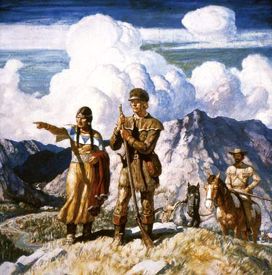
Sacagawea guided Lewis and Clark on their expedition of 1804-06.
Sacagawea (1790?-1812?) A Shoshone Indian woman, she was captured by an enemy tribe who eventually sold her to a French Canadian trapper she later married. In 1804, Lewis and Clark hired her husband Toussaint Charbonneau as an interpreter for their expedition. Sacagawea became an integral part of the expedition.
Margaret Sanger (1879-1966) Pioneering crusader for the legalization of birth control, she battled the nation’s government and courts to open America’s first birth control clinic, and she founded the Natural Birth Control League, Planned Parenthood of America, and the International Planned Parenthood Federation.
Sedona Arabella Miller Schnebly (1877-1950) Sedona followed her husband west when their small Missouri town condemned his Presbyterian religion. Arriving in Arizona Territory in 1901, they planted orchards and hosted early tourists in what is now named for her, Sedona. Arizona.
Sarah Jane “Sally” Newman Skull (1817-??) – Sally was known for her many husbands, horse-trading, aim with a pistol, forceful language, and hauling cotton and critical supplies for the Confederacy. But, mostly, she was known as a woman whose husbands mysteriously died or disappeared.
Squirrel Tooth Alice – See Mary Elizabeth “Libby” Thompson
Elizabeth Cady Stanton (1815-1902) Known, along with Susan B. Anthony, as one of the foremost figures of the movement for women’s equality.
Belle Starr, aka the “Outlaw Queen” (1848-1889) – Hooking up with the Younger brothers and Jesse James at a young age, Starr became an outlaw herself and was the first woman to be tried for a serious crime by Judge Isaac Parker.
Helen J. Stewart: First Lady of Las Vegas (1854-1926) – Played a key role in the development of Las Vegas, Nevada, and is dubbed the First Lady of Vegas for her lasting contributions.
Lucy Stone (1818-1893) a pioneering leader in the women’s suffrage movement. She founded the American Woman Suffrage Association.
Harriet Beecher Stowe (1811-1896) - Author and poet, she wrote the biggest bestseller of the nineteenth century, Uncle Tom’s Cabin. The novel, which first appeared in a serialized version in National Era magazine, was the first major American work in which a black man appeared as the central hero.
T
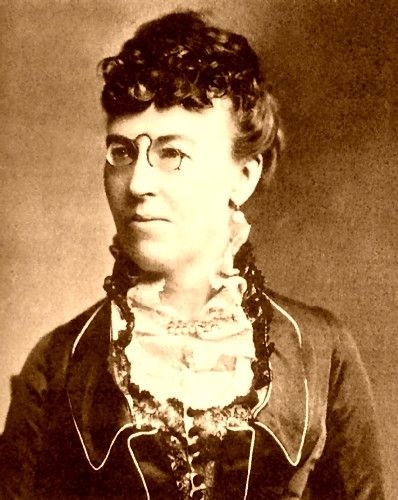
Augusta Tabor.
Augusta Pierce Tabor (1833-1895) – The first wife of Colorado “Silver King” Horace Tabor, Augusta was a hardy pioneer who homesteaded in Kansas before moving on to the mining camps of Colorado. After her husband made millions, he jilted her for Baby Doe, causing a scandal that rocked Denver society.
Baby Doe Tabor, aka Elizabeth McCourt (1854-1935) – Marrying one of the richest men in Colorado, Baby Doe was involved in one of the country’s most famous love triangles, scandalizing the social community of Denver.
Mary Elizabeth “Libby” Thompson (1855-1953) – One of the most popular soiled doves in Dodge City, Kansas, and other frontier cattle towns during the 1870s. She later became famous as Squirrel Tooth Alice, the madam of a brothel in Sweetwater, Texas.
Sojourner Truth (1797?-1883) A former slave, she became a leading proponent of human rights and a spokesperson for abolition and women’s rights.
Alice Ivers Tubbs; aka Poker Alice (1851-1930) – Perhaps the best-known female poker player in the Wild Old West.
Harriet Tubman (1820?-1913) As a “conductor” on the Underground Railroad, this fugitive slave helped thousands of blacks escape north before the Civil War, during which she served as a Union nurse and military spy.
V
Elizabeth Van Lew (1818-1900) – A well-born Richmond, Virginia resident who built and operated an extensive spy ring for the United States during the Civil War.
W
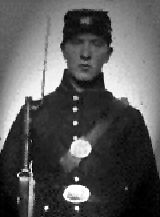
Sarah Rosetta Wakeman, aka Private Lyons Wakeman.
Sarah Rosetta Wakeman; aka Private Lyons Wakeman (1843-1864) – Disguising herself as a man, Wakeman fought in the Civil War for the Union.
Madam C.J. Walker, aka Sarah Breedlove (1867-1919)—Born to newly freed slaves, Sarah Breedlove made a name for herself despite adversity and blazed a trail for women in business with her hair care and teachings.
Mary Edwards Walker (1832-1919) was a feminist, abolitionist, prohibitionist, alleged spy, prisoner of war, and surgeon in the Civil War. She is the only woman to receive the Medal of Honor.
Jemima Warner (17??-1775) – Jemima Warner was probably the first woman to be killed in action during the U.S. wars. During the American Revolution, she was the teenage wife of Private James Warner of the Pennsylvania Rifle Battalion. She followed her husband and was killed in the Siege of Quebec, Canada.
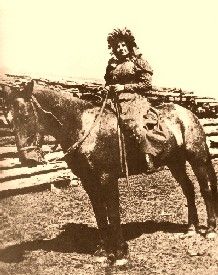
Ellen Watson, aka “Cattle Kate”.
Ellen Watson, a/k/a Cattle Kate (1861-1889) – Ellen Watson, dubbed by local newspapers in the late 1880s as “Cattle Kate,” was long considered an outlaw. Members of the Wyoming Stock Growers Association lynched her.
Emmeline Wells (1828-1921)—Unshakeable in her commitment to plural marriage, Emmeline Wells was a leading figure in Mormon politics and the women’s suffrage movement who helped close the gap of misunderstanding that separated Mormons and non-Mormon Americans for more than 50 years.
Ida B. Wells - See Ida B. Wells Barnett
Margaret Bourke White (1904-1971) - A pioneering photojournalist who gained fame for her photographs of mill workers and sharecroppers and her association with Life magazine.
Narcissa Prentiss Whitman (1808-1847) – A missionary in the Oregon Country of what would become the state of Washington, she, along with Eliza Hart Spalding, was the first European-American woman to cross the Rocky Mountains in 1836. With her husband, Dr. Marcus Whitman, they established the Whitman Mission near modern-day Walla Walla, Washington.
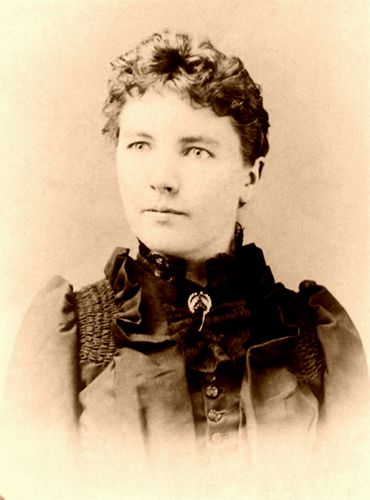
Laura Ingalls Wilder.
Laura Ingalls Wilder (1867-1957) – Famed children’s author and “storyteller of the prairie.”
Cathay Williams (1842-??) – When Congress passed an act authorizing the establishment of the first all-Black military units, later to become known as “Buffalo Soldiers,” Cathay Williams became the first and only female Buffalo Soldier.
Emma Willard (17871870) - A foremost 19th-century proponent of higher education for women, she founded the Troy, New York Female Academy, where she daringly taught her students science and math and educated hundreds of future teachers.
Kaitchkona Winema, aka Toby Riddle, Woman Chief (1848-1932) – A Modoc Indian Woman who played an essential part in the Modoc War of 1872-1873.
Victoria Claflin Woodhull (1838-1927) – The first woman to run for President and the center of a scandal that rocked the nation.
Y
Bronco Sue Yonkers – Wild Woman of the West – Bronco Sue Yonkers was a Welsh girl who turned men’s heads and could shoot as well as any of them, and she left a trail of unlucky men in her wake.
©Kathy Alexander/Legends of America, updated March 2025.
Jump to (last name begins with): A B C D E F G H I J K L M N O P Q R S T U V W X Y Z
Also See:
Historic People in American History