
Lawman Summaries (name begins with) A B C D E F G H I J K L M N O P Q R S T U V W X Y Z
Charles Faber (18??-1876) – Town constable of Las Animas, Colorado in the 1870s. He was shot and killed by Clay Allison in 1876 at a town dance when he attempted to remove Clay’s guns.
Neeley Factor – U.S. Deputy Marshal assigned to the Central District of Oklahoma. When Factor, along with Zeke Miller and a posse, tried to arrest a gang of outlaws near Adamson, Oklahoma, a gun battle erupted. Still, when the gang found themselves outnumbered, they finally surrendered and were taken to the Fort Smith federal jail.
William “Billy” B. Fain, aka Billy Profane (1856-1929) – Born in Tennessee, Fain moved to California in 1883. A tough, rugged man with a forceful manner of speaking, he soon earned the nickname “Billy Profane.” In 1884, he killed his own uncle, James C. Fain, but the killing was ruled self-defense. While living in the Warner Springs area of San Diego County, he got into a dispute with the Helm brothers, and in 1887, a shootout occurred between Fain and Chat Helm. Though Fain was tried twice on assault to murder charges, he was cleared and moved to Oak Grove, California. He was elected constable, a position he held until July 1890. He then moved on to Yuma, Arizona, where he married, raised a family, and lived until his death on March 20, 1929.
Philip Fall – The brother of gunman Albert Fall, Philip was a cattle rustler and outlaw who later became a deputy marshal.
H. D. Fannin – U.S. Deputy Marshal, commissioned in the Western District at Fort Smith, Arkansas. After Fannin had arrested a man named Jason Labreu in 1883 for the rape and murder of a woman, Labreau escaped on the way to Fort Smith, Arkansas, and was killed by Fannin. Later that same year, Fannin was one of the deputy marshals who helped capture Johnson Jacks, who had been charged with killing U.S. Deputy Marshal Addison Beck.
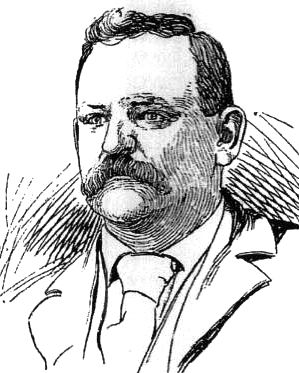
Edward J. Farr.
Edward J. Farr (1867-1899) – Born on November 22, 1867, in Kerrville, Texas, he later moved to New Mexico with his older brother, Jeff. Later, both men moved to Huerfano County, Colorado, where Edward was elected sheriff in 1898. During this time, the Ketchum Gang roamed the area, robbing trains, banks, and post offices. On July 11, 1899, Sam Ketchum, Will Carver, and Elza Lay pulled a heist without their leader, Thomas “Black Jack” Ketchum, in Folsom, New Mexico. Though the bandits made off with some $50,000, they were quickly pursued by a posse, which included Sheriff Farr, to a hideout in Turkey Canyon near Cimarron, New Mexico. On July 16th, the posse caught up with the bandits, leading to an all-out gun battle. When it was over, Sheriff Farr had been shot three times and killed. Also seriously wounded was posse man Henry M. Love of Colfax County, New Mexico, who would die of his wounds on July 21st. Of the gang, Sam Ketchum was hit and taken into custody, where he died on July 24. Also hit was Elza Lay, but he and Will Carver were able to escape. Lay was caught up in August and sent to prison. Carver would be killed two years later by Texas lawmen.
Jefferson “Jeff” Beauregard Farr (1862-1920) – The older brother of Edward J. Farr, he was born in Kerrville, Texas, and when he grew up, he moved to New Mexico. Later, his younger brother Edward joined him, and the pair made their way to Huerfano County, Colorado, where Edward was elected sheriff in 1898. Jeff went to work for his brother as a deputy sheriff, and when Edward went after the Ketchum Gang in July 1899, he left Jeff in charge. Unfortunately, Edward was killed by the gang near Cimarron, New Mexico, on July 16. Jeff then became sheriff, a position he retained until 1917. He then worked as a rancher and cattleman.
John Gist Farr (1847-18??) – A Choctaw Indian originally from South Carolina, Farr served as U.S. Deputy Marshal for at least eight years in the Choctaw Nation of Indian Territory after relocating there in 1875. He was first commissioned in March 1889 and lived in Antler, Oklahoma.
Sam Farris (18??-1894) – While serving as a Canadian County Deputy Sheriff in Oklahoma Territory, Farris recognized two outlaw brothers named James and Victor Casey in Yukon, Oklahoma on May 21, 1894. The Caseys were suspected of murdering two men near El Reno earlier in the month, and when Farris confronted them, the brothers shot the deputy. However, Farris returned the fire, wounding Vic Casey in the foot before he died. Vic Casey would later develop blood poisoning from the wound and die on November 12, 1894. His brother Jim was later arrested and placed in jail in Oklahoma City. On June 30, 1895, when he tried to escape jail with the Christian brothers, he was killed.
William Faulkner – U.S. Deputy Marshal, commissioned out of the federal court in Van Buren, Arkansas, serving under Marshal William A. Britton. In 1868, William arrested Amos McCurtain, a murderer and the last man to be hanged at Van Buren on June 24, 1870
John F. Fields (18??-1892) – A half-blooded Cherokee Indian, Fields was commissioned as a U.S. Deputy Marshal in the Western District at Fort Smith, Arkansas. In June 1885, Fields was riding with Sam Six Killer to a murder scene near Fort Gibson, Oklahoma, where notorious outlaw Dick Glass and his gang of rustlers killed a man named William Cobb and seriously wounded another named Alex Cowan. The deputies trailed Dick Glass and his outlaw buddies to about five miles south of Emet, in the Choctaw Nation, where Glass was killed in a shoot-out by Sam Sixkiller. In October 1892, when Fields rode with a posse to arrest Cherokee outlaw Ned Christie, he would not be so lucky. On October 19th, as a posse approached Christie’s cabin, ordering the fugitive to come out, Christie came out of his cabin with his guns blazing. Fields received a fatal gunshot to the neck, another deputy was wounded, and the posse retreated.
William Fields (18??-1887) – A full-blooded Cherokee Indian, Fields was commissioned as a U.S. Deputy Marshal in the Western District at Fort Smith, Arkansas, in early 1887. At the same time, he was also appointed to act as the City Marshal of Tahlequah, Oklahoma, the capital of the Cherokee Nation. Shortly after his appointment, he attempted to arrest a Choctaw Indian named Cash Ellis, who had allegedly killed a black man named Busby. However, Ellis was not to be taken in without a gunfight and wound up with both legs riddled with bullets. The next time, Fields would not be so lucky. On the afternoon of April 10, 1887, he and an African-American deputy named Crowder Nix were attempting to arrest James H. Cunninus near Eufaula, Oklahoma, for robbing a railroad boxcar. The fugitive, however, began to flee, and in a running gun battle, Fields was killed by Cunninus. Crowder, however, returned the fire, wounding the fugitive and taking him into custody.
Edward D. Fink – U.S. Deputy Marshal commissioned in El Reno, Oklahoma Territory, in January 1895 under Marshal Evett Nix. He later worked out of the Western District of Indian Territory, serving under Marshal Leo Bennett and assigned to Wetumka, Oklahoma. In December 1902, while attempting to arrest two outlaws named Tunnels and Clark near Wetumka, he was overpowered and received a pistol-whipping that left him unconscious. Two years later, on November 20, 1904, he would not be so lucky when he attempted to arrest Indian outlaws Jim Tiger and Peter Fish. Pursuing the fugitives on horseback to the Eufaula area, he ordered them to halt when Fish turned in his saddle and fired his Winchester rifle, killing the deputy. The killers were later apprehended by U.S. Deputy Marshals Grant Johnson and Bud Ledbetter and tried, and Fish received life imprisonment for Fink’s murder.
Cornelius Finley (18??-1878) – U.S. Deputy Marshal for the western district, killed by Mexican bandits on September 2, 1878, along with U.S. Deputy Marshal John Hicks Adams near Davidson’s Canyon, Arizona. The suspects were chased into Mexico and apprehended but never tried or convicted in connection with either murder.
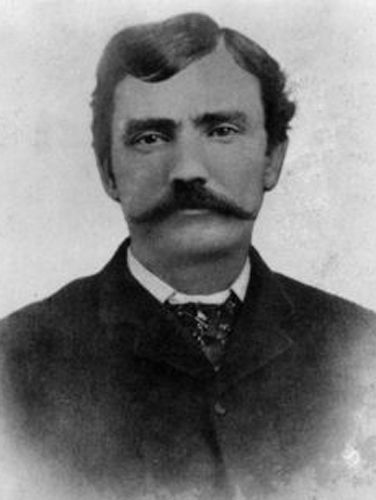
John King Fisher.
John King Fisher (1854-1884) – A gunman, outlaw, and lawman, Fisher gave up his outlaw ways and became the sheriff in Uvalde County, Texas, in 1881. Three years later, he and his friend, Ben Thompson, were killed in an ambush in San Antonio, Texas.
George W. Flatt (1853-1880) – Flatt was Caldwell, Kansas‘s first marshal in 1879, but was not well-liked. When a new mayor was elected the next year, he was replaced. He was killed on June 19, 1880, by members of the “new” police force.
Camillus Sydney “Buck” Fly (18??-1901) – Best known for his photography of Geronimo’s surrender in 1886, Fly lived and worked in Tombstone during the Gunfight at the O.K. Corral. He also served as the sheriff of Cochise County, Arizona, for two years.
W. “Tandy” Folsom (18??-1893) – U.S. Deputy Marshal working out of the Western District in Fort Smith, Arkansas. In September 1893, he killed a man named Captain Key Duran in self-defense. However, just a few months later, in November 1893, as Folsom attempted to arrest a man named Dave Bohannon in the Choctaw Nation, Bohannon slipped up behind the deputy and shot and killed him.
Frederick Fornoff (1859-1935) – Born in Baltimore, Maryland, on February 6, 1859, Fornoff moved to Galveston, Texas, in 1877. Two years later, he worked as a miner in Colorado, and in 1880, he landed in Albuquerque, New Mexico, where he became a policeman and worked his way up to Chief of Police. In 1898, he enlisted in the Rough Riders, serving with them until they disbanded. Afterward, he became a U.S. Deputy Marshal while also serving as a deputy sheriff in Bernalillo County, New Mexico. He then moved on to the New Mexico Mounted Police, where he became a Captain. In that position, he was tasked with investigating the murder of Pat Garrett on February 29, 1908. Fornoff concluded that Garrett had been killed by a hired killer, Jim Miller, although others disagreed. He later served in some capacities for the Federal Government and for the Santa Fe Railway. He died on November 26, 1935, in Sheridan, Wyoming.
Mary Frances “Mamie” Fossett – Appointed as a U.S. Deputy Marshal by C.H. Thompson of Guthrie, Oklahoma. Fossett was the daughter of Bill Fossett and one of the few women appointed as a deputy in the 19th century.
William “Bill” or “Will” D. Fossett (1851?-1940) – A lawman in various capacities for over 50 years, Fossett served as a U.S. Deputy Marshal and should be recognized as much as or more famous lawmen, such as Heck Thomas and Bill Tilghman.
Charles Fox – U.S. Deputy Marshal commissioned at Tecumseh, Oklahoma Territory in July 1894, serving under Marshal Evett Nix. He rode with lawmen Heck Thomas and John James in November 1895 to capture the Graves Gang, which was wanted for murder. In the end, they arrested four gang members who were sent to Fort Smith, Arkansas, for trial.
Friar Frair – U.S. Deputy Marshal commissioned in Indian Territory in the 1880s. On January 19, 1886, he was required to serve an arrest warrant on fellow U.S. Deputy Marshal Bass Reeves for the murder of Reeves’ cook, William Leech. However, when Reeves stood trial, he was cleared when the death was ruled accidental.
George A. “Bud” Frazer (1864-1896) – The son of George Milton Frazer, Bud enlisted in the Texas Rangers at the age of 16 and later served as a deputy in Pecos County, Texas. When he was 26 years old, he was elected as the sheriff of Reeves County, Texas, in 1890. In 1891, he made the fatal mistake of hiring the infamous killer, James B. Miller as a deputy. He was soon forced to fire him, which resulted in the deadly Frazer-Miller feud, which would last for several years. Miller killed Frazer in 1896.
George Milton Frazer (1828-1908) – Born in Brownsville, Tennessee, on January 5, 1928, Frazer was in Texas in 1835, where he first lived at San Augustine and later in Sabine County. In May 1846, he joined the army in the Mexican-American War for two years. He then settled in Santa Fe, New Mexico, where he worked as a wagon master and did some mining. He later settled in southern New Mexico, opening an express business from Mesilla to Pinos Altos. He commissioned a company of Arizona Rangers to fight the Indians close to the Arizona state line in 1861. The Arizona Rangers were mustered into Confederate service at Fort Fillmore, New Mexico, in August 1861 and fought in several battles, primarily against the Indians. He eventually achieved the rank of captain. After the Civil War, he settled in San Antonio, Texas, before moving to Pecos County, where he worked in the ranching and mercantile business. Later, he resided in Toyah, Texas, where he served as a judge before his death on August 2, 1908.
W. George Frazier – U.S. Deputy Marshal, commissioned in the Western District of Arkansas under Judge Parker at Fort Smith, Arkansas. He became a deputy after U.S. Deputy Marshal West Harris was killed, and though he spent numerous hours trying to solve the mystery, the killers were never captured.
William B. Freeman – U.S. Deputy Marshal, commissioned on July 19, 1869, serving in the District Court at Van Buren, Arkansas, under Marshal William A. Britton. By 1894, Freeman was working out of the Southern District Court of Indian Territory at Paris, Texas, when he took part in a posse of deputy marshals that attempted to arrest Bill Dalton near Ardmore, Oklahoma, on June 8, 1894. As the posse approached Bill’s home, the fugitive, with a pistol in hand, jumped out of a window and ran toward the posse, ignoring orders to halt. He was killed immediately.
Reuben M. Fry – U.S. Deputy Marshal, commissioned on February 11, 1884, in the Western District at Fort Smith, Arkansas, serving under Marshal Thomas Boles. In July 1888, he was riding with Deputy Marshals Trammell and Wheeler near Black Springs, Arkansas, trying to locate whiskey stills when bootleggers ambushed them, and Trammell was killed.
©Kathy Alexander/Legends of America, updated March 2026.
Also See:
Adventures in the American West
See Sources.
Lawman Summaries (name begins with) A B C D E F G H I J K L M N O P Q R S T U V W X Y Z