
Lawman Summaries (name begins with) A B C D E F G H I J K L M N O P Q R S T U V W X Y Z
Joseph “Joe” F. Eads – U.S. Deputy Marshal commissioned in July 1894, serving under Marshal Evett Nix. In August 1894, he rode with U.S. Deputy Marshall Sam Large to arrest horse thieves, Mike Guffy and T.V. Powell. However, the outlaws resisted and drew their guns. In the end, Powell was killed, and Guffy was arrested.
George Washington Earp (1864-1960) – Wyatt Earp’s first cousin, George was a peace officer in Old Ulysses, Kansas, and a U.S. Deputy Marshal.
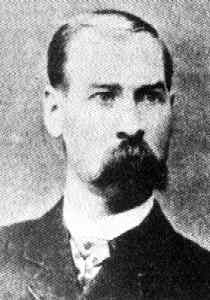
James Earp.
James C. Earp (1841-1926) – The oldest Earp brother, James, served as a lawman in Dodge City, Kansas. He was with his brothers in Tombstone, Arizona; he was not involved in the events of the O.K. Corral. Settled in California.
J. P. Earp – U.S. Deputy Marshal commissioned in the Western District at Fort Smith, Arkansas.
Morgan Earp (1851-1882) – Served as Ford County, Kansas Deputy Sheriff; Butte, Montana Marshal; U.S. Deputy Marshal in Arizona. He was killed by the “Cowboy” faction in Tombstone, Arizona, in 1882.
Virgil Earp (1843-1906) – Dodge City, Kansas Deputy Marshal; Prescott, Arizona Deputy Sheriff; Tombstone, Arizona Marshal/Chief of Police; U.S. Deputy Marshal in Arizona Territory; Deputy Marshal in Colton, California; Esmeralda County, Nevada Deputy Sheriff.
Warren Earp (1855-1900) – U.S. Deputy Marshal in Arizona; Special Ranger of the Arizona Cattleman’s Association. Killed in a gunfight in Willcox, Arizona, in 1900.
Wyatt Earp (1848-1929) – Lamar, Missouri Constable; Elsworth, Kansas Marshal; Wichita, Kansas Deputy Policeman; Dodge City, Kansas Assistant Marshal; Pima County, Arizona Deputy Sheriff; Tombstone, Arizona Deputy Policeman-Assistant Marshal; Dodge City Peace Commissioner, U.S. Deputy Marshal in Arizona Territory. Died a natural death in California in 1929.
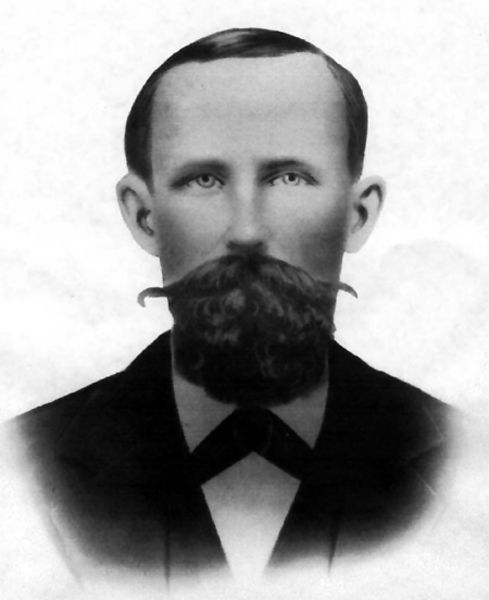
Hiram Edward Eastwood.
Hiram Eastwood – U.S. Deputy Marshal commissioned in the Southern District Court of Indian Territory at Paris, Texas. In 1893, outlaw Bill Luttrell tried to kill Eastwood because he blamed him for capturing and hanging his brother, Charles. However, Eastwood was warned that Luttrell was gunning for him. While Eastwood tended his horse in Oakland, Oklahoma, he spotted the outlaw approaching and grabbed his rifle. The two came face to face outside the stable, and both men fired three shots simultaneously. Lutrell was not a good shot, as Eastwood was unharmed, but the would-be killer took shots at his heart, lungs, and neck. The Paris, Texas, court found that the killing was in self-defense.
Frank Boardman “Pistol Pete” Eaton (1860-1858) – Cowboy, Indian fighter, U.S. Deputy Marshal, scout, and author, Eaton was one of the fastest draws in Indian Territory.
William “Dad” F. Egan (1832-1924) – Born in Kentucky in 1832, Egan was raised in Missouri. By 1859, he lived in Texas and ran a ranch just a few miles West of Denton. He served in the Confederate Cavalry during the Civil War. After the conflict ended, Egan married and was elected sheriff of Denton County, Texas. While serving, he also continued to run his ranch and hired a young Sam Bass to help with livestock and other odd jobs. Bass soon befriended Egan’s son, Armstrong, and the two bought a racehorse, which they ran until William stopped his son from participating and owning it. When Bass began to turn wayward, Sheriff Egan remained friends with him. However, when Bass’ activities became clearly illegal, Egan fully cooperated with Texas Rangers and other lawmen in the pursuit of the outlaw. Bass was killed in Round Rock, Texas, in 1878. Shortly afterward, Egan left his sheriff’s position but later held public office several times. He died in 1924.
C.E. Elkins – U.S. Deputy Marshal commissioned in Oklahoma Territory. In 1892, Elkins and three other previously commissioned deputy marshals were arrested and charged with arson and murder for a fire in Lexington, Indian Territory, where a man had lost his life. All of the former lawmen were arrested and charged with arson and murder.
George Elkins – U.S. Deputy Marshal commissioned in Oklahoma Territory. In 1892, Elkins and three other previously commissioned deputy marshals were arrested and charged with arson and murder for a fire in Lexington, Indian Territory, where a man had lost his life. All of the former lawmen were arrested and charged with arson and murder.
Jake Elliott – U.S. Deputy Marshal commissioned in Indian Territory. He rode with several U.S. deputy marshals to capture the Jennings Gang on November 29, 1895.
Jess Elliott (18??-1892) – A Cherokee Indian, Elliott served as deputy sheriff of Rogers County, Oklahoma. On November 3, 1892, Elliott got into a fight in a Catoosa, Oklahoma, saloon with Bob Talton, who was on probation for horse theft. Both men had been drinking, and when the dispute got out of hand, Talton was thrown out of the saloon, and Elliott was forcibly held inside, giving time for Talton to get away. However, Talton concealed himself outside the saloon, and when Elliott came out, Talton attacked him and cut his throat. Talton was later arrested, convicted of the murder, and sentenced to death. He was hanged in Tahlequah, Oklahoma, on July 31, 1896.
Jackson W. Ellis – U.S. Deputy Marshal commissioned in the Western District of Arkansas in 1885. At the same time, he also served as an Indian Policeman in the Choctaw Nation. A few months after being sworn into duty, Ellis was in a gunfight with a man named Bud Trainer in Tahlequah, Oklahoma. The trainer was killed, and Ellis was exonerated as the shooting was found to be in self-defense. In September 1887, when Ellis tried to arrest a man named Dick Vann, who had killed U.S. Deputy Marshal Sam Sixkiller, gunplay erupted again, leaving Vann dead in the dirt. Around the same time, another murderer named Harry Finn, who had killed his father in Missouri, had fled to Oklahoma. When Ellis confronted the killer, the guns blazed again, and true to form, Ellis left the fugitive dead. On another occasion, while Ellis was riding a train from Kansas City to Galveston, Texas, four train robbers tried to rob the mail and express cars. However, along with Train guard Jack Frazier, Ellis fought off the bandits and forced them to flee. Although the train robbers made off with about $1,000, it was only a fraction of the cash held in the two cars. By 1890, Ellis practiced law and served as a law officer. After 16 years in the Indian Police, he resigned from his duties as a lawman in 1902.
William “Bill” Ellis – U.S. Deputy Marshal, commissioned on October 30, 1889, in the Western District at Fort Smith, Arkansas. On May 16, 1890, when Ellis attempted to arrest a whiskey peddler named R. A. Beck, a Shootout ensued, and Beck was killed. In November 1892, Ellis was one of the 16 deputy marshals summoned to capture the notorious Cherokee outlaw, Ned Christie. Christie, however, resisted arrest and was killed. In 1897, Deputy Marshal Ellis was appointed by Marshal J. P. Grady to work in the Central District of Indian Territory. After Ellis retired from his lawman duties, he moved near Antlers, Choctaw Nation, where he established the X-T Bar Ranch, which he operated until 1920.
Campbell Eoff – A U.S. Deputy Marshal and turnkey of the Fort Smith, Arkansas jail, Eoff worked when Cherokee Bill tried to escape on July 26, 1895. In the melee, fellow turnkey Larry Keating was killed. The escape attempt ended only when outlaw Henry Starr talked Cherokee Bill into giving up his weapon.
T. J. Ernest – U.S. Deputy Marshal in Indian Territory. He was riding with U.S. Deputy Marshal Famous Smith in September 1897 when the pair attempted to arrest a noted Texas outlaw named Dave Vaugh, who had been terrorizing the Illinois and Sequoyah Districts for several months. However, Vaugh resisted arrest near Fort Gibson and pulled his guns. When the smoke cleared, the outlaw was dead.
M. Erwin (18??-1858) – U.S. Deputy Marshal commissioned in the District Court at Van Buren, Arkansas. In 1858, he was ambushed at Fort Gibson, Indian Territory. He was the first U.S. Deputy Marshal to be killed in Indian Territory.
Will “Bill” Etherton – U.S. Deputy Marshal assigned to the Cheyenne Reservation in Indian Territory. On one occasion, Etherton arrested notorious outlaw Bill Dalton in a saloon at Stillwater, Oklahoma, before transporting him to the Guthrie federal jail. It was the last time the fugitive was ever arrested. However, he soon overpowered his jailer and made his escape, only to be later killed by a fellow U.S. Deputy Marshal.
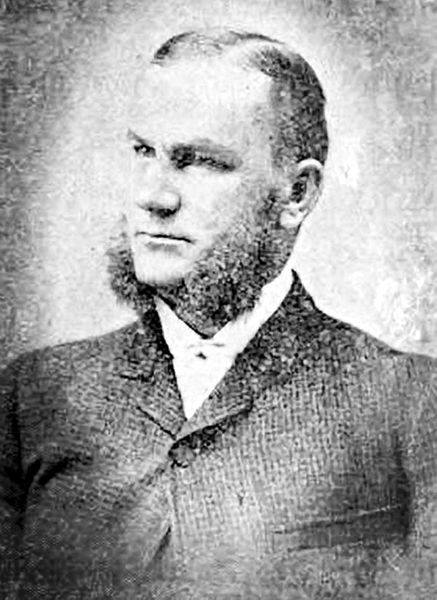
Joseph W. Evans.
Joseph W. Evans (1851-1902) – A Wells Fargo Special Agent and U.S. Deputy Marshal in Arizona. Evans was born in Fayetteville, North Carolina, but moved west as he grew up. In 1872, he landed in Phoenix, Arizona, where he worked as an expressman for the Arizona Stage Company. Working his way up, he became a general supervisor in 1877. Later, he served as a special agent for Wells Fargo until he was appointed a U.S. Deputy Marshal in 1880 by Crawley Dake 1880. Evans was present in Tombstone, Arizona, during the Gunfight at the O.K. Corral in October 1881 and was friends with the Earps. He allegedly helped them escape Tucson, Arizona, after they killed Frank Stilwell. After leaving his position as a lawman, Evans made his living in real estate and became a prominent Phoenix businessman. He lived there until his death on May 28, 1902.
©Kathy Alexander/Legends of America, updated October 2026.
Also See:
Historic People Photo Galleries
Lawmen of the Old West: Who’s Who in American History
See Sources.
Lawman Summaries (name begins with) A B C D E F G H I J K L M N O P Q R S T U V W X Y Z