
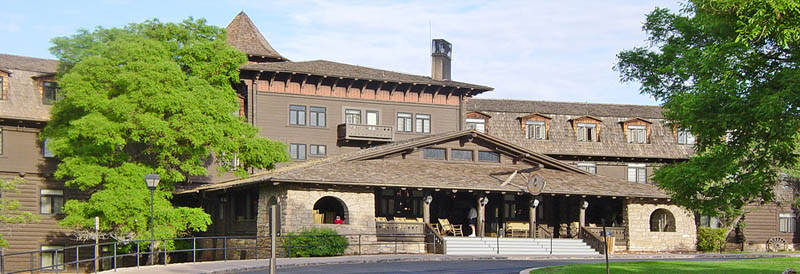
El Tovar Hotel at the Grand Canyon, Arizona, by the National Park Service.
The Fred Harvey Company owned the popular Harvey House chain of restaurants, hotels, and other hospitality businesses, which operated alongside railroads in the late 1800s. It was founded in 1876 by Fred Harvey to cater to the growing number of train passengers. These facilities were renowned for service quality, exceeding the needs of railroad passengers. Several historic structures remain today.
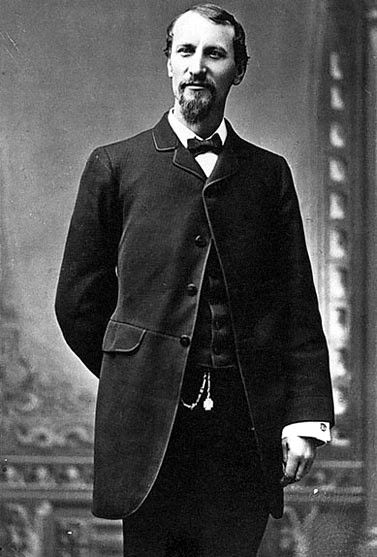
Fred Harvey.
Fred Harvey, born June 27, 1835, was just 15 years old when he emigrated to the United States from Liverpool, England. He first worked as a dishwasher in New York for $2 per day. Saving his money, he soon moved to New Orleans, Louisiana, where he worked again in the restaurant business, learning the trade from the ground up.
In 1853, he moved to St. Louis, Missouri. Five years later, he and a partner, William Doyle, opened the Merchants Dining Saloon and Restaurant in St. Louis. In 1859, he married his wife Ann, and the couple had a son the following year.
Unfortunately, when the Civil War broke out in 1861, his partner took all their money and ran off to join the Confederacy. With no patrons coming through the door, Harvey was broke.
He soon took a succession of jobs on riverboats before working for the Hannibal and St. Joseph Railroad, which the Chicago, Burlington, and Quincy Railroad eventually purchased. He ascended the corporate ladder and was transferred to Leavenworth, Kansas, where he would remain.
During this period, the young entrepreneur observed that the lunchrooms serving rail passengers were deplorable, and most trains lacked dining cars, even on extended trips. The custom at the time was to make dining stops every 100 miles. Sometimes there was a restaurant at the station, but there was often nothing to feed the hungry travelers. The dining stops were also short, no longer than an hour, and the passengers were expected to find a restaurant, order their meal, and get served in this short amount of time. When the train was ready to go, it left, often leaving passengers stranded at the station. Those who succeeded found the fare available at the train stops less appetizing.
Atchison, Topeka & Santa Fe Railroad depot in Topeka, Kansas.
In light of this, Fred Harvey drew on his prior restaurant experience and devised a new idea. However, his request was denied when he approached his manager to build a network of restaurants along the railroad line. Instead, in 1873, he began a business venture with Jasper “Jeff” S. Rice to establish three railroad eating houses in Lawrence, Kansas; Wallace, Kansas; and Hugo, Colorado, along the Kansas-Pacific Railroad. The café operation ended within a year.
However, Harvey remained convinced of the potential profits from providing high-quality food and service at railroad eating houses. He got his chance when he met with Charles Morse, superintendent of the Atchison, Topeka & Santa Fe Railroad. After pitching his idea, Morse, a gourmet, loved the concept. The railroad subsequently contracted with Harvey to produce several eating houses on an experimental basis. Morse would not charge Harvey rent in the agreement, which was sealed only with a handshake. Harvey began by taking over the 20-seat lunchroom at the Topeka, Kansas, Santa Fe Depot Station, which opened under his leadership in January 1876. Harvey’s business focused on cleanliness, service, reasonable prices, and good food. It was an immediate success. Before long, there were more cafes along the line.
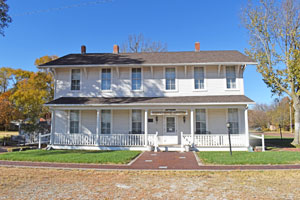
The old Harvey House Hotel and Restaurant in Florence, Kansas, is now a museum. Photo by Kathy Alexander.
Impressed with his work, the Atchison, Topeka & Santa Fe soon turned over control of food service along the rail line. The Harvey Houses became the first restaurant chain in the U.S., with the Topeka depot becoming the training base for the new chain along the Santa Fe Route. Soon, Harvey’s lunchrooms extended from Kansas to California. Harvey himself engineered a telegraph system that allowed the train to inform him of its estimated time of arrival, thereby enabling his restaurant staff to prepare and serve guests promptly.
In 1878, Harvey purchased and opened his first hotel in Florence, Kansas, adding fine accommodations. This was the first of his eating house-hotel establishments along the Atchison, Topeka & Santa Fe Railroad tracks.
By the early 1880s, Harvey operated 17 restaurants along Santa Fe’s main line.
By 1883, Harvey Company restaurants were operating with reasonable effectiveness. However, some out West were plagued by inconsistent service delivery problems despite Mr. Harvey’s established standards. His all-male workforce was often as wild as the West was. They were often prone to absenteeism, drunkenness, rude behavior, and fighting — none endeared them to the sophisticated customer segment Harvey sought. A turning point occurred when Fred Harvey fired all the waiters and the manager at Raton, New Mexico, following a drunken brawl. The newly hired manager requested permission to replace the dismissed rowdies with female staff members.
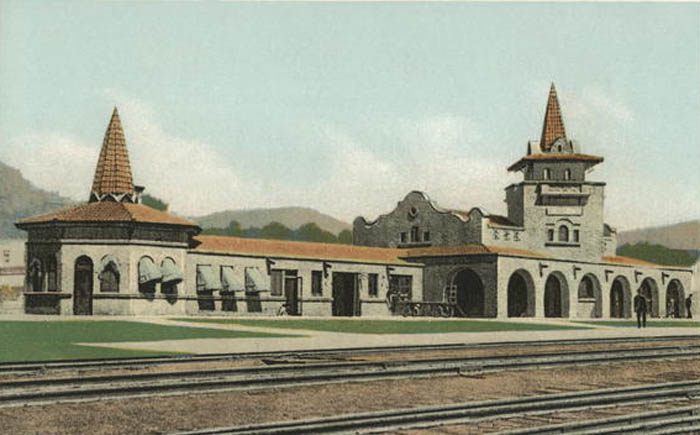
Santa Fe Station Raton, New Mexico.
Though Harvey was adamant about using standard processes across locations, he was open to new ideas, especially when they could be tested. Harvey approved the new hiring criteria and quickly saw the value of women. From this idea, the “Harvey Girls” were implemented.
Fred Harvey began recruiting women through newspaper advertisements nationwide. To qualify as one of the “Harvey Girls,” the women had to have at least an eighth-grade education, good moral character, good manners, neatness and articulateness, and singleness. They were young women aged 18-30, most of whom Harvey recruited from the East Coast and the Midwest.
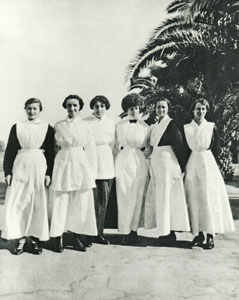
Harvey Girls in Slayton, Texas.
Harvey paid good wages, up to $17.50 per month, with free room and board and uniforms. In return for employment, the Harvey Girls would agree to a minimum six— to nine-month contract, abide by all company rules during the term of employment, relocate to locations where the company needed them, and not marry during their employment. If they married, they would forfeit half their base pay.
Upon hire, they were provided a free rail pass to their chosen destination. The Harvey girls wore a black shirtwaist dress that hung no more than eight inches off the floor, a perfectly starched white apron and cap, opaque black stockings, and black shoes. Their hair had to be restrained in a net and tied with a regulation white ribbon, and makeup of any sort was prohibited, as was chewing gum while on duty.
Harvey House employment offered a new option in an era when few career opportunities existed for women beyond nursing and school teaching. Many Harvey Girls earned the income they needed to support the families they left behind. Harvey knew these women and their families would require assurance that their reputations would remain intact in the Wild West, where many other single women were either prostitutes or dance hall girls.
Harvey built comfortable dormitories, imposed strict curfews, and specified behavioral rules for both on- and off-work hours. The most senior girl supervised the other girls, who enforced curfews and chaperoned male visits. As such, Harvey Girls generally enjoyed reputations as virtuous and were sometimes credited with civilizing the West by promoting good manners and wholesomeness. Within a short time, these became highly sought-after positions. Roughly 5,000 Harvey Girls went out West to work. The Harvey Girls were one of Fred Harvey’s most enduring legacies.
The restrictions maintained the Harvey Girls’ clean-cut reputation and made them even more marriageable. Cowboy philosopher Will Rogers once said:
“In the early days, the traveler fed on the buffalo. For doing so, the buffalo got its picture on the nickel. Well, Fred Harvey should have his picture on one side of the dime and one of his waitresses with her arms full of delicious ham and eggs on the other side ‘cause they have kept the West supplied with food and wives.”
The workforce at each Harvey House included a chef, assistant chefs, a butcher, pantry girls, busboys, a housemaid, and a crew of 15-30 waitresses. Each role was clearly specified, but Harvey permitted some movement across lines when supply-and-demand relationships required it. The Harvey Girls became the frontline staff of each restaurant.
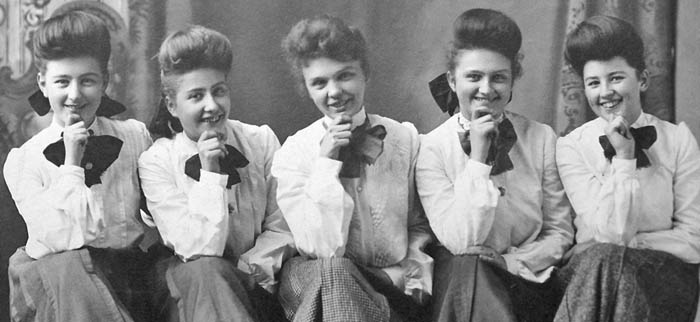
Harvey Girls.
By the late 1880s, there was a Harvey establishment every 100 miles along the Santa Fe line; this interval corresponded to the distance trains needed to refuel and load water. Harvey House establishments provided a clean, safe place to relax and enjoy a good meal in sophisticated surroundings. Where beans and biscuits had been the norm, diners could dine on thick, juicy steaks and hot, crispy hash browns. Meals were served on tables outfitted with Irish linens, silver table service, and fine china, with excellent food and reasonable prices. To reinforce the sense of gentility, Harvey mandated that all men in the dining room wear coats. A supply of dark alpaca coats was always on hand to ensure no one would be turned away.
At some point, the railroad agreed to convey fresh meat and produce free of charge to any Harvey House via its private line of refrigerator cars, the Santa Fe Refrigerator Despatch. These railroad cars contained food shipped from every corner of the U.S. The Harvey Company also maintained two dairy facilities, the larger of which was in Las Vegas, New Mexico, to ensure a consistent and adequate supply of fresh milk.
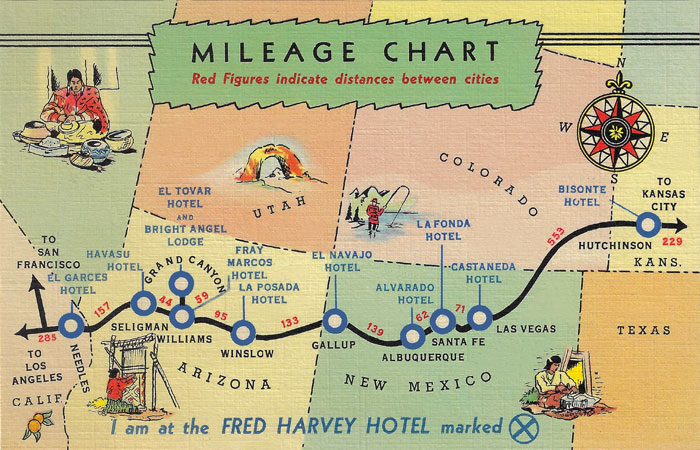
Fred Harvey Mileage Chart.
At its peak, there were 84 Harvey Houses, all of which catered to wealthy and middle-class visitors alike, and Harvey became known as “the Civilizer of the West.”
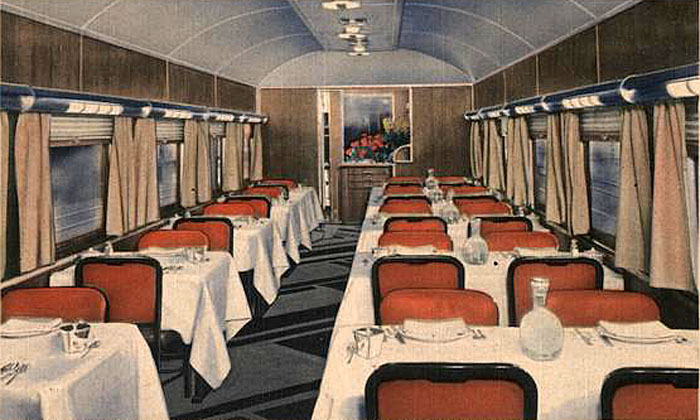
Fred Harvey Dining Car.
In the 1890s, the Santa Fe Railway began including dining cars on some of its trains, with Harvey getting the contract for the food service. At that time, the railroad advertising proclaimed “Fred Harvey Meals All the Way.”
In the early 1900s, Fred Harvey hired architect Mary Colter to design influential landmark hotels in Santa Fe and Gallup, New Mexico, and Winslow, Arizona, at the South Rim and at the bottom of the Grand Canyon. Colter’s rugged, landscape-integrated design principles influenced a generation of subsequent Western American architecture.
At about the same time, the Fred Harvey Company created an “Indian Department,” which commissioned artists and photographers to convey the exoticism of Native Americans in the Southwest. The images were printed on menus and brochures to promote Indian Country and Harvey’s tourist enterprises. The company also employed Native Americans to demonstrate rug weaving, pottery, jewelry making, and other crafts at its Southwest hotels.
Fred Harvey continued to improve his service until he died in 1901, after which his sons took over the company. At the time of his death, 47 Harvey House restaurants, 15 hotels, and 20 dining cars in 12 states were operating on the Santa Fe Railway.
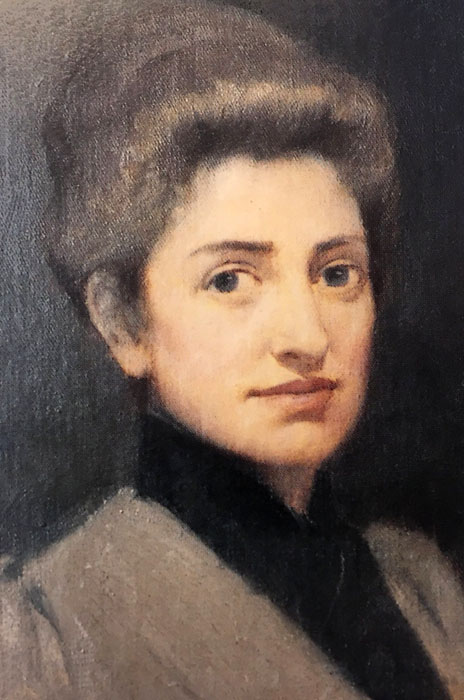
Mary Colter.
Mary Colter began working full-time for the company in 1910, moving from interior designer to architect. For the next 38 years, Colter served as chief architect and decorator for the Fred Harvey Company. As one of the country’s few female architects and among the most outstanding, Colter often worked under rugged conditions to complete 21 landmark hotels, commercial lodges, and public spaces for the Fred Harvey Company. Seeking to incorporate her architecture into the natural splendor of the Grand Canyon, she drew from its beauty and focused on authenticity. Hopi House and Bright Angel Lodge, both on the south rim of the Canyon, are prime examples of her work.
After World War I, as people began to travel by automobile, the company gradually declined. This, coupled with the introduction of faster, more luxurious trains that required fewer stops, led to the closure of Harvey House restaurants in smaller towns. Those in larger towns remained and were frequented by car travelers. However, most Harvey Houses had no volume to sustain operating profits without a predictable, consistent number of passengers. The Harvey Company continued to operate some dining cars for the Pullman Company, but this business also declined with the decline in train ridership.
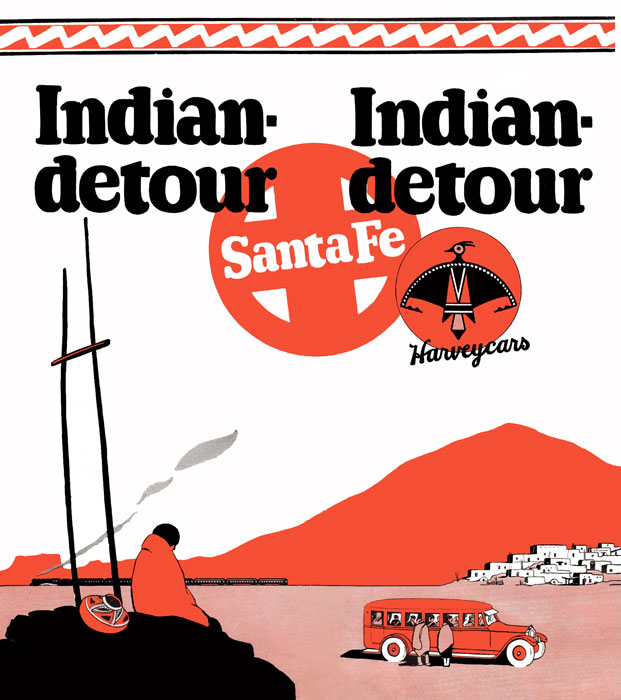
Fred Harvey Indian Detours.
Despite the decline in passenger train patronage, the company survived and prospered by marketing its services to the motoring public. Moving away from its full reliance on train passengers, the company began to package motor trips in the Southwest, including tours of Indian villages and the Grand Canyon, especially after it became a national park in 1919. After 1926, Harvey Cars were used to provide the “Indian Detours,” chauffeured interpretive tours that ferried guests at his Southwest hotels in comfortable Harvey Cars for one- to three-day excursions into Indian settlements in New Mexico and Arizona. These tours provided an authentic Native American experience by having actors stage a particular lifestyle in the desert. Fred Harvey’s son, Ford, initiated a series of guided tours, and the company purchased a hotel in Santa Fe, La Fonda, which became the headquarters for the Indian Detours. These “Indian Detours” continued into the 1940s.
During the Great Depression, the Harvey Company and the rest of the nation suffered as people couldn’t afford to travel. However, Bright Angel Lodge at the Grand Canyon was completed in 1935, and other Harvey Houses were built during the Depression.
In the 1930s, the Fred Harvey Company expanded beyond the Santa Fe Railroad’s reach, often away from rail passenger routes. Restaurants were opened in 1939 at Chicago Union Station (the largest facility owned by Harvey), San Diego Union Station, the San Francisco Bus Terminal, the Albuquerque International Airport, and the Los Angeles Union Passenger Terminal, each capable of accommodating nearly 300 diners.
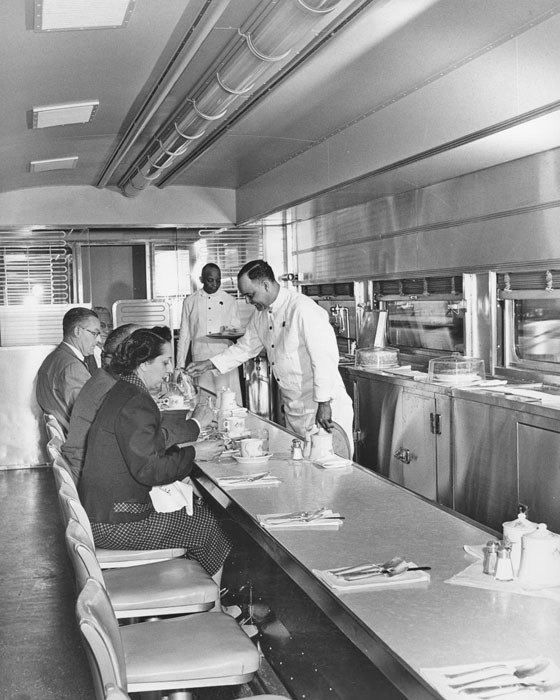
Fred Harvey’s lunch counter on the San Francisco Chief about 1945.
The declining trend was reversed with the commencement of World War II. Suddenly, the trains were filled with troops that the Harvey Houses began to feed. At that time, many closed Harvey Houses were reopened as mess halls for troops traveling on the Atchison, Topeka, and Santa Fe Railroad. However, the loss of many Harvey employees to the war effort and supply disruptions left “Harvey a fragmented system where the standards and quality of food and personnel fluctuated from house to house.”
In 1943, it was estimated that the Fred Harvey Company served more than one million meals each month in dining cars and Harvey Houses. However, by 1948, all but a handful of Harvey Houses had permanently closed.
In 1946, the Harvey Girls were immortalized in the MGM musical namesake movie, The Harvey Girls, starring Judy Garland.
By the 1950s, the railroads were cutting back as newer and better highways were being built nationwide, and people began to travel more by air. Passenger trains declined quickly, and railroads gradually began to eliminate passenger service. In the late 1950s, the Harvey Company began to operate the new landmark Illinois Tollway “Oasis,” which were rest stops built on bridges above Interstate 294 in the Chicago suburbs.
In 1954, the Harvey family purchased the Grand Canyon hotels from the Atchison, Topeka & Santa Fe Railroad, thus ensuring that the Fred Harvey Company would continue to generate revenue. In 1966, the Fred Harvey Company purchased the Furnace Creek Inn, near Death Valley National Park, from U.S. Borax.
Harvey Houses continued to be built and operated into the 1960s. The hotel and restaurant chain operated under the leadership of his sons and grandsons until 1965. In 1968, the Hawaii-based Amfac Corporation acquired the Harvey Company, applying its high standards to its portfolio of hotel and resort properties worldwide. When the Harvey Company was sold, it was the sixth-largest food retailer in the United States. Amfac was renamed Xanterra Parks & Resorts in 2002. Xanterra purchased the Grand Canyon Railway and its properties in 2006.
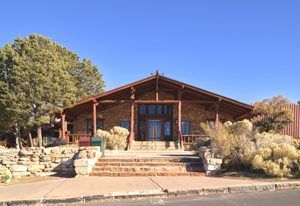
Bright Angel Lodge at Grand Canyon, Arizona, by Carol Highsmith.
Though most of the original Harvey Houses and hotels are gone, a few survive. Most notable are the El Tovar Hotel, built in 1905, and the Bright Angel Lodge, built in 1935, on the South Rim of the Grand Canyon. The Fray Marcos Hotel in Williams, Arizona, built as a Harvey House in 1908, now houses a gift shop, offices, and the Grand Canyon Railway and Hotel train depot. The new hotel nearby reflects the original style. Xanterra operates these hotels and the Grand Canyon Railway and Hotel.
The Painted Desert Inn, located in the middle of Petrified Forest National Park, opened in 1940. However, it was short-lived: World War II curtailed travel, and it closed in 1942. Five years later, the Fred Harvey Company took over management and hired Mary Colter to renovate the property, and the legendary Harvey Girls were brought to the Petrified Forest. The property operated until 1963. In 1987, it was declared a National Historic Landmark; the property was rehabilitated and returned to its former glory. It serves as a museum today.
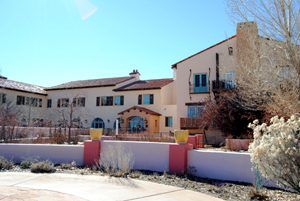
La Posada Hotel, Winslow, Arizona. Kathy Alexander.
The 1929 La Posada in Winslow, Arizona, is still in operation and provides accommodations for many Route 66 travelers.
Fred Harvey is credited with being the first restaurant chain in the United States and successfully bringing new, higher standards of civility and dining to a region widely regarded in the era as “the Wild West.” His company also became a leader in promoting tourism in the American Southwest in the late 19th century. Fred Harvey was also a postcard publisher, touted as “the best way to promote your Hotel or Restaurant.” Most postcards were published in cooperation with the Detroit Publishing Company.
A Fred Harvey Museum is located in the former Harvey residence in Leavenworth, Kansas.
© Kathy Alexander/Legends of America, updated December 2025.
Also See:
Harvey Hotels & Restaurants on Route 66
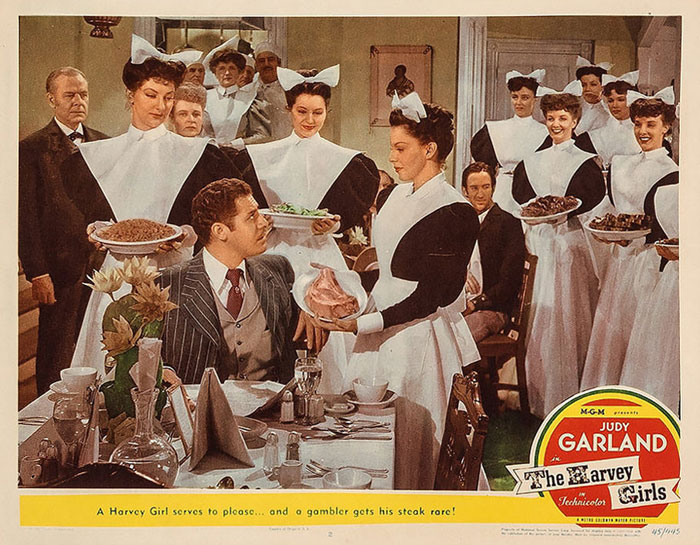
Harvey Girls, a 1946 movie starring Judy Garland.
Railroads & Depots Photo Gallery
Sources:
Browna, Karen A. and Hyer, Lea Hyer, Archeological benchmarking: Fred Harvey and the service profit chain, 2007
Fred Harvey and the Harvey Girls
Harvey Houses
Kansapedia
Wikipedia – Fred Harvey
Wikipedia – Fred Harvey Company
Xanterra