
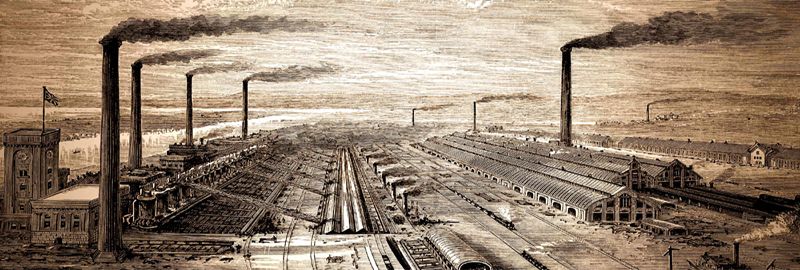
Industrial Revolution in the United States.
1919 – United States Year in Review
The Battle of Athens: An Obscure American Revolution
The Bum Blockade – Stopping the Invasion of Depression Refugees
Dust Bowl Days or the “Dirty Thirties”
Farm Security Administration – A New Deal
The Fatal Flight of United Airlines 629
Federal Writers’ Project – Real-Life Stories
Historic American Buildings Survey
Hoovervilles of the Great Depression
Indigenous Americans’ Long Path to U.S. Citizenship
Audie Murphy – America’s Greatest Hero
Nostalgic Flashback Of The 1950s Era
New York’s Historic Fields Witnessed Baseball’s Greatest Early Moments
Photographers Documenting History
President Roosevelt’s New Deal
Prohibition in the United States
Red, White, and Jolly: How Coca-Cola Changed Santa Claus
Scandals of FBI Director J. Edgar Hoover
The Sixties – The New Generation
Speakeasies of the Prohibition Era
Charles Waggoner – Colorado Robin Hood
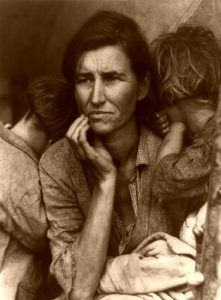
Migrant Mother during the Depression era

Repeal the Prohibition Amendment.
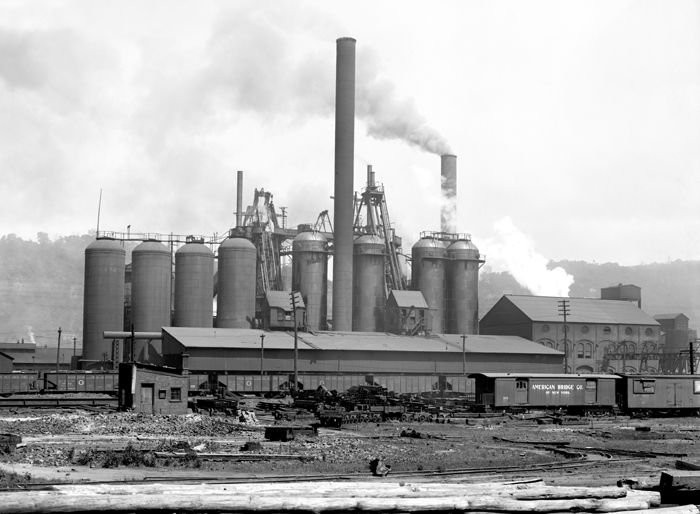
Carnegie Steel Company, Pittsburgh, Pennsylvania, by Detroit Publishing about 1907.
Moving beyond the days of the Wild West, the 20th Century in United States history moved beyond a gunfighter, mining, homesteading, and outlaw mentality to become an industrialized nation and, onward, a world superpower. Though the rough-and-ready days of the Old West were pretty much over, the nation was filled with a new generation of pioneers who sought to industrialize and civilize it.
With these new ideals came child labor laws, environmental concerns, and Prohibition. Known as the “Noble Experiment,” Prohibition banned the sale, manufacture, and transportation of alcohol for consumption from 1919 to 1933. This led to a different “outlaw” mentality, spawning a new generation of desperados who thrived from the lucrative business of bootlegging and liquor sales. The American public, not to be deprived of their “rights,” fought back, especially the many gangsters who profited greatly during these times with liquor sales and gambling, prostitution, drugs, and other decadent activities.
More trauma occurred with the expansion of monopolies and trusts, and in 1914, World War I began. In a global military conflict that embroiled most of the world’s great powers, more than 70 million soldiers were mobilized in one of the largest wars in history. Ultimately, more than 15 million people were killed, making World War I one of the deadliest conflicts in history. It finally ended four years later, in 1918.
Legends General Store.
But hard times were not finished for America and the rest of the world. Soon, the Great Depression settled upon the nation and the rest of the world. It was the most significant and severe economic Depression in the 20th Century. Most historians who are based in the United States use the stock market crash of October 29, 1929, known as Black Tuesday, as the starting date.
The Depression had devastating effects on all walks of life. International trade plunged, as did personal income, tax revenue, prices, and profits. The heavy industry suffered greatly; farming and rural areas declined dramatically as crop prices fell by approximately 60%, and tens of thousands of jobs were lost. Devastated and starving, the Depression created yet another era of outlaws that once again created violence in all areas of the nation. The U.S. finally began to recover in the spring of 1933, encouraged by President Franklin Roosevelt’s administration policies, such as the National Industrial Recovery Act.
Later in the 20th Century, trauma continued in World War II, which began in 1939 and ended in 1945. This was followed by the Cold War, a tense militaristic standoff between the United States and the Soviet Union, the two remaining superpowers after World War II. In 1950, the Korean War began, and from 1959, the long, drawn-out Vietnam War lasted until April 1975.
The 20th Century was also known for the Space Race, the Civil Rights Movement, and the beginning of the Gulf War.
©Kathy Alexander/Legends of America, updated April 2026.
Also See:
American History Photo Galleries
See Sources.