
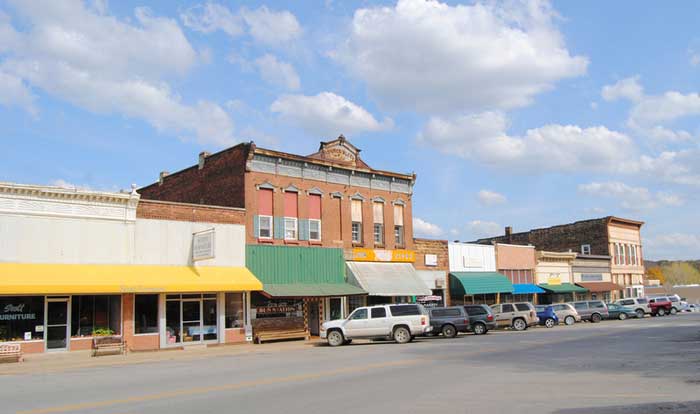
Osceola Downtown by Kathy Alexander.
Osceola, Missouri, is a sleepy little town today, with a population of some 900 people; this has not always been the case, as the community was on its way to becoming an important port city at one time.
Before the town was founded, the site, situated on the Osage River, was just downstream from the main villages of the Osage Nation, and the area was often frequented by the tribe, who had made their home there for centuries.
However, things would change for the Osage Indians when the United States government acquired the Louisiana Purchase in 1804, territory previously held by the French and Spanish.
Unlike the French, who had successfully traded with the Osage, American settlers demanded protection from the Indians, who were known for their skill with both horses and guns.
In 1808 and 1825, the Osage had been convinced to sign treaties with the government, giving up all of the lands in present-day Missouri and parts of Arkansas, Kansas, and Oklahoma. In 1872, they traded their remaining Kansas lands for the present reservation in Oklahoma.
As more and more settlers moved into the area, the town that would later be known as Osceola was founded in the mid-1830s. The first house was built in the winter of 1835-36. The logs were cut by Sanders Nance and his slave, Martin, and hauled to the bluff. However, a dispute soon erupted between Nance and a man named Phillip Crow as to whose land it was. Nance backed off, and Crow built the house. He was soon joined by a man named Richard P. Crutchfield, and in the spring of 1836, the pair opened the first store on the banks of the Osage River called the “Crossing of the Osage at Crow and Crutchfield’s.”
Crow and Crutchfield were soon joined by the Cox brothers — Pleasant, Joseph, and William, who opened the second store in the settlement. More and more people continued to come to the area, with James Gardner opening a log tavern, John W. Bridges establishing a blacksmith shop, and Pleasant Cox opening a sawmill, all in 1837. The following year, Phillip Crow expanded his business dealings by building a ferry across the Osage River. A post office was also established in 1838.
New settlers continued to come, primarily supported by agriculture, timber, and livestock. In 1839, the town adopted the name of the famed Seminole leader, Osceola, who had died in South Carolina two years earlier. David Corbin and his son built the first frame building in the town in 1839, which was soon occupied as a tailor shop run by a Frenchman named Ernest Lemming.
On January 29, 1841, St. Clair County was formed from Rives (later Henry) County and named for Arthur St. Clair, a Revolutionary War general. After a bitter contest and numerous debates, Osceola became the county seat in November 1841, a designation it still holds today.
The first courts of St. Clair County met in homes before a courthouse was built in 1842. The building was a two-story structure with a tin roof, a parapet around its roofline, and plank floors on the town square.
In the early 1840s, small steamboats began to ascend the Osage River, making Osceola an important port, as it was situated at the head of the navigable waters. Acting as a transfer point between the steamboats and wagon trains, sometimes as many as 100 wagons would be lined up to obtain supplies.
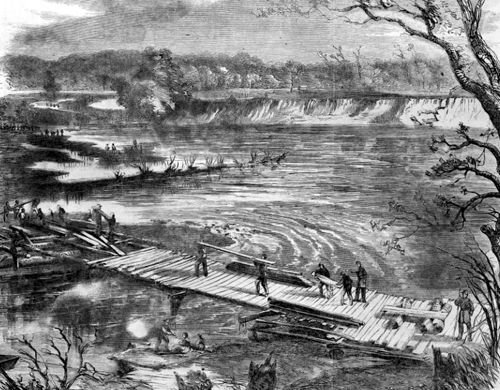
Osage River, Missouri
In 1848, Osceola gained its first newspaper, The Whig, established by P.C. Davis. By 1850, the town had grown large enough to warrant the construction of the Commercial Hotel, which was first called the Pollard House and the Union Inn.
By the mid-1850s, western Missouri was suffering the effects of what is known as the Kansas-Missouri Border War. Years before the Civil War began, pro-slavery factions of Missouri were actively fighting against “free-staters” in the newly developed Kansas Territory as to whether the state would join the union as a free or slave state.
As a result, warfare developed along the border counties of both states. These “unofficial soldiers” who fought in the skirmishes in guerrilla-type warfare were called Jawhawkers or Redlegs on the Kansas side and Missouri bushwhackers, ruffians, or raiders in the “Show Me State.”
When the Civil War officially erupted, Missouri joined the Union side of the conflict, yet was home to residents who supported the Confederate cause. Many of those who had emigrated to Osceola were of Southern origin. General James H. Lane, a controversial Union leader from Kansas, had heard that Confederate supplies and money were being held there.
The Sacking of Osceola
After the Battle of Wilson’s Creek, Missouri, on August 10, 1861, the Union army retreated, exposing the Kansas border. General James H. Lane organized his men to combat this and led them into action against Confederate General Sterling Price in the Battle of Dry Wood Creek on September 2, 1861. Though his troops lost the battle, Lane continued fighting and pillaging in Paynesville, Butler, Harrisonville, and Clinton, Missouri, before coming to Osceola on September 23, 1861. Osceola was a prosperous town of over 2,000 people at that time, though most able-bodied men were off to war.
After exchanging a few shots with some Confederates on the outskirts of town, Lane’s Brigade entered the settlement with two large artillery pieces. It immediately began to ransack it, starting with the bank. After blowing open the safe, they were disappointed to find no money but only a few documents. Allegedly, the citizens of Osceola, having heard of the incoming soldiers, had hidden the money before their arrival. Sentries were posted at the town’s entry points to stop any help from reaching it, and anyone daring to do so was fired on immediately.
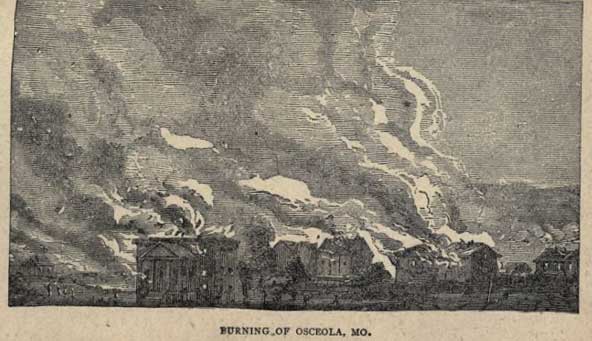
Illustration of the Sacking of Osceola, published in “The Border Outlaws” by James W. Buel, 1880.
Enraged, Lane ordered his men to pillage and burn the entire town. The courthouse was broken open, county records destroyed, stores and private homes were pillaged and torched, and buildings were bombarded with cannonballs. It was not long before the city was a smoking mass of ruins.
If this was not enough of an atrocity, twelve men were given a farcical trial and shot in the town square. These men, who had tried to defend the town, were “convicted” of treason and condemned to death by firing squad, of which Lane took part. Amazingly, three would survive, but Lane was unaware of this, or he probably would have returned to kill them.
Finally, Lane’s men brought their frenzy of pillaging and murder to a close by celebrating and getting drunk, so much so that, according to reports, many of the men were unable to march when it came time to leave and had to ride in wagons and carriages. They took their loot, including Lane’s share, including a piano and several silk dresses. The troops then continued to Kansas City, Missouri. The settlement suffered more than $1,000,000 in damage, including property belonging to pro-Union citizens.
Lingering fury regarding the Osceola Massacre stirred hatred in many a Missouri citizen. It would become one of the causes for William Quantrill’s raid on Lawrence, Kansas, two years later, on August 21, 1863.
Lane was severely criticized for his actions in Osceola, most notably by General Henry Halleck, Commander of the Department of Missouri, who believed that the attacks by Lane and Colonel Charles Jennison aggravated anti-Union sentiment in Missouri and intensified resistance to federal authority in the state. Of their actions, he would state: “The course pursued by those under Lane and Jennison has turned against us many thousands who were formerly Union men. A few more such raids will make this State unanimous against us.” Thus, Lane’s Brigade ended.
Two years later, William Quantrill attacked Lawrence, Kansas, in what has become known as the Lawrence Massacre. Confederate guerrillas could be heard shouting, “Remember Osceola!” Lane was in residence in Lawrence at the time, but he escaped the attack by racing through a cornfield in his nightshirt.
Osceola Survives
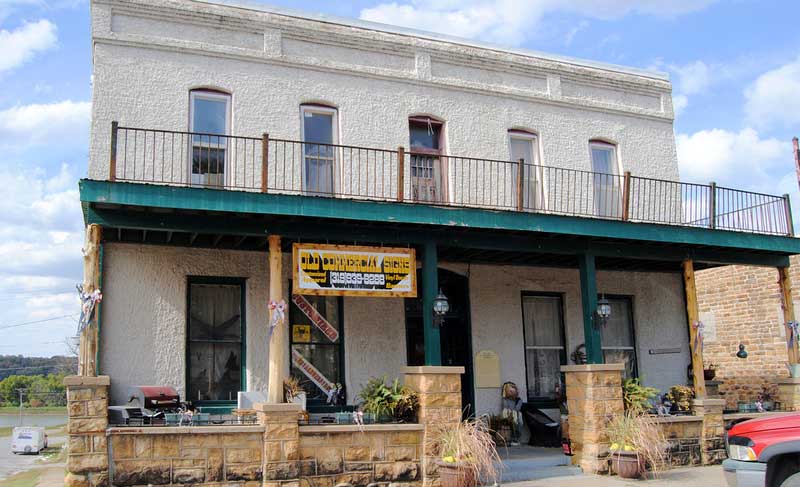
The old Commercial Hotel in Osceola, built in 1867, once housed members of the infamous James-Younger Gang.
By the time the Civil War had ended, Osceola, like other Missouri towns, was devastated – its buildings in ruins, and its population reduced to just about 200 people. Though some rebuilding occurred, including a new courthouse and the Commercial Hotel in 1867, it would not see prosperous days again until the Kansas City, Osceola, and Southern Railroad began to make its way to the community.
In the meantime, many who had served in the Civil War were embittered and turned to outlawry, including the famed Younger Brothers of Lee’s Summit, Missouri, and the James Brothers from Kearney, Missouri. The Osceola area was a frequent hideout of these young men, who were known to have often stayed at the Commercial Hotel.
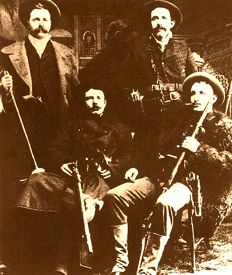
The James-Younger Gang – Left to right: Cole” Younger,
Jesse Woodson James, Bob Younger, and Frank James.
In March 1874, Jim and John Younger were in the area, fleeing from Pinkerton agents who were hot on their trail. Two agents named Captain Louis J. Lull (aka: W.J. Allen) and John Boyle (aka James Wright) arrived in St Clair County early in the second week of March, taking rooms at the Commercial Hotel. They met Osceola Constable Edwin Daniels there, who agreed to guide the agents.
The three soon set out searching for the outlaws. On March 16, they spent the night at the Roscoe House in Roscoe, some 10 miles southwest of Osceola. The next afternoon, they started toward the farm of Theodrick Snuffer, a family friend of the Youngers, just a few miles out of town.
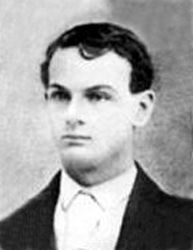
John Younger.
Posing as cattlemen, they approached the Snuffer home, ostensibly to inquire about directions. Little did the lawmen know that Jim and John Younger were hiding upstairs, watching their every move.
When the agents left, the suspicious Younger brothers followed them. Jim and John approached the three men on the road between Roscoe and Osceola, and John Boyle immediately fled. Jim took a shot at him, but the bullet succeeded only in knocking off the agent’s hat. The Youngers then disarmed Lull and Daniels, but unbeknownst to them, Lull had a small pistol in his pocket, which he pulled and shot John Younger in the neck. Holding a double-barrel shotgun, John instinctively fired back, hitting Lull’s shoulder and arm with buckshot. Lull and Daniels fled, but Jim Younger shot and killed Daniel, while the wounded John pursued Lull and fired at him with his pistol. After Lull fell severely wounded, John went towards his brother Jim, who fell from his horse and died. Agent Lull would also die from his wounds three days later. In the meantime, Jim managed to escape, and John was buried in the Yeater Cemetery in an unmarked grave.
Finally, the town of Osceola would once again see prosperity when the Kansas City, Osceola, and Southern Railroad began to make its way to the community. The building of the railroad itself provided jobs to area residents, and when it reached Osceola in 1885, the town began to thrive through agriculture, mining, and lumbering.
By the turn of the century, the town’s population had reached 1,200 people. It included several industrial businesses, such as a flour mill, a sawmill, a cheese factory, a fruit cannery, and large kilns producing superior lime, as well as several rock quarries.
At about the same time, the town’s second courthouse was questioned for structural safety. Despite the concerns, it continued to be used for several years until it was finally vacated in 1908. Although several attempts were made to raise funds to build a new courthouse, voters were unwilling to spend the money on a new building, and county officials were housed in various structures throughout the town. It wouldn’t be until 1920 that the new courthouse was sufficiently finished to accommodate employees. It was finally completed in 1923 and continues to stand today.
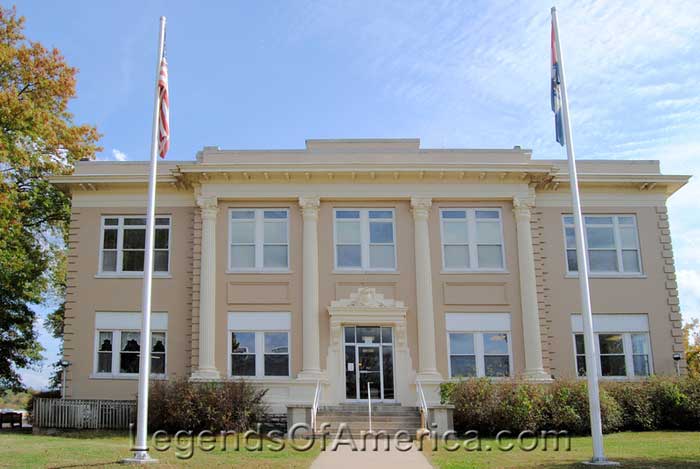
St Clair County Courthouse in Osceola, Missouri, by Kathy Alexander.
Today, Osceola remains the county seat of St. Clair County and has a population of just under 1,000. The small town offers a wealth of history, and many buildings around the square feature late-19th-century architecture. Unfortunately, Osceola burned again when a fire in a downtown square in January 2022 destroyed five buildings, including the town’s historic theatre.
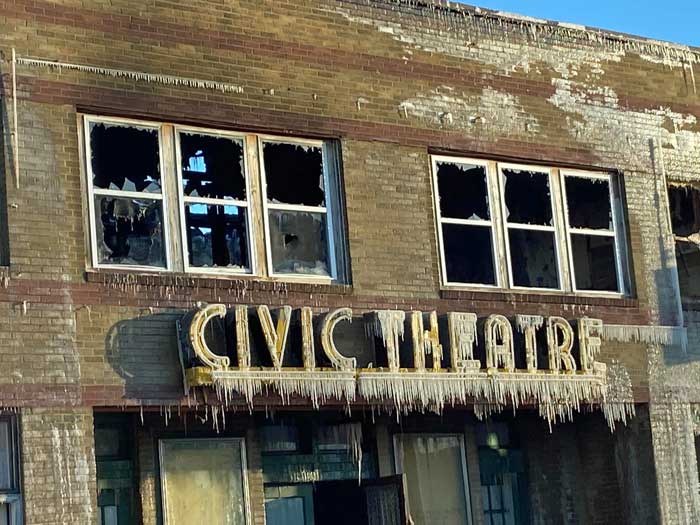
Fire destroyed five buildings on the downtown square in January 2022, including the historic Civic Theatre. Photo by Melody Schrock.
In the cemetery is a monument to the men killed in the Sacking of Osceola. Nearby, Truman Lake offers numerous recreational opportunities. The town is famous for the Osceola Cheese Company, which produces a variety of locally made cheeses, dressings, sauces, and preserves. Another interesting stop is the old Commercial Hotel, which is allegedly haunted — but that’s a whole ‘nuther story.
© Kathy Alexander/Legends of America, updated February 2026.
Also See:
Historic Accounts of the Osceola Massacre
James H. Lane – Grim Leader in the Free-State Fight
Warsaw, Missouri – History on the Osage River
See Sources.