
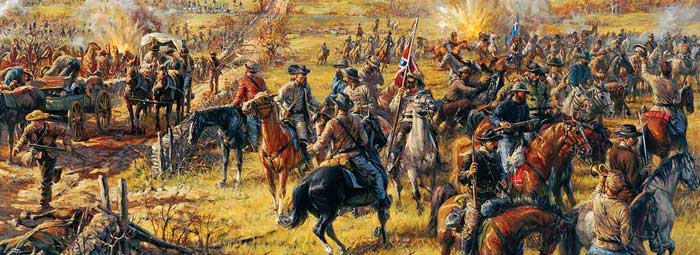
The Battle of Westport, Missouri, by Andy Thomas.
Price’s Missouri Expedition – August-October, 1864 – Also known as Price’s Raid, this expedition through Missouri and Kansas occurred in the Trans-Mississippi Theater of the Civil War in the fall of 1864. Confederate Major General Sterling Price led it, starting from Camden, Arkansas, on August 28, 1864. The campaign intended to recapture St. Louis and recover Missouri from the Confederacy. Confederate forces won several early victories, but the tide turned after they were defeated at Westport, Missouri. They then moved to Kansas, where they lost the Battles of Marais des Cygnes and Mine Creek before being forced to retreat to Missouri and ultimately to Arkansas.
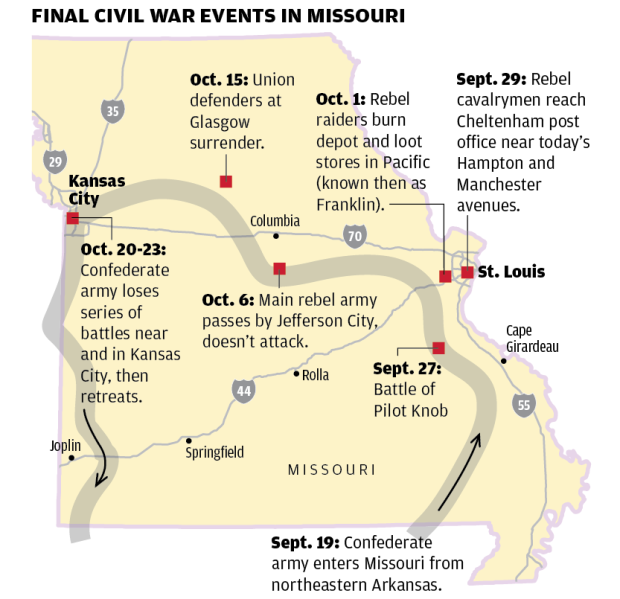
Price’s Raid through Missouri.
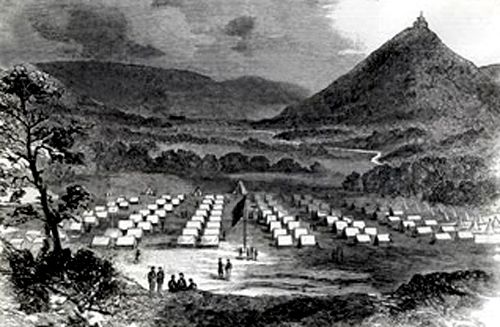
Fort Davidson, Missouri.
Fort Davidson – September 27, 1864 – The first battle of Price’s Raid, the Battle of Fort Davidson, also called the Battle of Pilot Knob, occurred in Iron County, Missouri. In September 1864, a Confederate army under Major General Sterling Price crossed into Missouri from Arkansas to capture St. Louis. Union Brigadier General Thomas Ewing moved down the railroad to Ironton with reinforcements to slow Price’s advance. On September 27, 1864, the Confederates attacked, driving the Federals back into their defenses anchored by Fort Davidson. In the late afternoon, Price unsuccessfully assaulted the fort repeatedly, suffering heavy casualties. Given the time involved, Price dismissed the possibility of mounting guns on the high ground to compel the fort to surrender or shell the garrison into submission. During the night, the Federals evacuated the fort. Price paid a high price in lives, giving Union forces the time they needed to concentrate and oppose his raid. The Union victory resulted in 184 Union casualties and 1,500 Confederate casualties.
Fourth Battle of Boonville – October 11, 1864 – Occurring in Cooper County, Missouri, this was the second battle of Price’s Expedition. General Sterling Price’s Confederate forces arrived in Boonville, Missouri, on October 10, 1864. Even though the town was mainly sympathetic to the Confederacy, undisciplined members of Price’s force engaged in a two-day frenzy of looting that delayed their advance. Meanwhile, Union forces worked on a strategy to defeat the Confederates. Union Brigadier General John B. Sanborn, who followed Price and his men, came upon Price’s rearguard outside Boonville on October 11. Still, Confederate Major Generals John S. Marmaduke and James F. Fagan repulsed him. Sanborn then withdrew South of Saline Creek. On the same day, “Bloody Bill” Anderson and his bushwhackers arrived in Boonville with Union scalps dangling from their horses’ bridles. Appalled, Price ordered Anderson to remove the scalps immediately and refused to speak to him until he did. Once Anderson complied, Price ordered him to take his men northward to break up the North Missouri Railroad. However, Anderson and other bushwhackers had already halted the railroad line, so he attacked and looted small towns and depots North of the Missouri River. On October 12, Price and his troops left Boonville.
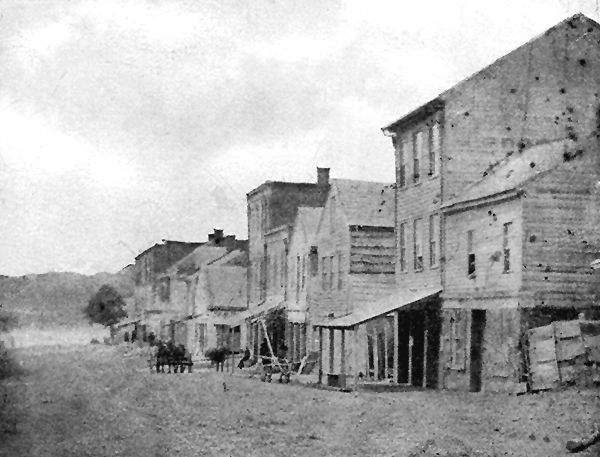
Glasgow, Missouri, 1864
Glasgow – October 15, 1864 – Part of Price’s Missouri Expedition, this battle occurred in Howard County on October 15, 1864. While Major General Sterling Price led his men westward across Missouri, he sent a detachment to Glasgow to seize weapons and supplies from an arms storehouse believed to be there. This combined mounted infantry, cavalry, and artillery force besieged the town and the fortifications on Hereford Hill. Before dawn on October 15, Confederate artillery opened on the town, and Rebels advanced on Glasgow by various routes, forcing the Yankees to fall back. The Union forces retreated out of town and up the hill toward the fortifications on Hereford Hill. They formed a defensive line there, but the Confederates advanced. Convinced that he could not defend against another Confederate attack, Colonel Chester Harding surrendered around 1:30 p.m. Although Harding destroyed some Federal stores, Price’s men found rifle muskets, overcoats, and horses. The Confederates remained in town for three days before rejoining the main column with new supplies and weapons and marching toward Kansas City, Missouri. The victory and capture of supplies and weapons boosted Price’s army’s morale. The Confederate victory resulted in 400 Union casualties and 50 Confederate casualties.
Sedalia – October 15, 1864 – While Confederate Brigadier Generals John B. Clark and Joe Shelby were engaged in the Battle of Glasgow, General Price sent Brigadier General M. Jeff Thompson and elements of Shelby’s Iron Brigade, including about 1,500 men, to attack the town of Sedalia, Missouri. The Confederates defeated and captured the Missouri Union militia stationed there in two fortified redoubts, and then some of the Confederates’ troops began sacking the town. Realizing what was happening, Thompson ordered them to stop, permitting them to keep only the weapons, equipment, and horses he had already seized from the patrolled defenders. Thompson and his men then left Sedalia to rejoin Price’s main force.
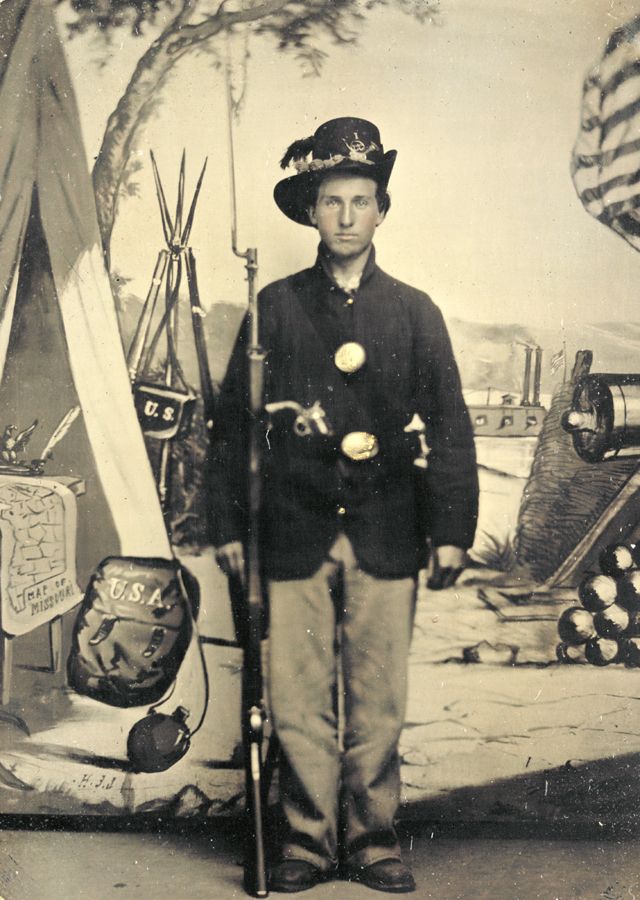
Missouri Soldier by Enoch Long.
Lexington – 2 – October 19, 1864 – A battle of Price’s Missouri Expedition, this skirmish took place in Lafayette County on October 19, 1864. Major General Sterling Price’s march along the Missouri River was slow, allowing the Yankees to concentrate. Major General William S. Rosecrans, commanding the Department of the Missouri, proposed a pincer movement to trap Price and his army. However, he could not communicate with Major General Samuel R. Curtis, commander of the Department of Kansas, to formalize the plan. Curtis had problems because many of his Kansas militia troops refused to enter Missouri. A force of 2,000 men under Major General James G. Blunt’s command set out for Lexington. On October 19, Price’s army approached Lexington, collided with Union scouts and pickets around 2:00 p.m., drove them back, and fought the main force. At first, the Yankees resisted, but Price’s army eventually pushed them through the town to the western outskirts and pursued them along the Independence Road until nightfall. The Yankees could not stop Price’s army without Curtis’s entire force, but they further retarded their slow march. Blunt gained valuable information about the size and disposition of Price’s army. The Confederate victory resulted in an unknown number of casualties.
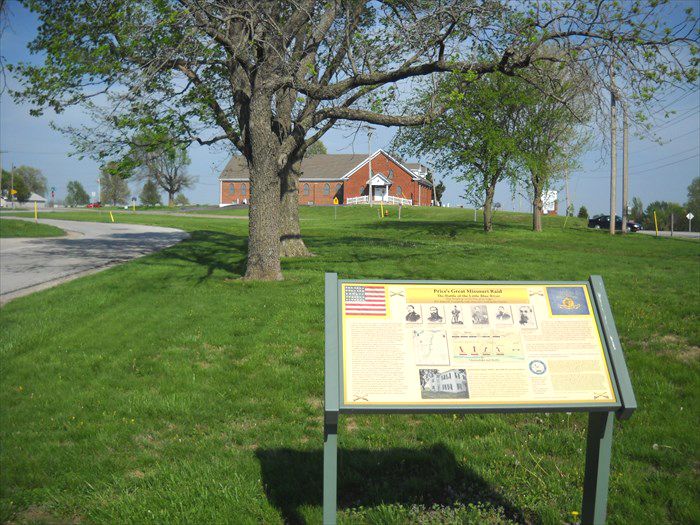
Battle of the Little Blue River, Missouri Historical Marker.
Little Blue River – October 21, 1864 – Also called the Battle of Westport, this battle took place in Jackson County on October 21, 1864, and was part of Price’s Missouri Expedition. Price’s slow march along the Missouri River allowed the Yankees to concentrate. Major General William S. Rosecrans, commanding the Department of the Missouri, proposed a pincer movement to trap Price and his army. Still, he could not communicate with Major General Samuel R. Curtis, commander of the Department of Kansas, to formalize the plan. Curtis was having problems because many of his troops were Kansas militia, who refused to enter Missouri. However, about 2,000 men under Major General James G. Blunt’s command set out for Lexington. He met the Confederate troops at Lexington on October 19, slowed their progress, defeated them, and retreated. On October 20, Blunt’s troops arrived on the Little Blue River, eight miles East of Independence. The Union forces prepared to engage the Confederates again in a solid defensive position on the West bank. Curtis ordered Blunt into Independence while leaving a small force under Colonel Thomas Moonlight on the Little Blue River. The next day, Curtis ordered Blunt to take all the volunteers and return to the Little Blue River. As he neared the stream, he found that Moonlight’s small force had burned the bridge as ordered, engaged the enemy, and retreated from the strong defensive position they had held the day before, crossing the river. Blunt entered the fray and attempted to drive the enemy back beyond the defensive position he wished to reoccupy. The Yankees forced the Confederates to fall back initially, but their numerical superiority took its toll in the five-hour battle. The Federals retreated to Independence and went into camp there after dark. Once again, the Confederates had been slowed, and more Union reinforcements were arriving. The Confederate victory resulted in an unknown number of casualties.
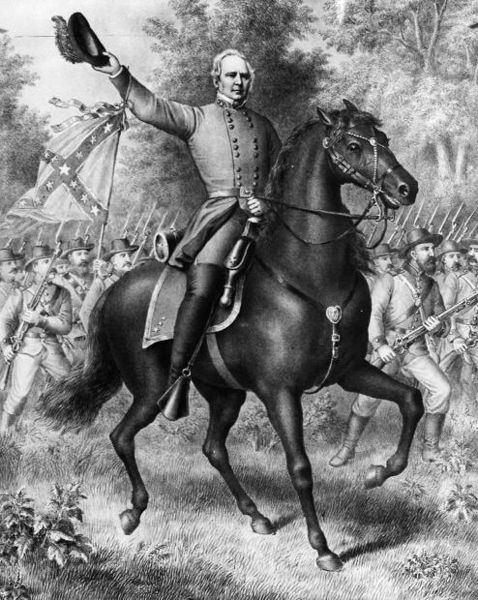
Colonel Sterling Price
Independence – 2 – October 22, 1864 – Part of Price’s Missouri Expedition, this skirmish took place in Jackson County on October 22, 1864. Major General Sterling Price’s army rode West toward Kansas City. On the night of October 21, he camped at Independence and resumed his westward march the next morning with Brigadier General Joe Shelby’s division in the lead, followed by Brigadier General John S. Marmaduke’s division, with Brigadier General James Fagan’s division bringing up the rear While Shelby’s men met success at Byram’s Ford, the other two columns did not fare as well Major General Alfred Pleasonton’s Union force crossed the Little Blue, beat up a Rebel brigade in Fagan’s command, and occupied Independence Marmaduke’s division then met Pleasonton about two miles West of Independence, hit the Federals hard, pressed them back, and held them at bay until the morning of October 23. However, Pleasonton’s actions frightened Price and his army and influenced them to send their wagon trains to New Santa Fe on the Fort Scott Road after crossing the Big Blue River. The Confederate victory resulted in 140 Confederate casualties; the number of Union casualties is unknown.
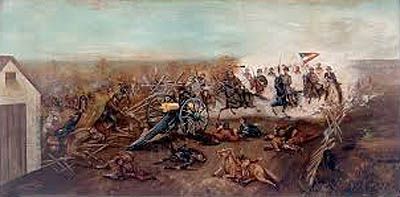
Battle of Byram’s Ford by Benjamin D. Mileham.
Byram’s Ford – October 22-23, 1864 – Also called the Battle of Big Blue River, this skirmish occurred in Jackson County, Missouri, as part of Price’s Missouri Expedition on October 22-23, 1864. Major General Sterling Price’s Army of Missouri was headed West towards Kansas City and Fort Leavenworth, Kansas. In and around Westport, Major General Samuel R. Curtis’s Army of the Border was blocking the Confederates’ way West. Major General Alfred Pleasonton’s provisional cavalry division pressed Price’s army’s rear. Price had nearly 500 wagons and needed a good ford over the Big Blue River to move his supplies. Byram’s Ford was the best in the area and became a strategic point during the fighting around Westport On October 22, Major General James G. Blunt’s division held a defensive position on the Big Blue River’s West bank Around 10:00 a.m. on the 22nd, part of Brigadier General Joseph O. Shelby’s Confederate division conducted a frontal attack on Blunt’s men This attack was a ruse because the rest of Shelby’s men flanked Blunt’s hasty defenses, forcing the Federals to retire to Westport Price’s wagon train and about 5,000 head of cattle then crossed the Big Blue River at Byram’s Ford and headed southward toward Little Santa Fe and safety Pleasonton’s cavalry was hot on the tail of Price’s army Brigadier General John S. Marmaduke’s Rebel division held the West bank of the Big Blue at Byram’s Ford to prevent Pleasonton from attacking Price’s rear Pleasonton assaulted Marmaduke at Byram’s Ford around 8:00 a.m. on October 23 Three hours later, Marmaduke’s men had enough and fell back toward Westport With Pleasonton across the river, he was now an additional threat to Price, who was fighting Curtis’s Army of the Border at Westport Price had to retreat South The number of casualties in the Union victory is unknown.
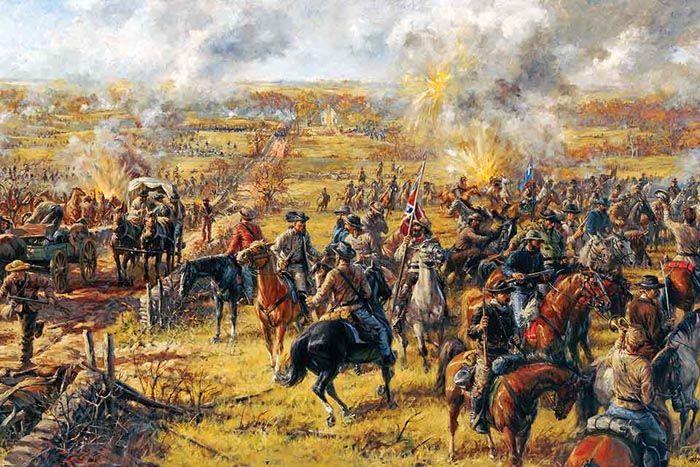
Battle of Westport, Missouri, by Andy Thomas.
Westport – October 23, 1864 – Confederate Major General Sterling Price’s Missouri Expedition had changed from St. Louis and Jefferson City to Kansas City and Fort Leavenworth. As his army neared Kansas City, Major General Samuel R. Curtis’ Army of the Border blocked its way West. At the same time, Major General Alfred Pleasonton’s provisional cavalry division closed on their rear. Price decided he needed to deal with the two Union forces and attack them one at a time. With Pleasonton still behind him, Price chose to strike Curtis at Westport. First, Curtis had established strong defensive lines, and during a four-hour battle, the Confederates hurled themselves at the Union forces but to no avail. The Rebels could not break the Union lines and retreated South. Westport was the decisive battle of Price’s Missouri Expedition, and from then on, the Rebels retreated. The estimated casualties in the Union victory were 1,500 for both the Union and the Confederates.
Battle of Trading Post/Marais des Cygnes – October 25, 1864 – Three battles occurred within several hours of each other on October 25, the first of which was the Battle of Marais des Cygnes. After losing the Battle of Westport, Price was in a headlong retreat while hotly pursued by Major-General Alfred Pleasonton’s Union cavalry.
The Union general caught up with the Confederates as they camped on the banks of the Marais des Cygnes River near the Trading Post in Linn County, Kansas. After an artillery bombardment that began at 4:00 a.m., Pleasonton’s men launched a furious assault. Price ordered his troops to cross the swollen river, leaving Major General James F. Fagan to hold off the Federals until he could get his wagon train across. Although the Union captured two cannons and several prisoners, they could not escape Price’s force. The number of Union casualties is unknown. Pleasonton continued his pursuit of Price and caught up with him again later that morning at Mine Creek.
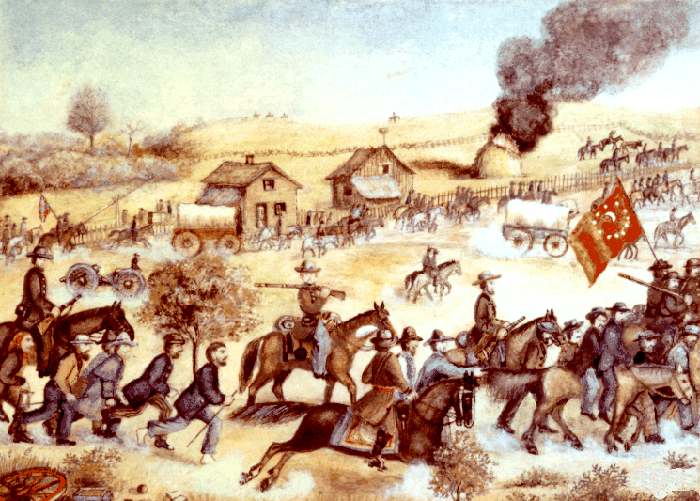
Battle of Mine Creek, Kansas by Samuel J. Reader.
Battle of Mine Creek – October 25, 1864 – The Battle of Mine Creek, Kansas, also known as the Battle of the Osage, was fought on October 25, 1864, as part of Price’s Raid. The second-largest cavalry engagement of the war pitted two divisions of Confederate Major General Sterling Price’s Army of Missouri against two Federal brigades under Colonels Frederick Benteen and John Finis Philips. About six miles South of Trading Post, the brigades of Benteen and Philips of Pleasonton’s division overtook Price’s Confederates as they were crossing Mine Creek. The Southerners had been stalled as their wagons crossed the swollen Ford. They formed their battle line on the North side of Mine Creek. Although outnumbered, the Federals commenced a mounted attack led by the 4th Iowa Cavalry. One participant described it as bursting upon the Confederates “like a thunderbolt,” causing Price’s line to disintegrate “like a row of bricks.” Superior Union firepower and the ferocity of their attack made up for their smaller numbers, and Pleasonton’s cavalry forced Price to retreat once more. Approximately 600 of Price’s men, including two of his generals, John S. Marmaduke and Brigadier General William L. Cabell, were captured, together with six cannon.
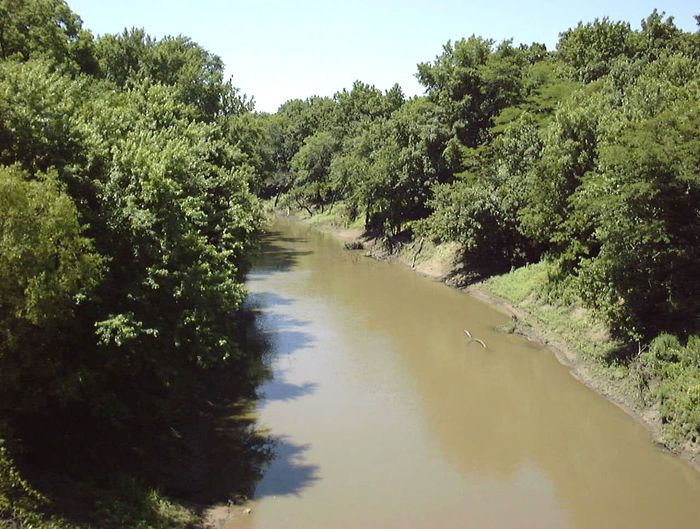
Marmaton River, Missouri, courtesyof Wikipedia.
Marmaton River – October 25, 1864 – Also called the Battle of Shiloh Creek or Charlot’s Farm, this skirmish occurred on October 25, 1864, as part of Price’s Missouri Expedition. Major General Sterling Price continued his march toward Fort Scott after the Battle of Mine Creek. In the late afternoon of October 25, Price’s supply train struggled to cross the Marmiton River ford and, as at Mine Creek, Price had to make a stand. Brigadier General John S. McNeil, commanding two brigades of Pleasonton’s cavalry division, attacked the Confederate troops that Price and his officers rallied, including a sizable number of unarmed men. Not knowing that many were unarmed, McNeil observed the sizable Confederate force and refrained from an all-out assault. After about two hours of skirmishing, Price continued his retreat, and McNeil could not mount an effective pursuit. By then, Price’s army was broken. It was simply a question of how many men he could successfully evacuate to friendly territory. The Union victory left an unknown number of casualties.
Newtonia – 2 – October 28, 1864 – Fought in Newton County on October 28, 1864; this battle was part of Price’s Missouri Expedition. Price’s force was in full retreat following its expedition into Missouri. On October 28, 1864, it stopped to rest about two miles South of Newtonia, Missouri. Soon afterward, Major General James G. Blunt’s Union troops surprised the Confederates and began to drive them. Brigadier General Joe Shelby’s division, including his Iron Brigade, rode to the front, dismounted, and engaged the Yankees. The other Rebel troops retreated towards Indian Territory (Oklahoma). Brigadier General John B. Sanborn later appeared with Union reinforcements, which convinced Shelby to retire. The Union troops forced the Confederates to retreat but failed to destroy or capture them. The Union victory resulted in 400 Union casualties and 250 Confederate casualties.
Compiled and edited by Kathy Alexander/Legends of America, updated October 2026.