
Summaries: A B C D E-I J-K L-M N O P Q-R S T-V W X-Z
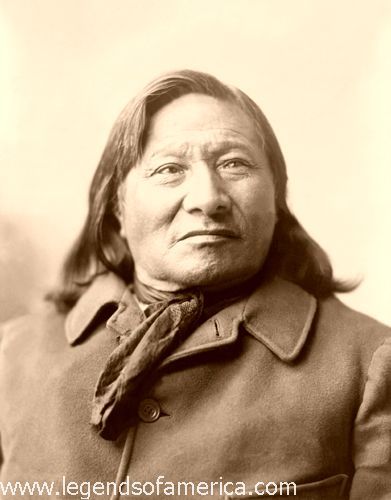
Rain-In-The-Face, a Dakota Chief, 1906.
Dakota – Also known as the Santee Sioux, the Dakota, along with the Nakota (Yankton), comprise the eastern Sioux tribes. Dakota translates to “Allies” or “Confederates,” expressing their intimate relationship with the Nakota and Lakota. They lived for centuries in southern Minnesota and western Wisconsin.
Dakubetede – A small tribe of Oregon, relatives of the Tututni Indians and speakers of a related Athapascan language. Like many other West Coast Indian tribes, the Dakubetede people were relocated to the Grande Ronde and Siletz Reservations in Oregon during the 1800s, where they were merged with other native peoples, and their languages rapidly vanished. The Dakubetede language is no longer spoken, but the Athabaskan people of Siletz have been working together to revive a mixed-heritage language based on Tututni and Tolowa.
Dalton Period – The Dalton Period of indigenous peoples spans approximately 10,500 to 9,900 years ago, or from around 8500 to 7900 BC, during which a distinctive culture of ancient Native American hunter-gatherers flourished. These ancient peoples created a distinctive set of stone tools that are now found at sites across the Middle United States.
Deadose – A small Atakapn tribe who lived between the Trinity and Navasota Rivers in eastern Texas. In 1749, they were gathered with other Attacapans at the San Ildefonso Mission, but they abandoned it a few years later. Wars with the Apache and European diseases decimated the Deadose.
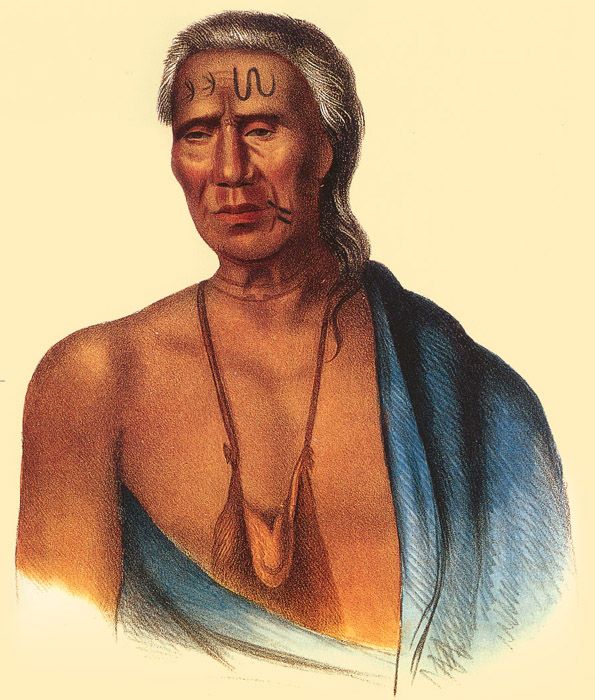
Lapowinsa, Chief of the Lenape, by Gustavus Hesselius, 1735.
Delaware/Lenape – The Delaware Indian tribe, also known as the Lenape, was part of the Algonquin linguistic stock and originally lived along the Delaware River in New Jersey, New York, and Pennsylvania. They were called “Grandfathers” by other Algonquin Nations because they are believed to have originated the language. Like other First Nations, the Delaware were forced from their homes by European settlers.
Diegueno – Also called San Diegueno, this Yuman-speaking tribe originally inhabited large areas on both sides of the U.S.–Mexican border in California and Baja California. They were named after the mission of San Diego. Diegueno descendants numbered more than 3,500 in the early 21st century.
Dotame – A tribe of which Lewis and Clark learned from Indian informants. They were said to speak the Comanche language and to number 30 warriors, or 120 people, in ten lodges. No traders had been among them; they trafficked usually with the Arikara, and were hostile toward the Sioux, but friendly with the Mandan, the Arikara, and with their neighbors. From the use of the name in connection with Cataka (Kiowa Apache) and Nemousin (Comanche), the Dotame were seemingly identifiable with the Kiowa.
Native American Symbols, Totems & Their Meanings – Digital Download
Doustioni – A tribe located in the region around the Gulf of Mexico, they are known only from records of the Sieur de la Salle’s expedition, which identifies them as allies of the Kadohadacho tribe in the late 17th century. Some writers have placed them in northeastern Texas, but this has never been convincingly proven. J.R. Swanton identified them as a Caddoan group originating from the area around Bayou Dauchite in northwestern Louisiana, but this is also unproven. No further record of the tribe survives.
Duhare – The Duhare tribe, who lived near the Chicora people in South Carolina and Georgia, were predecessors of the Creek Indian tribe. They were said to have been giants and of Irish ancestry.
Duwamish – A Lushootseed (Salish) tribe in western Washington and the indigenous people of Seattle; they have been living in this area since the end of the last glacial period, 10,000 years ago. The Duwamish tribe descends from at least two distinct groups before intense contact with people of European ancestry—the People of the Inside (the environs of Elliott Bay) and the People of the Large Lake (Lake Washington). The present-day Duwamish tribe developed in parallel with the times of the Treaty of Point Elliott and its aftermath in the 1850s. Although not recognized by the U.S. federal government, the Duwamish remain an organized tribe with roughly 500 enrolled members as of 2004.
Summaries: A B C D E-I J-K L-M N O P Q-R S T-V W X-Z
Also See:
Native Americans – First Owners of America
See Sources.