

Two photographers took each other’s pictures with hand-held cameras while perched on a roof between 1909 and 1932.
When photography began in 1839, cameras began accompanying explorers on their travels. However, at this time, technology had not yet reached a point where the images could be used in publications. Instead, skilled illustrators were required to translate these early images. It was not until the 1860s that the first practical paper photographs were achieved.
By the mid-1800s, around the time of the Civil War, the photographer was buried in a portable dark tent that held camera equipment and a portable darkroom. At that time, they processed their photos right on the spot. By the 1870s, photography had advanced so that treated plates could be taken out to the field, exposed, and returned to a darkroom for later processing. In 1884, George Eastman patented the first roll-film system, proving it practicable, and four years later, in 1888, perfected the Kodak camera, the first camera designed specifically for roll film.
Throughout the second half of the 19th Century, as photography underwent several technical improvements, many brave adventurers set out to document the events, people, and scenes that made this country great.
Historic Photographers:
Ansel Easton Adams (1902-1984) – An American photographer and environmentalist, he is best known for his black-and-white photographs of the American West, especially in Yosemite National Park.

George Grantham Bain
George Grantham Bain (1865-1944) – A New York photographer, Bain founded the first news photograph service, Bain News, in 1898.
Mathew B. Brady (1822-1896) – One of the most celebrated 19th-century American photographers, he is best known for his photographs of celebrities and his documentation of the Civil War. He is credited with being the father of photojournalism.
Edward Sheriff Curtis (1868-1952) – A photographer of the American West, he is best known for his many images of Native Americans.
Jack Delano (1914-1997) – Working for the Farm Security Administration (FSA), Delano was also a composer noted for using Puerto Rican folk material.
Walker Evans (1903-1975) – An American photographer best known for his work for the Farm Security Administration (FSA), documenting the effects of the Great Depression. He said his goal as a photographer was to make “literate, authoritative, transcendent pictures.”
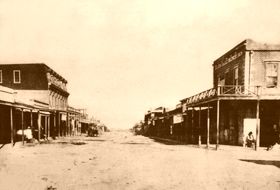
Allen Street, Tombstone, Arizona, 1882
Camillus Sydney “Buck” Fly (18??-1901) – Best known for his photography of the Geronimo’s surrender in 1886, Fly lived and worked in Tombstone during the Gunfight at the O.K. Corral. He also served as Cochise County, Arizona’s sheriff for two years.
Alexander Gardner (1821-1882) – A Scottish-born photographer, he moved to the United States in 1856, where he developed his profession. He is best known for his photographs of the Civil War, President Abraham Lincoln, and the execution of the conspirators in Lincoln’s assassination.
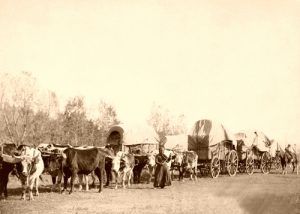
Freighting in the Black Hills, South Dakota, by John C.H. Grabill
John C. H. Grabill – An American photographer known for his photographs in South Dakota and Wyoming in the late 19th Century.
Herman Heyn (1866-1949) – An important portrait photographer in Omaha, Nebraska, from the 1880s through the 1920s; he is nationally noted for more than 500 images of Native Americans, mostly Sioux.
Frances “Fannie” Benjamin Johnston (1864-1952) – One of the earliest American female photographers and photojournalists.
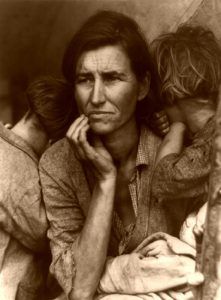
Migrant Mother, 1936, by Dorothea Lange.
Dorothea Lange (1895-1965) – A documentary photographer and photojournalist, Lange is best known for her Depression-era work for the Farm Security Administration (FSA).
Russell Lee (1903-1986) – Photographer and photojournalist who became a member of the team of photographers assembled for the federally sponsored Farm Security Administration (FSA) documentation project.
John Margolies (1940-2016) – An amazing photographer and author who captured thousands of photographs of buildings and roadside attractions between 1969 and 2008.

Timothy H. O’Sullivan.
Timothy H. O’Sullivan (1840?-1882) – An American photographer, O’Sullivan was best known for his photographs from the Civil War and the American West.
Gordon Roger Alexander Buchanan Parks (1912-2006) – A groundbreaking American photographer, musician, poet, novelist, journalist, activist, and film director, Parks is best remembered for his photo essays for Life Magazine.
Marion Post Wolcott (1910-1990) – A noted photographer who worked for the Farm Security Administration (FSA) during the Great Depression, documenting poverty and deprivation.

Arthur Rothstein, FSA photographer.
Arthur Rothstein (1915-1985) – An American photographer. Rothstein is recognized as one of America’s premier photojournalists.
Andrew Joseph Russell (1830-1902) – A 19th-century American photographer of the Civil War and the Union Pacific Railroad.
Ben Shahn (1898-1969) – A Lithuanian-born American photographer, Shahn is best known for his social realism, left-wing political views, and series of lectures.

Erwin E. Smith, cowboy photographer, 1908.
Erwin E. Smith (1886-1947) – Often called “one of the greatest photographers of cowboy life,” Smith created engaging, action-filled images of cowboys and ranch life that have come to symbolize the universal western cowboy type.
William Eugene Smith (1918-1978) – An American photojournalist known for refusing to compromise professional standards and for his brutally vivid World War II photographs.
Roy Emerson Stryker (1893-1975) – An American economist, government official, and photographer, Stryker is best known for heading the Information Division of the Farm Security Administration (FSA) during the launch of the FSA documentary photography movement.
John Vachon – John F. Vachon (1914-1975) – Vachon worked as a filing clerk for the Farm Security Administration (FSA) before being recruited to join a small group of photographers employed to publicize the conditions of the rural poor in America.
©Kathy Alexander/Legends of America, updated March 2026.
Also See:
Artist, Photographer, & Publisher Photo Galleries
President Roosevelt’s New Deal
Keeping the Frontier Alive: Living Historians and the Art of The American West
Another fun video from our friends at Arizona Ghostriders.