
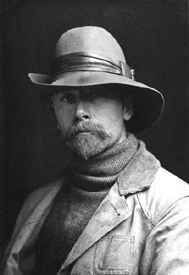
Edward S. Curtis, 1898.
Edward Sheriff Curtis was a photographer of the American West, best known for his early-20th-century photographs of Native Americans.
Born near Whitewater, Wisconsin, on February 16, 1868, to Reverend Johnson Asahel Curtis and Ellen Sheriff Curtis, the family moved to Minnesota around 1874. Curtis dropped out of school in the sixth grade and soon built his own camera. In 1880, the family lived in Cordova Township, Minnesota, where his father worked as a retail grocer. At 17, Edward became an apprentice photographer in St. Paul, Minnesota.
Two years later, in 1887, the family moved to Seattle, Washington, where Edward purchased a new camera and invested $150 into an existing photographic studio with Rasmus Rothi, becoming a 50% partner. This endeavor was short-lived, and after only six months, Curtis left Rothi to form a new partnership with Thomas Guptill in a studio called Curtis and Guptill, Photographers and Photo Engravers.
In 1892, Edward married Clara J. Phillips, and the couple had four children. In the bustling frontier city of Seattle, his photography business thrived. In 1895, he met and photographed Duwamish Princess Angeline, who was known by her tribe as Kickisomlo, the daughter of Chief Sealth of Seattle. This became his first portrait of a Native American. His favorite subjects, beyond the studio’s confines, were Mount Rainier, city scenes, and, increasingly, local Native Americans. He also followed the news closely, reporting on the hardships that befell the prospectors who joined the Klondike Gold Rush in 1897.
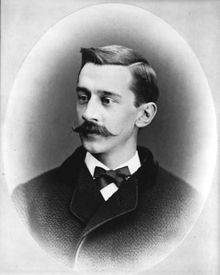
George Bird Grinnell, 1890.
In 1898, while photographing Mt. Rainier, Curtis encountered a small group of scientists, including George Bird Grinnell, an expert on Native Americans. Both Grinnell and Curtis were invited to join the famous Harriman Alaska Expedition in 1899, where Curtis was designated the official photographer. Afterward, Grinnell invited Curtis to join an expedition to photograph the Blackfeet Indians in Montana in 1900.
During the expedition, Curtis witnessed the Sun Dance ceremonies, rituals in which participants willingly suffered pain “for strength and visions.” Through this experience, along with Grinnell’s tutelage, Curtis developed a comprehensive written and photographic record of the most essential Indian peoples West of the Mississippi and Missouri Rivers, who, as he later put it, still retained “to a considerable degree their primitive customs and traditions.” Although he initially agreed with the U.S. Bureau of Indian Affairs that Indians could not survive unless they abandoned their traditional lifeways and adapted to a new culture, over time, he grew to resent the government’s policy towards Indians with fierce anger.
In 1906, J.P. Morgan offered Curtis $75,000 to produce a series on North American Indians. The series was planned to consist of 20 volumes, each containing 1,500 photographs. Morgan was to receive 25 sets of the series and 500 original prints. During the project, Curtis took over 40,000 photographs of more than 80 tribes. When completed, 222 sets were published, which not only held photographs but also documentation on Native American traditional life, biographical sketches, tribal lore and history, and descriptions of traditional foods, housing, garments, recreation, ceremonies, and funeral customs. In some cases, his documentation is the only recorded history. Edward’s goal was to document the way of life before it disappeared, writing in the introduction to his first volume in 1907: “The information that is to be gathered… respecting the mode of life of one of the great races of mankind must be collected at once or the opportunity will be lost.”
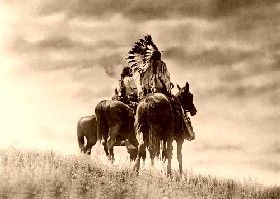
Cheyenne Warriors by Edward S. Curtis.
He also made over 10,000 wax cylinder recordings of Indian language and music, which were issued in limited editions from 1907 to 1930.
In October 1916, Edward’s wife, Clara, filed for divorce, and three years later, she was granted Curtis’ photographic studio and all of his original camera negatives as part of the settlement. However, Curtis wouldn’t stand for it, so he went to the studio with his daughter, Beth, and destroyed all of his original glass negatives rather than have them become her property. She later managed the studio with her sister.
Around 1922, Curtis moved to Los Angeles, California, with his daughter Beth and opened a new photo studio. However, it wasn’t an immediate success. He also worked as an assistant cameraman for the famous Hollywood director Cecil B. DeMille and as an uncredited assistant cameraman in the 1923 filming of The Ten Commandments.
On October 16, 1924, Curtis sold the rights to his ethnographic motion picture In the Land of the Head-Hunters to the American Museum of Natural History. He was paid $1,500 for the master print and the original camera negative. Unfortunately, filming the production cost him over $20,000.
In 1927, he was arrested for failing to pay alimony over the preceding seven years. The total owed was $4,500, but the charges were dropped for whatever reason. In 1928, desperate for cash, Curtis sold the rights to his project to J.P. Morgan’s son. In 1930, he published the final volume of The North American Indian.
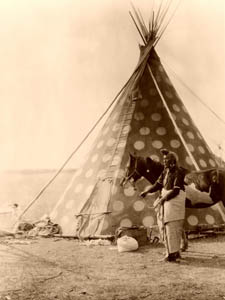
Blackfeet Tipi by Edward S. Curtis.
In 1935, the Morgan estate sold the rights and remaining unpublished material of the series to the Charles E. Lauriat Company in Boston for $1,000 plus a percentage of any future royalties. The sale included 19 complete bound sets of The North American Indian, thousands of individual paper prints, the copper printing plates, the unbound printed pages, and the original glass-plate negatives. Lauriat bound the remaining loose printed pages and sold them with the completed sets. The remaining material remained untouched in the Lauriat basement in Boston until it was rediscovered in 1972.
After his long and extensive project, The North American Indian, was finally completed, the strain of incessant travel broke Curtis’ health, compounded by legal and financial worries. He took some interest in the remnant of his studio in Los Angeles, which his daughter had long run. He also dabbled in mining, farmed a small holding in Whittier, and wrote, but he published little memoir material. In his later years, he watched his life’s work seemingly slide into oblivion.
On October 19, 1952, at the age of 84, Curtis died of a heart attack in Whittier, California, in the home of his daughter, Beth. He was buried at Forest Lawn Memorial Park in the Hollywood Hills, California. An obituary that appeared in The New York Times stated:
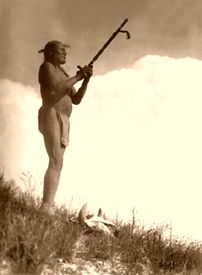
Sioux Prayer to the Mystery by Edward S. Curtis.
“Edward S. Curtis, an internationally known authority on the history of the North American Indian, died today at the home of a daughter, Mrs. Bess Magnuson. He was 84. Mr. Curtis devoted his life to compiling Indian history. His research was done under the patronage of the late financier, J. Pierpont Morgan. President Theodore Roosevelt wrote the foreword for the monumental set of Curtis books. Mr. Curtis was also widely known as a photographer.”
Although his life’s work, The North American Indian, never proved popular during his lifetime, as its editions were expensively produced and issued over a long period, he would be happy to know that modern history has greatly appreciated the project’s value. Exhibitions have been mounted, anthologies of photographs have been published, and The North American Indian has been increasingly cited in others’ research. A reprint edition of the entire work has also been published.
©Kathy Alexander/Legends of America, updated October 2026.
Also See:
Artist, Photographer, & Publisher Photo Galleries
Edward S. Curtis Photo Gallery
Photographers Documenting History
See Sources.