
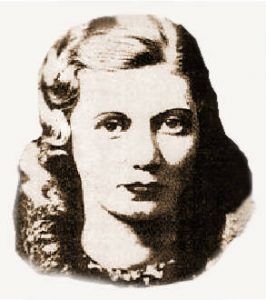
Edna Murray.
Edna “Rabbit” Murray was a Depression-era outlaw who associated with several high-profile gangs, including the Barker-Karpis Gang. Her criminal career included activities like highway robbery and kidnapping. Although popularly known to the press as the “Kissing Bandit” for kissing a male robbery victim, she was known in the underworld as “Rabbit” for her skills in breaking out of the penitentiary.
Martha Edna Stanley was born on May 26, 1898, in Marion, Kansas, to Nicholas D. Stanley and Luella Stanley. She had a younger sister, Doris, and three brothers, Matt, Floyd, and Harry. As a child, she moved with her father to northeastern Oklahoma, settling in Cardin, a former center of zinc and lead mining. Leaving her mother behind, the family earned income by renting out shanties to local miners.
As a teenager, she married a man named Paden, with whom she had a son, Preston Leroy Paden, in 1915. However, the marriage was brief. She then married Walter Price, but that marriage also failed.
Murray was working as a waitress in Sapulpa, Oklahoma, when she met robber Volney Davis, who became her lover and further exposed her to an organized criminal network. He was imprisoned for life in 1918.
She then moved to Kansas City, Missouri, where she joined her younger sister Doris, who was living with a criminal named Emory Connell.
Murray soon met and married Connell’s partner, “Diamond Joe” Sullivan, a jewel thief, bootlegger, and notorious figure whose criminal activities were widely known. Sullivan was convicted of murdering Little Rock policeman Luther C. Hay during a 1923 robbery and was executed by electrocution on April 18, 1924, at the Arkansas State Penitentiary, leaving Murray widowed at a young age.
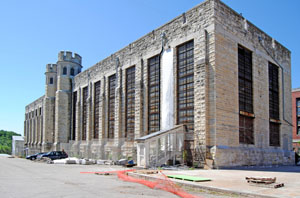
Old Missouri State Penitentiary in Jefferson City, Missouri, by Kathy Alexander.
After Sullivan’s death, she met and married another bootlegger named Jack Murray, and the pair robbed a series of banks. Some of their activities involved transporting illegal liquor from New Orleans to Kansas City, marking her shift to direct participation in Prohibition-era offenses. On October 1, 1925, Edna Murray and Jack Murray were sentenced to 25 years for a holdup in Kansas City, Missouri. It was this crime that earned Edna the nickname “the Kissing Bandit“, after she flirtatiously kissed victim H.H. Southward, an employee carrying company funds to a bank.
On May 2, 1927, Edna escaped from the Missouri State Penitentiary in prison at Jefferson City, Missouri, and remained free until arrested in Chicago, Illinois, on September 10, 1931. She and a couple of other inmates then escaped by climbing over a fence on November 4, 1931. However, they were quickly apprehended and returned to prison. On December 13, 1932, she escaped again along with Irene McCann after sawing through the bars of her cell.
In the meantime, her former lover, Volney Davis, had applied for a 20-month “leave of absence” from his prison, which was granted on November 3, 1932. Such leniency was common in Oklahoma at the time, even given his criminal record, although Alvin Karpis later claimed that the state’s decision was influenced by a $1,500 bribe. Davis was scheduled to return to the prison on July 1, 1934, but instead went on the run. A month after his release, Edna joined up with him. The two continued their crime spree and later settled down in Aurora, Illinois. Her son Preston joined them and participated in their crimes. At that time, Edna’s sister, Doris, was living with outlaw Jess Doyle, a member of the Barker-Karpis gang.

Volney Davis.
The couple soon joined the Alvin Karpis-Barker Gang, which was then at the peak of its activities. The gang, led by Alvin Karpis and Fred Barker, carried out operations including the August 30, 1933, robbery of the South St. Paul, Minnesota, post office for the Stockyards National Bank payroll, as well as mail and auto thefts to facilitate their mobility and fund their activities. Murray’s role involved harboring participants and using safehouses to conceal stolen goods and vehicles. She also took part in the gang’s bank robberies and holdups in the St. Paul area and the surrounding area.
One of the Barker-Karpis Gang’s most notorious crimes involving Murray occurred on January 17, 1934, when Edward Bremer, a prominent St. Paul, Minnesota banker and brewery president, was abducted at gunpoint near his home and held for a $200,000 ransom, which was successfully paid after three weeks. At that time, Murray resided at the Edgcumb Apartments in St. Paul, close to the kidnapping site, and participated in the planning and aftermath, including sharing in the ransom proceeds estimated at $18,000 to $20,000 for her portion. She was later indicted for conspiracy. Her support extended to post-kidnapping activities, such as helping transport ransom money and fleeing with Davis to locations like Kansas City, Missouri, under the alias Mr. and Mrs. H.J. Morley.
On April 23, 1934, outlaws John Dillinger, Homer Van Meter, and John “Red” Hamilton arrived at the couple’s home seeking a hideout after being nearly captured by the FBI near Rhinelander, Wisconsin. Hamilton, having been badly wounded during the shootout, had been denied treatment by Chicago mob doctor Joseph Moran and died of his injuries several days after arriving at their Aurora home. Murray and Davis were later present during his secret funeral, in which he was buried in an unmarked grave. In the meantime, Volney Davis led FBI agents to Hamilton’s grave outside Aurora, Illinois, and three months later, Edna backed his story up.
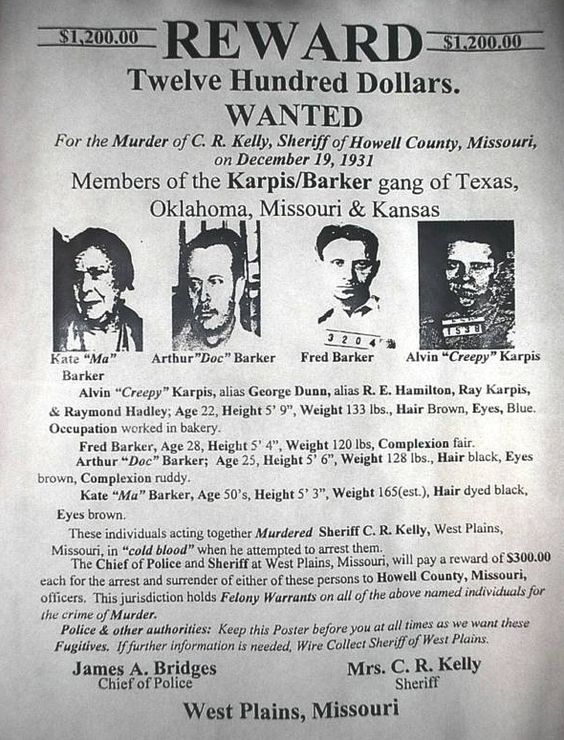
Barker-Karpis Gang Wanted Poster.
The Barker-Karpis Gang’s escalating violence and high-profile crimes, bolstered by Murray’s involvement, led FBI Director J. Edgar Hoover to designate key members as “public enemies”, intensifying a nationwide manhunt that highlighted the gang’s status as one of the era’s most dangerous outfits and prompted expanded federal resources for their capture. With the FBI hot on her tail, she was indicted on January 22, 1935, along with several members of the Barker-Karpis Gang for a conspiracy to kidnap wealthy Minnesota banker Edward Bremer and ransom him for $200,000 in January 1934.
A little over two weeks later, Volney Davis was captured in St. Louis, Missouri, by federal agents on February 6, but escaped from federal custody the next day. He had been traveling under escort to stand trial in St. Paul, Minnesota, when their plane was forced to land in Yorkville, Illinois. Once on the ground, Davis knocked out a guard and stole a car. He evaded capture for nearly four months before being traced to Chicago by the FBI and arrested by Agent Melvin Purvis on June 1. He was eventually returned to St. Paul, where he was convicted of kidnapping and sentenced to life imprisonment. Davis cooperated with the government and gave information, as well as testified against other members of the gang.
In the meantime, Edna Murray fled and soon found herself in Pittsburg, Kansas, with Jess Doyle, a member of the Barker-Karpis Gang and her sister’s boyfriend. She was apprehended there on February 7, 1935, along with associate Jess Doyle and her brother Harry C. Stanley and his wife, Mary Stanley, who were charged with harboring her after she fled following the capture of other gang members.
Harry C. Stanley was fined $1,000 and sentenced to six months’ imprisonment at the Sedgwick County Jail on March 12, 1935. Edna Murray was convicted with several others in the kidnapping conspiracy and sentenced to federal prison on May 6, 1935.

Edna Murray in the Missouri State Penitentiary in Jefferson City, Missouri.
The following year, Edna’s son Preston Leroy Paden was convicted of murder for killing a night watchman in Kansas. He was given a life sentence and died in 1957, in Oklahoma, at age 41, from causes unrelated to criminal associations.
Like the rest of the Karpis-Barker Gang, Volney Davis was sent to Alcatraz, where he spent the next several decades. But by the time of Davis’ release in the late 1950s, he was in poor health and resided in Guerneville, California. He died on July 20, 1982, in Sonoma County, California.
Murray was very cooperative with the authorities after her capture and gave evidence against a number of the Barker-Karpis gang’s associates, along with corrupt police officers and lawyers. While in prison, she marketed herself as a “gangster’s moll” in several newspapers and journals, writing articles with titles such as I Was a Karpis-Barker Gang Moll.
She was paroled from the Women’s Prison at Jefferson City, Missouri, on December 20, 1940, and eventually made her way to San Francisco, California, where she adopted a low-profile existence under assumed identities to evade publicity and potential threats from her criminal history. She avoided any involvement in crime, including efforts to reconnect with relatives strained by her earlier life choices; remarried; took the surname Potter; and lived quietly.
Edna Murray died on April 13, 1966, at the age of 68 in San Francisco and was buried at Golden Gate National Cemetery in San Bruno, California.
©Kathy Alexander/Legends of America, updated June 2025.
Also See:
The FBI and the American Gangster
Gangsters, Mobsters & Outlaws of the 20th Century
Sources: