
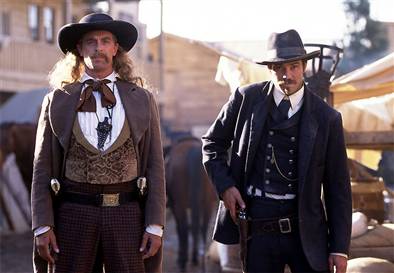
Characters of Wild Bill Hickok and Seth Bullock on the HBO Deadwood series, photo courtesy HBO
Factual Accounts:
- Martha Bullock arrives in camp after Seth Bullock has already been made sheriff, and his hardware business is successful. Mrs. Bullock will become a pillar of Deadwood, bringing arts and culture to the town.
- Bullock, along with Sol Star, established the Star and Bullock Hardware Store in 1876.
Chinese:
- A strong Chinese community existed in Deadwood’s early days, when as many as 400 Chinese lived in an area of Deadwood often referred to as the “Badlands.” They elected their own mayor and council and established their own police force and fire department.
- In early Deadwood’s days, selling opium and other drugs to white settlers was common.
E.B. Farnum:
- Farnum was actually appointed as Mayor by the first miners’ court in Deadwood. A few weeks later, he won the election by popular vote.
- Hearst comes to Deadwood and eventually buys the Homestake Mine.
- Jack McCall shot Wild Bill Hickok in Mann & Nuttall’s Number 10 Saloon.
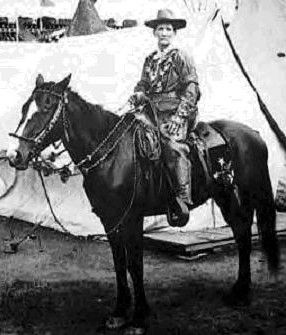
Calamity Jane
- Calamity Jane was every bit as foul-mouthed and drunk as she is portrayed in the series.
- There was a smallpox outbreak in 1876, where quarantine tents (pest houses) were established to care for the sick. Calamity Jane was instrumental in caring for the ill during this epidemic.
Lucretia “Aunt Lou” Marchbanks:
- Lucretia Marchbanks was known as “Aunt Lou” in the camp and quickly gained a reputation for having the finest culinary skills in the Black Hills.
- Aunt Lou did work at the Grand Central Hotel as the Kitchen Manager.
- Albert W. Merrick was, in fact, a newspaper editor, founding the Deadwood Pioneer in 1876. However, in August 1879, he sold the paper only to re-purchase it a year later.
Miners Court:
- A Miners’ Court was established in August 1876 to establish a provisional government in the city. At this time, Seth Bullock was elected as a commissioner and fire warden, and E.B. Farnum was made mayor. A month later, the miners’ court held an election for offices, and Farnum actually won in the popular vote for mayor. However, Seth Bullock wasn’t even in the running for the Deadwood Marshal position, and the job went to Con Stapleton.
Trixie:
- According to pioneer John S. McClintock, a Gem Theater prostitute named Tricksie shot a man through the front of his skull for beating her up. The attending doctor put a probe through the man’s head, amazed that he survived the gunshot.
- Wild Bill Hickok, Calamity Jane, and several prostitutes did arrive with Charlie Utter’s wagon train in July 1876.
- Charlie Utter was a true friend to Wild Bill Hickok. When Bill Hickok died, Charlie was indeed away but soon made it back in time to make all the arrangements for his funeral, bought the plot, and erected the marker.
- Jack Langrishe did, in fact, come to Deadwood in 1876 along with the rest of his troupe. They temporarily conducted their productions at the Bella Union Theatre before building their own building.
Fictional Accounts:
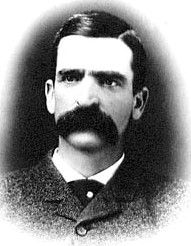
- It is doubtful that Seth Bullock and Sol Star even met Wild Bill Hickok, much less befriended him. Seth and Sol arrived in Deadwood only one day before Wild Bill Hickok was shot. The timeline is obviously skewed, so Wild Bill could “stay in the picture” a little longer.
- Seth Bullock did not go after Bill Hickok’s killer, Jack McCall. After the trial in Deadwood was found to be a farce, McCall was apprehended and taken to Yankton, South Dakota, by U.S. Marshals. He was hanged for the murder of Bill Hickok on March 1, 1877. McCall was buried in Yankton with the hangman’s noose still tied around his neck.
- Seth Bullock’s marriage to his brother’s widow is fiction. In fact, Martha Eccles was Seth’s childhood sweetheart, and the couple married in Utah in 1874, two years before Seth came to Deadwood. He actually sent Martha and their newborn daughter, Margaret, to live with her parents in Minnesota until he could establish his business. After Martha joined him in the camp, they had another daughter, Florence, and a son, Stanley.
- The Miner’s Court did not elect Seth Bullock as Deadwood’s first marshal, but rather, the Miner’s Court elected a man named Isaac Brown after the trial of Jack McCall on August 5, 1876. However, when Isaac Brown, along with the Reverend Smith and two other men named Charles Mason and Charles Holland, were traveling between Crook City and Deadwood, they were ambushed and killed on August 20. Leaving an open position, the miner’s court soon met again, this time electing Stapleton as the new sheriff. However, Bullock was appointed by Governor Pennington as the first Lawrence County Sheriff in March 1877. However, when the Lawrence County Sheriff vote was held in November 1877, Bullock lost to John Manning.
- Star and Bullock did not buy the lot for their store at Wall & Main Street from Al Swearengen. They bought the lot from two men named Sam Schwartzwald and Henry Beaman in April of 1877.
- Sol Star and Seth Bullock were involved in a short-lived mining endeavor that never appears in the series. In 1877, records show that the Portland Mine was owned by Star, Bullock, and Peter Wiser. Just a year later, in March 1878, records show that the claim was sold.
- Bullock didn’t have an affair with Alma Garrett, as she did not exist. It is doubtful that he had an affair, given his upstanding reputation.
- Martha did not arrive in camp with a son in tow but arrived with her and Seth’s daughter, who was just a toddler at the time.
- William Bullock did not exist; however, Seth and Martha cared for a nephew for several years, beginning in 1881.
Cornish Miners:
- Though evidence suggests problems among the Cornish miners during the Homestake Mine’s early history, the vast majority seems to be among the miners themselves, rather than between the Cornish men and the mine owners, or specifically, George Hearst. As a rule, the Cornish were sought after by mine owners, as they were considered the best hard-rock miners in the world, having a long history of mining in their own country. Though the mine owners might have “loved” them, they were often discriminated against by other immigrants who were resentful of their clannishness and semi-privileged industrial situation.
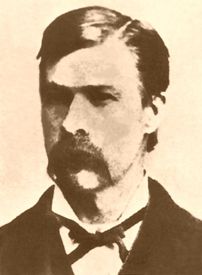
Morgan Earp
- Though Morgan does come along with Wyatt when the two arrive in the spring of 1877, there is no indication that he shot anyone while in Deadwood. There is also nothing in the historical records to indicate that he was the “goofball” portrayed on the HBO Series. Morgan was married when he arrived in the mining camp, and the couple lived in Butte, Montana.
- Though Wyatt shows up in season three of the series, he actually appeared in Deadwood in the spring of 1877, at about the same time that Al Swearengen opened the Gem Theater and Seth Bullock was appointed as the Lawrence County Sheriff.
E.B. Farnum:
- E.B. Farnum did not own the Grand Central Hotel in Deadwood but instead owned a retail store and was a real estate and mining entrepreneur.
- It is very unlikely that he was Al Swearengen’s “lackey,” as all evidence suggests he was a successful businessman in his own right.
- Though the series shows no wife, Farnum was married and had three children.
- Although the series gives E.B.’s name as Eustace Baily, it was actually Ethan Bennett.
- Though Hearst indeed hired investigators to check out the claims before his arrival, including a man named L.D. Kellogg, an experienced practical miner, there is no evidence that Kellogg or any other investigator used heavy-handed tactics with the townfolk. After a brief investigation, Kellogg optioned the Homestake and Golden Star Claims for $70,000.
- George Hearst never owned the Grand Central Hotel. However, he would build a new hotel at the Homestake Mine in 1879.
- While George Hearst, who will one day be the head of the Hearst Publishing empire, does send agents to Deadwood to inspect the claims, there is no evidence of an agent named Francis Wolcott.
- Though Hearst was known to have been a very controlling person in his business interests, there is no evidence that he was the ruthless man the character portrays in the HBO series. In fact, he was described in 19th-century literature as a man of scrupulous integrity, a faithful friend, and without pretense or presumption of any kind.
- Though the series depicts Wild Bill Hickok’s funeral as sparsely attended, it was, in fact, quite the opposite, with almost the entire camp in attendance.
Homestake Mine:
- The Homestake Mine was discovered by brothers Moses and Fred Manuel and Hank Harney, rather than Brom Garrett, who never actually existed in Deadwood’s history. This also obviously precludes Alma from owning the mine or Elsworth from running it. These two also didn’t exist in Deadwood’s history.
- While Jack Langrishe did operate a theatre in Deadwood, he was not gay and ran the theatre with his wife, Jenette.
- Langrishe’s first productions, before he built his own building, were held at the Bella Union rather than in an abandoned brothel.
Lucretia “Aunt Lou” Marchbanks:
- Aunt Lou never worked for George Hearst, though it was possible that he may have met her as she did work for a time for the DeSmet Mine, which Hearst would later own.
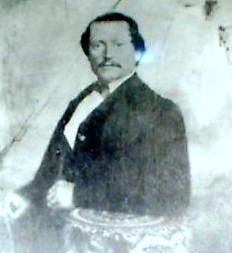
Jack McCall
- Jack McCall’s first trial that acquitted him of murder was not held in the Gem as shown, but instead at the Deadwood Theatre, sometimes referred to as McDaniel’s Theatre (for its builder) or the Langrishe Theatre, for Jack Langrishe, the performer’s troupe manager.
Metz Massacre:
- Though the Metz family was ambushed and killed in 1876, the only survivor was actually a man, not a child, making Sophia Metz and the entire story surrounding her fiction.
Albert W. Merrick:
- Though the series never shows that A.W. Merrick was married, he was, and in fact, had three children. Unfortunately for the Merricks, they lost their 8-year-old son on October 8, 1880, when he died of inflammation of the bowels. They also lost an infant daughter in 1884.
Reverend Henry Smith:
- The Reverend Henry Weston Smith, who was almost 50 years old, did not die of a brain tumor. Instead, he was murdered while going from Deadwood to another mining camp, most likely by Indians. However, another preacher named Father Mackin, who replaced Smith, died of “softening of the brain” several months after having a spasmodic “fit” in front of the Overland Hotel.
- The claim that Al Swearengen was from England and raised in an orphanage is incorrect. His sob story to Trixie was just that. Swearengen was raised by his two parents and seven siblings in Iowa.
- When the first season opens, the bulk of the action takes place in Swearengen’s Gem Saloon; however, Al actually owned and operated a smaller establishment called the Cricket Saloon in 1876. The Gem Theatre didn’t open until April 1877.
- Though we would never know it in the series, Swearengen was married to a woman named Nettie. In 1878, she left him on the grounds of mistreatment, and the pair were later divorced.
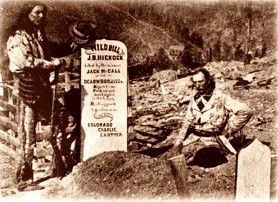
Charlie Utter at Wild Bill Hickock’s grave
- Unlike the unkempt and often awkward Charlie Utter in the series, the real-life Charlie was known for his charisma and pride in his appearance. He often dressed in hand-tailored suits and meticulously kept his long blonde hair and mustache well-groomed. Highly unusual for the times, he was also adamant about bathing every day.
- When Charlie Utter arrived in Deadwood, his brother, Steve, was along as well, though he does not appear in the HBO Series.