
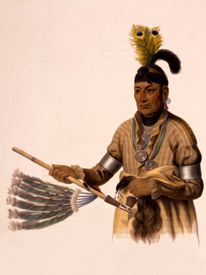
Naw-kaw, a Ho-Chunk chief, I.T. Bowen Lithographic,1836.
The Ho-Chunk, also known as Hoocaagra or Winnebago, are a Siouan-speaking Native American people whose historic territory included parts of Wisconsin, Minnesota, Iowa, and Illinois. They were closely related to the Chiwere peoples, including the Ioway, Otoe, and Missouri. The term “Winnebago” was used by the Potawatomi tribe, which meant “people of the dirty water”, referring to Wisconsin’s Fox River and Lake Winnebago, which were fouled by the bodies of dead fish in the summer. But they always called themselves Ho-Chaank, meaning “sacred voice.” Although they spoke a Sioux language, their culture was similar to that of the Algonquian peoples.
The tribe’s oral traditions state that the Ho-chunk originated at the Red Banks on Green Bay. Other tribal traditions indicate that tribes such as the Quapaw, Missouria, Iowa, Oto, Omaha, and Ponca were once part of the Ho-chunk, but these tribes continued to move farther west while the Ho-chunk remained in Wisconsin.
Before Europeans ventured into the Ho-Chunk territory, the people were living in the Lake Winnebago area, building substantial rectangular houses. From here, they hunted, farmed, and gathered food, including nuts, berries, roots, and edible leaves. They often foraged in other parts of their territory for hunting and gathering. The tribe comprises 12 clans, each associated with a different animal spirit.
The main roles of the men of the tribe included hunting, fishing, serving as warriors when necessary, and leading political relations with other tribes. Some men also created jewelry and other body adornments from silver and copper. The men were also responsible for acquiring protection and powers from specific spirits, which were obtained by making offerings such as tobacco and war-bundles. To become men, boys underwent a rite of passage at puberty that involved fasting and acquiring a guardian spirit.
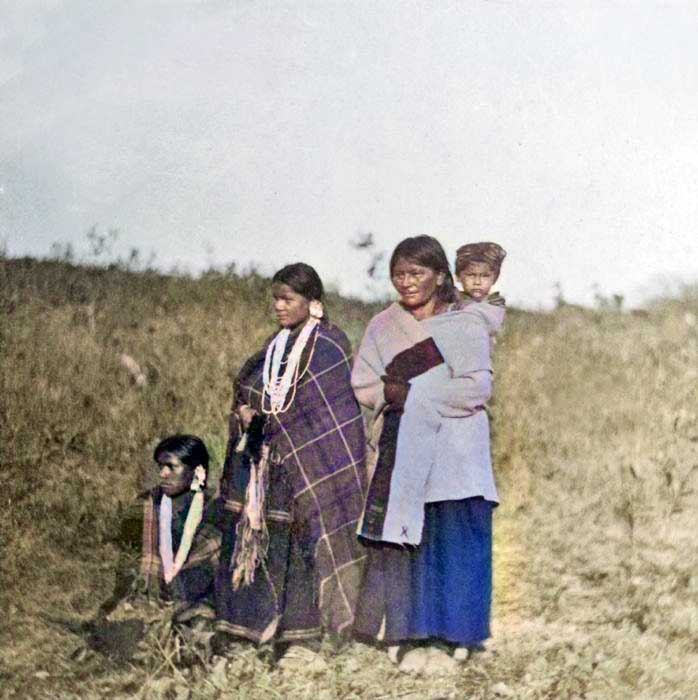
Winnebago Women about 1870. T
Women were responsible for growing, gathering, and preserving food. They cultivated corn, beans, and squash, tapped maple trees for sap for syrup and candy, and collected berries, roots, and wild rice. They learned to identify and use a wide range of medicinal plants, including roots and leaves. From the game their men brought back to camp, they tanned the hides to make clothing, storage bags, and coverings for dwellings. They were also responsible for the care of children and the elderly.
Their clothing was comprised of fringed buckskin, which they frequently decorated with beautiful designs created from porcupine quills, feathers, and beads – a skill for which they are still renowned today. Body tattooing was common to both sexes.
In the mid-16th century, the influx of Ojibwa peoples into the northern portion of their range prompted the Ho-Chunk to move south of their territory. Here, they were at odds with some of the Illinois Indians.
The Ho-Chunk’s first contact with Europeans was when they met French explorer Jean Nicolet in 1634. At that time, they lived in the area around Green Bay on Lake Michigan in Wisconsin, extending to Lake Winnebago, the Wisconsin River, and the Rock River in Illinois. It is estimated that their population was as much as 20,000.
Afterward, French trappers and traders began to enter their area, describing them as powerful and skilled warriors who frequently waged war against other tribes. By the 1650s, the Ho-Chunk population had declined to approximately 600 due to disease and war. They lost their dominance in the region when numerous Algonquian tribes migrated west to escape the aggression of the powerful Iroquois. When peace was established between the French and the Iroquois in 1701, many Algonquian peoples returned to their homelands east of the Mississippi, and the Ho-Chunk were relieved of pressure on their territory.
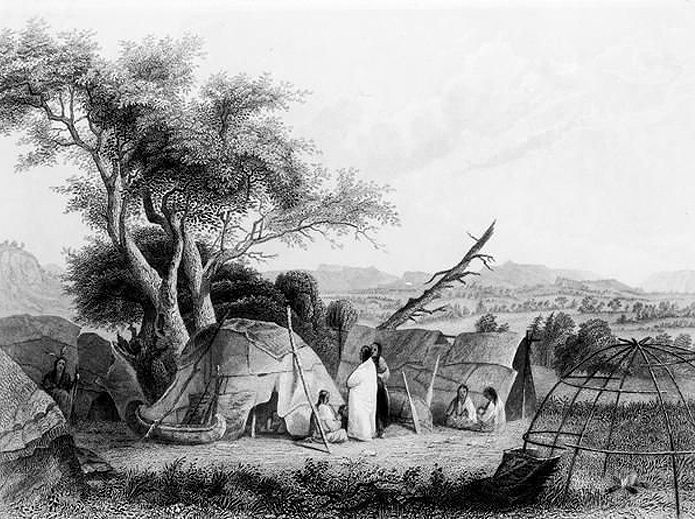
Ho-Chunk Wigwam.
After 1741, while some remained in the Green Bay area, most returned inland. The population gradually recovered, aided by intermarriage with neighboring tribes and with some French traders and trappers. They adopted several Algonquian customs and traditions and entered the fur trade. They continued to maintain gardens but increasingly relied on hunting and trapping. Instead of the large villages they had previously inhabited, they established smaller, more dispersed settlements and began living in domed wigwams. Increasingly, trading centers at Portage and Prairie du Chien drew them away from their earlier territory in the Green Bay region.
When Wisconsin became part of the United States in 1783, the Ho-chunk, like other Wisconsin tribes, retained a strong attachment to the British and fought against the United States during the American Revolution.
By 1806, their population had recovered to about 2900. At approximately the same time, the Ho-Chunk began to follow the religious teachings of the Shawnee Prophet Tenskwatawa and his brother Tecumseh. These Shawnee Indians from Ohio urged Indians to reject European American ways, such as drinking liquor, European-style clothing, and firearms. He also called for the tribes to refrain from ceding any more lands to the United States. In the War of 1812, the Ho-Chunk fought alongside the British, and although they lost, they retained their hostility toward the United States.
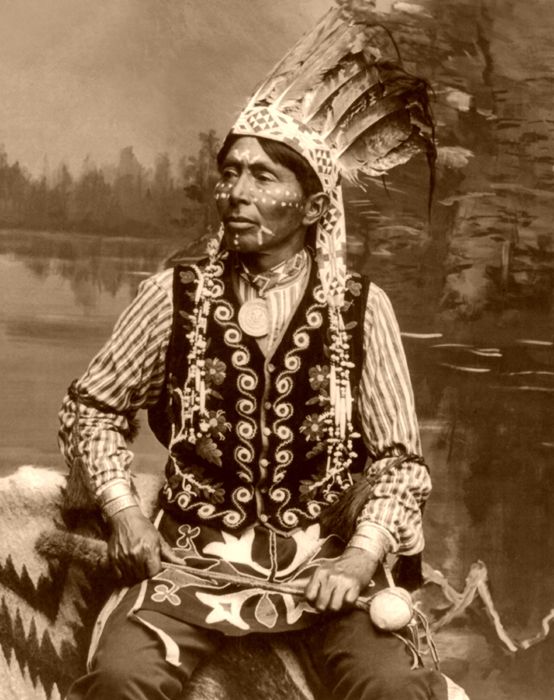
Branching Horns, Ho-Chunk Warrior by Henry H Bennett, 1905.
By treaties made in 1825 and 1832, they ceded all of their lands south of the Wisconsin and Fox Rivers to the United States Government in return for a reservation on the west side of the Mississippi River above the upper Iowa River. In 1836, they suffered severely from smallpox. In 1837, they relinquished the title to their old country east of the Mississippi River, and in 1840, they removed to Iowa. Many, however, remained in their old lands.
In 1846, their population had reached 4,40,0, and they surrendered their reservation in favor of one in Minnesota north of the Minnesota River. Afterward, their population declined again to about 2,500 in 1848, at which time they were removed to the Long Prairie Reservation, bounded by the Crow Wing, Watab, and Mississippi Reservations in Minnesota. In 1853, they relocated to Crow River, and in 1856 to Blue Earth, Minnesota, where they remained until the Dakota outbreak of 1862, when white settlers in the area demanded their removal. In consequence, they were taken to Crow Creek Reservation in South Dakota but suffered so much from sickness and in other ways that they escaped to the Omaha for protection. There, a new reservation was assigned to them on the Omaha lands, where they were later allotted lands in severalty. Some, however, remained in Minnesota when the tribe was removed from that state, and a larger number never left Wisconsin.
Today, the two separate federally recognized related Native tribes are the Ho-Chunk Nation of Wisconsin and the Winnebago Tribe of Nebraska. Their current membership is estimated at more than 7,500 Ho-Chunk Nation members and more than 4,500 Winnebago Tribe of Nebraska members.
©Kathy Alexander/Legends of America, updated January 2026.
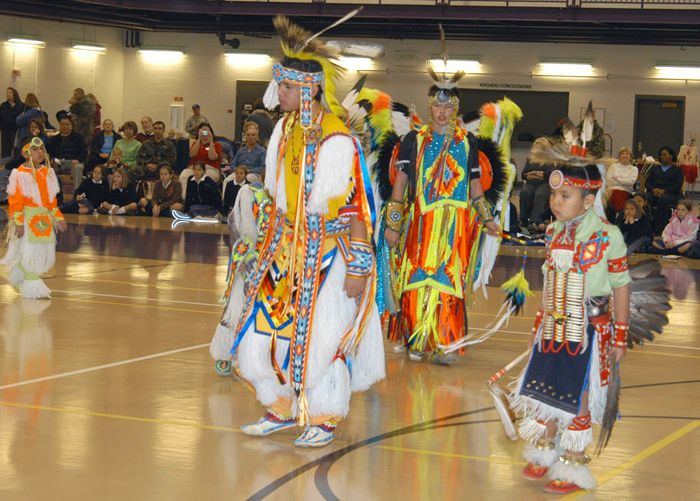
Winnebago Tribe of Nebraska, courtesy Wikipedia
Also See:
Native American Photo Galleries
Native Americans – First Owners of America
Sources: