
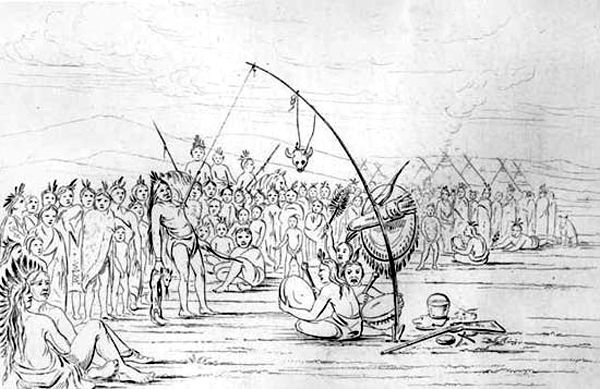
Sun Dance ceremony by George Catlin.
Ceremony and rituals have long played a vital role in Native American culture. Spirituality is an integral part of their very being.
Often referred to as “religion,” most Native Americans did not consider their spirituality, ceremonies, and rituals as “religion” like Christians do. Instead, their beliefs and practices form an integral and seamless part of their very being. Like other aboriginal peoples around the world, their beliefs were heavily influenced by their methods of acquiring food, from hunting to agriculture. They also embraced ceremonies and rituals that provided power to conquer life’s difficulties, as well as events and milestones such as puberty, marriage, and death. Over the years, practices and ceremonies evolved to meet the changing needs of the tribes.
Rituals & Ceremonies:
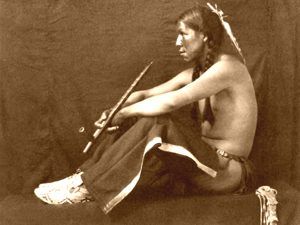
Taos Indian with a peace pipe.
The arrival of European settlers marked a significant change in Native American culture. Some of the first Europeans the Indians would meet were often missionaries who viewed Native American Spirituality practices as worthless superstitions inspired by the Christian devil. These early missionaries were determined to convert the Native Americans to Christianity.
As more and more Europeans flooded North America, the United States and Canadian governments instituted policies to force Natives onto reservations and encourage them to assimilate into the majority culture.
This also changed their spiritual traditions when, in 1882, the U.S. Federal Government began to work towards banning Native American Religious Rights, which impacted their ceremonies. At that time, U.S. Interior Secretary Henry M. Teller ordered an end to all “heathenish dances and ceremonies” on reservations due to their “great hindrance to civilization.” This was further supported the following year by Hiram Price, Commissioner of Indian Affairs, when his 1883 report stated:
“…there is no good reason why an Indian should be permitted to indulge in practices which are alike repugnant to common decency and morality, and the preservation of good order on the reservations demands that some active measures should be taken to discourage and, if possible, put a stop to the demoralizing influence of heathenish rites.”
These attempts to suppress the traditions of Native Americans eventually led to the Massacre at Wounded Knee on December 29, 1890, when the government attempted to stop the practice of the “Ghost Dance,” a far-reaching movement that prophesied a peaceful end to white American expansion and preached goals of clean living, an honest life, and cross-cultural cooperation by Native Americans.
When the Seventh U.S. Cavalry was sent into the Lakota Sioux’s Pine Ridge and Rosebud Reservations to stop the dance and arrest the participants, approximately 150 Native American men, women, and children were killed.
Though some traditions were lost, others survived despite the ban, and various tribes continue to follow many spiritual traditions. Some Native Americans have been devout Christians for generations, and their practices today combine their traditional customs with Christian elements. Other tribes, particularly in the Southwest, have largely retained their traditional aboriginal practices.
Rituals & Ceremonies:
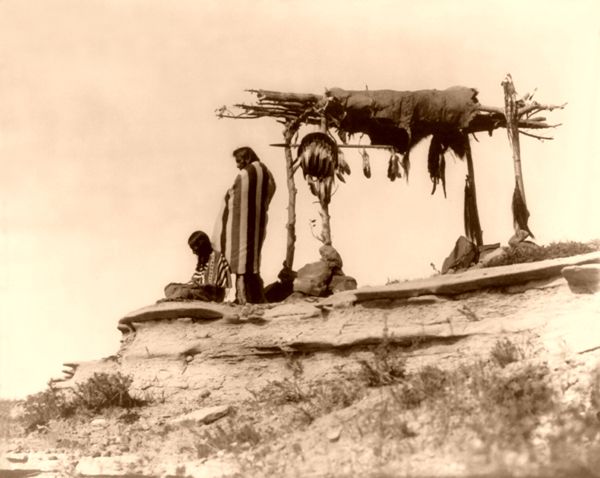
Tribute to the Dead
Death Ceremonies
Native Americans celebrated death, knowing it was an end to life on Earth but believing it to be the start of life in the Spirit World. Most tribes also believed that the journey might be long, so afterlife rituals were performed to ensure that the spirits would not continue to roam the earth. Various tribes honored the dead by giving them food, herbs, and gifts to ensure a safe journey to the afterlife.
The Hopi Indians believe that the soul moves along a Sky path westwards and that those who have lived a righteous life will travel with ease. However, those who haven’t will encounter suffering on their journey.
To ensure a safe journey, they wash their dead with natural yucca suds and dress them in traditional clothes.
Prayer feathers are often tied around the forehead of the deceased and buried with their favorite possessions and feathered prayer sticks. Traditional foods and special herbs are served and placed at the graveside.
The Navajo believed that living to old age was a sign of a life well-lived, thus ensuring that the soul would be reborn. Alternatively, they felt that if a tribe member died of sudden illness, suicide, or violence, a “Chindi, or destructive ghost, could cause trouble for the deceased’s family. Afterlife rituals could last for several days, with careful consideration given to the foods and herbs chosen for the celebration, reflecting the deceased’s life. Common herbs used by the Navajo included Broom Snake Weed, Soap Weed, and Utah Juniper.
Many tribes that had been converted to Catholicism also observed All Souls’ Day, celebrated on November 2, which commemorates the dead. Many believe that the spirits return to visit family and friends on that day. In preparation, various tribes would prepare food and decorate their homes with ears of corn as blessings for the dead.
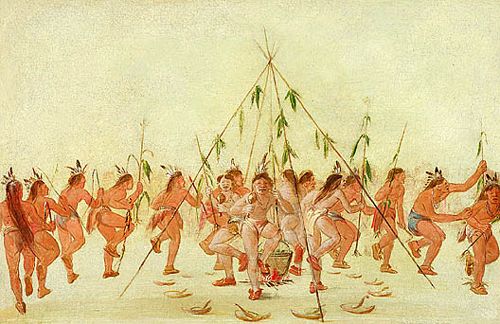
Green Corn Dance.
Green Corn Festivals
Also called the Green Corn Ceremonies, this is both a celebration and a religious ceremony primarily practiced by the peoples of the Eastern Woodlands and the Southeastern tribes, including the Creek, Cherokee, Seminole, Yuchi, Iroquois, and others. The ceremony typically coincides with late summer and is tied to the ripening of the corn crops. Marked by dancing, feasting, fasting, and religious observances, the ceremony typically lasts for three days. Activities varied from tribe to tribe, but the common thread is that the corn would not be eaten until the Great Spirit was given his proper thanks. During the event, tribal members give thanks for the corn, rain, sun, and a good harvest. Some tribes even believe that they were made from corn by the Great Spirits. The Green Corn Festival is also a religious renewal, with various religious ceremonies. During this time, some tribes hold council meetings where many of the previous year’s minor problems or crimes are forgiven and forgotten. Others also signify the event as the time of year when youth come of age, and babies are given their names. Several tribes incorporate ball games and tournaments in the event. Cleansing and purifying activities often occur, including cleaning out homes, burning waste, and drinking emetics to purify the body. At the end of each festival day, feasts are held to celebrate the good harvest. Green Corn festivals are still practiced today by many different native peoples of the Southeastern Woodland Culture.
Healing Rituals
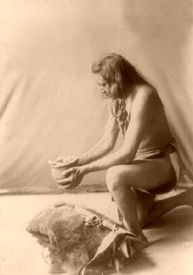
Incense over a medicine bundle, by Edward S. Curtis, 1908.
Symbolic healing rituals and ceremonies were often held to bring participants into harmony with themselves, their tribe, and their environment. Ceremonies were used to help groups of people return to harmony; however, large-scale ceremonies were generally not employed for individual healing. Varying widely from tribe to tribe, some tribes, such as the Sioux and Navajo, employed a medicine wheel and a sacred hoop, and would sing and dance in ceremonies that could last for days.
Historical Indian traditions also utilized many plants and herbs as remedies or in spiritual celebrations, thereby creating a connection with spirits and the afterlife. Some of the plants and herbs used in spiritual rituals included Sage, Bearberry, Red Cedar, Sweetgrass, Tobacco, and many others.
The healing process in Native American Medicine is quite different from how most of us perceive it today. Native American healing encompasses a range of beliefs and practices that combine elements of religion, spirituality, herbal medicine, and rituals to address physical and emotional conditions. From the Native American perspective, medicine is more about healing the person than curing a disease. Traditional healers worked to make the individual “whole,” believing that most illnesses stem from spiritual problems.
In addition to herbal remedies, purifying and cleansing the body is also essential, and many tribes used sweat lodges for this purpose. In these darkened and heated enclosures, a sick individual might be given an herbal remedy, smoke, or rub themselves with sacred plants, and a healer might employ healing practices to ward off angry spirits and invoke the healing powers of others.
Sometimes, healing rituals involve whole communities, where participants sing, dance, paint their bodies, and sometimes use mind-altering substances to persuade the spirits to heal the sick person.
Peyote Worship
Some southwestern tribes have historically practiced Peyote ceremonies, which were associated with the consumption of tea made from peyote buttons, the dried fruit of a small cactus, officially known as Anhalonium or Lophophora. Native to the lower Rio Grande and Mexico, the name “mescal” was wrongly applied to this fruit by many white observers. The ceremonies were held for specific reasons, including healing, baptism, funerals, and other special occasions. Though many have the impression that peyote was smoked, this was not the case, as the peyote button will not burn. Instead, fresh or dried buttons were eaten or ground into a powder and drank in tea.
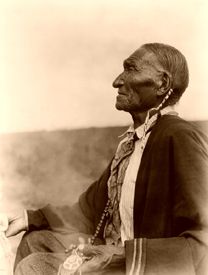
Cheyenne Peyote Leader by Edward S. Curtis
Rites for these ceremonies would generally begin in the evening and continue until the following dawn, and were restricted by some tribes to men only. Like other Indian ceremonies, fire and incense were used to cleanse the mind and body. The ceremony also utilized bird feathers, which represented the power of birds, preferably those from predatory birds, which were considered strong and thought to protect the worshipper.
The ceremonies were guided by healers, also known as roadmen, as they were thought to guide a person’s journey through life. Most often, small drums and rattles were also utilized. The experience is almost identical to taking lysergic acid diethylamide, better known as LSD.
Called the “sacred medicine,” peyote ceremonies are still practiced today by various tribes who believe that it counters the craving for alcohol, heals and teaches righteousness, and is helpful in combating spiritual, physical, and other social ills. Concerned about the drug’s psychoactive effects, between the 1880s and 1930s, U.S. authorities attempted to ban Native American religious rituals involving peyote, including the Ghost Dance. Today, the Native American Church is among several religious organizations that use peyote as part of their religious practice.
Pow-Wows
A relatively modern term, the word derives from the Narragansett word “powwaw,” meaning “spiritual leader.” Before the term “pow-wow” became popular, other words were used to describe these gatherings, including celebration, doings, fair, feast, festival, and more. The closest English translation is “meeting.” Today, it exemplifies all of these events, and a modern pow-wow can be any gathering where both Native American and non-Native American people come together to dance, sing, socialize, and celebrate American Indian culture. These events might be specific to a particular tribe or inter-tribal.
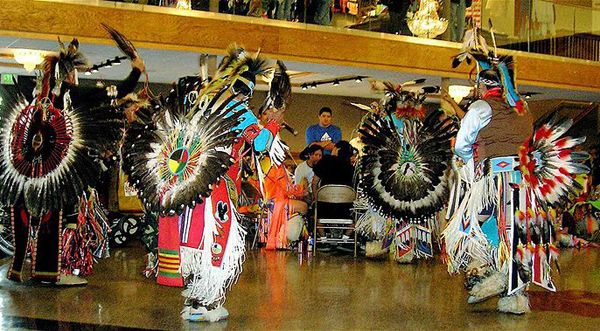
Native American PowWow
Planning for a pow-wow typically begins months in advance by a group of people, usually referred to as a pow-wow committee. It may be sponsored by a tribal organization, tribe, or any other organization seeking to promote Native American culture. These events often feature dance competitions, which can last from several hours to several days.
The Gathering of Nations is one of the largest Pow-wows in the United States. It is held annually on the fourth weekend in April in Albuquerque, New Mexico. Over 500 tribes from around the United States and Canada participate in the event. This event features 32 dance categories, as well as other competitions for singers and drummers, and a pageant for the title of Miss Indian World. The event also features a Traders’ Market where Native Americans display their arts and crafts.
Vision Quests
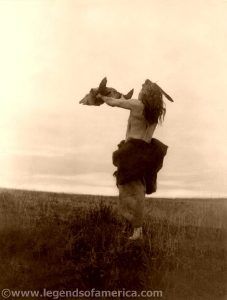
Mandan offering the buffalo skull
Numerous Native Americans practiced the rite of Vision Quests, often taken by older children before puberty to “find themselves” and their life’s direction. The rite was performed in various ways, with differing lengths and intensities, and at varying ages, across different tribes. In most cases, the vision quest was a “supernatural” experience in which the individual sought to interact with a guardian spirit, usually an animal, to obtain advice or protection.
Much preparation was often undertaken before the vision quest to determine the sincerity and commitment of the person. Sometimes the quest required the individual to go alone into the wilderness for several days to become attuned to the spirit world.
Other tribes required the individual to take a long walk or were confined to a small room. Often, the individual was required to fast before the quest and was not allowed to sleep. During this period of sensory deprivation, the individual was to search for the presence of a guardian spirit or a sign that would be given to them. Once the presence or sign was “seen,” and the individual had realized their direction in life, they would return to the tribe to pursue their life’s journey.