
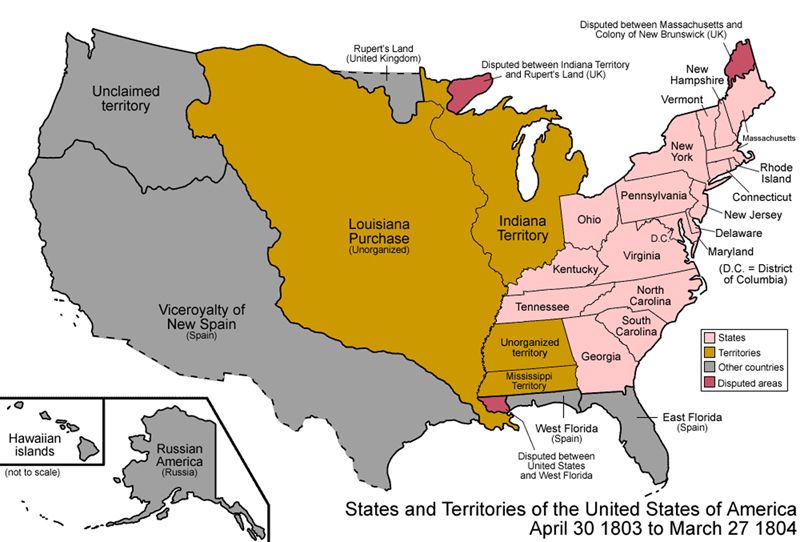
Louisiana Purchase.
One of Thomas Jefferson’s most significant achievements was the Louisiana Purchase, in which the United States acquired 828,800 square miles of the French territory of La Louisiane in 1803. Encompassing all or part of 14 current U.S. states, the land included all of present-day Arkansas, Missouri, Iowa, Oklahoma, Kansas, Nebraska, parts of Minnesota that were West of the Mississippi River, most of North Dakota, nearly all of South Dakota, northeastern New Mexico, portions of Montana, Wyoming, and Colorado East of the Continental Divide, and Louisiana West of the Mississippi River. Today, the land included in the purchase comprises approximately 23% of the United States’ territory.
At the end of the French and Indian Wars in 1763, France lost all of its possessions in North America, dashing hopes of a colonial empire. This empire was centered on the Caribbean island of Santo Domingo and its lucrative cash crop of sugar.
 The French territory known as La Louisiane, extending from New Orleans up the Missouri River to modern-day Montana, was intended as a granary for this empire and produced flour, salt, lumber, and food for the sugar islands. By the terms of the 1763 Treaty of Fontainebleau, however, Louisiana West of the Mississippi River was ceded to Spain, while the victorious British received the eastern portion of the vast colony.
When the United States won its independence from Great Britain in 1783, one major concern was having a European power on its western boundary, as well as the need for unrestricted access to the Mississippi River. American settlers pushed West and found that the Appalachian Mountains blocked shipping goods eastward. The easiest way to ship produce was to build a flatboat and float down the Ohio and Mississippi Rivers to the port of New Orleans, from which goods could be put on ocean-going vessels. The problem with this route was that the Spanish owned both sides of the Mississippi River below Natchez.
In 1795, the United States negotiated the Pinckney Treaty with Spain, which provided the right to navigate the river and deposit U.S. goods at the port of New Orleans. The treaty was to remain in effect for three years, with the possibility of renewal. By 1802, U.S. farmers, businessmen, trappers, and lumbermen were bringing over $1 million of produce through New Orleans each year. Spanish officials were growing concerned as U.S. settlements encroached on their territory. Spain was eager to divest itself of Louisiana, which drained its financial resources. On October 1, 1800, Napoleon Bonaparte, First Consul of France, concluded the Treaty of San Ildefonso with Spain, which returned Louisiana to French ownership in exchange for a Spanish kingdom in Italy.
Napoleon’s ambitions in Louisiana involved creating a new empire centered on the Caribbean sugar trade. By terms of the Treaty of Amiens of 1800, Great Britain returned ownership of the islands of Martinique and Guadeloupe to the French. Napoleon viewed Louisiana as a depot for these sugar islands and a buffer against U.S. settlement. In October 1801, he sent a large military force to retake the important island of Santo Domingo, which had been lost in a slave revolt in the 1790s.
Thomas Jefferson, the third President of the United States, was disturbed by Napoleon’s plans to re-establish French colonies in America. With the possession of New Orleans, Napoleon could close the Mississippi River to U.S. commerce at any time.
Jefferson authorized Robert R. Livingston, U.S. Minister to France, to negotiate for the purchase of up to $2 million of the City of New Orleans, portions of the East bank of the Mississippi River, and free navigation of the river for U.S. commerce.
Louisiana had not yet officially transferred to French ownership, and Napoleon’s deal with the Spanish was a poorly kept secret on the frontier. On October 18, 1802, however, a remarkable event occurred. Juan Ventura Moralis, Acting Intendant of Louisiana, made public Spain’s intention to revoke the right of deposit at New Orleans for all cargo from the United States.
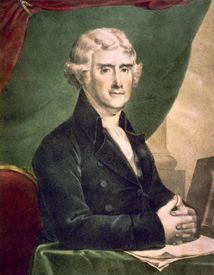
Thomas Jefferson by Henry R. Robinson.
The closure of this vital port to the United States caused anger and consternation, and commerce in the West was virtually blockaded. Historians believe the revocation of the right of deposit stemmed from Americans’ abuses, particularly smuggling, rather than French intrigues, as was commonly believed at the time.
President Jefferson defied public pressure for war with France and appointed James Monroe as special envoy to Napoleon to help the United States acquire New Orleans. Jefferson increased the authorized expenditure to $10 million.
Meanwhile, Toussaint L’Ouverture, his army of former slaves, and yellow fever frustrated Napoleon’s plans in the Caribbean. During ten months of fierce fighting in Santo Domingo, France lost over 40,000 soldiers. Without Santo Domingo, Napoleon’s colonial ambitions for a French empire in North America were foiled. Louisiana would be useless as a granary without sugar islanders to feed. Napoleon also considered the temper of the United States, where sentiment was growing against France, and stronger ties with Great Britain were being considered. Spain’s refusal to sell Florida was the last straw, and Napoleon turned his attention to Europe again; the sale of now-useless Louisiana would supply needed funds to wage war there. Napoleon directed his ministers, Talleyrand and Barbe-Marbois, to quickly offer the entire Louisiana territory to the United States.
On April 11, 1803, Talleyrand asked Robert Livingston how much the United States was prepared to pay for Louisiana. Livingston was confused, as his instructions only covered the purchase of New Orleans and the immediate area, not the entire Louisiana territory. James Monroe agreed with Livingston that Napoleon might withdraw this offer at any time.
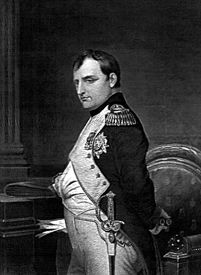
Napoleon Bonaparte.
Waiting for President Jefferson’s approval might take months, so Livingston and Monroe decided to open negotiations immediately. By April 30, they closed a deal to purchase the entire 828,000-square-mile Louisiana territory for 60 million Francs (approximately $15 million). They used part of this sum to forgive debts owed by France to the United States. The payment was made in United States bonds, which Napoleon sold at face value to the Dutch firm of Hope and Company and the British banking house of Baring at a discount of 87 1/2 per each $100 unit. As a result, Napoleon received only $8,831,250 in cash for the Louisiana territory. Dutiful banker Alexander Baring conferred with Marbois in Paris, shuttled to the United States to pick up the bonds, took them to Britain, and returned to France with the money – and Napoleon used these funds to wage war against Baring’s own country!
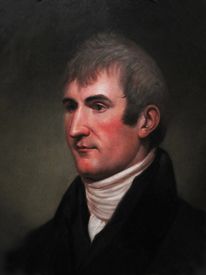
Meriwether Lewis.
When news of the purchase reached the United States, President Jefferson was surprised. He had authorized $10 million for a port city but instead received treaties that required the government to spend $15 million on a land package double the country’s size. Jefferson’s political opponents in the Federalist Party argued that the Louisiana Purchase was a worthless desert and that the Constitution did not authorize acquiring new land or negotiating treaties without Senate consent. The opposition worried that new states would inevitably be carved out of the Louisiana territory, strengthening Western and Southern interests in Congress and further reducing the influence of New England Federalists in national affairs. President Jefferson enthusiastically supported westward expansion and held firm in his support for the treaty. Despite Federalist objections, the U.S. Senate ratified the Louisiana treaty on October 20, 1803.
A transfer ceremony was held in New Orleans on November 29, 1803. Since the Louisiana territory had never been officially ceded to the French, the Spanish lowered their flag, and the French raised theirs. The following day, General James Wilkinson accepted possession of New Orleans for the United States. A similar ceremony was held in St. Louis on March 9, 1804, when a French tricolor was raised near the river, replacing the Spanish national flag. The following day, Captain Amos Stoddard of the First U.S. Artillery marched his troops into town and ran the stars and stripes up the fort’s flagpole. The Louisiana Territory was officially transferred to the United States government, represented by Meriwether Lewis.
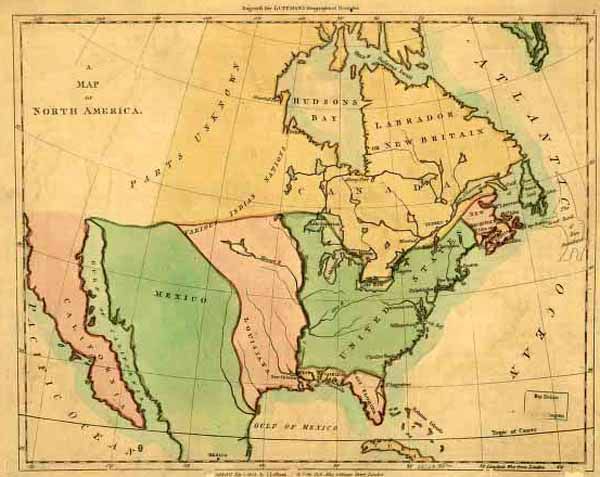
The Louisiana Purchase Historic Map
The Louisiana Territory, purchased for less than five cents an acre, was one of Thomas Jefferson’s most significant contributions to his country. Louisiana doubled the size of the United States overnight, without a war or the loss of a single American life, and set a precedent for the purchase of territory. It paved the way for the United States’ eventual expansion across the continent to the Pacific and its subsequent rise to world-power status. International affairs in the Caribbean and Napoleon’s need for funds to support his war efforts provided the backdrop for the remarkable achievements of Thomas Jefferson’s presidency, including the acquisition of new lands and opportunities for the nation.
Compiled and edited by Kathy Alexander/Legends of America, updated September 2026.
Also See:
Mississippi River & the Expansion of America
The Mysterious Death of Meriwether Lewis
Thomas Jefferson – The Sage of Monticello
Westward Expansion and Manifest Destiny
Source: The Lewis & Clark Journal of Discovery, National Park Service