
Martha Elizabeth Baker Terry Personal Account, date unknown
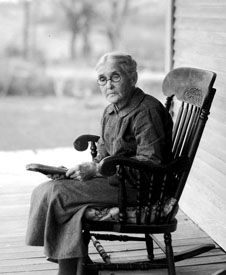
Elizabeth Baker Terry.
Six months had passed when we at last camped on the Jordan River in Utah. Our provisions were running low. The cattle were weary and footsore, but we were jubilant. At American Forks, a small settlement, we tried to re-provision. The Mormons met our offers with sullen shakes of their heads.
We went through Battle Creek, Provo, Springville, Spanish Fork, Salt Creek, and Fillmore, then reached Mountain Meadows. Near the lower end, the valley tapered to a mere 300 to 400 yards, as a gap led out to the scorched sands of the desert beyond. A spring made this section of the meadow a natural camping ground. Here, we halted to rest. The day before we started, we spent it on a final check. Every family was on ration. Most of us sought our blankets not long after sundown.
I awoke early; a coffee aroma permeated the wagons which had been drawn up in a helter-skelter fashion. Suddenly, gunfire rattled from the hillside nearest our camp. Whooping savages tumbled down the slope and sliced off our milling stock. The men worked frantically, shoving the heavy schooners and carriages into a huge corral. A few, armed with long rifles, stood on guard. The last wagon was in line when the main band of savages charged down the mountainside, yelling and shooting. Rifles barked along the train. The attackers hesitated before the viciousness of the fire and fell back. The respite gave us time to dig in. Under Captain Fancher’s direction, we chained the wagon wheels together. Others hurried out with picks and shovels and dug feverishly to throw up a breastwork. Even the women helped.
We were on a travel route, and it seemed all we had to do was stand the Indians off until help arrived.
The sun tortured us with intense heat. By midday it was almost unbearable, and we were almost out of water. Later that day, we consumed the last brackish water.
On the evening of the third day, the Indians made their most determined attack. Crouched low, they circled about the train, shooting inaccurately. The Meadow offered little cover, and our assailants felt the lash of the corral sharpshooters. Back they went to the hillsides, carrying their wounded. The siege was on again.
The fourth day was the worst of all. The wounded were dying of thirst. The entire caravan was weak from thirst.
The morning of the fifth day dawned. Our resistance was crumbling rapidly. Our ammunition was nearly gone. The stench of our unburied dead was in our nostrils. And the agony of thirst was always with us.
In a twinkling, hope transformed our ranks. We cheered weakly. The horsemen came on at a walk so slowly I thought they would never reach the corral. A square-made man with an air of authority dismounted, smiling at our greetings. He left his companion with the horses. Captain Fancher stepped forward. The stranger took Fancher’s hand. John D. Lee, he said, Indian Commissioner for this district.
Eagerly, we crowded about him. He explained gravely that the Paiute Indians were rebellious and difficult to handle, but he believed he could persuade them to parlay. In a lengthy conference between Lee and the men of our band, he gained our complete confidence.
A sentry’s cry shook us from our stupor. Two men on horseback, bearing a white flag, advanced toward us.
When the Indian Commissioner rode off, our hope and prayer went with him. He was gone two hours.
He came back at a gallop, a wagon following his dust. He said they’ve agreed to let you go if you’ll surrender your arms. At first, the men objected, then finally agreed to the terms. Slowly, they filed to the wagon Lee had brought with him; rifles clattered in the bed.
John D. Lee smiled grimly and nodded to the driver. The wagon rumbled off over the low rise. Mounting his horse, Lee spurred a short distance from the corral. He rose in his stirrups and shouted, Do your duty.
Bewildered, we stood there. The Indians, shrieking, shooting, and yelling, tumbled down the slopes triumphantly. For a moment, the entire wagon train was frozen in immobility.
I started to follow my mother and stumbled. The last I saw of her, she ran toward our carriage with little Billy in her arms. And the Indians were upon us.
Now, I could see that they weren’t all Indians. Whites had painted themselves to resemble their savage companions. With bloodcurdling yells, they leaped on the defenseless pioneers. I sought shelter under a wagon and peered out between the spokes.
I saw my father fall to the ground.
The Indians and their white companions killed and killed. The sight of blood sent them into a fanatical frenzy. One huge white kept shouting for Jehovah.
The fiends slackened their butchering only when there were no more victims. Dripping paint and blood, they stood panting, searching for any signs of life among the hacked and clubbed bodies.
A white man took me by the hand and led me to a wagon where several other children had been placed. I found my sister, Sarah Frances, there.
As we left, the Indians and whites were completing their looting. Some of the disguised Mormons were washing their paint off in the spring.
Our wagon creaked to the Hamblin ranch a mile away, where it discharged its sobbing cargo. We were held at the ranch for several days while the Mormons debated how to dispose of us.