
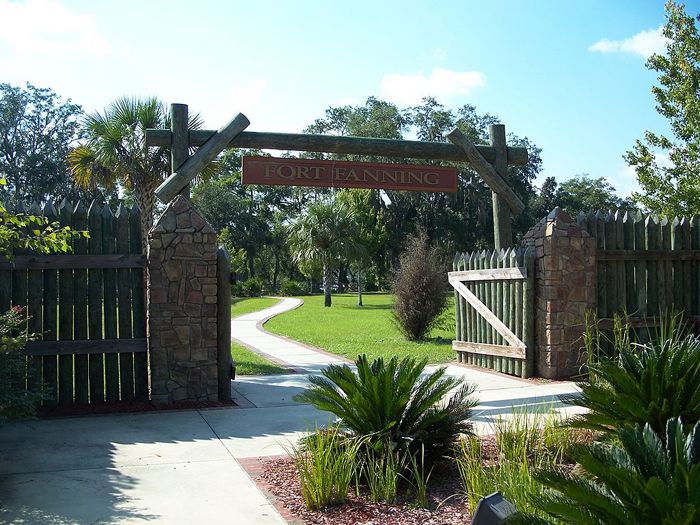
Fort Fanning Historical Park, Fanning Springs, Florida, courtesy Wikipedia.
Fort Fanning, Florida, was built in November 1838 during the Second Seminole War and was first called “Palmetto.” Later, it was renamed in honor of Colonel Alexander Campbell Wilder Fanning, who had served under General Andrew Jackson in the First Seminole War. Its purpose was to protect the Suwannee River’s highly strategic, heavily used crossing. It also served as a base of operations for U.S. and Florida Militia troops who tried to suppress the activities of small bands of Creek and Seminole warriors operating in the vast swamps along the lower Suwannee River. Raids and battles were a regular part of life in the region for both whites and Indians during the years 1836-1842. The fort was garrisoned for nearly five years, during which time 31 soldiers lost their lives, all but three of them from sickness.
The post was abandoned in February 1843, and because it was made of wood and situated in a warm, humid climate, it soon deteriorated.
The site of Fort Fanning is preserved today at the Fort Fanning Historic Park in Fanning Springs, Florida. The city-owned facility is located on the original fort site and features reconstructed gates and a section of the stockade wall. Paved walking paths wind through the site, and a series of beautiful overlooks offer views of the Suwannee River. It is located at 9930 Kentucky Avenue in Fanning Springs, Florida. Just across U.S. Highway 19 is Fanning Springs State Park, home to a natural spring that feeds the famed river.
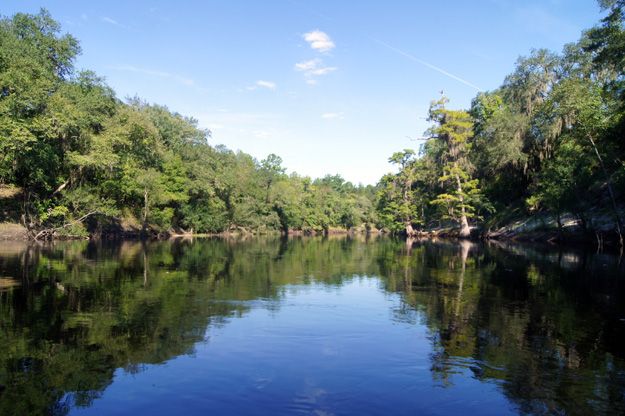
Suwannee River, Florida, courtesy Authentic Florida
©Kathy Alexander/Legends of America, updated November 2025.
Also See:
See Sources.