
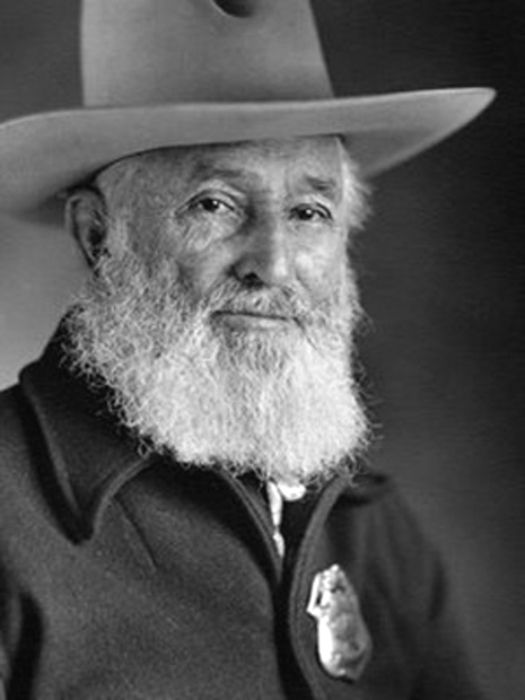
John Reynolds Hughes.
John Reynolds Hughes was a cowboy, rancher, Texas Ranger, and later an author. During his lifetime, he became one of the better-known members of the Texas Rangers, and he remains a notable figure in Ranger history.
Hughes was born on February 11, 1855, in Henry County near Cambridge, Illinois, to Thomas and Jane Augusta Bond Hughes. His family later moved to Mound City, Kansas, where he had limited formal schooling and worked extensively on the family farm.
At age 14, Hughes left home and began working on cattle ranches. He spent several years in Indian Territory (present-day Oklahoma), where he lived among Native American communities, including the Choctaw and Osage. By the mid-1870s, he was in the Fort Sill area and later recalled knowing Comanche leader Quanah Parker. Like many young men of the era, he worked as a trail driver and eventually moved to Texas. Around 1880, he purchased land near Liberty Hill and entered the horse business.
In 1886, horses belonging to Hughes and his neighbors were stolen. Hughes tracked the thieves into New Mexico. In the confrontation that followed, two men were killed, and the stolen horses were recovered. Accounts of this episode come largely from Hughes’s own later writings, and some details can’t be verified; however, the incident brought him to the attention of Texas Ranger Ira Aten. In July 1887, Hughes accompanied Ranger Aten in pursuing a murderer named Judd Roberts. When the men found Roberts, it resulted in a gunfight in which the murderer was killed.
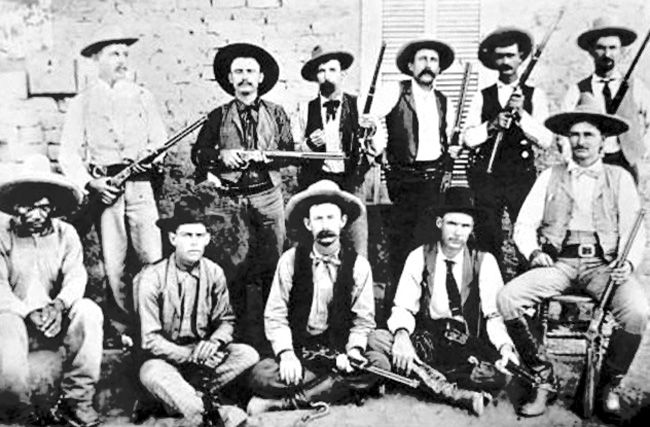
Company D of the Texas Rangers with Captain John Hughes at lower right, 1894.
With the recommendation of Ranger Aten, Hughes joined Company D of the Frontier Battalion of the Texas Rangers in August 1887. Stationed at Camp Wood and later along the Texas–Mexico border, he pursued cattle rustlers, smugglers, and fugitives, gaining a reputation as a determined tracker. In 1890, Hughes and the rest of Company D were assigned to protect the silver mine in Shafter, Texas, and in 1893, he was made a sergeant in charge of a ranger detachment at Alpine. During this time, the infamous killer James Miller was hatching a plan to kill Reeves County Sheriff Bud Frazer in Pecos, Texas, and Hughes and his men were asked to help stop the assassination attempt. The Rangers arrested the men before the plot could take place.
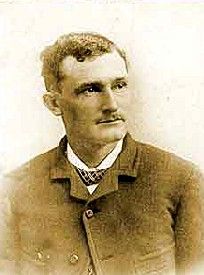
John Reynolds Hughes.
In 1893, following the killing of Captain Frank Jones during a gunfight with bandits near the Mexican border, Hughes was promoted to captain of Company D. He led efforts to pursue suspects believed responsible for Jones’s death, including members of the Olguin family. Several suspects were killed in subsequent encounters, though the exact number and circumstances vary by account. Some of the reported figures say 18 men were killed, though that has been questioned.
Hughes continued his service after the Frontier Battalion was reorganized in 1900 and ultimately served approximately 28 years, making him one of the longest-serving Texas Rangers.
Western novelist Zane Grey spent time with Hughes and drew inspiration from Texas Rangers in his 1914 novel The Lone Star Ranger, which he dedicated to Hughes and other Rangers. While some have suggested that Hughes influenced the later fictional lawman, the Lone Ranger, there is no definitive evidence that he directly inspired the character. The origins of the Lone Ranger remain debated, with many pointing to Bass Reeves as the actual inspiration.
After retiring on January 31, 1915, Hughes remained active in ranching, business, and civic affairs in Austin, Texas, and became associated with Citizens Industrial Bank. In 1940, he became the first recipient of the Texas Rangers Certificate of Valor, awarded for his lifetime service as a peace officer.
Hughes later wrote his own memoir, Recollections of a Texas Ranger (1947), published shortly before his death. The book helped cement his place in popular Ranger history, though, like many memoirs, it has a bit of frontier-era storytelling.
Hughes never married. In declining health and living with relatives, he died by suicide on June 3, 1947, at age 92. He is buried in the Texas State Cemetery.
John Reynolds Hughes is a member of the Texas Rangers Hall of Fame.
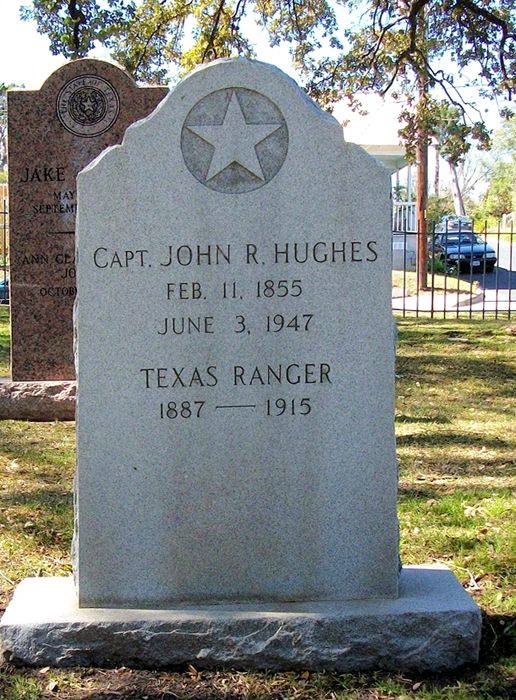
Captain John R. Hughes’ Grave at the Texas State Cemetery in Austin.
©Kathy Alexander/Legends of America, Updated February 2026.
Also See:
The Texas Rangers – Order Out of Chaos
Sources:
Find a Grave
Texas State Historical Association
Texas State Cemetery
Wikipedia