
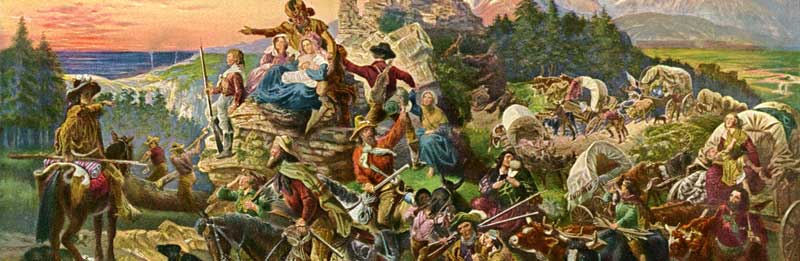
Westward Expansion
by Jesse Galanis
The frontier was the beginning of America as we know it today. And much like the current landscape, it was formed by people from a thousand worlds, trying to start over. Except that life back then was considerably more brutal, with droughts, crop failures, disease outbreaks, blizzards, wildfires, locusts, and isolation.
History books celebrate the men who led the charge, as they should. But any mentions of the women are an afterthought. But they were the ones who held it together when the dust rose and the crops failed. They weathered the same hardships without any of the glory and brought about serious changes.
This piece is for the homesteaders. The women who made the wilderness livable and the future possible.
Women’s Roles in Frontier Life
We know frontier women plowed fields, tended livestock, cooked over open fires, patched roofs, and raised children miles from the nearest neighbor. That was the definition of “keeping house”, and they did it well. But that wasn’t all.
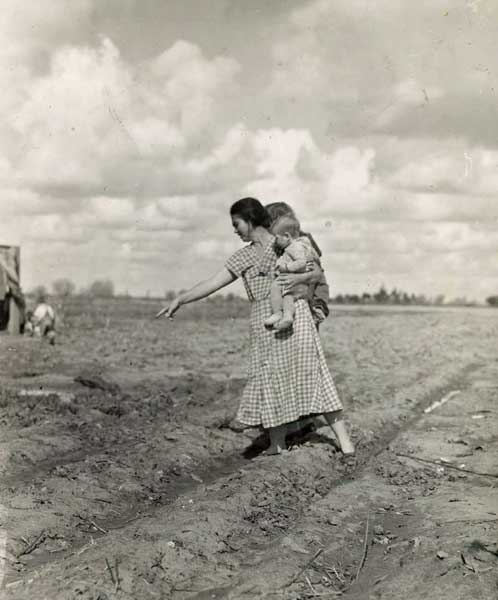
When a blizzard hit or a fever spread, they were the doctors and nurses. Some taught in makeshift schoolhouses, others ran boarding houses, laundries, or trading posts that kept new settlements alive. This was what made the frontier unique, it had its own logic. No school in town? Someone started teaching in their kitchen. No doctor for miles? Someone learned basic medicine.
The Homestead Act of 1862 brought about more change. It allowed adult citizens to claim 160 acres of federal land for a small fee. Single women and widows accounted for up to 12% of claims.
Interestingly, married women were not allowed to make this claim unless they could prove they were the head of the household. Probably a measure put in place to make sure federal resources were not over-allocated to a particular household, but still something that left married women with a little less power.
Today, the legacy of the Homestead Act still sparks conversations about land ownership and gender equality. However, many of the women who shaped frontier life remain invisible in mainstream history and even more so online. Their stories aren’t just missing from textbooks. They’re missing from search results.
That’s why retelling these narratives matters. Tools like a Google rank checker can help make sure they don’t stay buried. The women who taught in kitchens, ran farms, and kept settlements alive deserve to rank in history and on page one of Google.
Key Figures in Women’s Frontier History
Let’s dive into some of the key frontier women who brought about change and rewrote what women were capable of in early times.
Pioneering homesteaders
For some women, homesteading was both an act of necessity and defiance.
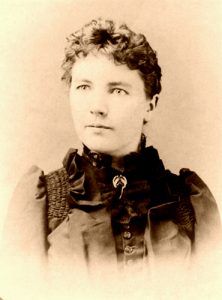
Laura Ingalls Wilder
Laura Ingalls Wilder: Wilder wrote from her own experiences of growing up in a pioneer family. Her books paint a beautiful picture, but remain grounded in the realities of homesteading. Her work does contain dated racial depictions, but offers a lot of context into life on the American plains.
Elinore Pruitt Stewart: She was a widow who moved to Wyoming to take advantage of the Homestead Act. She worked as a housekeeper for a rancher while improving her own 160-acre claim. Her book “Letters of a Woman Homesteader” is a collection of letters written to her former employer. It lends key insight into her ambition and humour. She married later and never gave up on her quest for independence.
Anna Zhang, Marketing Lead at U7BUY, has spent years understanding how stories travel across cultures and generations. She believes that the endurance of frontier women’s stories shows how storytelling keeps history alive in modern life.
Zhang explains, “Every retelling keeps them alive. We tell these stories because they remind us what we’re capable of.”
Women in trade and enterprise
These women had a clear business advantage, as trade changed with mining booms or wagon routes, but their services, like boarding houses, laundries, trading posts, and bakeries, were the only reliable services.
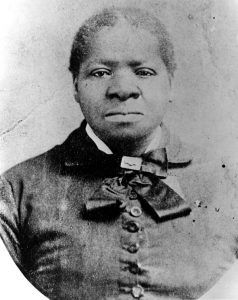
Bridget “Biddy” Mason
Biddy Mason: Biddy Mason’s enslaver dragged her west to California. She had to walk behind the wagons the whole way. In 1856, she went to court and won her freedom. She worked as a nurse and midwife, saved money, bought property, and became one of the city’s first Black landowners. She then helped found First African Methodist Episcopal Church and quietly funded anyone who needed help.
Mary Fields: She was born into slavery and freed after the Civil War. She then worked for a convent, built a reputation for toughness, and later became the first Black woman to carry U.S. mail on a star route contract. Winter passes, rough roads, none of it mattered. The mail went through because Mary said it would.
Polly Bemis: She was sold by her family and smuggled into a mining camp in Idaho. She was later freed and married Charlie Bemis, a local saloon owner. Together, they built a cabin on the Salmon River where she ran a small lodge. She’s famously known for pulling a man from the river and saving his life. She faced racism but still came out on top and is a beloved frontier figure in Idaho.
Andy Wang, Marketing Manager at Skywork.ai, says frontier women set the first examples of what it means to run a business in uncertain times.
Wang says, “They didn’t have investors or safety nets. They built trust one trade at a time, such as fixing tools, selling supplies, and running inns. Every small deal kept their towns alive.”
Native American women leaders
These women guided negotiations, maintained community networks, and resisted military campaigns that threatened their people.
Sacagawea: She joined the Lewis and Clark expedition as a guide and translator. Just as important was her presence in helping the group navigate the terrain, a young Native woman with a child signaled peace to the tribes they came across. Sadly, not much is known of her life after the journey.
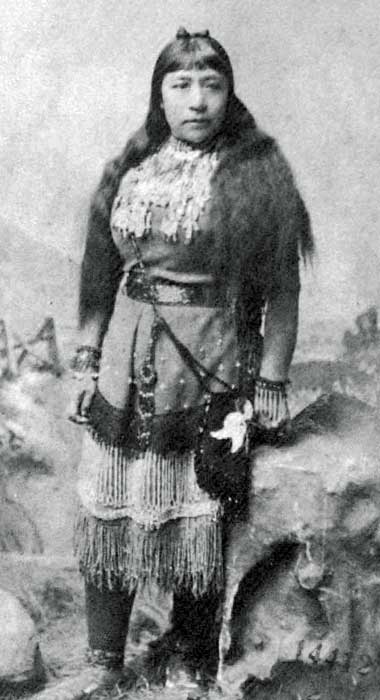
Sarah Winnemucca
Sarah Winnemucca: She was the first Native American woman to publish a book. Her book Life Among the Piutes: Their Wrongs and Claims educated people about how federal laws wronged her people. She spent years traveling and speaking, trying to get fair treatment for her Northern Paiute people.
Lozen: A warrior and strategist, she fought alongside Victorio and later Geronimo, helping her people resist U.S. and Mexican military campaigns. She was known for her tactical brilliance and courage, but she was also said to possess spiritual insight that could sense the movements of enemies.
Emily Ruby, Managing Partner at Abogada De Lesiones, APC, often represents those fighting for justice against difficult odds. To her, the courage of frontier women mirrors that same unrelenting drive to claim fairness where none existed.
Ruby reflects, “Frontier women fought for fairness, as was their right. Every time someone stands up for themselves or their neighbor, that spirit shows up again.”
The Challenges Frontier Women Faced
The Oregon Trail alone claimed thousands of lives, with cholera and dysentery spreading rapidly through wagon trains. You’d be fine at breakfast, dead by dinner. Women nursed the sick with whatever they had, mostly prayer, boiled water, and herbs.
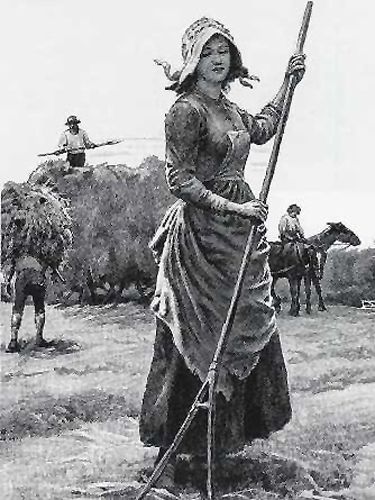
Pioneer Woman.
Social barriers meant women had it more difficult than they needed to be. The law treated women like property for most of the 1800s, with no legal identity. Married women couldn’t own land, sign contracts, or keep their own wages in many states. The various Married Women’s Property Acts changed that slowly, state by state.
Race made everything harder. The Chinese Exclusion Act of 1882 banned Chinese women from entering the country. Black women faced violence and discrimination even in “free” territories.
Mexican women lost property rights when the border moved south. Native women watched their children being taken to boarding schools designed to erase their culture.
Still, they persisted. A woman would walk 20 miles through snow to help birth a baby. Teachers held school in sod houses with dirt floors. Store owners extended credit, knowing they might never get paid. Not because they were saints, but because that’s what neighbors did.
Grant Aldrich, Founder and CEO of Preppy, has spent his career helping people unlock education as a tool for progress. Reflecting on the one-room schoolhouses that dotted the frontier, he sees a powerful lesson in persistence and access.
Aldrich says, “The women who taught on the frontier weren’t chasing recognition. They believed knowledge could hold a community together, and that kind of belief is what actually moves history.”
Final Note: The Legacy of Frontier Women
The frontier happened because women made it happen. They turned wilderness into neighborhoods, strangers into communities. Some were famous in their time. Most weren’t. Their legacy lives in every Western town that survived its founding.
So go find these stories. Your local historical society probably has diaries nobody’s read in decades. Your town has buildings they built, graves they’re buried in. The past is closer than you think, and it’s full of women who deserve remembering.
Museums are catching up, too. The National Cowgirl Museum celebrates women who rode, roped, and ranched. Schools teach fuller stories now.
©Jesse Galanis, for Legends of America, submitted November 2025.

Jesse Galanis
Author’s Bio: Jesse Galanis is a professional writer who decomposes complex concepts of business information and working online. He provides quality content that assists people in everyday life.
Also See:
Best Fall Getaways With Historical Roots: Leaves, Legends, and Small Town America
Discover Your Roots: Step-by-Step Guide to American Genealogy Research
Preserving History in a Changing America: Modern Challenges
Women of the Klondike Gold Rush