
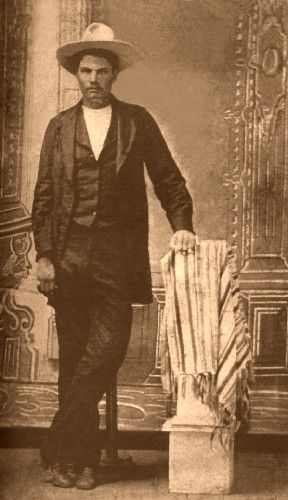
John Wesley Hardin
By Jesse Wolf Hardin.
For all his many confrontations, practiced enemies, and capable adversaries, John Wesley Hardin never faced a greater opponent or more serious threat than himself. While claiming his every violent act was out of the “first law of nature: self-preservation,” he again and again made choices more likely to jeopardize than secure his fiery mortal spark. And contemporary historians have even implicated him in his fall and destruction.
In a vintage 1924 article, John Hunter quotes John Wesley Hardin’s midwife as predicting he would either become a “great hero” or a “monumental villain.” In truth, he was wholly neither… and a little of both.
Hardin was a prime example of that special breed of men known collectively as “gunfighters.” Given the proliferation of firearms in the Old West from the 1860s to the 1880s, simply packing a Colt wasn’t nearly enough to qualify someone as a true gunslinger. Nor did a single occasion of firing a gun in defense or anger make one an accomplished gunfighter.
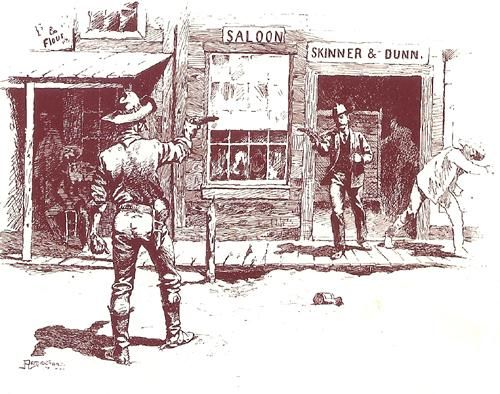
Gunfight.
We all know the Western gunfight seldom, if ever, occurred the way historically illiterate Hollywood writers and directors have portrayed it: the mannerly encounter at high noon, revolvers holstered until the very last second. Giving one’s opponent the chance for a fair draw. Guns shot out of hands, without a bloody shattering of fingers and palms… or apologizing to a downed hombre in the Virginian’s dusty drawl. It is nonetheless a fact that there once was, and probably still exists, a certain special breed of men whose violent encounters involve face-to-face action– men who hold that they’re right, who insist on looking their antagonists in the eye, and being the last thing they see on the day of their death.
A “shootist” was neither a bushwhacker, robber, nor assassin per se– but rather, a highly effective and often volatile individual whose violent deeds usually arose spontaneously and out of reaction to a perceived insult or slight. He was more likely to be a loner than either a gang member or a posse member, and when reprising the roles of Sheriff or outlaw, white hat or black, he usually filled the part well. Silent, pleasant, or petulant– he fairly exuded both character and style. He felt safer and perhaps saner outside the general fraternity and shallow associations of civilized men. He likely trusted his intuition, discernment, skill, instincts, and responses above all else. Slow to enter into alliances of purpose or convenience, the shootist adhered to the classic martial dictum that “offense is the best defense.” He seldom backed down– not because he was inhumanly fearless, but rather because he knew how to use his fear as fuel for assertive and sometimes explosive action. Whether objectively right or wrong, the shootist acted out of a moral certainty… adhering to his code of honor even when breaking existing laws and cultural taboos.
By this measure, Wyatt Earp was more an entrepreneur and vigilante than an archetypal shootist. On the other hand, Doc Holliday qualifies, even though his willingness to inflict harm could be considered a far greater determining factor than his occasional acts of violence and the few resulting victims. The gregarious Billy the Kid had four confirmed kills in 14 fights. Still, for all his bravado, we know he would have preferred a life of dancing at Mexican “fandangos,” and making love to warm Señoritas instead of fingering cold grey revolvers!
Jesse James was a thief, even if a partially politically motivated one. He always worked with a sizable gang and apparently got over any intrinsic compunctions about shooting from a “hide” or pumping bullets into turned and quivering backs.
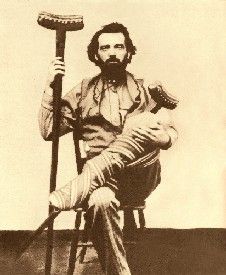
Clay Allison.
Clay Allison, however, was primarily an upfront shootist… if also an unredeemable, homicidal maniac who once literally “shot himself in the foot.” And no one can doubt that lawman James “Wild Bill” Hickok was a prime example of a classic gunfighter. His total of eleven kills is impressive, averaging, as he did, one kill per fight. But then his record might have been a lot bloodier if not for his penchant for using the butt of his revolver to “brain” or “buffalo” those miscreants he aimed to arrest instead of just shooting them where they stood.
Both Hardin and Hickok were ungodly accurate, as well as the prerequisite willingness–willing not only to take someone’s life at the drop of a hat but willing, if necessary, to die. Even the supposedly proficient Ben Thompson had only four kills in over 14 altercations. Seventy-five percent of the rounds fired at the famous “Gunfight At The O.K. Corral” were actually the “Gunfight In The Alley Behind Fly’s Photography Studio, with the combatants firing some 32 rounds at distances of no further than 12 to 15 feet… and yet only 12 of those shots even connected.
Truth is, most gunmen on both sides of the law were notoriously poor shots, partly due to the scarcity and expense of ammunition and the scant practice they got. Shooting one-handed made hits less likely than if they had used a modern two-handed “Weaver” stance. In a closed room, black powder smoke from the first shots made it even harder to identify and connect with the target. And alcohol was often a significant factor. Take, for example, Wyatt Earp’s brother Warren. In Willcox, Arizona, in 1900, he got the worst of a gunfight by drunkenly standing up to challenge someone… before realizing he’d forgotten his gun!
Like the rest of his memorable ilk, Wes Hardin was cast hot from a meteoric iron mold. From this ancient crucible, a host of villains poured out, along with the likes of Beowulf and other Celtic heroes. The intense and brilliant Sioux warrior Crazy Horse was misunderstood even by his people. Conscientious war resistor Alvin York, who went on to single-handedly capture hundreds of German soldiers during the hottest days of World War I. “Braveheart’s” courageous and betrayed Sir Wallace. To the degree it’s found in Western movies and TV, it lives less in the sanitary goodness of Johnny Mack or Tom Mix than in the solitary determination of The Brave Cowboy, the righteousness of Billy Jack, and the all-consuming fire of Thelma and her incorrigible cohort Louise.
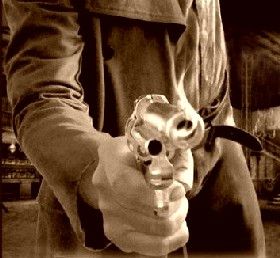
Gunfighter.
There was probably no authentic Western character more proficient with their chosen handguns nor more willing to put them to deadly use than John Wesley Hardin. His lightning draw and unerring marksmanship were oft witnessed and judicially documented, and many an addition to local graveyards had Wes to thank for that last bumpy ride. While only eleven kills in 18 fights can be independently verified, his probable tally of upwards of 30 or 40 victims killed in face-to-face gunfights likely exceeds that of all other known shootists… though certainly not all other killers.
A low-life contemporary of Hardin’s likely murdered more than 40 men in his lifetime– but almost always with a rifle, from a place of ambush. James P. “Deacon” Miller passed judgment again and again until finally getting his neck stretched by an intolerant lynch mob in Oklahoma in April 1909… and may have been the gun-for-hire that put a bullet through Billy the Kid’s killer, Pat Garrett. And for perspective, it helps to remember that Generals and politicians oversee the deaths of millions more young boys than Hardin or any other self-inflating Western desperado could ever claim credit for… sometimes for justifiable reasons, sometimes for reasons not so good. If you think about it, more people have lost their lives due to contractors’ indifference to the risks of asbestos. Thousands are killed in a single modern terrorist strike, and few individuals have more “notches on their guns” than the sexually deranged serial killers of the modern urban age.
Historically, there have always been chance or unintentional deaths by firearms, acts of resistance and retribution, self-advancement as well as self-defense, incidents involving rape, the heavy-handed brutality or blundering of drunks, and the deadly results of deception and betrayal. Hardin stands tall in meeting most of his adversaries head-on and never losing a fight. I’m sure he never hurt a single woman or child and was kind to beggars, horses, and kids. While he made rash moves and occasional mistakes, he had few regrets. He might have wished he hadn’t killed a man for snoring on a specific nightmare-filled evening, but he never drew blood for anything so crass as personal financial gain. He lived not for the grail of the Knight, errant though he may have been… lived not to fit in, but to distinguish himself. For the dictates of instinct and heart, not some sense of obligation or duty. Not for dollars or gold but for the shining rewards of his self-defined mission.
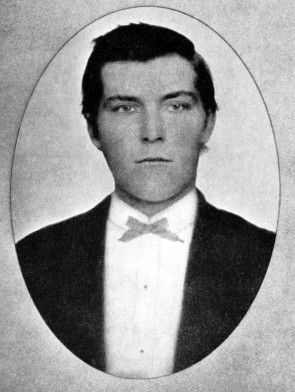
John Wesley Hardin.
Hardin could be relaxed and laughing one minute, tense or solemn the next, quoting Old Testament lines about Hell and brimstone to a “treed” audience between bouts of intemperate opinion and shots of unholy rotgut whiskey. He was obviously prejudiced against Indians, Mexicans, and blacks and encouraged– if not instigated– the majority of the upwards of 27 battles he engaged in.
Like all of us, Hardin was a product of his time and circumstances. Suppose he combined strict religiosity and moralism with a mean streak and a periodic disregard for life. In that case, it must have partly stemmed from the pressure of being the son of a blistering Southern preacher. Named after the founder of the Methodist Church, he inherited high expectations and a heavy mantle. Like adolescents at any age, he was no doubt torn between his love and loyalty to his family and the need to break away from that familial tether, establish his identity, and demonstrate to the world his growing significance and power.
The first to fall victim to Hardin’s smoking guns was a beefy ex-slave named Major (“Mage”) Holzhausen. Getting his pride hurt in a wrestling match with 15-year-old “Johnny” Hardin and another boy, Mage sought reparation with burning determination and a stout wooden club. When the muscular freedman grabbed the reins of Hardin’s horse some days later, it took five revolver rounds to shoot him loose. Demonstrating at least a degree of ambivalence, if not remnant empathy and compassion, the fledgling bad man then rode eight miles to get help for the wounded man. Within a week, Mage was dead from his wounds, and Hardin went into hiding, a killer baptized in blood.
Much of the gunman’s fame and popularity in Texas was thanks to his frequent battles with despised Federal troops and the State Police. Not long after becoming a fugitive, Hardin got the “drop” on four mounted soldiers his brother Joe believed were out hunting him… and together, his shotgun and revolver raised the teenager’s total to five.
His lifetime string of shootouts was face-up, as they say, but hardly “fair” in the noble or Hollywood sense. Hardin did everything he could to get the upper hand– including ritually practicing his fast draw and unerring aim, constantly and consciously anticipating the moods of the people around him, having his gun already in hand when expecting trouble, and often being the first to initiate a draw when a poker game or conversation unexpectedly heated up. Nor was he averse to pulling a gun on unarmed antagonists, as he proved with the shooting of Mage, and later when making a threatening gambler named Ben Hinds back down (“As he made for me,” John Wesley writes, “I covered him with my pistol and told him I was a little ‘on the scrap’ myself, the only difference between him and I being that I used lead.”)
His object, and the object of most dyed-in-the-wool shootists, was to “get the drop” on his opponent no matter what it took– meaning to be the first person in the room able to cock and point their weapon. If that wasn’t enough, he needed to be the first to fire a disabling shot. Note that I said “disabling,” meaning the rounds actually connected with flesh, hit the right person or persons (not always easy in crowded saloons), and did enough damage to prevent them from returning fire. Whereas an assassin’s purpose is to take life, at the moment of conflict, a gunfighter’s intent is not to kill per se but to prevent himself from getting shot, and end the fight to his advantage. The best way to do that, however, is bullet placement: a quickly disabling shot. This most practically means penetration of the head, spine, or heart… and such wounds are generally (if only consequentially) fatal.
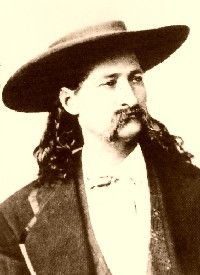
James Butler “Wild Bill” Hickok.
Most of Hardin’s stories can be corroborated with police, newspaper, and court records. Still, at least one tale in his autobiography casts a shadow on the veracity of the rest. Supposedly at the end of a trail ride to Abilene, Kansas, the then 18-year-old John Wesley also got the drop on the famed gunslinging marshal Wild Bill Hickok– by appearing to surrender his revolvers butt first, but then quickly twirling them into firing position in what is (since the movie “Tombstone,” at least!) called the “Curly Bill Spin.” I find this unlikely for a couple of reasons. First, Bill would have likely had his revolver out, ready to hit Hardin on the head if not shoot him down. If the marshal’s weapons were holstered, he would have been poised to draw and could have easily grabbed steel and fired before J.W. could execute the spin.
Additionally, the maneuver was a well-known stage trick, and it wasn’t unusual to see cowboys show off with a demonstration while entertaining the boys around a fire. Hickock likely knew the move and anticipated it, given the cocky young Texan he faced. And finally, had it happened the way described, the loss of face would have demanded timely retribution, not Bill supposedly saying, “Let us compromise this matter, and I will be your friend.” A frontier gunman’s chances of surviving the week depended as much as anything else on their perceived invulnerability, and no lawman could keep the peace after being seen publicly backing down.
It is likewise unclear if the Abilene resident Hardin, who drilled with four holes one drunken night, was really someone out to kill him as he claimed. He may or may not have fired those rounds through a wooden partition in the room to awaken and thus silence the snoring of a fellow boarder. If so, he was likely embarrassed and ashamed to find he had inadvertently killed a man in his sleep… and thus concocted the version recounted in his book. At any rate, if Hickock had no other reason to tend to the brash cowboy before this, he certainly did now. Hardin prudently slipped out across the porch roof, dressed in nothing but his underwear and his hat. It would be hard to call his rapid retreat cowardly. Nobody in their right mind wanted to go up against another gunman that they believed to be their equal, if there was any way to avoid it. The results could be that both men die or suffer a lifetime of pain due to smashed organs or lingering infection.
In Trinity City, Texas, in August 1872, John Wesley was shot by Phil Sublett — a shotgun-wielding drunk intent on winning his poker stakes back. While he managed to put a round through Sublett’s shoulder, the two buckshot that ripped through Hardin’s kidney made it look for a while as if he’d die. State policemen long on his trail began closing in, and he arranged for a sickbed surrender to a Sheriff he trusted, Dick Reagon. He apparently felt well enough by the time they moved him to Gonzales in October to cut his way out of jail with a smuggled saw, likely with the deliberate disregard or outright assistance of sympathetic guards.
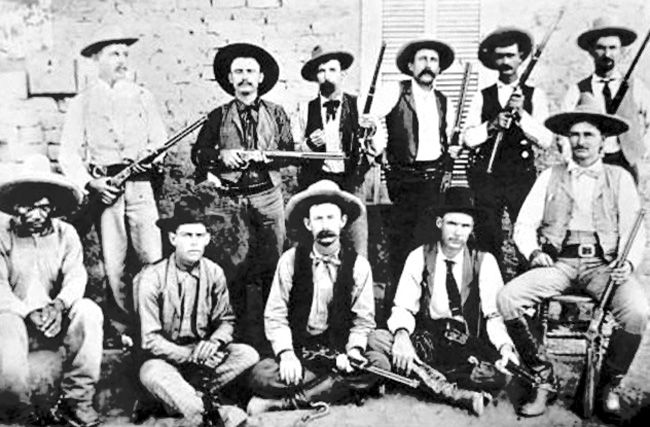
Company D of the Texas Rangers, with John Hughes, is on the lower right.
Wanted as a fugitive by the Texas Rangers, Hardin remained visible and active. He took time out of his busy schedule to get involved in what became known as the Taylor-Sutton Feud in 1873: the year Colt introduced its soon-to-be-famous .45 revolver, and Winchester released the lever action that “won the West.” While it’s understandable that John Wesley would lean towards the Taylors, his participation at such a sensitive time reminds me of the old Irish joke in which a lad, coming upon a barroom brawl, asks, “Is this a private fight, or can anyone join?”
Taylor returned the favor by joining in pumping bullets into Sheriff Charlie Webb during a gunfight in 1874. Hardin claimed the officer drew on him before he pulled his own ivory-stocked Smith & Wesson First Model Russian from underneath his vest.
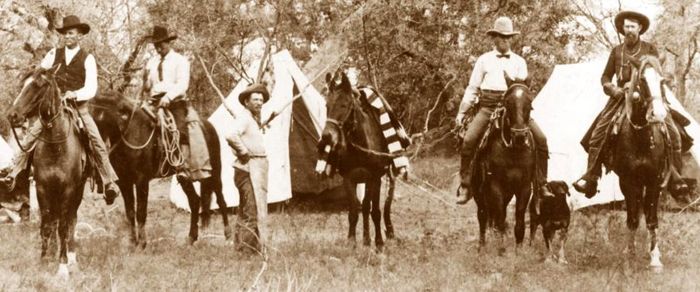
Texas Rangers
Now the Rangers’ hunt was on in earnest, and he found himself hiding again in the thickets and holing up in the barns of the few distant relatives not already under active surveillance. Whether he goaded Webb into drawing or merely fired in self-defense, he now found the crucial support of the local populace fading away. Earlier, he’d received kudos and applause for killing DeWitt County Sheriff Jack Helm, but Jack was a hated Union loyalist known to be hard on ex-Confederates. In contrast, everyone who knew him generally liked Webb. This fateful and unfortunate incident, more than any before it, would prove to be John Wesley’s undoing.
In large part, Wes’s love for fine horses and his passion for racing them allowed him to outdistance pursuing Rangers again and again. But their consistent inability to catch up with him only heightened the passions of what soon became a large civilian mob… and when they couldn’t wreak their vengeance on Wesley, they opted to lynch his brother Joe instead. All told, as many as eight of his friends and family were killed after the Webb incident, all innocent, if informed, scapegoats for a frustrated and seething mob. John Wesley, whose sense of Southern manliness decreed he must always hide any doubt or grief beneath a steely countenance, was no doubt haunted forever by the specter of those who gave their lives in his place. In one of the most melancholy passages of his prideful book, he grieves that his otherwise self-justified acts had “drove my father to an early grave… almost distracted my mother… killed my brother Joe and my cousins Tom and William… left my brother’s widow with two helpless babes… to say nothing of the grief of countless others.” But for all he and they had suffered, he still never admitted having had any choice or ever done anything but right, at least to no one but himself, in the nights of existential loneliness and unsettling uncertainty.
Nor could he depend on an environment of indifferent officials, community assistance, and support. Posses and Rangers seemed to be everywhere this time, and after dispatching a few of his seemingly limitless pursuers, Hardin wisely decided to move to Florida with his family. There he assumed the last name of his friend, the city marshal of Brenham, and thus became to his new friends and associates one “J.W. Swain.” Unenviably, he was the subject of the biggest manhunt and the most significant reward the state of Texas had ever posted for a single man: four thousand dollars, “Dead or Alive.”
In August 1877, a drunken friend, Brown Bowen, exposed John Wesley after getting pummeled in a row with William Chipley, the butt-kicking manager of the Pensacola Railroad. Swain was actually the notorious outlaw Hardin; Bowen blustered and would no doubt show up to exact revenge for the beating his comrade had taken. That and the knowledge of such an unprecedented reward was enough to inspire the piqued authorities to set a trap promptly, minus the legal formality of an arrest warrant, but armed with hardware appropriate to their time and task. Bill Chipley, Florida Sheriff William Hutchinson, and some 20 other deputies arrested him as he boarded a train on August 23, 1877. Hardin was viciously pistol-whipped as he struggled to pull a hidden Colt .44 that he’d secured all too well underneath his leather suspenders.
Had he been able to draw before being clubbed unconscious, he’d most likely have been killed. By nature, a free and self-reliant man, the thought of incarceration thoroughly terrorized him… and even more so by the possibility of being seized by a mob like his brother Joe was, shackled and unable to react in his defense. “I had the glad consciousness, however,” John Wesley writes, “of knowing that I had done all that courage and strength could do, and that I had kept my oath never to surrender at the point of a pistol.” Extradited to Comanche to stand trial for the killing of Webb, Hardin was on his way to what would prove to be a lengthy stint in the Texas Penitentiary in Huntsville. He was subsequently sentenced to 25 years at hard labor, at only 24 years and three months of age.
Needless to say, the individualistic Hardindidn’tt adjust very well to confinement, as evidenced by his repeated escape attempts despite the severe floggings and solitary confinement that inevitably followed. After being punished numerous times for “attempted escape, mutinous behavior, conspiracy, insubordination,” and other offenses, John Wesley settled down enough to study law and pass his bar examination. His letters to his wife became sporadic and often emotionally distant, though he insisted she was never far from his mind.
“Do you think that it would be impossible for me to forget you?” he asks her in a letter from prison, “one whom you well know I love and adore above all others…” He closed with “I remain your true and devoted husband. Until death.”
Hardin served 16 years, from 1878 until February 1894. While he paced in the prison yard or read law books in his cell, America witnessed the introduction of smokeless powder cartridges, Browning’ss improved Winchesters, and a general end to the Indian Wars… plus electric street lights and motors, the subway, the Kodak camera, cross-country skis, the pneumatic tire, and bingo. Dvorak and Tchaikovsky experienced heady competition from Gilbert & Sullivan, and Henry Ford built his first car.
Hardin was set loose with a new suit and a state-issued check for just under $15. His mother, who had always loved and protected him, had died during his imprisonment in 1885, and his son in early 1893. His wife Jane, faithful and supportive throughout her impoverished separation, died at age 36… only one year and four months before John Wesley’s release.
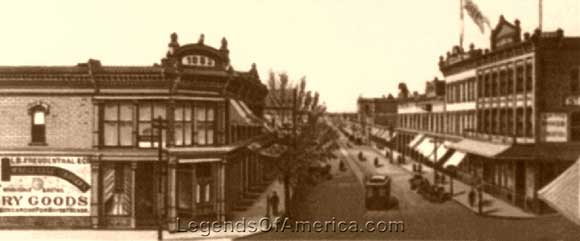
Street in El Paso, Texas, 1888.
Brooding but hopeful, in early 1895, attorney Hardin chose El Paso to hang out his shingle, less than 200 uninhabited miles Southeast of the cabin where I write this, and a short ride on the other side of the Texas/New Mexico state line. Whatever hopes he might have had for a profitable and legitimate career were soon crushed like kitchen bugs beneath the hard-soled boots of reality. Finding that few outside of the impoverished Latino community would trust an ex-convict with their legal work, Hardin increasingly turned to the solace of caramel-tinted whiskey — and the more lucrative gaming tables in the back of nearly every dimly lit saloon. It’s no doubt a little different today, with disheartened prisoners released back into society owning little more than a demolished reputation, the government-issued clothes on their backs, and the out-of-style shoes on their feet. Few bosses are likely to hire an ex-con for anything but the most menial and underpaid jobs, and soon desperation couples with resentment in propelling over 80% of ex-offenders back into the “joint.” That is, if theydon’tt do something that gets them blown out of their saddles first.
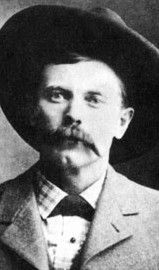
George Scarborough.
Itdidn’tt help Hardin’s chances any that El Paso authorities anticipated his arrival with both concern and trepidation. Most lawmen feared him, a few envied his nerve, skill, and reputation… and all expected that sooner or later there would be trouble. The respected Chief of Police, Jeff Milton, secreted several Burgess folding shotguns in strategic locations around town, and sometimes deputies John Selman and George Scarborough were already making plans for how to deal with him if the time ever came. And John Wesley didn’t help ease the authorities’ apprehension by showing off his gun-handling skills and impressive marksmanship almost from the day he arrived.
Hardin was always game to tweak the noses of the powers-that-be, but his having spent close to half his life in the penitentiary had taught him a degree of judgment and temperance, if not reserve. In August 1895, he prudently acquiesced to an outraged Milton when confronted with accusations he’d supposedly made. Hardin was “so much faster,” the courageous officer admitted, “that if he had gone for a gun, I wouldn’t have had a chance.” And the previous July, he made no objections when asked to come in and appear on charges of gambling, carrying a firearm, and robbery.
Whether he felt cheated or merely pissed off at being called a “jail rat,” on May 2 J.W. an inebriated J.W. pointed a pearl-handled Colt .41 caliber double-action revolver at the offending party and retook the $95 he’d just lost at craps… all the while humming a happy tune. Then, to the newspapers that had questioned the necessity and severity of his response, he wrote several lines of explanation and defense, including: “I admire pluck, virtue, and push wherever found. Yet I contempt and despise a coward and assassin of character, whether he be a reporter, a journalist, or a gambler.”
From childhood, he loved to stalk “among the big pines and oaks with a gun,” but soon enough his primary use for a firearm became armed combat rather than boyhood fun. While he may have killed one hapless fellow in 1876 with a Winchester rifle, he preferred the kinds of up-close confrontations in which purpose-shotguns and handguns so excel. He dropped his first man with what was likely a Colt Dragoon .44, and used Colt and Remington percussion revolvers for most of his many kills.
We can be sure that by 1874he’dd converted from carrying percussion models to the latest in American-made cartridge revolvers– as it was on Hardin’s birthday in May of that year that he used an ivory-handled “Russia” model Smith & Wesson .44 (serial number #25274) to take Sheriff Charley Webb’s life. And Colt Single Action .45s may have been the instruments of destruction for pursuing Pinkerton agents in 1876, and possibly two Mobile, Alabama police officers.
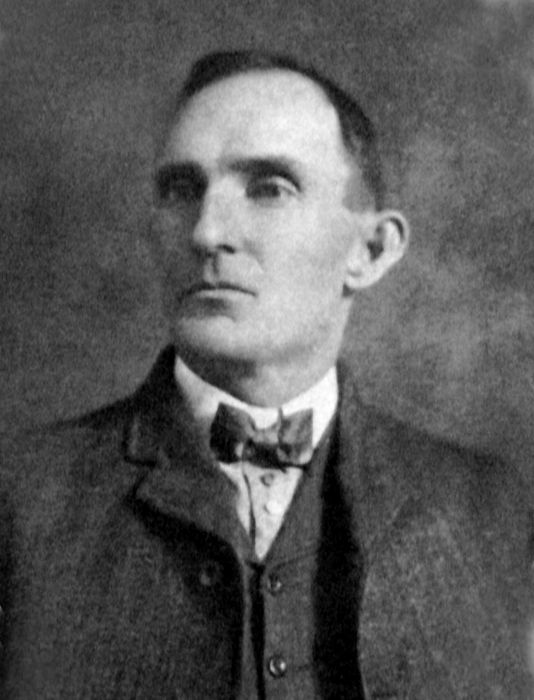
Jim Miller.
Upon his release, he seems to have preferred the rapidity of fire offered by double-action revolvers. As most readers are aware, single-action designs require that the hammer be cocked with the thumb for every shot, whereas with so-called double-action arms the shooter not only spins the cylinder but cocks and releases the hammer with a single long pull of the trigger. The SA is nearly as fast for the first shot, but subsequent aimed fire is considerably improved in the double mode. Besides the .41 Colt 1877 used to dominate the crowd at the Gem, he also owned at least one ’77 “Lightnin” in .38 LC (Serial number #84304– gifted by friend Jim Miller), and the larger framed double-action Colt 1878 in .44 WCF (serial number #352) removed from his body at the time of his death.
It goes without saying that the drop-loop “quick draw” or “buncher” holster featured in movies through the 1970s never existed in the historic West, nor would it have been desirable to have a gun positioned so low, whether planting fence posts or snaking through the crowds of a smoke-filled saloon. The most common were the tight-fitting “Slim Jim” skirted designs and surplus military models with their protective rain flaps removed. None of these had tie-downs, requiring the wearer to grab them with one hand while drawing their weapon with the other– hence the expression “slapping leather.” It’s suggested that at least towards the end, Hardin preferred to carry his arms in shoulder holsters or tucked conveniently into his waistband. However, they were housed, and his proficiency in getting them out and hitting what he was aiming at was nothing less than impressive– a skill that he demonstrated first through a growing body count and later by blasting poker cards held up by his admirers. Unlike many gunmen and shootists, Hardin really was fast on the draw. Sometime after his capture, he put on a display of quick draw, border shifts, and rolls for his guards’ entertainment. Ranger Jim Gillette described his “sleight of hand” gun handling as having been executed with nothing less than “magical precision.”
A fast gun and a heart full of “pluck and push,” however, could guarantee neither freedom nor life. Now, he was finding out the hard way that a willingness to stand up to insult and injury was no longer considered a manly virtue by civilizing residents. Bankers and speculators were making millions of dollars through systemic manipulation and deception– while the women and men who candidly spoke their mind, who leveraged power face to face and gladly met each test… often found themselves pariahs in the rapidly urbanizing West. It’s hard to imagine their alienation, their grieving over lost values and lost ways, or the existential loneliness that must have haunted their sleepless nights. The damage and the despair.
Hardin’s gambling increased proportionally, and he was seen making more and more flamboyant bets whenever in the presence of an audience. Winning gave him the feelings of mastery and brilliance, of risk-taking and excitement that his post-prison existence otherwise lacked. It was, like the carrying and use of weapons, an effort to exercise some degree of control over his life in an environment of bitter disempowerment and rapid transition.
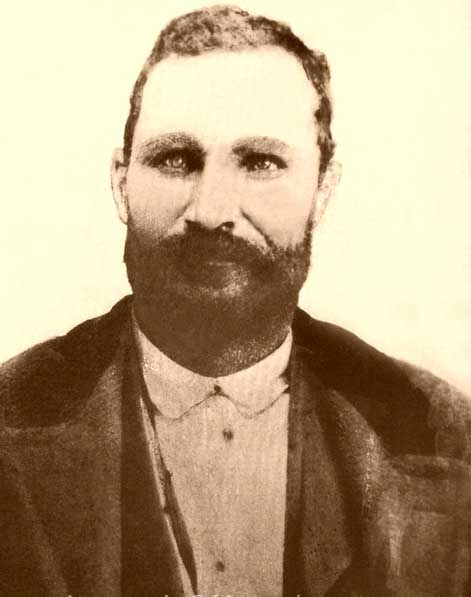
John Selman.
On the afternoon of August 19, 1895, John Wesley Hardin was rolling dice at the Acme saloon bar, standing uncharacteristically with his back exposed to anyone stepping through its louvered swinging doors. An agitated Constable Selman had barely entered the room before blasting the preeminent shootist of all time in the back of the head. He then pumped two more rounds into his target’s chest and arm, as he lay motionless on his back in a spreading puddle of blood and gore.
Hardin could be weary, butthat’ss not the same as being indifferent or oblivious. Our man was well aware of the many dangers he faced, and had only a short time before he had a major row with Old Man Selman and his son John Jr. It was something more than alcohol induced laxness that predetermined his attitude and posture on that fateful day.
Hardly a month goes by that wedon’tt read in some newspaper or hear on the radio about another case of what is now called “suicide by cop: someone at the end of their emotional rope, ignoring the repeated calls by the police to drop their weapon, orchestrating the situation so that the police have no option but to shoot. They no doubt prefer this to putting a gun to their head– but there may also be the added satisfaction of being killed while facing a real or imaginary oppressor, with an enabling gun in hand.
But as much as he must have suffered at that point, Hardin’s death was no form of suicide, nor was it Hardin’s wish to die. More than anything else, he was gambling that fateful afternoon– with not only his money, but with his life. He was upping the ante, raising the stakes, and calling the opposition’s bluff! He was ready to rake in the winner’s chips, break the bank with the next throw of the dice, and pay what has always been the highest price. The last sounds he likely heard were the shuffling of the constable’s feet some six or eight feet behind him, and the rattle of dancing ivories on thebar’ss polished wood.
Andit’ss not hard to see why the wizened Selman carried out his ignoble plan with such stealth and haste. A split second before the 250-grain slug roared in his direction, Hardin began instinctively reaching for the gun long at home at his waist.
Indeed, even as his world was collapsing around him, firearms were something he felt he could count on– and thus he never went anywhere without them. They were more than a means of defense, more than a strategy for gaining deference and respect. Guns became the buddies that would never let him down, the girlfriend that would never leave, the wife that would never be taken away from him by disaster or disease. For the aging shootist, they came to represent the possibility of love, of a code, a way of being, thinking, and acting that might never die. At home, it’s not so much beneath the oil or gas lamps of a raucous saloon as on the open range… making the passage from birth to death beneath an unfenced Western sky.
©Jesse L. “Wolf” Hardin, 2006, updated October 2026.
About the Author: “John Wesley Hardin: The Shootist Archetype” is adapted from Jesse L. “Wolf” Hardin’s popular book Old Guns & Whispering Ghosts, which includes a number of fascinating stories of the colorful characters and firearms of the Wild West, as well as dozens of previously unpublished historical photos. Hardin is a lifelong student of Western history and antique firearms and a prolific artist, entertaining Old West presenter, and storyteller. In addition to Old Guns & Whispering Ghosts, he has published four other books, as well as numerous articles that have appeared in more than 100 magazines. Hardin, who lives in an isolated canyon in the Gila Mountains of Southwest New Mexico, also tends to a wildlife sanctuary.
Also See:
El Fego Baca & The “Frisco W”r”
Ben Lilly: Bears, Blades & Contradictions