
Joaquin Murrieta’s Stolen Cache
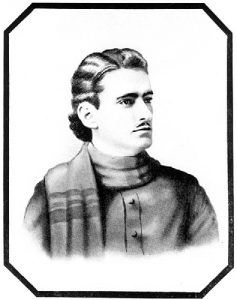
Joaquin Murrieta.
Joaquin Murrieta was a legendary figure in California during its Gold Rush days of the 1850s. From a mid-19th-century California pioneer’s point of view, some described Joaquin Murrieta as a Mexican Patriot. Others would say he was nothing but a vicious desperado. He was forced off his claim when he tried to make a living in mining. Angry about this, he turned to a life of crime and was seen by some as a Mexican patriot resisting the white settlers’ domination. Others saw him simply as a bandit. Murrieta became the leader of a band called the Five Joaquins, who were said to have been responsible for most cattle rustling, robberies, and murders committed in the Mother Lode area of the Sierra Nevadas between 1850 and 1853. One of those robberies was a wagonload of gold that the Joaquins had stolen from the northern mines. However, when members of Murrieta’s gang were driving the load along the hills East of the old Carrizo Stage Station, they were ambushed by Indians.
According to the tale, the gold and other items the gang took were hidden under a projecting rock ledge in an old burial cave. Murrieta likely went after the lost loot soon after, but the California Rangers killed him before he could retrieve the gold. The Old Carrizo Stage Station once served the Butterfield Stage Station in the Anza Borrego Desert.
Another treasure that Murrieta was said to have buried is thought to be located between Burney, California, and Hatcher Pass. The $175,000 cache, said to be hidden not far from Highway 299, has never been found.
Yet another stolen Murrieta cache, worth some $200,000, is said to be buried somewhere between Susanville and Freedonyer Pass near today’s Highway 36.
Murrieta and his gang often hid their stolen loot near the sites of their robberies. On one occasion, Murrieta and his right-hand man, Manual Garcia, known as “Three-Fingered Jack,” robbed a stagecoach along the Feather River. The strongbox reportedly contained about 250 pounds of gold nuggets worth $140,000. Allegedly, the pair buried the strongbox on the banks of the Feather River in a canyon a few miles South of Paradise, California. According to Wells Fargo officials, the stolen gold has never been recovered. Read our full article on Joaquin Murrieta here.
Hidden Treasures Near Vallecito Station
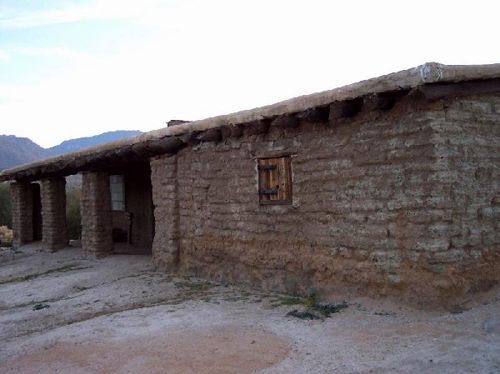
Vallecito Station today.
A stagecoach traveled from El Paso, Texas, to San Diego with a box of gold coins in the 1860s. In addition to the driver, the stage also carried a guard to protect the money. However, when the stage reached Yuma, Arizona, the guard fell ill, and the driver continued without him. Somewhere in the area of Carrizo Wash, between the Fish and Coyote Mountains, the stage was held up by bandits, who killed the stage driver and fled with the box of gold. According to the tale, the outlaws buried the gold on the South slope of Fish Mountain but could not retrieve it because so many soldiers were in the area. The buried coins are said to remain there today.
In addition to this stolen cache, others are also said to be buried near the Vallecito Station. Numerous lost gold mines are allegedly in the area, including the Lost Bell Mine, the Lost Bill Williams Mine, and the Lost Squaw Mine. Vallecito Station is now in the Vallecito Regional Park in San Diego County.
Holden Dick’s Stolen Loot
In March 1881, a lone bandit stopped a freight wagon carrying several hundred pounds of gold ore as it traveled through Modoc County. The ore from Nevada was destined for Sacramento and heavily guarded by three men. But this did not stop the outlaw named Holden Dick. Immediately killing two of the three guards, he forced the stage to stop, and the remaining guard and driver quickly surrendered. He ordered them down from the stage and sent them walking South. Meanwhile, he boarded the wagon, tied his horse to the back, and drove North, where he was said to have buried the loot on the western slope of the Warner Mountains.
The vicious crime went unsolved for years until a Pitt River Indian known as “Holden Dick” began to trade small amounts of gold ore in Susanville and Alturas. After appearing in mining-camp saloons and spending his money freely, the Indian would disappear into some of the most rugged sections of the South Warner Mountains, only to return with a good supply of gold ore.
At first, the locals thought the Indian was working a secret mine, and in the saloons they tried, without success, to get him to talk. They also began to follow him when he left, hoping to find the mine. On one occasion, when another miner named Samuel B. Shaw was badgering the Indian for the location of his gold, Holden got fed up and shot the man, wounding him fatally.
Holden Dick was soon arrested for Shaw’s murder and locked up in the Susanville jail. On January 23, 1886, four men stormed the jail and dragged him into the street. Beating, whipping, and torturing the man, he refused to tell the location of his hidden cache, and he was finally hanged at the blacksmith shop.
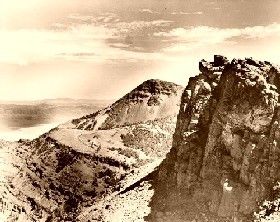
Eagle Peak, California.
Somewhere along the line, the authorities figured out that the gold ore Holden so freely bandied about did not come from a mine but was stolen loot taken from the freight wagon five years earlier.
After a little more “digging,” the cache is believed to have been hidden in a cave where Holden Dick lived most of the time. The cave was located in one of the many canyons that extend from Eagle Peak on the western slope of the southern Warner Mountains. He was also said to have constructed a crude rock wall at the cave’s entrance, though it would most assuredly be collapsed today. The cave was most likely located at lower elevations in the mountains since the Indian lived there year-round.
©Kathy Alexander/Legends of America, updated September 2026.
Also See:
Adventures in the American West
Lost Treasure Tales Across America
See Sources.