
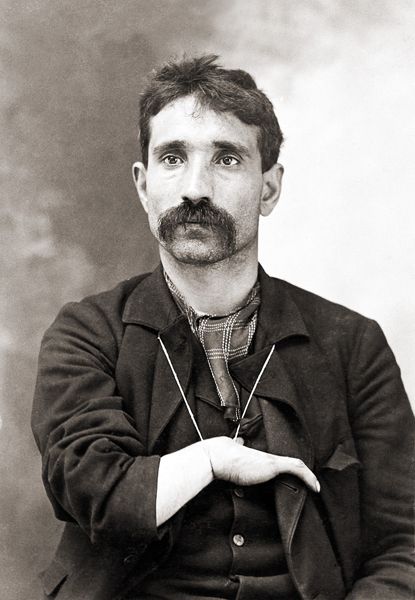
Giuseppe “Joe” Morello 1902.
By Joseph Bruno.
They came from the mobbed-up city of Corleone, Sicily, but they perpetrated their murder and mayhem in the mean streets of New York City.
The co-leader of the Black Hand was a formidable man named Giuseppe (Joe) Morello. Born in 1867, Morello had a severely deformed right hand, which only featured an elongated pinkie finger that bent grotesquely downward. As a result, he was nicknamed “The Clutch-Hand,” “Little Finger,” and “One Finger Jack.”
Joe Morello’s father, Calogero Morello, passed away in 1872. A year later, his mother, Angelina Piazza, remarried a Mafioso named Bernardo Terranova. Together, Joe’s stepfather and mother had four children: Nick, Ciro, Vincent, and Salvatrice. There is some confusion regarding their relationships, but it is important to note that Nick Terranova, also known as Nick Morello, was Joe Morello’s half-brother, not his full brother.
Salvatrice Terranova married a notorious man named Ignazio “Lupo” Saietta, also known as “The Wolf.” In America, Saietta, along with Joe Morello, Nick, and Vincent Terranova, formed the feared and reviled organization known as the Black Hand. For all practical purposes, Saietta and Morello shared equal power within the organization.

The Corleone Mafia in the movie The Godfather.
While still in Corleone, Bernardo Terranova introduced Joe Morello and his three half-brothers to the Corleonesi Mafia, also known as the Fratuzzi. They proved their loyalty by committing murders as instructed by the bosses of the Corleonesi. One of their victims was Giovanni Vella, who led a quasi-police force called the Guardie Campestri, or Field Guards. This group patrolled the streets of Corleone on foot, looking for members of the Corleonesi Mafia engaging in illegal activities.
In 1888, Joe Morello was arrested for the murder of Vella, but then strange events began to unfold.
First, the smoking gun that implicated Morello mysteriously vanished shortly after his arrest, which took place just minutes after Vella was killed. An enterprising member of the carabinieri, the local police, was bribed handsomely in lira to take the gun.
Secondly, there was the troubling issue of a woman named Anna Di Puma, who claimed she witnessed Joe Morello shooting Vella to death in a dark alley. Just two days after Vella’s murder, Anna Di Puma was sitting outside a friend’s house, engaged in conversation, when a gunman approached from behind and shot her in the back, killing her instantly. With no smoking gun and no witnesses left to testify against him, Joe Morello was set free.
Morello then decided it was time to start making significant money by dealing in counterfeit bills, commonly referred to as “funny money.” Things went smoothly for a while until, in 1892, Morello was arrested with a handful of fake cash in his left hand. Rather than face charges in Sicily, Joe Morello defiantly ignored the Italian authorities and secretly fled to America, settling in the Lower East Side of New York City. It didn’t matter that Morello was tried “in absentia” and sentenced to six years in solitary confinement; he was a vast ocean away from punishment and ready to make his mark in the grand “Mountain of Gold.”
Shortly after Joe Morello escaped from Sicily and entered America illegally, Bernardo Terranova, his wife Angela, and six of their children boarded the ship Alsatia to join him. Joe Morello’s wife, Lisa Marvelesi, accompanied them with their two-month-old baby, Calogero, who was named after Joe Morello’s biological father. Like many immigrants of the time, they passed through Ellis Island and entered America legally.
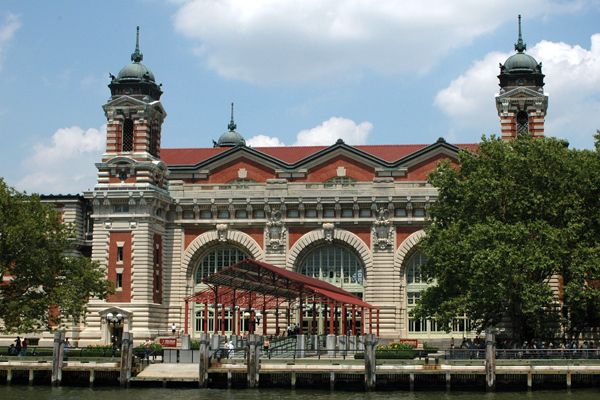
Ellis Island.
While most immigrants arrived with little more than the clothes on their backs and a few coins in their pockets, the Terranovas brought 18 pieces of luggage filled with fine clothing and a substantial sum of money. Although this was not illegal, it raised suspicions among Ellis Island officials, especially since Sicilian Mafioso Bernardo Terranova listed his occupation as “laborer,” despite being a notorious murderer in Corleone.
Upon arriving in America, Morello and the Terranovas worked hard to avoid attracting law enforcement’s attention. Although there was no communication between Sicilian and American police, Italian immigrants had a three-year grace period during which they were immune to deportation. The Terranovas settled in Manhattan’s Little Italy alongside Morello and initially attempted to make a living through various legal jobs, including plastering.
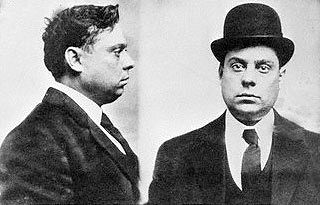
Ignazio Saietta.
Ignazio Saietta, known as “Lupo the Wolf,” had a unique journey before he teamed up with Joe Morello and the Terranovas in America. Born in Corleone, Sicily, on March 19, 1877, Saietta was inducted into the Sicilian Mafia. He fled to America to escape prosecution for the murder of Salvatore Morello and to connect with Joe Morello and the Terranovas in various legal and illegal activities, many of which terrorized Italian immigrants in New York City.
Upon arriving in New York City, Morello initially tried to make an honest living, but this was merely a facade for his illegal operations, including bookmaking and loan sharking. Soon, he became flush with money and invested in several small businesses, such as a coal store and various bars and restaurants in Little Italy and as far north as 13th Street, all of which quickly failed due to “lack of business.” In 1899, Morello returned to his expertise: counterfeiting, but this time, he focused on counterfeiting American currency.

Italian Harlem.
Morello installed a small printing press in an apartment at 329 106th Street in what was known as Italian Harlem. He printed mainly two- and five-dollar bills, the most commonly used American currency. Morello hired several men of Italian and Irish descent to spread these bills around New York City. The New York City police got wind of the counterfeiting ring, and several Morello workers were arrested. A man named Jack Gleason (not the comedian) immediately flipped and identified Morello as the mastermind of the operation. Morello was arrested, but none of the other men arrested dared to testify against Morello. Also, because Morello had only legitimate American currency in his possession when arrested, he walked out of jail without even being indicted. But this embarrassment taught Morello a severe lesson he’d never forget: never work closely with anyone except men he knew from Sicily.
It is unclear whether Joe Morello or Ignazio Saietta originally started the Black Hand extortion scheme in America. What is clear is that around 1898 or 1899, both Morello and Saietta, along with the Terranova brothers, Vincenzo and Ciro, began terrorizing local Italian businessmen of some means by sending them “Black Hand” or “La Mano Nera” extortion letters. These letters threatened local businessmen with bombing their businesses or even death if the businessmen didn’t immediately cough up some very substantial cash. At the bottom of the extortion notes was the imprint of a “Black Hand,” made by a hand dipped in black ink (but due to the inroads law enforcement had made with fingerprinting at the time, the “Black Hand” was later drawn instead). If the businessman did not comply with the note’s demands, he would indeed get his business bombed, and sometimes he was tortured and even killed in the infamous Murder Stables, located at 323 East 107th Street in Harlem.

Black handprint.
In 1905, a tragic incident occurred involving a butcher named Gaetano Costa. He received a Black Hand letter demanding $1,000. The letter instructed Costa to place the money inside a loaf of bread and then give the loaf to a man who would enter his butcher shop the following day, waving a red handkerchief. Costa refused to succumb to the extortion demands. Two days later, two men entered his shop and shot Costa dead.
Joe Morello introduced an innovative approach to the Black Hand extortion scheme to ensure successful collections. He would send an extortion letter to his victim and then wait near the victim’s store for the postman to deliver it the next day. As the victim read the letter, Morello would mysteriously appear in the store. Observing the distress on the victim’s face, Morello would ask about the cause of their anxiety. Knowing Morello’s high status in the local Mafia, the victim would hand him the letter and plead for him to intervene with the sender, hoping to reduce or even eliminate the demanded payment. Morello would take the letter and assure the victim that he would find out who sent it and what could be done about the situation.
Since Morello had sent the letter himself, the demand could not be completely withdrawn. Now that Morello possessed the letter, the victim had no evidence to present to the police regarding the extortion attempt.
In a few days, Morello planned to return to the victim’s store and share a fabricated story about how he had negotiated with the extortionist and reduced the extortion demand. At this point, the victim was just relieved to be alive and to see his store intact. He would gladly agree to pay Morello the lesser amount, who would then assure him that he would deliver the payment to the extortionist, effectively putting the matter to rest once and for all.
Saietta and Morello also operated a counterfeiting business based in the quiet upstate town of Highland, New York, located 50 miles from New York City. Saietta handled the day-to-day operations, while Morello focused on managing their illegal activities in New York City.

Deputy Inspector William J. Flynn.
Yet, the Black Handers had an enemy named Deputy Inspector William Flynn. Flynn, an expert detective but a little talkative (especially when talking about himself), had been actively investigating Morello and Saietta since the “Barrel Murders” of 1903. Flynn also knew that Morello, Saietta, and his gang were running an extensive counterfeiting operation, but he could not determine where the bills were being printed. However, he was sure it was not being done in New York City.
Employing several undercover policemen, Flynn had what he called a “life surveillance” put on Morello, which was not exactly the proper term since, because of the lack of police manpower, Morello was only intermittently observed. Still, Morello was certainly on Flynn’s radar, as was Saietta, until he inexplicably disappeared from New York City and went into hiding in Highland, New York, where he oversaw the group’s counterfeit printing operations.
In early 1908, Saietta orchestrated a large-scale fraud scheme by using his network of wholesale grocery stores in New York City to import olive oil and other Italian delicacies from Italy. He operated from his store on Mott Street, while his confederates, who were involved in extortion activities linked to the Black Hand and a nationwide counterfeiting operation, owned other grocery stores throughout the city.
In November 1908, Saietta filed for bankruptcy related to his import business, leading to the seizure of his Mott Street store under a U.S. court order. When the court-appointed receivers entered the store to examine the financial records, they found only $1,500 worth of inventory against more than $100,000 in debts. Additionally, the receivers discovered that just a week before his disappearance, Saietta had made over $50,000 in purchases, none of which could be accounted for, leaving the sellers unpaid. This tactic is known as a “bust out” fraud scheme, where an individual buys as much merchandise as possible on credit, sells it on the black market, pockets the cash, and then files for bankruptcy.
Saietta’s associates in the scheme filed for bankruptcy around the same time he did. Antonio Passananti, who had been sent to kill a New York cop named Joe Petrosino, owned a wholesale wine business in Brooklyn. He utilized a “bust-out” fraud scheme to close his business and initiate bankruptcy proceedings. When the receivers investigated Passananti’s store, they discovered records indicating that he had given Saietta large sums of money before both men disappeared. The New York Times reported that a dozen other Italian dealers had also vanished, leading to total liabilities of nearly $500,000.
In November 1909, after Petrosino was already dead, Saietta returned to New York City. Accompanied by his lawyer, Charles Barbier, he went to the bankruptcy receiver’s office and spun a tale about why he had suddenly left the city. Saietta claimed he had received a Black Hand extortion letter and, fearing for his life, had fled to Baltimore, Maryland, then to Buffalo, New York, before spending the final weeks at his brother’s grocery store in Hoboken, New Jersey. Saietta hired a team of lawyers to fight his creditors and resumed his old activities in New York City, socializing with Morello and other Black Hand members. Unbeknownst to him, Inspector Flynn had his men following Saietta as well. One day, they trailed him to Highland, New York, where they finally learned the location of the counterfeit bill printing operation.
Flynn now had enough evidence to arrest Morello, Saietta, and several other Black Handers involved in the counterfeiting operation originating in Highland, New York. However, Flynn didn’t want to arrest the minor players first because he feared Morello would be tipped off and go into hiding. From his surveillance on Morello, Flynn knew Morello now lived in a tenement building at 207 East 107 Street. However, Flynn did not know in which apartment Morello resided. One of Flynn’s operatives was 17-year-old Thomas Callahan, who had been posing as a shoeshine boy on 107th Street.
On November 15, 1909, Callahan spotted Morello, Vincenzo Terranova, and another man heading down the block toward their building. Without an exact plan in place and wanting to know which apartment the Mafioso inhabited, Callahan immediately ran into the four-story building. The building was dark since the janitor had turned off the interior building lights. After Callahan stopped on the second floor of the tenement, he heard the three men enter the building and begin walking up the steps toward him. Callahan slithered quietly to the top floor, not knowing exactly what to do. He then realized that the Black Handers, who were always armed, might continue upwards and see him trapped on the 4th floor, with no reason for being there.
Here is where Callahan made a bold move that might have saved his life.
Callahan started heading down the stairs like he did not have a care in the world. Between the third and fourth story landing, Callahan came face to face with “The Clutch Hand.” Morello looked puzzled. Morello stared Callahan straight in the eye and said, “‘Scusa, please.” Callahan moved to one side of the stairs, and without saying another word, the three men passed Callahan and continued to the top floor. Callahan sped down the stairs and out of the building, expecting a bullet in the back, his heart pumping like a runaway train. As he hurried to where the other agents were waiting, Callahan turned around to see if he had been followed out of the building. He hadn’t.
Now, it was time for Flynn and his crew to make their move. Within minutes after Callahan had exited 207 East 107 Street, Flynn’s agents had surrounded the building, their eyes on the 4th-floor window, where the light was still on. Every so often, they could see one of the men in the room pass the window, but not once did any of the Mafioso look out of the window. That was a lucky break for Flynn. It wasn’t until 11 a.m. the next morning that the agents made their move.
With six of his best men, including Callahan, Flynn quietly entered the building and climbed the steps. Flynn had a skeleton key, which could open virtually any lock. When they reached the door of the 4th-floor apartment, Flynn pressed his ear to the door and heard no movement inside. He quietly inserted the skeleton key and unlocked the door. Flynn and his agents slowly entered the room with their guns pointed out in front of them. The door opened into the kitchen, but nobody was there. They opened the door to one of the bedrooms, and there was Morello, dead to the world, snoring lightly. His half-brother, Vincent Terranova, was in a second bed beside him, sawing wood.
“We had no intention of waking them,” Flynn later told the press. “Until we were sitting on them.”
Flynn gave the word to his men to pounce, and in seconds, both Morello and Vincent Terranova were in custody. Under Morello’s pillow, the agents found four loaded revolvers; under Terranova’s pillow, five. Indeed, if they were not sleeping, the two men would have put up a hell of a fight.
The noise the agents had made in snagging the two Mafioso awakened the rest of the apartment’s inhabitants. Three half-dressed men exited their bedroom in seconds, screaming and cursing in Italian. Then Morello’s wife, Lina, emerged from a third bedroom, her infant daughter in one arm and a huge knife in the other hand. It took two men to subdue Lina and relieve her of her weapon. Still holding her baby tight and incensed that the agents were doing their job, Lina spat on them in defiance.
The other three Italians tried to create a diversion so that specific evidence could be hidden and eventually destroyed. One of Flynn’s men spotted one of the Italians stuffing several letters into Lina Morello’s apron, which lay sprawled on the kitchen table. Thinking no one was watching, Lena grabbed her apron, pulled out several letters, and stuffed them into her infant’s clothing. Holding the baby in one arm, Lina tried to leave the room. Two burly agents pounced on her, and a fierce skirmish ensued. With Lina kicking, screaming, and cursing, Flynn was able to search the infant’s clothing. He found three letters in the infant’s still-clean diapers and several more in her apron. They were all Back Hand letters waiting to be sent to their intended targets. However, Flynn’s agents did not fare too well in their battle with “Hellcat Lina,” as was evidenced by the several dozen cuts and bruises on their battered bodies.
Flynn’s agents fanned out and searched the other apartments at 207 East 107 Street. When the dust settled, they had arrested fourteen Black Handers and counterfeiters (some men were both). As a bonus, $3,000 in fake two-dollar bills was found in a paper bag under the bed in the apartment occupied by the Vasi brothers. It was a fine roundup for Flynn, but one big fish was nowhere to be found: Ignazio “Lupo the Wolf” Saietta.
As the search for Saietta continued, other members of Morello’s and Saietta’s crew were arrested throughout the city. Domenico Milone was arrested in a grocery store on East 97th Street. Antonio LoBaido, Frank Columbo, Giuseppe Mercurio, and Luciano Maddi were among the others who were snagged by the police.
Failure to communicate within the New York City police department delayed the arrest of Saietta on counterfeiting charges in Highland, New York. On November 18, 1909, just three days after the arrest of Morello and his gang, Saietta was arrested for extorting a Manhattan store owner, Manzella, who claimed Saietta had ruined his business. On November 22, Manzella, not surprisingly, got cold feet and refused to appear in court for Saietta’s arraignment. The Manzella case was dropped, but Saietta was immediately arrested on a bench warrant dated April 21, charging him with possessing counterfeit money in 1902. The bail was set at $5,000, which Saietta immediately posted. As a result, Saietta walked out of court a free man. When the New York City police department finally got their wires uncrossed, they realized they had their man in their clutches, but let him escape.
On November 26, the New York City police department issued an internal proclamation stating that any officer who could arrest Saietta in connection with the Morello counterfeiting case would be promoted to first-grade detective immediately. As it turned out, because of an unrelated case of piano theft, Saietta fell right into Flynn’s hands.
The piano was stolen in Hoboken, New Jersey, by a man described as an “Italian immigrant.” This man was traced to a home at 8804 Bay 16th Street in Bath Beach, Brooklyn. When the police arrived, lo and behold, they found Saietta, who had rented the house under the name Joe LaPresti. Lupo was arrested, along with fellow counterfeiter Giuseppe Palermo. When the police searched the house, they discovered a loaded revolver, Black Hand letters, phony passports, and three bank books under the names John Lupo, Joseph La Presti, and Giuseppe La Presti.
Saietta, realizing he should have used the phony passports while he had a chance to escape the country, offered the arresting officer a $100 bribe (presumably not in counterfeit cash). The police officer refused the bribe but received his promotion to first-grade detective.
The counterfeiting trial commenced on January 26, 1910, in a federal courthouse on Houston Street. It was a raucous carnival show, showcasing crying clowns as its main act. The judge was the Honorable Judge George Ray, and there were eight defendants in total, including the show stars: Joe “The Clutch Hand” Morello and Ignazio “Lupo the Wolf” Saietta. They were represented by attorney Mirabeau Towns, who was born in Alabama and went to law school in Atlanta, Georgia. Towns was notable for sometimes presenting his court addresses in verse, which couldn’t have pleased Judge Ray much.
There were 60 witnesses in all put forth by the state. Still, the main witness against the counterfeiters was a timid little man named Antonio Comito, who the Black Handers kidnapped and, along with his wife, was forced to print the counterfeit bills in Highland, New York. Comito told the court that he and his wife printed $46,000 counterfeit bills.
Comito also said that when New York City Police Lieutenant Joseph Petrosino was killed, Saietta had commented, “We did a fine job with Petrosino.”
The trial concluded on February 19, 1910, and the jury took only 1½ hours to return eight guilty verdicts.
When it came to the sentencing, the real theatrics began.
Morello was the first defendant called before the judge for sentencing. According to published reports, “Morello was cringing before the judge. He held out his left hand, deformed from birth, for the inspection of Judge Ray. This was the hand Morello was averse to showing to the jury that had tried him. He said he was the father of a family (through an interpreter) and that if the court would only suspend the sentence, he would go to Italy at once.
“But Judge Ray told Morello that he might serve 15 years and pay a fine of $500 on the first count against him, and serve ten years and pay another $500 on the second count against him. Morello didn’t wait for the interpreter to tell him about it. He dropped into a faint and had to be picked up and carried to the pen by the deputies.”
Lupo the Wolf was next in line for the sentencing. Newspaper reports said, “Was Lupo the brave and nervy criminal he had been supposed to be? Not for a moment. He began to weep before he reached the bar, and by the time Judge Ray had finished asking him what he had to say, he had used up one whole handkerchief with his tears. His thick, fat body shook with emotion as he told the court how the murder charge against him (in Italy) was all wrong, and the police of two countries had hounded him.
“Judge Ray, getting in words between the sobs, told Lupo that he had passed sentence on himself as to the old murder case when he fled from Italy instead of standing trial.
“‘I believe you and Morello were at the head of this undertaking. You have been convicted. I sentence you to 15 years and a fine of $500 on the first count and 15 years and a similar fine on the second count,’ said the court, and Lupo was led back to finish his weeping in private.”
When Judge Ray sentenced the other six men, the eight men were given a total of 150 years in prison.
The sentencing of Saietta and Morello effectively ended the Black Hand extortion letter scheme in America.
©Joseph Bruno, updated March 2026.
About the Author: A Vietnam veteran in the United States Navy, Joseph J. Bruno started in the newspaper business in the mid-1970s as a sports columnist for the New York Tribune. During the 1970s and ’80s, Bruno was an associate editor for Boxing Illustrated and a monthly contributor to Ring Magazine. In 1986-1987, Bruno wrote a sports column for the Times Herald-Record in Middletown, New York. Since then, he has written numerous articles for various magazines and books, both fiction and non-fiction. More information is available on his blog here: John Bruno on the Mob. Source: Ezine Articles (dead link.)
Follow-up: After Joe Morello was released from prison in 1920, he tried to retake control of his empire but found himself considered a threat to his former captain, now-turned-Mafia boss, Salvatore D’Aquila, who, within a year of Morello’s release, ordered Morello killed. As a result, Morello, along with several others under orders of death by D’Aquila, fled to Sicily for a while. When he returned to the United States, he became involved in the Castellammarese War, a bloody power struggle for control of the Italian-American Mafia between 1929 and 1931. One of the first victims of the war, Giuseppe Morello, was killed along with associate Joseph Perriano on August 15, 1930, while collecting cash receipts in his East Harlem office.
Ignazio Saietta was also released from prison in 1920 and returned to his old activities. However, sometime in the early 1930s, the emerging National Crime Syndicate leaders called Lupo in for a meeting and told him that he generated too much heat for their liking. They forced him to give up nearly all his rackets except for a small Italian lottery in Brooklyn. Lupo relied almost entirely on violence and terror, while the Syndicate used bribery first. On his own, Lupo then formed a protection racket involving bakers. In 1936, New York Governor Herbert Lehman petitioned President Franklin D. Roosevelt to have Lupo returned to prison for massive racketeering. He was returned to Atlanta Prison to serve a few years more on his original counterfeiting sentence. After his release, he returned to Brooklyn, where he died more or less unnoticed in 1947.
Also See:
The FBI and the American Gangster