
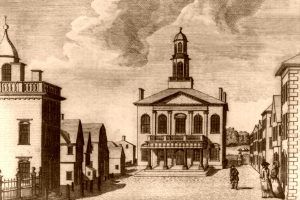
Salem, Massachusetts courthouse in 1790, by Samuel Hill.
Legal Process:
- When an individual filed an official complaint to the court about a suspected witch, a magistrate would issue a warrant for the accused person’s arrest. Before the Court of Oyer and Terminer was appointed, the sitting magistrates of the regular Salem court or village officials presided at the examinations, which functioned as preliminary hearings and decided whether there was enough evidence to hold an accused witch for trial. In the Court of Oyer and Terminer, these magistrates included Jonathan Corwin, John Hathorne, Bartholomew Gedney of Salem Towne, and Thomas Danforth of Boston.
- The magistrates issued a warrant for arrest if the complaint was deemed credible. The individual was brought in for a public examination, essentially an interrogation, where the magistrates pressed the accused to confess.
- Once the accused person was taken into custody, they were examined by two or more magistrates. If, after listening to testimony, the magistrates believed the accused was probably guilty, the accused was sent to jail for possible re-examination and to await trial.
- The case would then be presented to a Grand Jury, where testimony would be made, and depositions entered into evidence.
- If the Grand Jury indicts the accused, they are tried before the Court of Oyer and Terminer. A jury would then decide whether the defendant was guilty or innocent.
- If the defendant was found guilty, the Court would pronounce the sentence. In the Salem Witch Trials, guilty defendants were sentenced to be hanged on a specified date.
- The Sheriff and his deputies carried out the sentence of death.
Evidence:
Puritan woman specter.
Spectral Evidence – Used by the “afflicted girls” and several others in their accusation against suspected witches, spectral evidence is based on dreams and visions. During the trials, the accuser would testify that the accused witch’s spirit (specter) appeared to the witness in a dream or vision. In many instances, the spirit might appear as an animal, such as a black cat or a wolf. The dream or vision was then admitted as evidence. Even though the accused was nowhere near the “afflicted” person at the time, testimony was often given that the “witch” had bitten, pinched, choked, or otherwise harmed the “afflicted” accuser.
As a basis for spectral evidence, a 60-page booklet entitled A Tryal of Witches, written by Gilbert Geis and Ivan Bunn, was used by the Salem magistrates in seeking a precedent for allowing so-called “spectral evidence.” The booklet was a report of the proceedings of the Bury St. Edmunds witch trials in Suffolk, England, conducted intermittently between 1599 and 1694. Specifically, the booklet covered the case of Amy Denny and Rose Cullender, accused of witchcraft, who stood trial and were hanged in Lowestoft, England, in 1662. Upon discovering that no lesser person than Sir Matthew Hale had permitted spectral evidence to be used in that case, the magistrates accepted the validity of spectral evidence, and the trials proceeded.
Touch Test – Utilized in Andover, Massachusetts, in September 1692, this evidentiary practice appears to have been exclusive to Andover. If the accused witch touched the victim while the victim was having a fit, and the fit stopped, it meant the accused was the person who had afflicted the victim. On September 7, 1692, the Reverend Barnard ordered all those accused of witchcraft to come together at the Andover meeting house, where the Salem Village “afflicted girls” were kept. Once the accused had all been gathered, he conducted the “Touch Test,” one of the most diabolical schemes of the witch trials. At that time, it was believed that if a witch’s hand touched the body of the person they had bewitched, that person would immediately become well and could identify the witch. After reciting a prayer, Barnard then blindfolded the accused, who was then forced to go near the “afflicted girls,” who would fall into fits and cry out, claiming they were under the curse of a witch when the accused drew closer. However, when the accused touched the girls, they would immediately come out of their fits and identify the person touching them as the one who afflicted them. This evidence was enough to warrant the accused’s arrest as witches. After this event, warrants were issued for 18 men and women accused in the touch test.
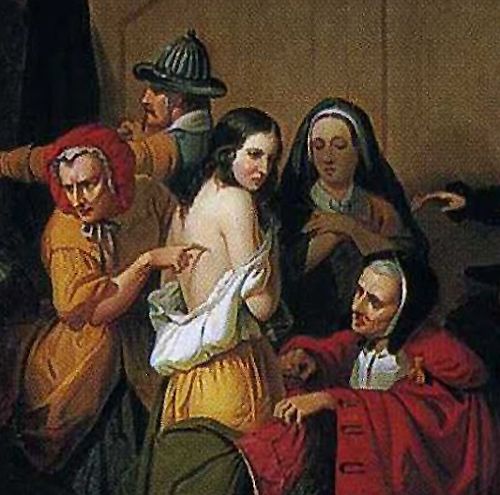
Close-up of Examination of a Witch, by Thompkins Matteson, 1853.
Witch Mark – A practice from England in the witch trials of the 16th and 17th centuries, looking for witch marks, or devil’s marks, was also utilized during the Salem witch trials. The common belief was that a “witch teat,” or extra nipple on a witch’s body, permitted a familiar or imp to suckle human blood. It was also believed that these “witches” who bore these marks would not feel pain or bleed when the mark was pricked. In the minds of the Puritans, these marks might be disguised as birthmarks, warts, moles, or any outstanding swelling or discoloration of the skin that was suspected of being a witch’s mark. Even red spots, bumps under the tongue, or in private parts might be a witch mark.
After an accused witch had been arrested, their body would be searched for any peculiarities. Doctors and midwives were employed for these searches, which were frequently done before the judge, jury, and an audience. The examining tool was usually a sharp instrument such as a pin or needle; if an insensitive portion of the body did not bleed, it was designated a witch’s mark. It later turned out that some of these so-called sharp objects were blunt or dull. Out of fear, people sometimes cut off their warts, moles, and other bumps to avoid being suspected of being a witch. However, these tactics had little effect, as the scars they left were just as deep.
Other Evidence – This included confessions of the accused, the testimony of a person who confessed to being a witch identifying others as witches, the discovery of poppets, books of palmistry and horoscopes, pots of ointments in the possession or home of the accused, and the existence of so-called witch’s teats on the body of the accused.
Examinations:
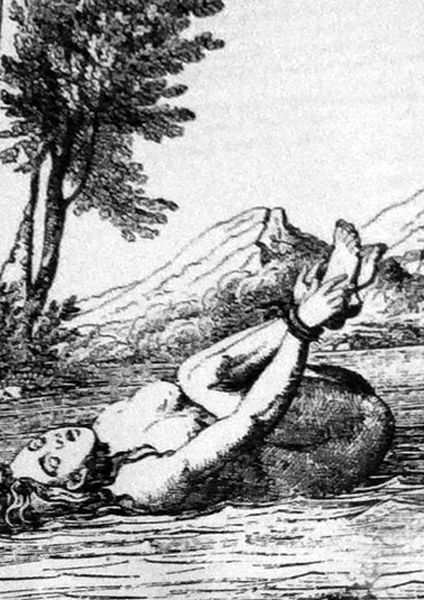
Witch Water Float Test.
In the 1692 witch trial era, when someone was “examined,” this usually meant they were brought in for an investigation, separately from any others examined the same day. The first part of the examination generally included the accusers, who would demonstrate the effect the accused, or their specters, had on them at the moment or had had in the past. Early in the examinations and trials, spectral evidence based on dreams and visions was allowed and used to establish guilt. Other accusers might testify to having witnessed the accused bewitching people, behaving oddly, or to their general character.
The examinations often included a doctor or midwife to see whether the accused had a “witch’s teat,” which were birthmarks, moles, or other markings on the body believed to be signs of a witch or a devil’s mark. The accused were stripped of their clothing, and if unusual marks were found, the spots were pricked, and if no pain was felt or they didn’t bleed, it was undoubtedly the mark of the Devil. The magistrates then questioned the accused, who generally assumed a presumption of guilt.
Other tests and torture were also used against accused witches in examinations and trials. Sometimes the accused were asked to recite the Lord’s Prayer. It was believed that a witch could not recite the prayer without making a mistake. Puritans believed the Devil would never allow his subjects to recite the Lord’s words entirely. In another test called the sink-or-swim test, the suspect would be curled up in a non-breathable position with rocks tied to their ankles. If the victim sank, they would die, and the midwives would know it was not a witch; yet if the victim floated, a trial would be held.
Prisons:
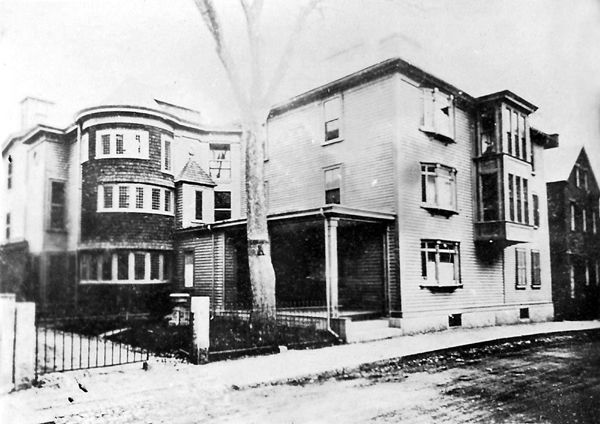
The original Salem Jail, built in 1684, was replaced with this building on the same site in 1763. This jail remained in use until 1813, when it was remodeled into a home. It is gone today.
During the terrible witch hysteria of 1692, so many people were arrested; they were scattered in area village jails and Salem Towne, Boston, and Cambridge. However, most awaiting trials were held in the Salem Dungeon and Jail. Located near the North River, Salem approved the construction of the dungeon in 1683, and the following year, the jail was completed. It was constructed of hand-hewn oak timbers and siding, measuring 70 by 280 feet.
Boston’s jail was an open common room bordered by smaller rooms where some prisoners were locked at night. Like the smaller Essex County jails, it was set inside a fenced yard where less dangerous prisoners could exercise. Wealthy prisoners could even rent a room in the prison keeper’s house and attend religious meetings under guard. Many others were held in the Ipswich Jail, the second jail built in the Massachusetts Bay Colony in 1652.
All the jails, intended to hold prisoners temporarily, were hot in summer and cold in winter, infested with lice and stank of dung and tobacco. They were described by one visiting Englishman as “suburbs of Hell.” Though all of them were bad, the Salem Jail was said to have been the worst.
Conditions in jail were harsh for those accused of witchcraft. It was rat-infested and filthy, and the accused witches were often bound with cords and irons for months. The dungeon was cold, foul-smelling, and kept in total darkness. Located near the north river, the area is often flooded during high tide, with water rising to the prisoners’ ankles. They were also subjected to insulting, unending examinations and excommunication from the church. The small cells had no bedding or bars, as most prisoners accepted their punishment. For those who tried to escape, if they were caught, they would be immediately executed.
Many who were “examined” by authorities, who induced them to confess, were tortured, often by hog-tying their feet to their necks until blood dripped from their eyes and nose. Others were made to stand for hours in a pillory, with arms outstretched. The examinations for witch marks were humiliating, as the accused were stripped of their clothing, and any blemishes were pricked with pins and pinched, often in their most private parts. Water was often withheld from prisoners because the authorities believed they could get more “confessions” if they were thirsty.
A careful tally of every single item used by prisoners was kept during their imprisonment, and before anyone could be released, they were required to pay their tab. Prisoners were charged for straw bedding and food; if they could not afford them, they did without. They were also charged for their cells, and for prisoners who were poor and could not afford to pay, they were placed in coffin-like cells, smaller than a phone booth, in which they could only stand. They were also charged for their cuffs, chains, the fetters they were forced to wear, and the cost of examinations for witch marks. The basic fee was two shillings, sixpence a week – about as much as a woman could hope to earn in a week.
A sizable hangman’s fee would be paid if a prisoner was executed. Those hanged were taken from the jail by oxcart to Gallows Hill. Afterward, their dead bodies were left swaying as a lesson to others. They were thrown into a nearby ditch when the bodies were taken down. If a prisoner died under these horrible conditions, the family was required to pay for the removal of the corpse. It is estimated that more than a dozen people died in the prisons. One of them was Lydia Dustin, who had been arrested in April 1692. After spending almost nine months in prison, she was finally found not guilty by the Superior Court of Judicature in January 1693. However, she could not be released until she paid her jail fees. Unable to do so, she died in jail on March 10, 1693.
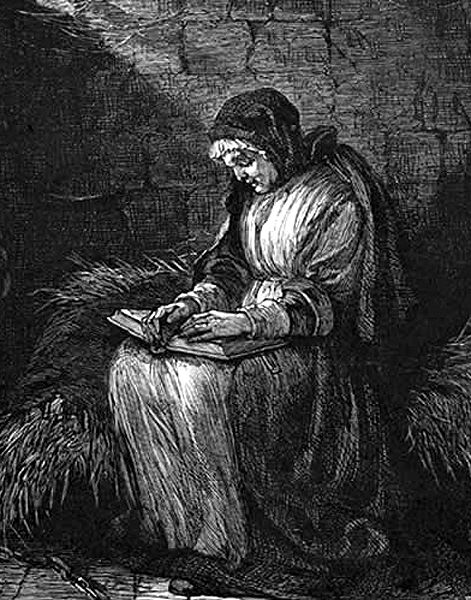
Drawing of Susannah Martin in Witch Jail, Salem, Massachusetts.
Despite its terrible conditions, the Old Salem Witch jail was a social gathering place. The staff would sell alcohol to those who came to visit. For a bond of £1, a prisoner could gain a day’s release to visit family, but had to return at night. A few more were able to bribe their way out of jail.
Dozens languished in these conditions for months without trials. At one point, there were as many as 150 people in the Salem dungeon. The youngest girl accused of witchcraft and imprisoned was four-year-old Dorcus Good. Both she and her mother, Sarah Good, were imprisoned in the Ipswich Jail. Sarah was accused of witchcraft in February 1692. She was tried, convicted, and sentenced to death. However, she was pregnant then, so her execution was delayed. While she was in jail, her four-year-old daughter, Dorcas, was arrested and jailed in March. Dorcas would witness the birth of her sister, Mercy Good, who died shortly after, probably due to malnutrition, lack of medical care, and unsanitary conditions. She would later witness her mother hanged on July 19, 1692. Dorcus would spend over eight months in jail before she was finally released. However, she would never be ok and would be judged insane by some.
Eventually, with the end of the witch hysteria, the Old Salem Witch dungeon was closed, and the land was sold. Later, a Gothic-style house was built on the site in 1813. The jail, which stood at 4 Federal St. and the corner of Saint Peter St., continued to be used until 1763, when it was replaced with another building. When another jail was built in 1813, the old one was remodeled into a home. Unfortunately, it was razed in 1957 to make way for the New England Telephone Company’s expansion.
Of those accused, 114 were arrested and held for many months in various jails. Forty-three were tried; 27 were convicted and sentenced to death; 19 were hanged, and one was pressed to death with stone weights. As many as a dozen people died in prison, including two nursing infants of jailed women. Two of the accused, later found innocent, were too poor to pay their jail fees and had to sell themselves into indentured servitude to obtain their release.
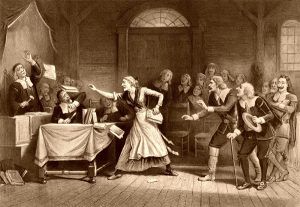
A witch trial by Joseph E. Baker in 1892.
Court of Oyer and Terminer – The term “oyer and terminer” is a partial translation of the Anglo-French phrase “oyer et terminer,” which literally means “to hear and determine.” In English law, courts of oyer and terminer were commanded to make diligent inquiries into felonies and misdemeanors specified in the commission. The inquiry was conducted through the grand jury, and if a defendant were indicted, the defendant would be tried by a jury, judged, and if found guilty, sentenced to punishment by the court.
In mid-May of 1692, newly appointed governor Sir William Phips returned from England to find dozens of accused witches filling the jails and more accusations threatening to overwhelm the local courts. The Governor then established a special court of Oyer and Terminer, with Lieutenant Governor William Stoughton as its chief magistrate.
Phips also appointed several prominent figures of the area to serve as Associate Magistrates, including Jonathan Corwin, Bartholomew Gedney, and John Hathorne of Salem Towne; John Richards, Peter Sergeant, Samuel Sewell, and Wait Still Winthrop of Boston; and Nathaniel Saltonstall of Haverhill. Thomas Newton would serve as the Crown’s Attorney prosecuting the cases, and Stephen Sewall would serve as clerk.
The Court of Oyer and Terminer convened in Salem Towne on June 2, 1692, with Chief Magistrate William Stoughton presiding and Thomas Newton serving as the Crown’s Prosecuting Attorney. Bridget Bishop’s case was the first brought to the grand jury. The fact that Thomas Newton, special prosecutor, selected Bishop for his first prosecution suggests that he believed a stronger case could be made against her than any of the other suspect witches. He was correct because the Grand Jury indicted her, she was tried, and sentenced to die. On June 10, she was hanged at Gallows Hill.
Following the hanging, Magistrate Nathaniel Saltonstall of Haverhill resigned from the court, disagreeing with the use of spectral evidence. Later, he became a prominent critic of the Salem proceedings and was accused of witchcraft. Jonathan Corwin of Salem replaced him. The following month, on July 26, Thomas Newton resigned to assume a position in New Hampshire. He was replaced the next day by Anthony Checkley.
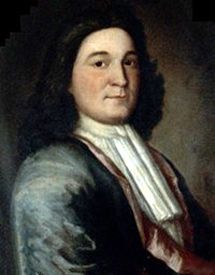
Sir William Phips.
In the Fall of 1692, Thomas Brattle, a well-educated and prosperous Boston merchant who served as treasurer of Harvard College and was a member of the intellectually elite Royal Society, would write a letter that would soon bring the disgraceful affair to an end. Writing to an English clergyman, he sent a letter that was very critical of the Salem witch trials, which was soon circulated widely in England and Massachusetts. Brattle presented compelling arguments against the legal premises and procedures underlying afflictions, accusations, and executions, focusing on the validity of spectral evidence in proceedings.
This letter greatly impacted Governor William Phips, who, on October 8, ordered that reliance on spectral and intangible evidence could no longer be allowed in trials. Three weeks later, on October 29, he prohibited further arrests, released many of the accused witches, and dissolved the Court of Oyer and Terminer.
The Superior Court of Judicature was then formed to replace the “witchcraft” court, which did not allow spectral evidence. The new court released those awaiting trial and pardoned those awaiting execution. In effect, the Salem witch trials were over. But, during the reign of the Court of Oyer and Terminer, they had executed 20 people accused of witchcraft.
Superior Court of Judicature – On November 25, 1692, the General Court of Massachusetts passed legislation creating the Superior Court of Judicature and various lower courts. The Superior Court was again headed by William Stoughton, as Chief Justice, with Anthony Checkley continuing as the Attorney General and Jonathan Elatson as Clerk of the Court. The four Associate Justices were John Richards, Samuel Sewall, Wait Still Winthrop of Boston, and Thomas Danforth of Cambridge. The five Justices sat for the first time in Salem Towne on January 3, 1693. This court, however, was required to ignore spectral evidence as unreliable.
During this first session, five cases were tried, including those indicted but not tried in September — Sarah Buckley, Margaret Jacobs, Rebecca Jacobs, Mary Whittredge, and Job Tookey. All were found not guilty. Grand juries were also held for many of those remaining in jail. Though charges were dismissed against many, 16 more people were indicted and tried, three of whom were found guilty: Elizabeth Johnson Jr., Sarah Wardwell, and Mary Post. However, when Chief Justice William Stoughton wrote the warrants for the execution of these women and the others remaining from the previous court, Governor Phips pardoned them all, sparing their lives.
In late January/early February, the Court sat again in Charlestown, Massachusetts, to hold grand juries and trials. They tried five people — Sarah Aslett Cole, Lydia Dustin, Sarah Dustin, Mary Taylor, and Mary Toothaker. All were found not guilty. However, they were not released until they paid their jail fees. Unable to pay, Lydia Dustin died in jail on March 10, 1693.
At the end of April, the Court convened in Boston, cleared Captain John Alden by proclamation, and heard charges against a servant girl named Mary Watkins for falsely accusing her mistress of witchcraft. In May, the Court convened in Ipswich, where they held a variety of grand juries that dismissed charges against all but five people. These included Susannah Post, Eunice Frye, Mary Bridges Jr., Mary Barker, and William Barker Jr. All were found not guilty at trial, bringing the infamous Salem Witch Trials to an end.
However, the Superior Court of Judicature continued to serve. In 1780, after the adoption of the Massachusetts Constitution, the Court’s name was changed to the Supreme Judicial Court. It continues to serve today and is believed to be the oldest appellate court in the Western Hemisphere.
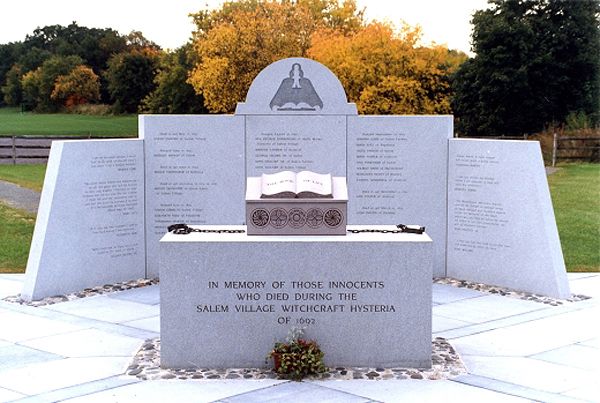
On May 9, 1992, the Salem Village Witchcraft Victims’ Memorial was dedicated in Danvers, Massachusetts.
O Christian Martyr, who for Truth could die
When all about thee Owned the hideous lie!
The world, redeemed from superstition’s sway,
Is breathing freer for thy sake today.
— John Greenleaf Whittier
Aftermath:
The last Salem witch trial was held in May 1693, but for those accused and their families, their lives would forever be changed. Even though Governor William Phips had pardoned all the remaining accused in 1693, their neighbors would never forget the fact that they had been accused. And, for those who had been convicted, it was even worse. Though they were free, in the eyes of the law, they were still considered “dead,” meaning they had no rights of recourse nor claim to any property they may have previously owned. This was the case in the life of Elizabeth Bassett Proctor, who had been convicted the previous year of witchcraft. Her husband, John Proctor, was hanged, and Elizabeth was only spared because she was pregnant. However, by the time she gave birth to her child, the hysteria had ended, and she was later released. But, she had no home to return to, as all her possessions and her husband’s had been seized. She and her children were impoverished. Though she would take her complaints to the courts, her pleas would go unheard because, in the eyes of the law, she was considered a “dead woman.” She would eventually prevail, but not before living for several years in turmoil.

Dead Crops.
Others, who were pardoned, were forced to remain in jail because they couldn’t afford to pay the bill owed for their imprisonment, which included everything from room and board to the price of their shackles. While waiting, one woman — Lydia Dustin– would die, and two more would indenture themselves before they were set free. Numerous more would, like Elizabeth Proctor, return to homes where all their possessions had been confiscated, their fields were untended, and their crops dead.
Further adding to their turmoil was the fact that the accusers and judges showed little remorse for their actions. Instead, they placed the blame on the “trickery of Satan,” thus freeing themselves from any sense of guilt. Jurors and townspeople also managed to maintain a clear conscience by claiming that many victims had confessed to their “crimes” and that the devil had tricked Salem Village. The communities expected those who had lost loved ones and property to go on with their lives as if nothing had happened. In the meantime, the formerly accused witch would spend years trying to regain their property and their rights as an individual.
However, over the years, things began to change slowly. While some would eventually make formal apologies, others would only hint at any guilt. The Reverend Samuel Parris of Salem Village conceded errors of judgment but mostly shifted blame to others. In jeopardy of losing his job, he delivered a “Meditation for Peace” sermon, acknowledging that he had placed too much emphasis on the spectral evidence. However, this would not be enough for the villagers, and he was eventually replaced by Thomas Green, who devoted his career to rebuilding his torn congregation. Governor William Phips blamed the entire affair on William Stoughton, who refused to apologize or explain himself, and criticized Governor William Phips for interfering just when he was about to “clear the land” of witches. However, Stoughton’s refusal to take any blame would not hurt him, as he would become the next governor of Massachusetts. Eventually, a few judges hinted at apologies for their roles in the trials but would never assume any real guilt.
Salem’s politics were also altered. The Essex County Court declared that the Salem Village committee was derelict, dismissed them, and replaced them with an anti-Parris committee.
On January 14, 1697, the Massachusetts General Court declared a day of fasting and reflection in response to the Salem witch trials. Samuel Sewell, one of the judges of the Court of Oyer and Terminer, wrote the proclamation and made a public confession of his guilt. Afterward, he set aside one day every year to fast and pray for forgiveness for his part in the trials. This would continue until he died in 1730.
On that same date, 12 jurors, who had served in the witch trials, signed a Declaration of Regret asking forgiveness for the error of their judgment.
“We whose names are under-written, being in the year 1692 called to serve as jurors in court at Salem, on trial of many who were by some suspected guilty of doing acts of witchcraft upon the bodies of sundry persons, we confess that we were not capable to understand, nor able to withstand, the mysterious delusions of the powers of darkness and Prince of the air, but were, for want of knowledge in ourselves and better information from others, prevailed with to take with such evidence against the accused, as, on further consideration and better information, we justly fear was insufficient for the touching the lives of any (Deut. XVII) whereby we fear we have been instrumental, with others, though ignorantly and unwittingly, to bring upon ourselves and this people of the Lord the guilt of innocent blood; which sin the Lord saith in Scripture he would not pardon (2 Kings XXIV 4)–that is, we suppose, in regard to his temporal judgments. We do therefore hereby signify to all in general, and to the surviving sufferers in special, our deep sense of, and sorrow for, our errors in acting on such evidence to the condemning of any person; and do hereby declare, that we justly fear that we were sadly deluded and mistaken–for which we are much disquieted and distressed in our minds and do therefore humbly beg forgiveness, first of God, for Christ’s sake, for this our error, and pray that God would impute the guilt of it to ourselves nor others. We also pray that we may be considered candidly and aright by the living sufferers, as being then under a strong and general delusion, utterly unacquainted with, and not experienced in, matters of that nature.
We do hereby ask forgiveness of you all, whom we have justly offended, and do declare, according to our present minds, we would none of us do such things again, on such grounds, for the whole world–praying you to accept of this in way of satisfaction for our offense, and that you would bless the inheritance of the Lord, that he may be entreated for the land.”
Thomas Fisk, Foreman
William Fisk
John Bacheler
Thomas Fisk
John Dane
Joseph Evelith
Thomas Pearly, Sr.
John Peabody
Thomas Perkins
Samuel Sayer
Andrew Eliot
Henry Herrick, Sr.
Various petitions were filed with the Massachusetts government between 1700 and 1703, demanding that the convictions be formally reversed. With the convictions still on the books, those not executed still had a “record” and were vulnerable to further accusations. In 1711, the Massachusetts legislature passed a general amnesty that exonerated all but six of the accused witches. That same year, the courts of the Massachusetts Bay Colony began making monetary restitution to the families of those jailed.
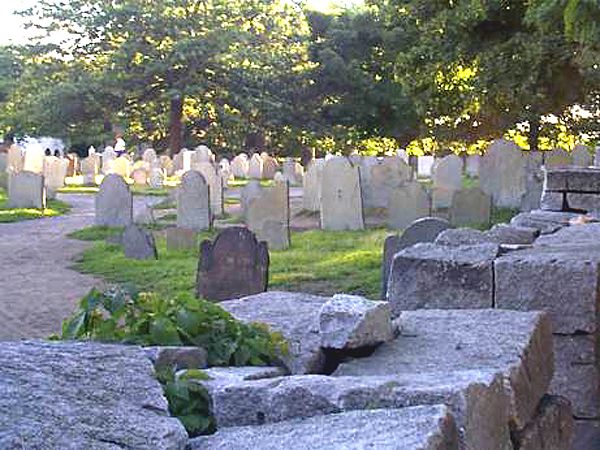
Salem Memorial and Cemetery.
In 1957, the State of Massachusetts formally apologized for the events of 1692. Further, the legislature passed a resolution exonerating Ann Pudeator, who had been hanged.
On May 9, 1992, the Salem Village Witchcraft Victims’ Memorial of Danvers was dedicated before an audience of over 3,000 people. It was the first such Memorial to honor all of the 1692 witchcraft victims and is located across the street from the original Salem Village Meeting House site, where many of the witch examinations took place. That same year, another memorial was dedicated in August in Salem. It consists of 20 granite benches near the Old Burying Point. The benches are inscribed with the name of the accused, the means of execution, and the date of execution.
Finally, on November 1, 2001, acting Massachusetts Governor Jane Swift approved a bill that cleared all the accused witches hanged in Salem in 1692 and exonerated the final five who had not been cleared by the previous amnesty resolutions — Susannah Martin, Bridget Bishop, Alice Parker, Margaret Scott, and Wilmot Redd.
After the Salem Witch Trials ended, not a single person was executed in America for having been convicted of witchcraft.
©Kathy Alexander/Legends of America, updated November 2025.
Also See:
The Salem Witchcraft Hysteria (Main article)
Timeline of the Witchcraft Hysteria
See Sources.