
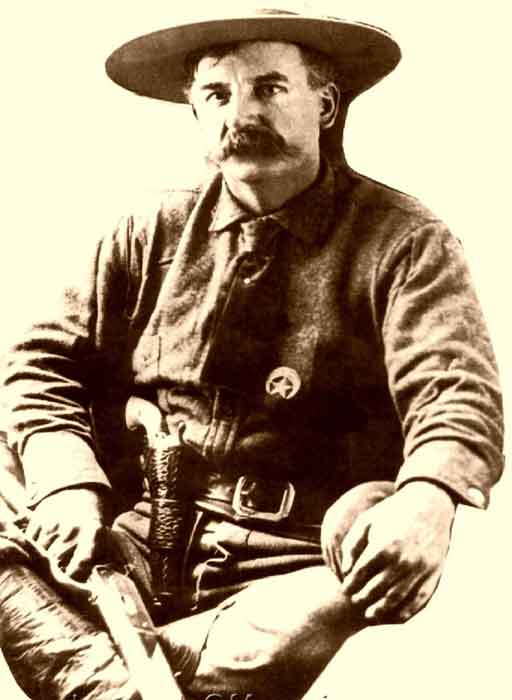
Lawman Henry Andrew (Heck) Thomas.
Henry Andrew (Heck) Thomas was one of the Wild West’s most effective lawmen, apprehending dozens of notorious outlaws, including members of the Doolin, Dalton, and Sam Bass Gangs.
Thomas was born in Athens, Georgia, on January 3, 1850, to Lovick and Martha Thomas. Reared and educated in Atlanta, he took on the nickname “Heck” at an early age. His parents wanted him to grow up to be a Methodist minister; however, the impetuous boy had other ideas.
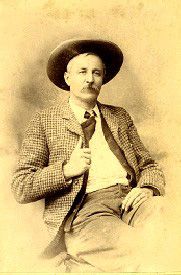
Heck Thomas.
When the Civil War broke out, his father and two paternal uncles quickly joined, and all three gained distinction with the Confederate Army. His father became a colonel commanding the 35th Georgia Infantry. His Uncle Henry also became a colonel and commanded the 16th Georgia Infantry, and yet another uncle, Edward Lloyd Thomas, commanded the 49th Georgia Infantry.
Before the war was over, Edward Thomas advanced to the rank of Brigadier General in command of the Thomas Brigade. For his Uncle Edward, Heck served as a courier at the front of the fighting in Virginia when he was just 12 years old.
When the war was over, Heck’s father became the first city marshal of Atlanta, and Heck joined the police force at 17. In 1871, Heck married his cousin, Isabelle Gray, an Atlanta preacher’s daughter, and the pair soon began a family. During his tenure as an Atlanta police officer, he began his career, gaining fame as a fearless fighter after being wounded in one of the city’s race riots.
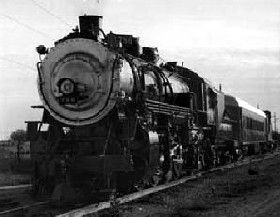
Houston and Texas Central Railroad.
In 1875, Heck moved his family to Galveston, Texas, where he soon worked as a railroad guard for the Texas Express Company. Charged with guarding the Houston and Texas Central Railroad between Denison and Galveston, the route was rampant with train robbery attempts. In 1878, the Sam Bass Gang attempted to rob the train near the Hutchins Station, some twelve miles Southeast of Dallas. Thomas was injured in the inevitable Shootout during the robbery attempt, but the gang got away with nothing, thanks to his foresight. Heck had placed the cash in an unlit stove while stashing “decoy” packages in the safe. By the time the outlaws discovered the ruse, the train was safely gone. Afterward, he was promoted to detective in Fort Worth for the company, and by 1879 he held the position of Chief Agent.
In 1885, Thomas left his position with the Texas Express to run for the vacant office of Chief of Police. However, after losing by a narrow margin, he went to work for the Fort Worth Detective Association. Continuing his success, he soon pursued brothers Jim and Pink Lee — two murderous members of the notorious Lee Gang. The gang of horse and cattle thieves had been plaguing Cooke County, Texas, and the Chickasaw Nation to such a degree that both the settlers and the Indians were up in arms. In May 1885, when U.S. Marshal James Guy formed a posse to go after the gang, they were ambushed, and four possemen were killed.
Soon after, rewards totaling $7,000 were posted for the capture of Jim and Pink Lee, and Heck Thomas began the pursuit. After four months of searching, Thomas, leading a posse, and Jim Taylor caught the Lee brothers off-guard in a hayfield near Dexter, Texas. Giving them a chance to surrender, as was his custom, the pair answered only with the sound of their Winchesters. In the ensuing melee, both bandits were killed, and the posse collected the reward. The newspaper proclaimed the next day: “The Lee brothers, the most notorious desperadoes in Texas, finally go down with their boots on.
Shortly after this daring deed, Thomas was appointed a U.S. Deputy Marshal in 1886. Moving his family to Fort Smith, Arkansas, Heck worked under the infamous Isaac Parker, known as the “Hanging Judge.” For the next seven years, Thomas would earn a reputation for being one of the most efficient deputies working the lawless land of Indian Territory. On his first trip out of Fort Smith, he apprehended eight murderers, a bootlegger, a horse thief, and several other hard-case criminals. This would become the “norm” for Heck, who often worked single-handedly and would, over his tenure, bring more outlaws to justice than any other marshal working in Indian Territory.
Though his career was soaring, his marriage was floundering. Just two years after accepting the position as a U.S. Deputy Marshal, Heck’s wife, Isabelle Thomas, had become weary of frontier life and her husband’s long absences. Before long, she divorced him and returned to Georgia with their five children.
In 1888, while Thomas was recuperating from wounds received in the line of duty in Tulsa, Oklahoma, he met a schoolmarm and preacher’s daughter named Mattie Mowbray. A year later, in October 1889, the pair married in Arkansas City, Kansas, and Heck soon began a second family.
By 1891, Thomas, along with two other Deputy U.S. Marshals — Chris Madsen and Bill Tilghman– began working together to bring in some of the most notorious outlaws of the time. Soon, the trio took on the nickname “Three Guardsmen” and would become known as largely responsible for bringing law and order to the Indian Territory.
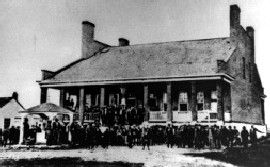
Fort Smith, Arkansas Courthouse
In 1892, Thomas and Madsen pursued the Dalton Gang, terrorizing Indian Territory with numerous train robberies and the ultimate shootouts that occurred during these attempts. On October 5, 1892, the Dalton Gang attempted to simultaneously rob two banks in Coffeyville, Kansas, hoping to steal enough cash to “retire” from a life of thievery and escape to South America.
Chasing the Daltons was a little strange for Heck, as Bob and Grat Dalton had once been Deputy U.S. Marshals like himself. He had also worked closely with their late brother, Frank Dalton, who was killed in the line of duty. However, these former ties to the Daltons did not stop him from pursuing his goal. In fact, Emmett Dalton would say that Heck Thomas was their “nemesis.”
After the Dalton Gang had robbed a train in Adair, Oklahoma, in July 1892, Thomas had doggedly tracked them into the Osage Nation and located their hideout. Continuing to track the outlaws, he came upon their campsite about 20 miles South of Coffeyville. As he continued the pursuit, the news came that four Dalton Gang members, including Bob and Grat, had been killed in Coffeyville. Brother Emmett Dalton was the only survivor, having been severely wounded. Upon hearing the news, Heck continued to Coffeyville and identified the bodies for the Wells Fargo Company.
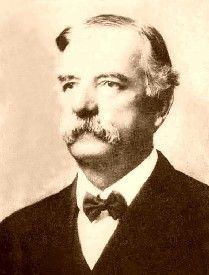
Henry Andrew “Heck” Thomas.
In 1893, the “Three Guardsmen” were tasked with taming Perry, Oklahoma, which had been born overnight in the Oklahoma land run of September 16, 1893. In no time, the settlement, which quickly earned the title of “Hell’s Half Acre,” was filled with 25,000 people and 110 saloons. With the tidal wave of humanity that had converged on Perry, lawlessness, disputes, and mayhem were the “norm” of the day in this burgeoning city. Also operating in the area was the infamous Doolin Gang, whom the trio was determined to apprehend.
The Doolin Gang robbed trains and banks in Kansas, Indian Territory, and Texas for four years, with the “Three Guardsmen” constantly pursuing. Finally, in August 1896, Thomas led a posse that caught up with Bill Doolin. When the outlaw was confronted, he tried to shoot his way out but was killed.
While working in the Indian Territory, Thomas arrested more than 300 wanted men in a dangerous job that felled fifteen other Indian Territory officers. During his tenure as a U.S. Deputy Marshal, Heck was known for going after the most dangerous outlaws because the rewards were higher. Though his success in tracking outlaws provided him with the financial rewards he sought, he also paid the price when he was wounded at least six times during gunfights.
In 1902, Thomas moved to Lawton, Oklahoma, to serve as the Police Chief for the next seven years. After a heart attack in 1909, he finally retired from law enforcement at age 59. Three years later, on August 15, 1912, he died of Bright’s Disease. Henry Andrew “Heck” Thomas was buried at Highland Cemetery in Lawton, Oklahoma, where his grave remains today.
©Kathy Alexander/Legends of America, updated August 2026.
 Also See:
Isaac Parker, the “Hanging Judge”
Gunfighters & Lawmen of the American West
See Sources.