
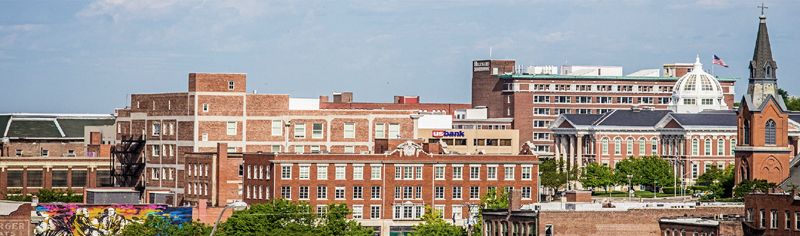
St. Joseph, Missouri, by Patrick P. Evenson, courtesy of the City of St. Joseph.
“St. Joseph is a modern wonder – a city of 60,000 inhabitants, eleven railroads, 70 passenger trains each day, 170 factories, thirteen miles of the best-paved streets, the largest stockyards West of Chicago, a wholesale trade as large as that of Kansas City and Omaha combined…”
— Chicago Times, 1886
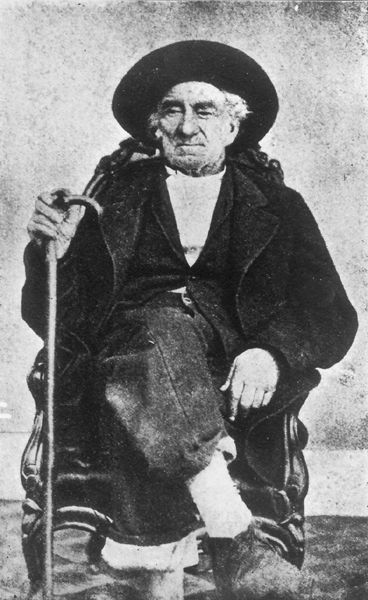
Joseph Robidoux III.
About 30 miles North of the Kansas City metropolitan area lies the historic city of St. Joseph, Missouri. Here, the Pony Express began, and Jesse James’s life ended.
Also known more familiarly as St. Jo to the locals, this town was founded in 1826 when Joseph Robidoux, a local fur trader, established the Blacksnake Hills Trading Post among the Indians. Before long, Robidoux developed a trading empire that stretched as far West as the Rocky Mountains. The first post office in the area was housed in Robidoux’s trading post in 1840. When the Platte Purchase made his land part of Missouri in 1837, the trading post developed into a settlement incorporated as St. Joseph on November 20, 1843.
St. Joseph remained relatively small until the discovery of gold in California, which significantly accelerated westward migration. At that time, the city quickly became the last supply point and jumping-off point for the many pioneers heading towards the Wild West on the Oregon Trail.
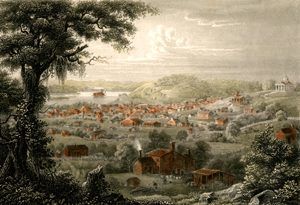
St. Joseph, Missouri, in 1852.
Thousands of settlers arrived by steamboat, while hundreds of wagon trains lined the streets waiting to be ferried across the Missouri River. In 1849 alone, some have estimated that as many as 50,000 pioneers passed through St. Joseph. The city quickly became a bustling outpost and rough frontier town, as covered wagons, oxen, and supplies purchased by emigrants established the city’s economic base.
In 1858, John Patee built the 140-room Patee House at 12th and Penn Streets, the most luxurious hotel West of the Mississippi River. In 1860, Russell, Majors, & Waddell established the St. Joseph offices of the Central Overland California and Pikes Peak Express Company on the hotel’s first floor. Today, the building still stands and operates as a communications and transportation museum, featuring a restored Pony Express office.
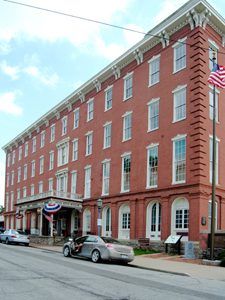
Patee House Museum in St. Joseph, Missouri, by Kathy Alexander.
The city grew further in 1859 as the railroad pushed West to St. Joseph, further securing its role as a distribution point for the West. St. Joseph remained the westernmost point in the U.S., accessible by rail until after the Civil War. St. Joseph’s proximity to the Missouri River also added to its phenomenal growth.
In 1860, St. Joseph became the headquarters and launching point for the Pony Express. From St. Joseph to Sacramento, California, the first successful Pony Express run took place on April 3, 1860, when a lone rider on a bay mare galloped from Pike’s Peak Stables in St. Joseph.
On that date, Mayor M. Jeff Thompson gave a rousing address at the Patee House to the excited crowd before the first pony rider headed West:
Before the advent of the Pony Express, the railroads and telegraph lines extended no further West than St. Joseph, and mail traveled West by stagecoach and wagons, a trip that could take months if it arrived at all. The Pony Express alleviated this problem by employing riders who could dramatically reduce the time it took for mail to be delivered.
The Pony Express is credited with helping to keep California in the Union by providing rapid communication between the two coasts. News of Abraham Lincoln’s election to the United States presidency in 1860 and the outbreak of the Civil War in 1861 reached California via the Pony Express.
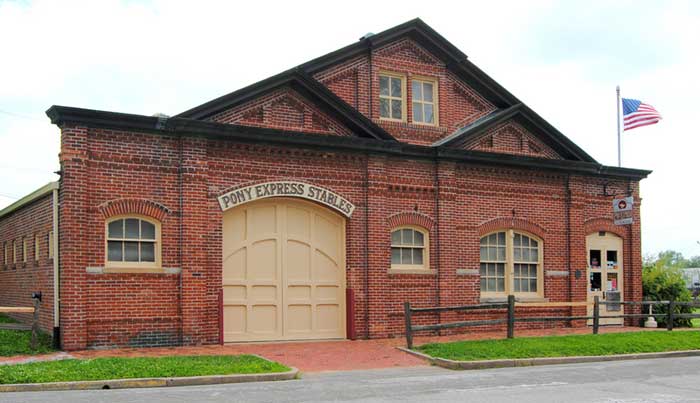
The original Pony Express Stables in St. Joseph, Missouri, now serve as a museum. Photo by Kathy Alexander
While the Pony Express dramatically improved the communication between the East and the West, it was a financial disaster for its owners. After the Pacific Telegraph Company completed its line to San Francisco in October 1861, it declared bankruptcy and closed. Today, the original Pony Express Stables stands at 914 Penn Street, and the building now serves as a museum.
“This is a great day in the history of St. Joseph. For more than a decade, she has been the portal through which the wagon trains of the Great West passed… Now she is to become the connecting link between the extremes of the continents. For the first time in American history, mail will go by an overland route from East to West… Citizens of St. Joseph, I bid you three cheers for the Pony Express!”
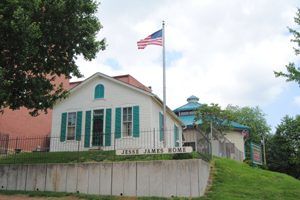
Jesse James’ home in St. Joseph, Missouri, by Kathy Alexander.
By the 1870s, St. Joseph had become the wholesale center for the building of the West, which led to an age of prosperity. Numerous businesses were located in the city, and beautiful mansions were built.
In December 1881, Jesse James made St. Joseph his home, hiding behind the alias Tom Howard. However, Jesse James’s time in St. Joseph was short and unhappy. Three months later, on April 3, 1882, Bob Ford shot Jesse James in his home.
In 1887, St. Joseph became the second city in the United States to have electric streetcars. Two years later, the city hosted the New Era Exposition, hoping to be chosen as the site for a future World’s Fair. A disastrous fire destroyed much of the fair, causing financial ruin for its significant backers and ending any hope of attracting a World’s Fair.
By the turn of the century, the rush to the West was virtually over, but St. Joseph had already established itself as a major livestock and wholesale market.
Today, the city serves as the county seat of Buchanan County and is home to approximately 79,960 residents. The city features numerous historical attractions, including museums, beautiful historic buildings, and mansions. Many of these historic buildings are listed on the National Register of Historic Places.
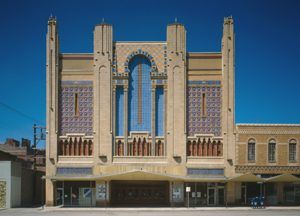
The 1927 theater building in St. Joseph, Missouri, now serves the performing arts.
©Kathy Alexander/Legends of America, updated October 2026.
Also See:
Pony Express – Fasted Mail Across the West
Jesse James – Folklore Hero or Cold-Blooded Killer?
Oregon Trail – Pathway to the West
See Sources.