
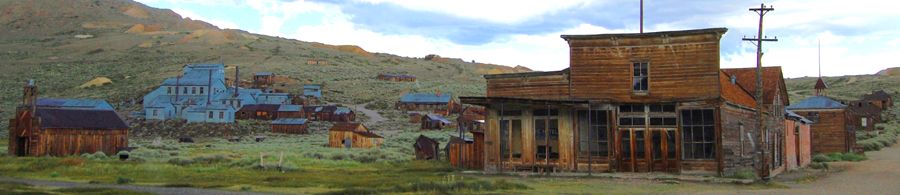
Bodie, California Ghost Town by Kathy Alexander.
“A sea of sin, lashed by the tempests of lust and passion.”
— Reverend F.M. Warrington said of Bodie, California in 1881
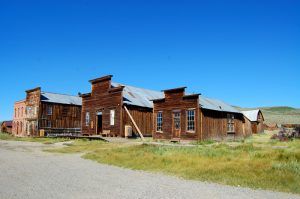
Buildings in the ghost town of Bodie, California, by Kathy Alexander.
Bodie, California, is a genuine gold-mining ghost town located east of the Sierra Nevada mountain range in Mono County.
When mining began to decline along the western slope of the Sierra Nevada, prospectors began to cross the eastern slope in search of their fortunes. One such man, William (aka Waterman) S. Bodey, discovered gold near a place that is now called Bodie Bluff in 1859. Alas, the poor man died in a snowstorm that winter and never saw the new town that would be named after him.
Though one legend attributes the spelling change to an illiterate sign painter, the citizens deliberately changed it to ensure correct pronunciation.
In 1861, the Bunker Hill Mine and a mill were established, though the camp was called home to only about 20 miners. Bodie grew slowly and remained an insignificant mining camp for 17 years. The Bunker Hill Mine and Mill, on the west slope of Bodie Bluff, changed hands several times before being sold to four partners in 1877. The name was changed to the Standard Mining Company, and within months, the partners discovered a significant vein of rich gold ore. Profits rose dramatically, and by the end of 1878, Bodie’s population had soared to some 5,000 people. The Standard Mine would yield nearly 15 million dollars in gold over the next 25 years.
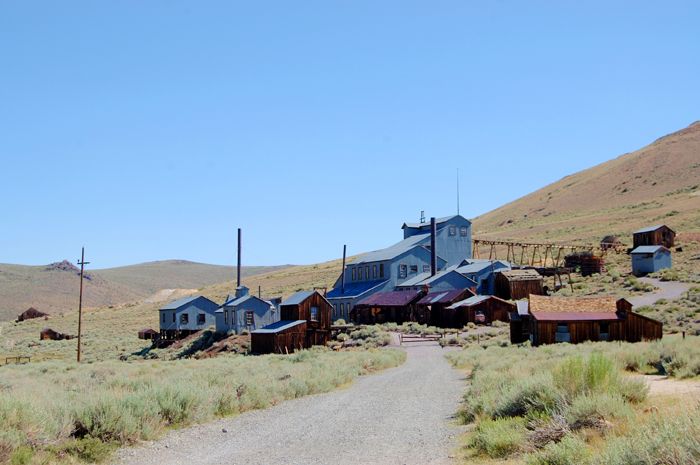
Standard Mine and Mill in Bodie, California, by Kathy Alexander.
Bodie’s citizens saw many hardships during the winter of 1878-79. Particularly savage, the winter claimed hundreds of lives from exposure and disease. Falling timber in the mines and the explosion of a powder magazine took additional lives.
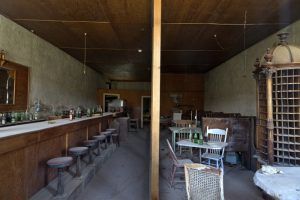
Bodie, California Saloon Interior by Carol Highsmith.
Miners, gamblers, and businesses continued to flood the area, and by 1879, Bodie boasted a population of about 10,000 and 2,000 buildings. Before long, the town supported some 30 gold mines, 65 saloons, numerous brothels, gambling halls, and opium dens, as well as several legitimate businesses, including three newspapers, several churches, a couple of banks, and a school. Every other building on the mile-long main street was a saloon. Three breweries worked day and night, while whiskey was brought into town in 100-gallon barrels.
Like many booming mining camps, Bodie soon earned a reputation for violence and lawlessness. Killings were sometimes daily events, and robberies, stage holdups, and street fights were common occurrences in the camp.
In its day, Bodie was more widely known for its lawlessness than its riches. Of Bodie, the Reverend F.M. Warrington would describe it in 1881 as “a sea of sin, lashed by the tempests of lust and passion.”
Given Bodie’s reputation, it is perhaps not surprising that one little girl, whose family was moving to the mining town, reportedly prayed: “Goodbye God! We are going to Bodie.”
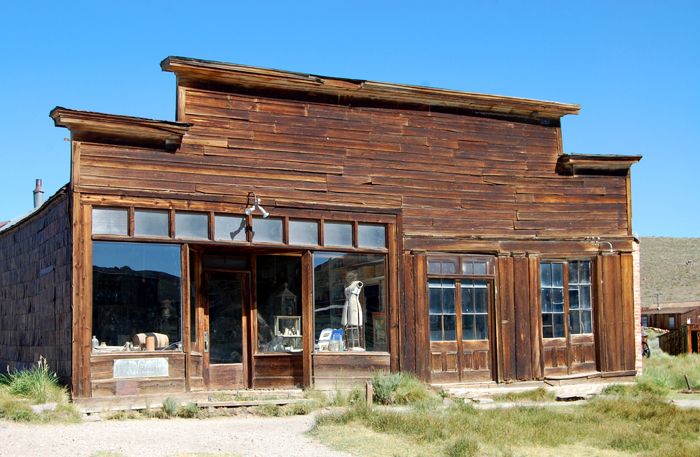
Boone Store in Bodie, California, by Kathy Alexander.
Bodie needed milled wood for construction, mineshaft beams, and heating; however, few trees existed in the area. Soon, several businessmen formed the Bodie & Benton Railroad in 1881 to transport lumber.
Like other railroads in the West, the Bodie & Benton Railroad hired inexpensive Chinese labor, much to the outrage of locally unemployed miners. By 1882, the 32-mile-long railroad was in service between Bodie and Mono Mills along the east shore of Mono Lake. Though the metal rails have long since been sold as scrap, you can still see the old railroad grade not far from the remote eastern shores of Mono Lake.
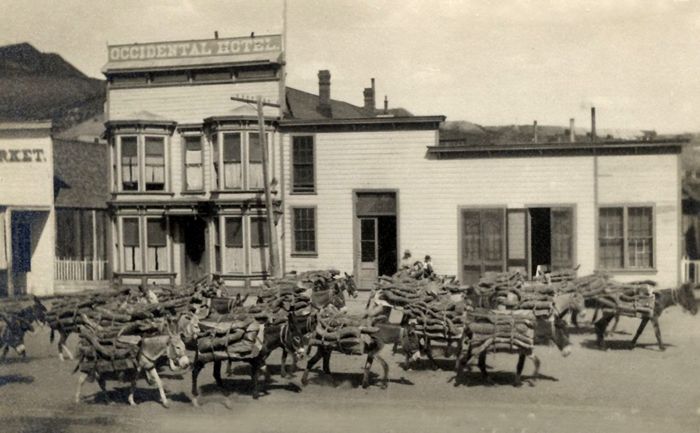
Hauling wood in Bodie, California.
Many immigrants and ex-miners homesteaded around Mono Lake, hoping to make a simple living off the land. Early Mono Basin ranchers often had plentiful food and stock and provided supplies to the local mining towns of Bodie and Lundy.
The boom was over just four short years later, and by 1882, Bodie had started to decline. Its population had dropped to just 3,000 as several smaller mining companies went bankrupt, and people began to leave the area, searching for better opportunities.
Before 1882, there were no churches in Bodie; however, there were two preachers, Reverend Hinkle, a Methodist, and Father Cassin, a Catholic. Services were held in private homes and later in the I.O.O.F. (Independent Order of Odd Fellows) Building and the Miner’s Union Hall.
Despite the decline of the mines, a Methodist Church and a Catholic Church were built in 1882. The Catholic Church would not survive the later fires of Bodie, but the Methodist Church still stands.
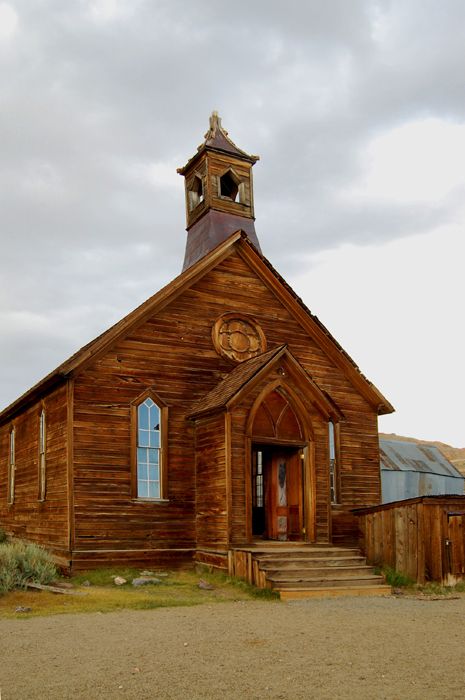
Methodist Church in Bodie, California, by Kathy Alexander.
The two significant mines — the Bodie and the Standard, merged in 1887 and continued to operate successfully for the next two decades. While the boom lasted, some 30 companies produced $400,000 in ore per month, estimated at $90 to $100 million.
In 1892, a fire ravaged much of the business district, further depleting Bodie’s population. Additional mines began to close. However, the very next year, Bodie became one of the first mining camps to use electricity. Another fire destroyed the Mill in 1898 but was rebuilt the following year.
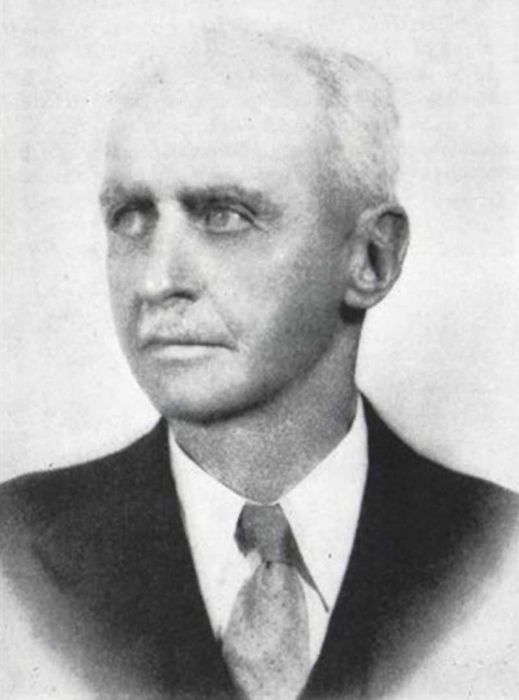
James Stuart Cain.
By 1915, most of the important mines were controlled by James Stewart Cain, who had arrived in Bodie when he was just 25 years old. Soon after his arrival, he entered the lumber business, transporting timber on barges across Mono Lake. He would grow so successful that he eventually owned the Bodie Bank, leased the Mono Lake Railway & Lumber Company (formerly known as the Bodie and Benton Railroad,) and became the town’s principal property owner and the owner of the Standard Mill. However, the Standard Mill was closed around 1916, and just a year later, the Bodie and Benton Railway was abandoned.
In 1932, another devastating fire, caused by a 2 ½-year-old boy playing with matches, destroyed 95% of Bodie’s buildings.
Though Bodie was already dying, further decline resulted from Prohibition and the Great Depression. While some mining continued, there were no new strikes, and companies eked out only minor profits, mainly by using the cyanide process to extract gold from old tailings.
However, a few people continued to live in Bodie until after World War II, when the last producing, mine, the Lucky Boy, was shut down.
By then, only six people were left in the old settlement, and five of these would soon die untimely deaths. First, one of the men shot his wife, and after she died, three men killed the murdering husband. According to legend, the ghost of the murdered man would visit the three men, shaking his fist. Soon, all three would die of strange diseases.
By the end of the 1940s, Bodie was a ghost town that was visited only by tourists interested in its history.
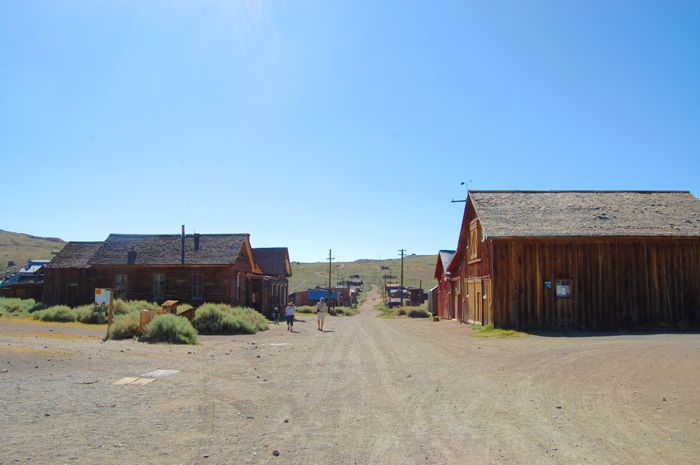
A street in Bodie, California, today by Kathy Alexander.
In 1962, after years of neglect, Bodie became a State Historic Park. Two years later, the ghost town was dedicated as a California Historic Site. It has also been designated a National Historic Site.
Bodie Legends
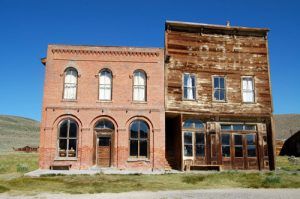
Buildings in Bodie, CA. Photo by Kathy Alexander.
Legends about Bodie abound, including the Bodie Curse. Supposedly, if visitors take anything from this old ghost town – even a pebble, they will be cursed with bad luck. Misfortune and tragedy are heaped upon the victim until the stolen item is returned. According to Park Rangers, many who have taken things eventually return them to the park to rid themselves of this curse. Purportedly, the park maintains a logbook of pages and pages of returned items. In the museum, you can see the letters from people who have returned items to the park. The curse is supposedly perpetuated by the ghosts of Bodie, who guard against thieves and protect its treasures. Some believe the “curse” is nothing more than a superstition perpetuated by the Park Rangers to preserve Bodie as a historic site. However, I, for one, wouldn’t take the chance of being haunted by the long-lost souls of Bodie.
Other ghostly legends have occurred in this ghost town, which is said to be a “ghost” town, remaining home to several restless spirits. The J.S. Cain house at the corner of Green and Park Streets is said to be haunted by the ghost of a Chinese maid. Families of Park Rangers who have occupied the house describe the spirit as not liking adults but loving children.
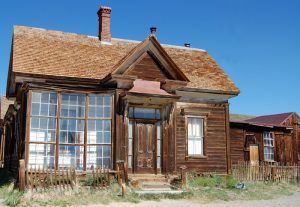
J.S. Cain House in Bodie, California, by Kathy Alexander.
Adults sleeping in the house have said they will awake in the night to find the “heavy set” Chinese woman sitting on them. Feeling suffocated, one woman fought so hard that she ended up on the floor. Others have reported seeing the bedroom door opening and closing on its own. The Gregory House is also said to be haunted by the ghost of an old woman. Guests and staff have reported seeing her sitting in a rocking chair, knitting an afghan. At other times, the rocking chair has been seen rocking on its own accord.
The Mendocini House is called home to several friendly ghosts. One is thought to be Mrs. Mendocini, who loves to cook her Italian food. Rangers report today that they often smell the delicious aroma of her cooking when they enter the house. Others have reported party-like sounds coming from the next room and children’s laughter of children.
Visitors have seen a woman peering from an upstairs window at the Dechambeau House.
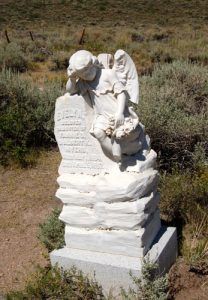
Grave Stone at Bodie California Cemetery.
At the Bodie Cemetery is “The Angel of Bodie,” a three-year-old child who was said to have been accidentally killed when she was hit in the head by a miner’s pick. Her grave is mounted with a white marble angel and on one occasion a man visiting the cemetery with his little girl noticed that she was giggling and seemingly playing with an unseen entity. Today, Bodie is one of the West’s largest and best-preserved ghost towns. Its over 200 buildings are maintained in a state of “arrested decay.” Many original items are displayed in these old buildings. When people moved out after the fire of 1932, they packed what they could get in their wagon or truck, and the rest was left behind. Only about 10% of the original buildings still stand; however, what is left looks much the same as it was over 50 years ago when the last residents left.
There are no permanent residents in the town except park employees. This original ghost town has no tourist traps, restaurants, or recreated saloons. The only business is the Bodie Museum, which is free to the public and offers books, postcards, and other souvenirs.
The Standard Mine and Mill are along the west slope of Bodie Bluff. Most of the inner workings are still intact, and during the summer months, the public can see some of them during a guided mill tour.
The Bodie State Park is open year-round, weather permitting. At an elevation of almost 9,000 feet, some connecting roads may be closed in the winter. The Bodie Museum, located in the old Miner’s Union Hall building, is open from May through October.
Near the Nevada border, Bodie is 50 miles south of Lake Tahoe, California, seven miles south of Bridgeport, off Highway 395. Turning on Highway 270, Bodie is 13 miles east. Highway 270 is open only sporadically in winter and is not paved for the final three miles to Bodie.
Several roads lead out of Bodie but are better left-traveled in four-wheel-drive vehicles.
©Kathy Alexander/Legends of America, updated March 2025.
Contact Information:
Bodie State Historic Park
P.O. Box 515
Bridgeport, California 93517
760-647-6445
Reader’s Experiences:
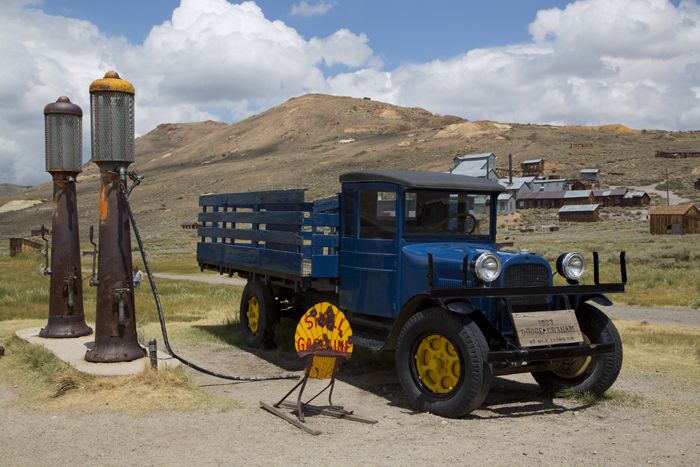
Gas pumps in Bodie, California by Carol Highsmith.
My name is Valerie. I am located in Long Beach, California, and I visited Bodie in the summer of 2001. The town was one of the most memorable landscapes I have ever seen. Near the Standard Mill was a shack with a really old washer and these feminine items surrounding it. I banged my head on a nail when I peeped through the window. So, at the time, I thought, hmm… how nice would it be to have a souvenir? I then put the nail in my pocket and continued the tour. I looked at your website and noticed your legends section. Well, I believe I’m cursed. The problem is I wouldn’t mind going the distance to place the nail back. I remember feeling bad about taking it more than a few times, but that was over five years ago, and through all my moving around and college transfers, I simply lost the nail. So, I was just wondering what you think I should do… Valerie, May 2006
We think Valerie should contact the park rangers with an apology to relieve herself of the “curse.” What do you think?
Carissa Gardner of Nevada wrote us in August 2013. She writes:
On August 5, my family and I visited Bodie. I had always wanted to see it, I pleaded with my hubby, who likes old stuff, plz do not take ANYTHING, just in case the Bodie curse was real. I did not want to put myself in that position or allow something like that in my home. We went to Bodie, it was wonderful to see, and we had a great time spent four hours there, ate lunch, and had fun.
When we arrived home, my husband had a purple piece of glass a blue and a green, and a few other glass pieces I was like why did you do that. I was mad but just let it go because I am not that superstitious. The next day Aug 6th, my back started hurting me very badly I went to the doc, and he said I had a disc slightly outta line and prescribed me a valium so I would have a good sleep so that he could give me an adjustment the next day, I took the Valium that night (never had taken Valium b4) and I was restless did not sleep all night and woke up with a pounding headache my eyes hurt so bad, and my back was even worse, I asked my hubby to stay home from work and take me to the hospital where they gave me a shot Demerol for pain in my butt and told me I had real bad sinus infection after the E.R. I went to my doctor for my back adjustment and told him about the Valium he told me 1 in 2000 people have the opposite reaction to what Valium is supposed to do and that he will note in my chart no Valium He decided not to mess with my back because I was in so much pain I was wearing sunglasses inside because of my eyes hurt so bad. So the rest of the day, August 6 and 7th,8th and 9th, I was in bed sick and sore.
On Aug 10th we went to a Reno Aces game in Reno Nv with our kids; we stayed half the game because it was very hot so we went home early to go swimming when we got we were getting our suits on and while doing this, my 6-year-old son grabbed my oldest sons epi-pen while playing with it he accidentally shot it thru his finger right thru one end to the other, so we headed to the hospital again, my son was ok but if the epi-pen had not gone all the way thru he would have lost his finger. (so a lil good luck there).
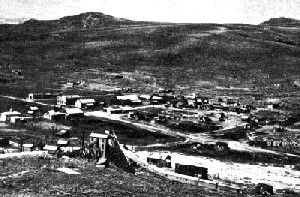
Bodie Fire 1932
The following two days were ok. Just cleaning and preparing for my best friend to come to visit and preparing to make a baby shower cake for another friend. I told my husband see, you should have not taken that glass. I was going to take it back on Aug 6th but got sick then was going to send it back on the way to the pool on the 10th but could not get to the Post Office. Well, the bad luck did not end yet; on Aug 14th my back was still pretty painful, but I went about cleaning and getting stuff ready for my friend’s visit; everything was pretty normal. We cleaned did yard work when my daughter stepped on a red ant ( no big deal) still went on with our day, and that evening my kids were in the backyard playing and climbing the tree when my daughter comes running in screaming that she hurt her arm, I asked what had happened she said she was climbing the tree and fell, right then I knew she broke her arm rushed her to the E.R. they did not think she broke it just bruised ( but I already knew after the week we had that it was) they took X-Rays, and the Doc comes back and says well you actually did break it, so she is currently in a sling for five more weeks with a broken/fractured humerus.
That was it for me the next morning I got that glass picked it up with a paper towel (did not want to touch it) stuck it in an envelope called Bodie got the address and as soon as the Post Office opened took it down and sent it back that was on Aug 15th. Things were a lil cruddy on the 16th my anxiety was high I finished getting stuff ready for my friend, and she came. We went out came home, and worked on the baby shower cake; we had problem after problem with that cake, and we were up till 3:30 am (I believe that was the last residual of our curse) everything has been fine since.
It may have been a coincidence; my husband thinks so, but we never know. I told him cause he took the glass. If he had not taken it, maybe these things would have still happened, but like I said, we will never know. So I recommend do not take any rocks, glass, trinkets from Bodie this is from experience its just not a good idea I still highly recommend to go visit Bodie because it is great, not scary or anything, we do plan to go back ( I told my husband he cannot come because I don’t trust him lol). We did collect a black and orange feather a bird feather not a Bodie feather, from there and flowers growing around, they are here in my home no problems with those but stuff connected to Bodie that may have history leave it there it was a scary two weeks, and we were miserable. Just leave the stuff be and enjoy the sights at Bodie.”
Editor’s Note: After we published Carissa’s experience, producers for a show on the Weather Channel read it and reached out to include her on an episode of “Meet the Legend: Curse of Bodie State Park” originally airing November 2, 2014.
Linda Reed writes in November 2014
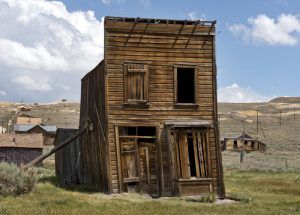
The old Swazey Hotel in Bodie, California, by Carol Highsmith.
I now believe in the Bodie curse. I didn’t know there was a curse; just read signs asking not to take anything away from Bodie. My husband and I found a couple of old-fashioned square nails, broken pieces of colored glass, and some pieces of old dishware. I also took home a piece of linoleum from the one house that is open to the public. It wasn’t long after our October 21st visit that the bad luck started. I wrenched my knee, just getting up from a sitting position. My knee was so swollen I had to ride an ambulance to emergency. The doctor extracted 37 cc’s of blood, and now I must undergo tests. A few days ago I broke a tooth and then yesterday I broke my entire bridgework. The dentist told me “no one” ever breaks the metal base of the bridge. I watched the Weather Channel’s program about the Bodie curse and finally realized what was happening. I have already packaged the pieces from Bodie and will mail them to the Rangers tonight!
Faith Collari writes in October 2019
Around 12 years ago, my husband and brother-in-law were visiting Bodie. My husband had been there many times and knew not to take anything. A couple of years later, we were visiting my brother-in-law back in Indiana, and he presented my husband with a perfect small brown bottle. Perhaps a medicine bottle. My brother-in-law said he had taken it from Bodie when they visited. Of course, we were not happy about it. We took it back to California, and my husband returned it the next time he visited Bodie. Was it cursed? Well, when we visited my brother-in-law, he had developed a blood disorder, and he passed away a few years later.
If you have an experience regarding the Bodie Curse, we would love to hear about it. Send us an Email HERE!
Also See:
Bodie, California Photo Gallery
California Ghost Towns & Mining Camps
Sources:
Bodie.com
Bodie State Historic Park
Varney, Philip; Drew, John and Susan; Ghost Towns of Northern California, Voyageur Press, 2001
Wikipedia