
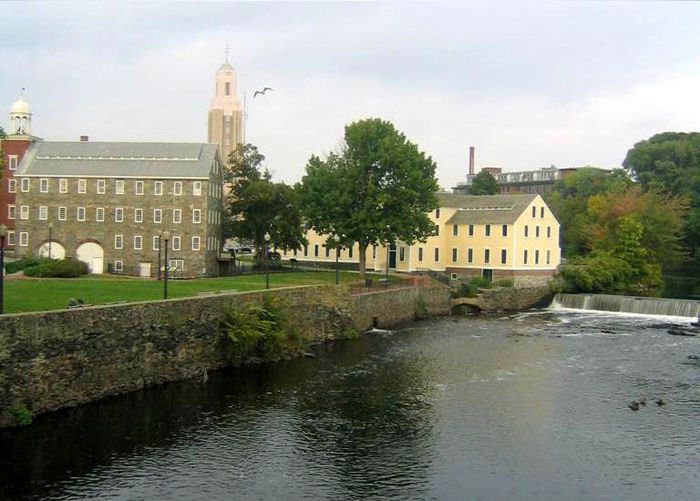
Slater Mill, on the Blackstone River, in Pawtucket, Rhode Island, courtesy Wikipedia.
The Blackstone River Valley National Heritage Corridor stretches from Providence, Rhode Island, to Worcester, Massachusetts, and is the birthplace of the American Industrial Revolution. Here, America transformed from Farm to Factory. America’s first textile mill could have been built along practically any river on the eastern seaboard. Still, in 1790, the forces of capital, ingenuity, mechanical know-how, and skilled labor came together at Pawtucket, Rhode Island, where the Blackstone River provided the power that kicked off America’s drive to industrialization.
Several historical and natural sites, beautiful landscapes, and villages tell the story of industrialization in America and the transformation of a river from a food source to a floating highway. The region also tells a story of growth and change as thousands came here from across the globe, looking for places to settle and work.
William Blackstone and Roger Williams were among the earliest European settlers in the Blackstone River Valley. Blackstone helped to establish Boston and then traveled west in 1635 to near present-day Cumberland, Rhode Island. Roger Williams helped to settle the Providence, Rhode Island area. Initially, most of the settlers were farmers. Following King Phillip’s War in the late 1600s, life in the valley changed. After the war, towns rebuilt and embraced new technological developments, including the widespread use of waterpower and mills for manufacturing.
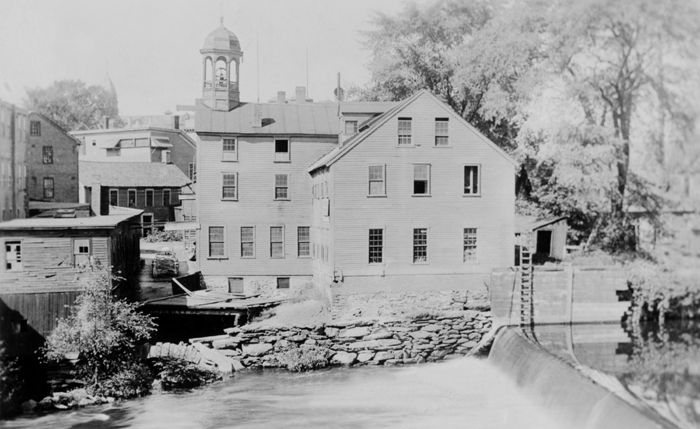
Historic Slater Mill, Pawtucket, Rhode Island.
In the late 1700s, Moses Brown, a merchant from Providence, and Samuel Slater, an Englishman, established a successful loom manufacturing company in Pawtucket, Rhode Island, at Slater Mill, America’s first textile mill. Along with a source of water power, Pawtucket also had a century-old tradition as home to tool and machine makers, and Brown had plenty of capital to invest in the project. Samuel Slater is a recent immigrant from England. Slater had spent seven years working in a textile mill in England, rising to the overseer of machinery and mill construction. By December 1790, the experimental mill was in operation – the first successful water-powered cotton-spinning factory in the United States and the beginning of a new age of industrialization. The company set the standard for developing more mills throughout the Blackstone Valley and eventually all over New England. New mill villages were built where only fields and forests once stood to take advantage of water power sources. Today, visitors can visit Old Slater Mill as part of the Slater Mill Museum and learn more about life in the mills.
Here, investors built not only mills but also homes, schools, and churches for their workers. The lifestyle changes for these new mill workers, mostly Yankee farmers, were dramatic. On the farm, the seasons and the sun governed the workday. Once in the mill, the rhythm of nature was replaced by the tolling of the factory bell. Time became a commodity strictly measured and sold at a set rate. The artisan’s skill or farmer’s produce no longer had as much value as the sheer amount of time a worker could stand beside their ceaseless machine.
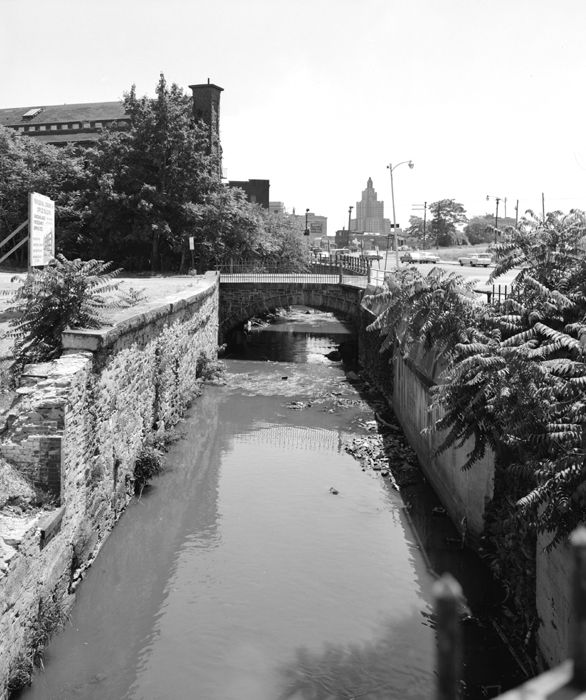
Blackstone Canal in Providence, Rhode Island.
The need for a faster, cheaper way to move goods from the mills to markets and bring in raw goods led to the construction of the Blackstone Canal to move heavy cargo between the mills on the river and the port of Providence. Construction of the canal began in 1824 and was completed in 1828, enabling mills to spread throughout the valley from Providence to Worcester. Canal boats pulled by horses transported products and passengers for only about 20 years, after which the railroad replaced boat traffic. In that time, the valley changed dramatically. Irish laborers built the canal, which brought many immigrants to the United States. Today, visitors can bike along portions of the towpath, canoe, or kayak and explore the canal’s history at museums and historic homes.
As new and larger mills were constructed over the 1800s, new sources of workers were needed to fill them. Among the first new workers were Irish immigrants, many of whom had come to the area in the 1820s to help construct the Blackstone Canal. During the 1860s and 1870s, mill owners began to recruit French Canadians to leave their farms in Quebec and become mill workers in the Blackstone Valley. More workers followed them from nations like Poland, Sweden, and Portugal. Even today, immigrants are still arriving in the Blackstone Valley from places like Central America and Cambodia to find work in the remaining mills here. The arrival of these workers changed the face of the Blackstone Valley in many ways. New languages filled the air as different cultures and traditions were added to the story of the valley. Woonsocket provided the best example of this change, as it became in effect a French-speaking city.

Providence and Worcester Railroad.
Though an improvement, the canal was still flawed, and it was not until the railroad’s coming that the Industrial Revolution would explode throughout the Blackstone Valley and America. The Boston to Worcester line in 1835, followed by the Providence and Worcester Railroad in 1847, allowed for the fast, cheap, and reliable transport of raw materials, finished goods, and farm products between the villages of the Blackstone Valley and the ports of Providence and Boston. Rail service also made the conversion of the textile mills of the valley from waterpower to steam power by the 1860s and 1870s practical.
In the 1920s, mills began to decline in the United States as manufacturing in the Northeast weakened. Life in the Blackstone River Valley is much different now than when Samuel Slater and Moses Brown teamed up to establish the textile industry in the United States roughly 130 years ago. The industry’s presence has diminished, though its impact has not.
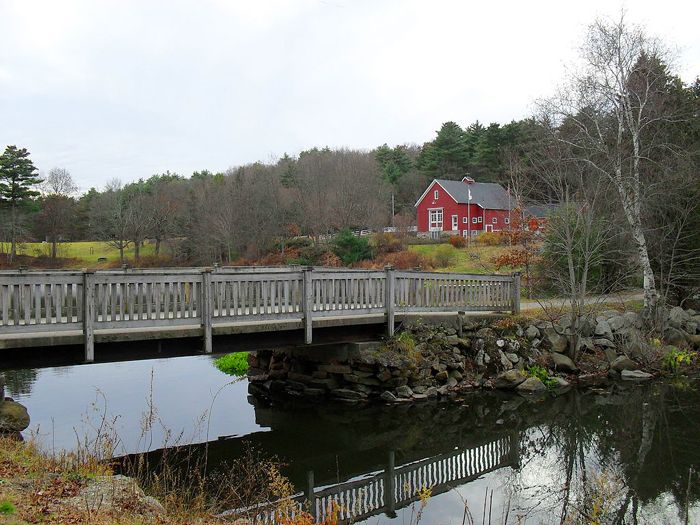
River Bend Farm Visitors Center, Blackstone River, and Canal State Park, Uxbridge, Massachusetts, courtesy Wikipedia
The elements that turned this quiet valley into an industrial powerhouse are still present today. The river, the canal, the mill villages, the agricultural landscape, and many mills are still here – part of the Blackstone River Valley’s living landscape.
Scattered throughout the 24 cities and towns that make up the Blackstone River Valley National Heritage Corridor are many vestiges of a by-gone era, including mill villages, roads, trails, dams and millponds, agricultural and natural landscapes and ethnic traditions in neighborhoods, languages, and foods.
Visitors to the Blackstone River Valley National Heritage Corridor can explore over 300 years of American history at the American Industrial Revolution’s birthplace. Throughout the region, corridor signs help guide visitors, remind people of the varied landscapes, and help explain the historical and natural resources that shaped the Valley’s story. Several self-guided walking tours have been developed for towns, neighborhoods, and historic resources in the Valley that can be picked up at the Visitor Information Centers.
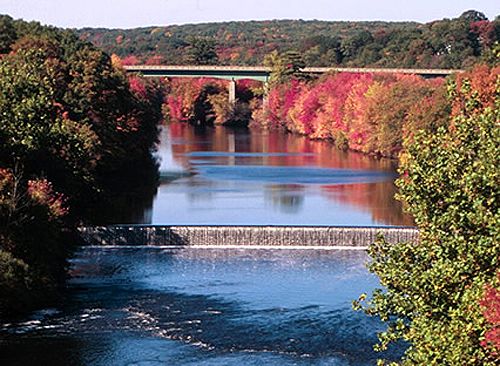
Blackstone River by the National Park Service.
Historical Sites:
The Waters Farm in Sutton, Massachusetts, is a good example of the farms that dominated the region before mills. The Waters family built the first part of the farm in 1728. They grew apples and made apple cider to earn a living, but commercial trade was not a significant part of life on the farm, so they produced most of what they needed. The farm had its blacksmith and carpenter’s shop, barn, and cider mill. Today, visitors can tour the farm and learn more about pre-industrial life in the river valley and the Waters family, who lived on the property from the early 1700s to the late 1900s. Visitors can also explore Sutton’s historic town, which became more industrialized over time, like much of the valley.
Chepachet Village, part of Gloucester, Rhode Island, was one of the earliest towns changed by the Industrial Revolution. Visitors can see an early mill constructed in 1814 to take advantage of the water that runs through the village. The Stone Mill is one of several downtown buildings from the early 1800s. In Chepachet, a mill, a Masonic Hall, a tavern, and a grocery store made the town a center of commercial activity. More significant mill buildings from a later period are also in the town.
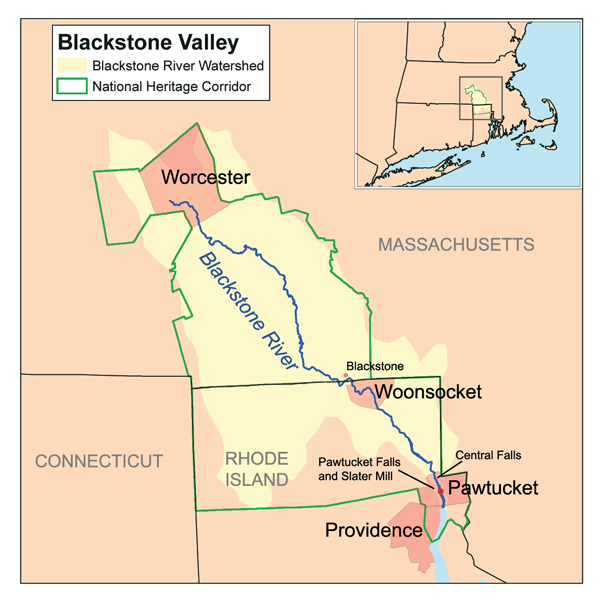
Blackstone Valley Map.
In 1853, Zachariah Allen established a particularly successful mill in Georgiaville, part of Smithfield, Rhode Island, that became the basis for the community’s life. Mill housing still lines Stillwater Road. The mill provided a paycheck and a place to live in this company town. Workers and supervisors lived in separate employee housing. At Georgiaville Pond, visitors can look out over a landscape changed by the mill, where dams on the Woonasquatucket River created ponds that helped ensure a constant water level so the mill could always run.
The Utopian village of Hopedale, Massachusetts, founded in the 1840s, is another example of a mill town. Here, as in Smithfield, the mill and its owners shaped the town. The Draper Corporation constructed houses and institutional buildings. At the time, the company thought that employees would work harder by providing workers with good homes and other amenities, and the company could attract better prospective employees. The Draper Corporation became the country’s most prominent equipment manufacturer for cotton textiles production. Workers came from all over the country to work in the factory, including men and women from England, Scotland, Canada, Ireland, and Italy. By 1916, roughly 1,700 people worked in the factories, growing to almost 3,500 by 1951.
Pawtucket, Rhode Island, is home to the original Slater Mill, where the wheels of industry began and forever changed America’s landscape and lifestyle. The site includes the original Slater Mill (1793), the first successful textile spinning mill in America, the Wilkinson Mill (1810), and the Sylvanus Brown House (1758), an example of a colonial home with demonstrations of hand spinning and weaving. Stroll along the river to see the Pawtucket Falls just south of the Mill. Located across the street from Slater Mill is the Blackstone Valley Visitor Center, where visitors can pick up information about the Valley, see the film “Hidden in the Blackstone Valley,” enjoy exhibits on the Valley, and visit the gallery.
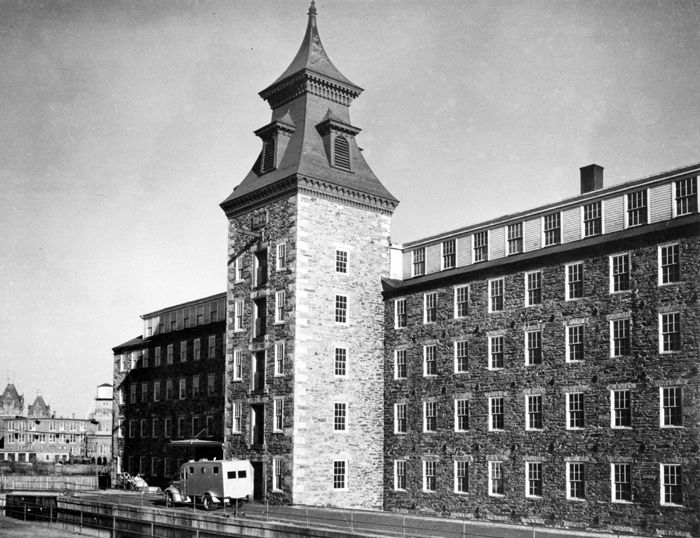
Cotton Mill in Woonsocket, Rhode Island.
The Cumberland/Lincoln area of Rhode Island contains the historic mill villages of Berkeley, Lonsdale, and Ashton – all built, owned, and operated by the powerful Lonsdale Company. The mill village center in Ashton, with its massive mill and adjacent brick worker’s housing, is a prime example of a New England mill village of the mid-19th century. Cumberland is also home to the Blackstone River Theatre, where performance arts bring the culture to life. In Lincoln, visitors can explore the old Great Road and find several historical gems like the Eleazer Arnold House (c. 1693), the oldest home in the town and one of the few remaining examples of a “stone-ender” in the state, the Moffet Mill (c. 1812), a fine example of an early wooden mill, and the Chase Farm, now a recreation area. Nearby, at Lincoln Woods State Park, is a bikeway that runs through the Blackstone River and Canal State Park.
In Woonsocket, Rhode Island, historic Main Street and Market Square prove this city’s 19th-century success as an important urban center. Visitors can see the Museum of Work and Culture to trace the story of mill workers who came here from Quebec to work in the textile mills and learn about the origins of the labor movement in the Blackstone Valley. Stroll along the Blackstone at River Island Park, where the river is in warmer months, or enjoy ice skating in the winter. Check the Blackstone Valley Explorer schedule to take a boat trip up the Blackstone River and learn about its natural and industrial history, or check out what’s playing at the Stadium Theatre, a local performing arts center featuring live theatre, concerts, and classic movie presentations.
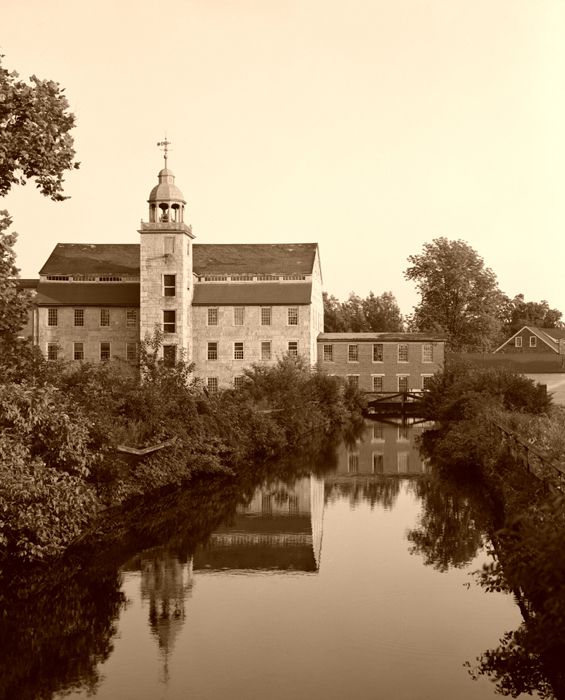
Crown Mill and Canal in Uxbridge, Massachusetts.
Uxbridge, Massachusetts, was initially an agrarian community with a healthy smattering of gristmills, sawmills, and other small enterprises. By the mid-19th century, more than 20 textile mills flourished in Uxbridge, attracting many immigrant workers and enriching and diversifying the town’s population. Downtown Uxbridge contains many vestiges of its early settlement, from its common surrounded by churches of varying denominations to its distinct housing and mill structures. Stop by the library across the common for a self-guided walking tour brochure and other information. Visit the River Bend Farm Visitor Center in the Blackstone River and Canal Heritage State Park, owned and operated by the Massachusetts Department of Environmental Management, to get information about the Valley and Corridor programs. The Park covers 1,000+ acres in Uxbridge, Northbridge, Millville, and Blackstone, where visitors can walk along the historic towpath, canoe the canal or river, view wildlife, enjoy interpretive tours, hike, and catch a summer concert.
In Northbridge, Massachusetts, visitors can discover five distinct villages that contributed to the Valley’s growth and remain an active manufacturing community today. Stop by the Town Hall or Whitin Community Center for more information.
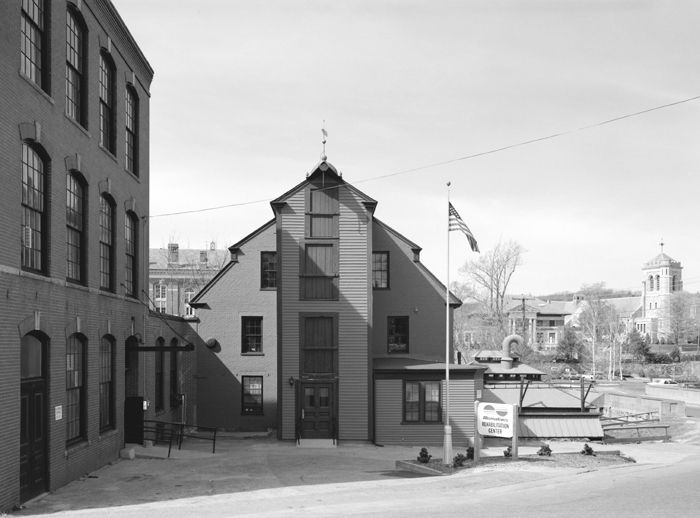
Whitinsville Brick Mill, Whitinsville, Massachusetts.
Visitors will find the Whitin Machine Company’s home in Whitinsville – once the nation’s largest textile machinery manufacturer. Built, maintained, and controlled by the Whitin family for over 100 years, the family also controlled the mills and villages near Linwood, Riverdale, and Rockdale. Today, Whitinsville reveals its evolution from an agrarian settlement to an industrial giant and offers a fascinating glimpse of the powerful family behind it all. Nearby is Plummer’s Landing, where Israel Plummer established a general store and warehouse beside an existing canal lock in 1837. Canal boats could easily tie up in the adjacent basin, and local farmers brought products to be shipped to expanding markets. Today, visitors can walk through Plummer’s buildings’ foundation stones, discover the remnants of a canal lock, access the Blackstone River, or walk along the existing towpath.
Worcester rose to prominence as the second-largest city in New England and the largest inland seaport in the world due to the building of the Blackstone Canal. Within 50 years, the city grew from 15,000 to 118,000 as its industries flourished in manufacturing textiles, machine tools, carpets, shoes, shoes, looms, corsets, wire, and wire products of all kinds and structural and ornamental ironware. Visitors can visit several cultural institutions, including the Higgins Armory Museum, the Worcester Art Museum, Salisbury Mansion, and the Worcester Historical Museum, to learn more about its history and culture. Visit the Great Museum Adventures site to learn more.
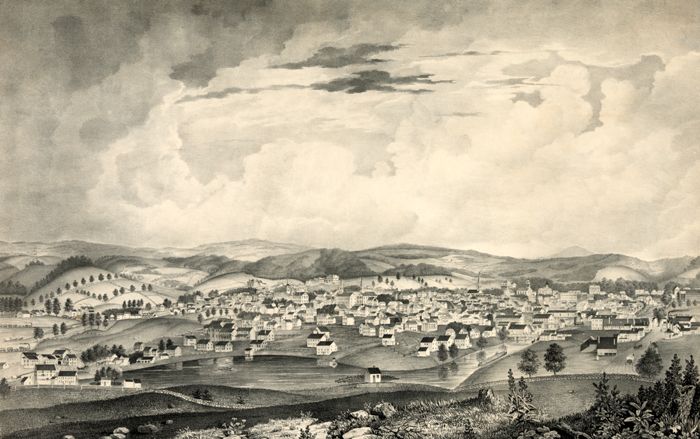
Worcester, Massachusetts by T. Moore Lithography, about 1837.
Several organizations partner with the National Park Service to support the Heritage Area today. Seven visitor centers throughout the valley provide information and have films or exhibits on life in the valley. Walking tours of the mill villages and seasonal ranger-led tours are available.
More Information:
Blackstone River Valley National Heritage Corridor
670 Linwood Avenue
Northbridge, Massachusetts 01588
508-234-4242
©Kathy Alexander/Legends of America, updated March 2025.
Also See:
American History Photo Galleries
Sources: