

Walla Walla Chief Peopeomoxmox.
The Battle of Walla Walla, also known as the Battle of Frenchtown, was the longest Indian battle in Washington Territory history. The conflict occurred on December 7-10, 1855, in response to a call from U.S. Army Major Gabriel Rains. The Walla Walla tribe, resisting the not-yet-ratified treaty and the premature opening of their lands, had raided the Fort Walla Walla trading post at Wallula. Further, their Chief, Peopeomoxmox, had reportedly vowed to kill Governor Isaac Stevens. In response, about 350 troops of the Oregon Mounted Volunteers marched from the Willamette Valley and established Fort Henrietta on the Umatilla River. After inspecting the abandoned Fort Walla Walla trading post, they marched towards the Touchet River to punish the Walla Walla.
Chief Peopeomoxmox met them under a white flag of truce, and at their insistence, he and four other men became their hostages to prevent an immediate attack on his village. The Oregon Volunteers left the Walla Walla camp with their hostages. Planning to establish a winter camp at the old Whitman Mission, the soldiers and their hostages moved along the Touchet River and headed up the valley. However, they were soon pursued by an estimated 1,000 Walla Walla, Cayuse, Palouse, and Yakama warriors.
The four-day battle took place East of present-day Walla Walla, near Lowden. The running battle began at the mouth of the Touchet River, along Frenchtown, a collection of French-Canadian fur-trader cabins extending from near today’s Walla Walla to west of present-day Lowden.
The outnumbered and ill-equipped Volunteers set up their field headquarters and hospital in a cabin owned by Joseph Larocque and his wife, Lizette Walla Walla. They quickly enclosed the cabin perimeter in a stockade called Fort Bennett. The battle took place East of the cabin. On the first day of the battle, the five Walla Walla hostages, including Chief Peopeomoxmox, were killed by the soldiers. The Chief’s body was found mutilated and dismembered. After four days, with the Volunteers running low on ammunition, they fled to Fort Henrietta, and the Indians withdrew.
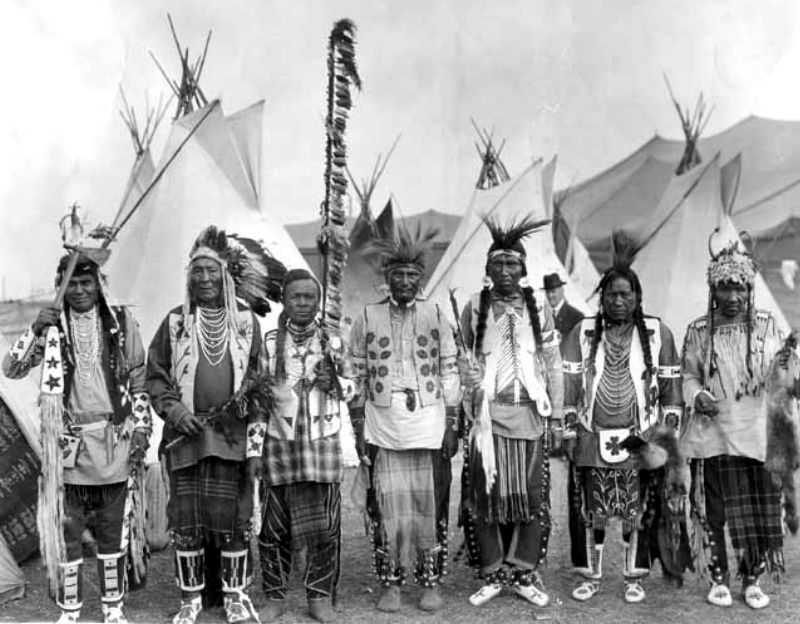
Walla Walla Indians.
©Kathy Alexander/Legends of America, updated September 2026.
Also See:
The Cayuse War – Revenge for the Measles
Indian Conflicts of Washington
See Sources.