Girard, Illinois.
Just four short miles South of Virden sits the town of Girard, Illinois, a village of about 2,200 people. One of the first settlers in the area was a Frenchman named Girard, who built a sawmill on the banks of Mill Creek. By 1834, more pioneers were also living in the area, including W.T. Bristow, Daniel Black, Elisha Smith, Dr. Edwards, and Colonel George Mather.
As the settlers grew more numerous, a stage line from Springfield to Alton, Illinois, began running through the area. Built along an old Indian Trail, this road would later become Illinois State Route 4 and Route 66.
In 1834, Dr. Edwards and George Mather laid out a townsite and named it Girard after the Frenchman and his mill. However, they never recorded the plat, and the “town” wouldn’t be established for more than two decades. About a mile and a half North of the present-day town of Girard, John Henderson established a stage stop in 1835. He later sold the stop to John Virden, after whom the town of Virden was named.
By 1843, enough settlers had arrived to build a schoolhouse in the Southwest corner of Girard Township, where Elizabeth McCullough taught.
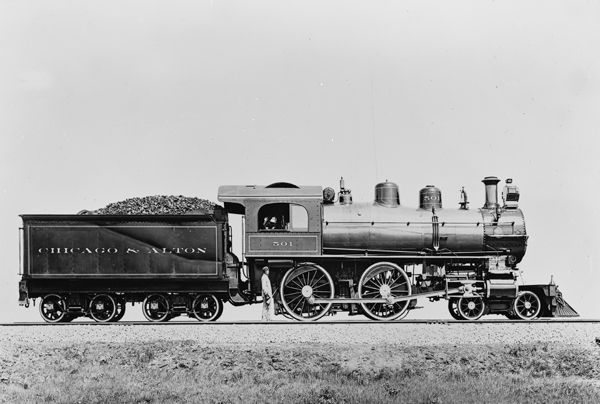
Chicago & Alton Railroad by Detroit Publishing about 1910.
In 1852, when the Chicago & Alton Railroad was built through the area, interest in establishing the town increased. In the spring of 1853, another townsite was laid out by Barnabas Boggess and Charles Fink, which encompassed much of the same land as the 1834 plat. They then sold lots for $20 each.
The first homes were located near the square, which Barnabas Boggess brought in from the country. Sam Boggess built another, which also served as the town’s first boarding house. J.S. Warfield built a new home and established a blacksmith shop. Harriet Purdy taught the first privately operated school.
In 1854, several businesses were erected, including Alfred Mayfield’s General Store and W.E. Eastman’s drug and merchandise store. J.W. Woodruff built a warehouse and shipped the first carload of wheat from Girard. Daniel Macknett established a lumberyard that he owned until 1893. It would operate for more than a century. The post office and the first hotel, called the Girard House, were also established in 1854.
The town was incorporated on February 14, 1855. H. Hall built the first flour mill on Mill Creek, and the first church was built. All denominations shared the building until each built its own.
William Lancaster established a brickyard in 1857. It operated until 1898, and many of the buildings that still stand today were made by the brickyard. That same year, the first newspaper—the Girard Enterprise—began. It ran until 1879, when the Girard Gazette began. The Gazette still operates today.
A public school was built in 1858 after the town voted to support a property tax to meet its expenses. The wooden schoolhouse served all grades until it burned in 1870.
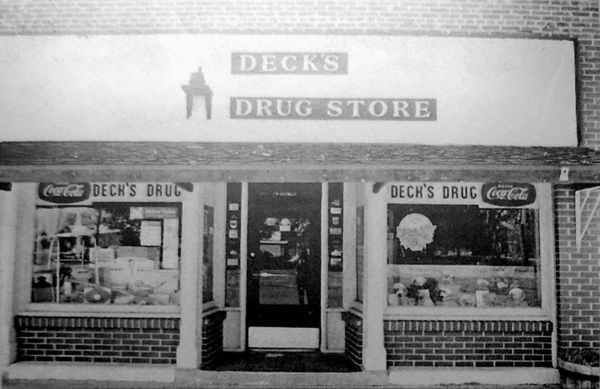
Decks Drug Store, Girard, Illinois.
The Deck Drug Store is the oldest business in Girard. Dr. Clark established it in 1865 and had an office on the upper level. In 1884, Lewis Deck joined him, ran the pharmacy, and later became the sole owner. After he passed the business to his sons, the drugstore was family-operated until 2001. It was then sold and operated by new owners before closing down a couple of years later. This was the first time that Girard was without a pharmacy of its own. Today, the building operates as Doc’s Soda Fountain and Deck’s Pharmacy Museum. Still serving up great old-fashioned treats and filled with pharmacy memorabilia, it’s a great place to stop.
Two years later, in 1867, Bowersox Clothing Store opened. Though changing ownership several times, it remained in business until 1976. That same year, F.W. Ring came to Girard and opened a bakery and restaurant. A well-educated and accomplished musician, he also organized and trained a band that became the best in Central Illinois. He traveled by train to every significant celebration to provide entertainment.

Decks Pharmacy Museum in Girard, Illinois, by Kathy Alexander.
Girard began to grow when the Girard Coal Mine was sunk in 1869. Over the years, Girard was home to nine different mines, and at its peak employed about 600 men. The Girard Coal Mine closed in 1922, dealing a terrific blow to the town. Only one mine operates today.
The St. Nicholas Hotel was built on the South side of the square in 1870. That same year, a new two-story red brick school was built, with eight rooms and seven teachers. The State Bank of Girard opened in 1873 and operated for decades.
By 1870, Girard had about 1,500 people, three steam flour mills, a butter and cheese factory, numerous merchandise stores, a lumber yard, two hotels, and five churches. The school served some 400 students.
In 1879, a fire started in a coal mine shaft while all the men were down below. Extremely frightened for their friends and loved ones, the townsfolk rallied, and every bit of salt in the city was dumped into the shaft, saving the men from certain death.
A Lock Factory was established in 1880, and it would operate for the next 40 years.
Dodson’s Opera House opened in 1893 and served as the town’s cultural center. Road shows, vaudeville companies, musical troupes, and home talent productions were held there regularly. Later, it also showed first-run movies.
Continuing to thrive during its coal-mining years, its public square was lined with various businesses often not found in such a small town. Unfortunately, many of these early wooden buildings were destroyed over the years by fire. When they were rebuilt, however, they were constructed of brick. The last two frame buildings burned down in March 1909. Later that year, in October, a larger fire destroyed the businesses of ten men on the west side of the square, even though they were brick. The fire was thought to have been started by a burglar because a burglar had rifled the safe of Dr. Riffey’s drug store. The following year, another fire took out several buildings on the square’s northeast corner, including the Girard House Hotel.
The first cement highway to lift Illinois out of the mud stage was State Route 4, running North to South through Macoupin County. It was built through Girard and Virden Townships in 1921. Girard then began improving its streets, first around the square, which was paved, while other roads were oiled and rocked.
1922 was not a good year for Girard, as the closing of the Girard Coal Mine dealt a significant economic blow to the community. Worse still, a mining disaster occurred in December. When gas ignited an explosion of an unused part of the mine, several men were riding through the tunnels to the bottom of the shaft. The men in the first car were terribly burned. One man died from his wounds, and 16 men were injured.
In 1926, Illinois State Route 4 was designated as Route 66, bringing many travelers through Girard for the next four years. The designation was removed in 1930 when the road was realigned through less populated areas to the East.

Whirl-a-Whip, Girard, Illinois.
After World War II, the town declined as people began driving into larger cities to do their shopping.
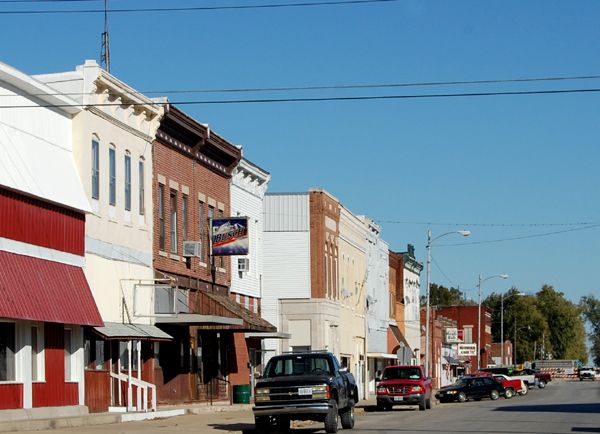
Today, Girard’s population is about 2,200, and the village offers numerous glimpses into its history. Visitors will find several historic buildings on the square, including the Ring Building located on W. Center St. on the North side. It features Mesker ornamental sheet metal and cast-iron facades popular in the late 1800s and early 1900s. The handsome former People’s Bank building is also located on the North side of the square. Organized in 1893, the bank built this building in 1919. Unfortunately, the bank itself was a casualty of the Great Depression. An old brick building on the northeast corner displays a fading ghost sign on its side, designating it as the Hall Brothers Lunchroom.
The classic 1950s Whirl-A-Whip Drive-In at 309 N. 3rd St. still offers food and 50 flavors of ice cream in the summer.
A “must-visit” is Doc’s Soda Fountain/Deck’s Drug Store Museum, located at 133 S 2nd St on Girard Square. The store operated under three generations of the Deck family for 117 years before being sold. Today, it operates as Doc’s Soda Fountain, offering soda fountain ice cream and a free drug store museum.
Just about four more miles down old Route 66, you will come to the tiny little town of Nilwood, Illinois.
More Information:
Girard Chamber of Commerce
PO Box 92
Girard, Illinois 62640-0092
217-627-3512
©Kathy Alexander/Legends of America, updated September 2026.
Also See:
Pre-1930 Segment of Route 66, Illinois – Chatham to Staunton
See Sources.

to Nilwood (coming)