
By Jesse Galanis
Every place has its own small mythology. Not the kind you see on plaques or in school assemblies, but the quieter kind you hear in passing. Someone was tinkering in a garage long before the world was ready to care.
An artist whose influence spread without ever carrying their name along with it. We call these people “hidden figures,” but most of the time, they weren’t hiding. We just weren’t paying attention.
Without these stories, you miss the connective tissue. The people who translated ideas across cultures, who solved problems no one else wanted to touch, who made art that helped others see themselves more clearly.
Once you learn their names, history stops feeling like a distant, sealed-off thing. It starts to look more like a place you could actually walk through.
So we’ll wander a bit. From early airfields where flight was still a gamble, into workshops and labs where breakthroughs happened without applause. We’ll spend time on stages and pages where American culture figured itself out in real time. You might come away impressed. You might feel a little frustrated about what never made it into the textbooks. That reaction is the point.
Pioneering Women: Breaking the Mold
Many breakthroughs initially appear as an inconvenience. As someone quietly realizing that the rules were never written with them in mind. When you look closely at history, especially women’s history, you start to see how often progress begins that way.
Bessie Coleman
Bessie Coleman didn’t grow up dreaming of being a “first.” She wanted to fly. That simple desire ran straight into a wall: in the early 1920s, no flight school in the United States would train a Black woman. So she did something that sounds almost absurd until you remember how badly she wanted it. She learned French and left the country.
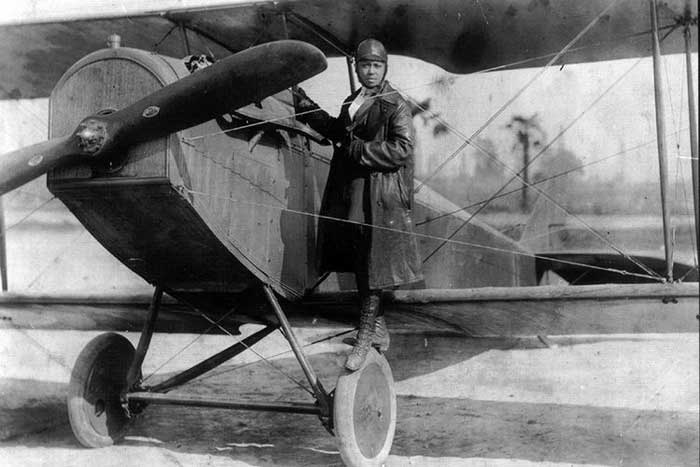
Bessie Coleman with her Curtiss JN-4 “Jennie” in her custom-designed flying suit, 1924. Photo courtesy Smithsonian Magazine.
In 1921, Coleman earned her pilot’s license in France, becoming the first African American woman and the first Native American woman to do so. When she returned to the U.S., she didn’t fade into obscurity. She became a barnstorming pilot, performing dangerous aerial stunts that drew massive crowds.
Her life was short; she died in a plane crash in 1926 during a practice flight, but her impact lingered. Pilots still reference her. Aviation institutions still study her choices. The Smithsonian documents her not just as a skilled aviator, but also as someone who expanded the role of aviation.
“The air is the only place free from prejudices.” — Bessie Coleman
Florence Price
Florence Price spent decades composing music that orchestras largely ignored. She was writing symphonies that blended European classical structures with Black spirituals and distinctly American themes, but the gatekeepers weren’t listening.
Then, in 2009, a remarkable thing happened: a cache of her manuscripts was discovered in an abandoned house she once used as a summer home. Music that had nearly vanished resurfaced. Today, major orchestras perform her work, and audiences are hearing a version of American classical music that always existed, just offstage.
Joern Meissner, founder and chairman of Manhattan Review, works with students preparing for high-stakes exams and competitive admissions processes. His perspective comes from seeing how often outcomes are shaped more by whether someone understands how the system actually works than by ability.
Meissner says, “We see it every year. Students aren’t held back by a lack of talent, but by a lack of access. Systems tend to reward familiarity, not potential. Once someone is taught how those systems operate, the gap narrows quickly. Talent was never the problem.”
Zitkála-Šá (Gertrude Simmons Bonnin)
Zitkála-Šá never softened her voice to make it more palatable. A Yankton Dakota writer and activist, she published essays around the turn of the 20th century that confronted white audiences with the realities of Native boarding schools, on how children were stripped of language, culture, and identity in the name of “education.”
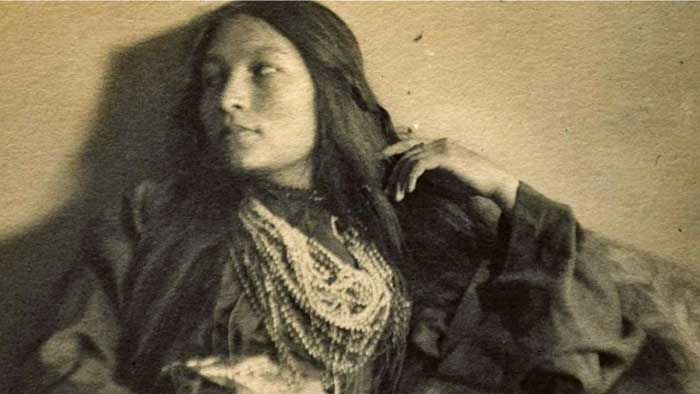
Zitkála-Šá, known also as Gertrude Simmons Bonnin, 1898.
Her writing wasn’t designed to comfort, but to tell the truth. The Library of Congress preserves her work now, but at the time, it unsettled people who preferred silence.
For many writers and scholars, reclaiming suppressed histories also means reconnecting with the original languages in which those histories were written, whether by learning Latin or by studying classical texts in their original form rather than through translation.
Sister Rosetta Tharpe
Sister Rosetta Tharpe played electric guitar with a force that unsettled gospel audiences and electrified future rock musicians. Her sound influenced artists who would go on to define rock and roll, even as her name slipped out of the narrative. For years, her influence lived in echoes, borrowed riffs, familiar rhythms without attribution. Eventually, the record corrected itself. Today, many historians credit her as the true godmother of rock and roll, a title that finally matches the impact she always had.
What ties these women together isn’t just talent. It’s the way their work forces a rethink. Not a footnote correction, but a structural one. Once you see them clearly, history no longer looks inevitable. It starts looking edited, and that realization changes how you read everything that comes after.
Trailblazers in Science and Innovation
Some people solve problems because it’s their job. Others solve problems because they can’t stand watching the same mistake repeated over and over. The figures in this chapter fall into the second category. They weren’t chasing prestige or patents for their own sake. They saw something broken in everyday life and thought. It doesn’t have to be this way.
Shan Abbasi, director of business development at PayCompass, works in payment infrastructure for high-risk and high-volume businesses where reliability is non-negotiable. His perspective comes from operating systems that are only noticed when something breaks.
Abbasi says, “The most important systems are usually invisible when they work. People don’t think about payments, logistics, or refrigeration until something fails. A lot of innovation is about preventing problems no one ever sees and accepting that credit usually comes last, if at all.”
Garrett Morgan
Garrett Morgan paid attention to the kinds of problems most people learned to live with. Firefighters were dying from smoke inhalation, so he designed a “safety hood” that filtered the air and allowed them to breathe safely in dangerous conditions. It wasn’t marketed as a grand scientific breakthrough, but it worked, and versions of it became the foundation for modern gas masks.
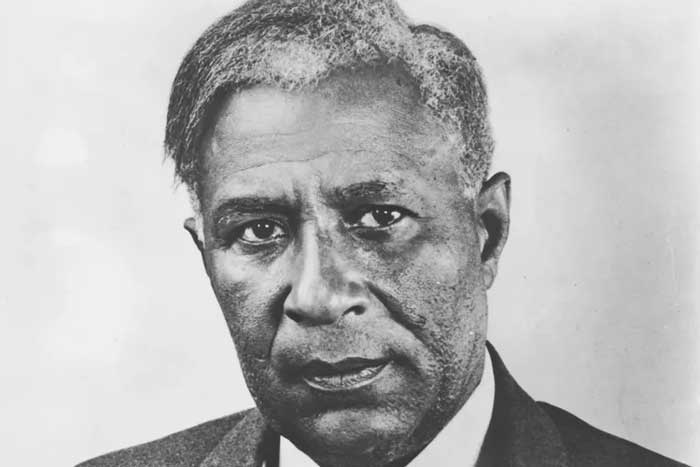
Garett Morgan (image source)
Then there was traffic. As cars became more common, intersections became more dangerous. Morgan noticed the chaos and came up with a simple idea: a three-position traffic signal that included a pause between stop and go.
That “in-between” moment gave drivers time to clear the intersection. It reduced crashes and made roads safer almost immediately. He didn’t just invent something new; he invented something practical. Today, every yellow light is a quiet reminder of that thinking. The National Inventors Hall of Fame eventually recognized his work, long after the world had already adopted it.
Lewis Latimer
Lewis Latimer didn’t get credit for inventing the light bulb, but without him, it wouldn’t have lit homes the way it did. Edison’s early bulbs burned out quickly. Latimer developed a method for producing longer-lasting carbon filaments, making electric lighting reliable and affordable.
He also wrote one of the first manuals on installing and maintaining electric lighting systems, helping cities put the technology to use. Today, the National Museum of African American History and Culture documents his role in turning a fragile idea into an everyday utility.
Granville T. Woods
Granville T. Woods is often labeled the “Black Edison,” which flattens what he actually did. Woods focused on systems, especially railways, and how to make them safer. He invented communication technologies that allowed moving trains to signal their location to dispatchers and other trains.
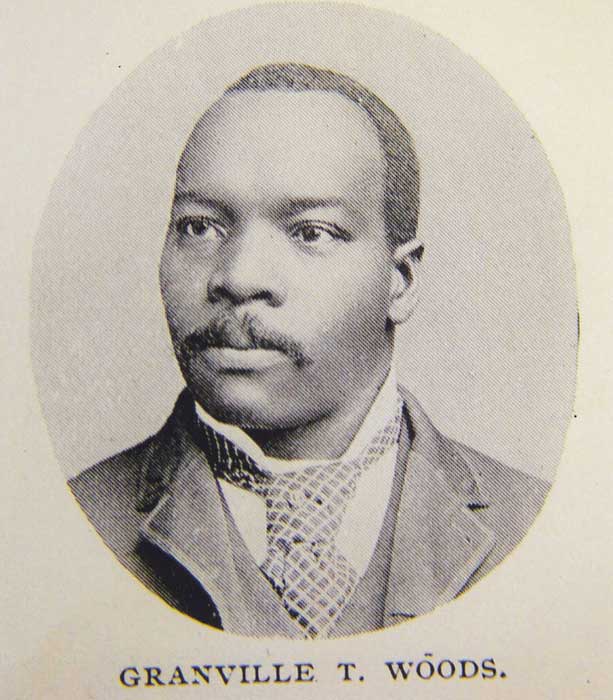
Granville Tailer Woods, Cosmopolitan Magazine, 1895.
Before that, rail travel relied on guesswork and timing. His inventions dramatically reduced collisions and saved lives. Institutions like MIT have documented how his work reshaped rail safety, even as others tried to patent around him.
Frederick McKinley Jones
Frederick McKinley Jones noticed a different kind of loss: food spoiling in transit. His portable refrigeration units transformed transportation, enabling the long-distance movement of fresh food, medical supplies, and vaccines without waste. That meant fresh produce in places that never had it before, and stable medical supplies during wartime. His work didn’t just improve logistics—it changed how entire regions ate and survived. The National Inventors Hall of Fame credits him with redefining food distribution as we know it.
Morgan Taylor, co-founder of Jolly SEO, runs earned-media and outreach campaigns for companies whose work depends on accurate online representation. His perspective comes from watching how often solid ideas fail to gain traction simply because no one takes responsibility for surfacing them.
Taylor says, “People assume the best ideas rise on their own. In reality, they rise when someone takes the time to document them clearly and make them easy for others to find. We see that in search every day. The work that lasts isn’t always louder or flashier. It’s the work that gets recorded, cited, and repeated.”
Cultural Icons
Some artists expose the parts a country would rather smooth over. Their work exists because it had to, not because the system made room for it. In fact, the system often did the opposite.
Edmonia Lewis
Edmonia Lewis carved marble in Rome because the United States didn’t give her much of a choice. As a woman of African American and Native heritage, she found American art institutions closed off and openly hostile. So she left.
In Rome, she built a career on her own terms, sculpting neoclassical works that drew the attention of presidents and international dignitaries. Back home, art schools largely ignored her existence. Only much later did museums like the Smithsonian begin to publicly recognize what she had accomplished, that American art history had been incomplete without her.
Samuel Charmetant, founder of ArtMajeur, works with artists who sell and build audiences outside traditional galleries and institutions. Much of his perspective comes from seeing how creative work circulates when formal gatekeepers aren’t involved.
Charmetant says, “For a long time, recognition depended more on access than ability. Artists didn’t stop creating just because institutions ignored them. Their work kept circulating quietly. What we’re seeing now is a correction. When barriers fall, the record fills itself in.”
Toyo Miyatake
Toyo Miyatake documented a different kind of exclusion. During World War II, he was incarcerated at Manzanar for being Japanese American. Photography was banned in the camps, but Miyatake smuggled in a camera lens and constructed the rest from scraps.
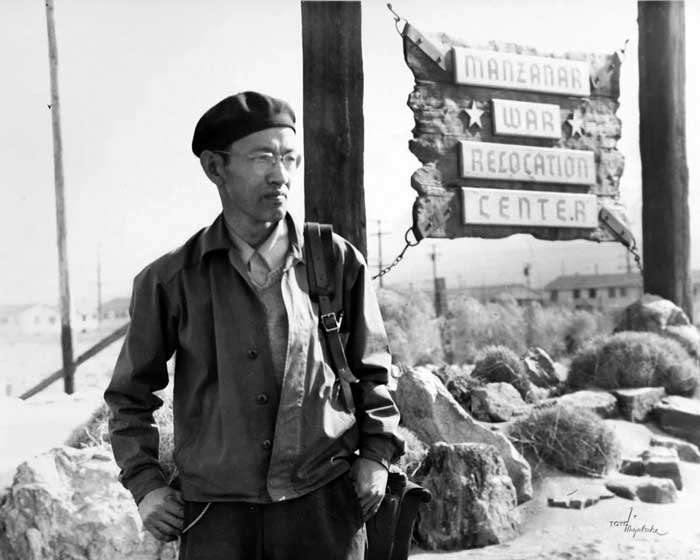
Toyo Miyatake (image source)
The images he captured weren’t dramatic in the way propaganda prefers. They showed ordinary life continuing under extraordinary injustice: children playing baseball, families eating together, moments of routine framed by barbed wire. Preserved today by the National Park Service, his photographs don’t argue or explain. They show what fear looks like when it becomes policy.
Together, their work reminds us that culture is shaped by what people create when freedom is denied.
Overlooked Patriots: Warfare and Strategy
Wars tend to shrink in hindsight. Complex campaigns get reduced to a few famous names, a couple of decisive moments, and a tidy ending. What gets lost are the people who made those moments possible, the ones whose work didn’t look heroic in the traditional sense, but without whom the outcome would have been very different.
The American Revolution didn’t run on speeches alone. It ran on information, timing, and people willing to take risks that couldn’t be publicly acknowledged.
James Armistead Lafayette
James Armistead Lafayette was one of those people. Enslaved at the time, he worked as a double agent, moving between British and American forces. To the British, he appeared loyal. To George Washington’s army, he delivered intelligence that helped trap British General Cornwallis at Yorktown.
The victory that effectively ended the war depended on deception as much as firepower. The National Park Service documents Armistead’s role as one of the most successful spies of the Revolution, even though recognition came slowly, and only after he petitioned for his freedom.
That pattern didn’t end with the Revolutionary War. Many modern systems still depend on people taking physical risks while protections lag. In workplace injury cases, recognition and accountability often arrive only after harm has already occurred, when injured workers are forced to navigate a complex process just to be acknowledged. Resources that clearly explain the work injury claim process exist precisely because so many people discover—too late—that protection isn’t automatic.
Salem Poor
On the battlefield itself, courage sometimes forced acknowledgment, even in places that weren’t inclined to give it. At Bunker Hill, Salem Poor fought with such distinction that white officers formally wrote to the Massachusetts legislature praising him and recommending honors. In 1775, such public recognition of a Black soldier was rare enough to stand out. The National Park Service preserves his service record as evidence that valor didn’t go unnoticed—even if it wasn’t fully rewarded.
Peter Salem
That same battle carries another name, history almost misplaced. Peter Salem is widely credited in contemporary accounts with firing the shot that killed British Major John Pitcairn, a key officer leading the charge. Whether every detail can be proven beyond doubt matters less than the broader truth: Black soldiers were present, decisive, and deeply involved in the Revolution’s most iconic moments.
African American and Native American soldiers consistently brought more than their numbers. They brought intelligence networks, knowledge of terrain, unconventional tactics, and a personal stake that made retreat impossible.
Seen together, these stories complicate the usual picture of American military history. Victory didn’t come only from generals whose names made it into textbooks. It came from people operating in the shadows, making choices with everything to lose, and rarely receiving credit when the war was over.
Final Note: Rediscovering American History
History isn’t some dusty book on a shelf. It’s alive, and it changes based on who gets to tell it. These hidden figures prove that innovation, courage, and creativity came from every corner of American society, not just the well-lit ones.
Want to know more? Start local. Your library has oral history projects. Your historical society has photographs nobody’s looked at in decades. Museums are digitizing their collections so you can explore them from your couch. Share what you find. Tell someone a name they’ve never heard. That’s how hidden figures become visible, one story at a time.
The best part about digging into history? There’s always more to find on Legends of America.
©Jesse Galanis, for Legends of America, updated January 2026.

Jesse Galanis
About the Author: Jesse Galanis is a professional writer whose aim is to make complex concepts easy to understand. He strives to provide quality content that assists people in everyday life.
Also See:
African American History in the United States
Native Americans – The First Owners of America
9 Important Women in American History You May Not Have Heard of