
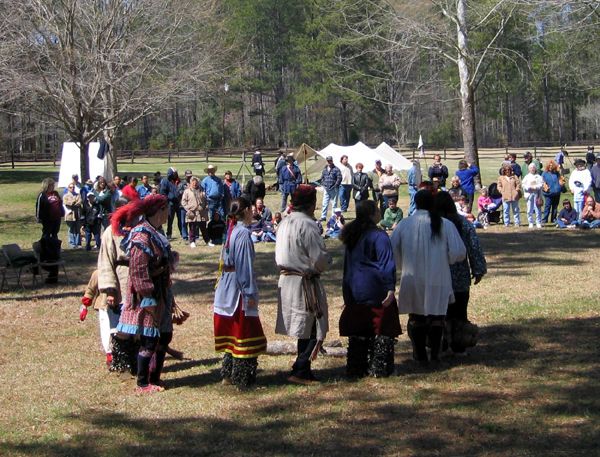
Creek Stomp Dance, courtesy National Park Service.
Performed by various Eastern Woodland tribes, including the Muscogee, Creek, Yuchi, Cherokee, Chickasaw, Choctaw, Caddo, Delaware, Miami, Ottawa, Peoria, Shawnee, Seminole, Natchez, and Seneca–Cayuga, the Stomp Dance is a ceremony that contains both religious and social meaning. The term “Stomp Dance” is an English term that refers to the “shuffle and stomp” movements of the dance. In the native Muskogee language, the dance is called Opvnkv Haco, which can mean “drunken,” “crazy,” or “inspirited” dance, referring to the effect the medicine and dance have on the participants. A nighttime event, the dance is affiliated with the Green Corn Ceremony, as practiced by the Muscogee, Creek, Cherokee, and other Southeastern Native American tribes.
These dances are generally performed several times during the summer to ensure the community’s well-being. Performed by both men and women, these events typically feature 30 or more performances, each sung by a different leader, and may also include other dances, such as the Duck Dance, Friendship Dance, or the Bean Dance.
When a leader begins, he circles the sacred fire, followed by those who wish to participate in a single file. Leading the dancers counter-clockwise around the fire, participants sing, shake leg rattles, and dance in a stomping step. Men and women alternate positions behind the leader, organizing themselves by age and skill, with the youngest and least experienced dancers at the end of the line.
Dancing typically starts well after dark and continues until the next day’s dawn. Participants who are making a religious commitment will begin fasting after midnight and are obligated to remain awake throughout the night. The “medicine” taken by participants is made from roots and plants ceremonially gathered and prepared by a Healer. Dancing continues until the sun rises, at which point the event is concluded.
©Kathy Alexander/Legends of America, updated July 2025.
Also See:
Native American Photo Galleries
Native American Rituals and Ceremonies
See Sources.