
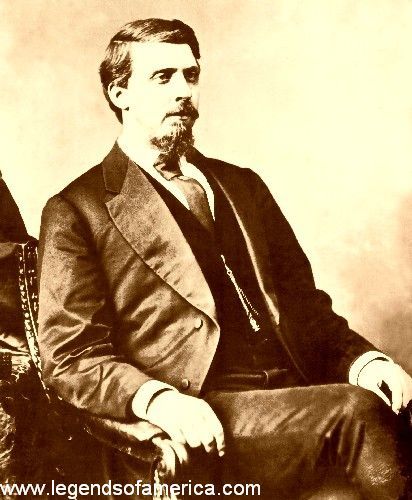
Judge Isaac Parker
“I have ever had the single aim of justice in view… ‘Do equal and exact justice’ is my motto, and I have often said to the grand jury, ‘Permit no innocent man to be punished, but let no guilty man escape.'”
— Judge Isaac C. Parker, 1896
Judge Isaac Parker, often called the “Hanging Judge,” from Fort Smith, Arkansas, ruled over the lawless land of the Indian Territory in the late 1800s. In 1875, Indian Territory (now Oklahoma) was populated by cattle and horse thieves, whiskey peddlers, and bandits who sought refuge in the untamed territory free of a “White Man’s Court.” The only court with jurisdiction over the Indian Territory was the U.S. Court for the Western District of Arkansas, located in Fort Smith, Arkansas, on the border between Western Arkansas and the Indian Territory.
Isaac Parker was born in a log cabin outside Barnesville, Belmont County, Ohio, on October 15, 1838. Isaac, the youngest son of Joseph and Jane Parker, helped out on the farm but never really cared about working outdoors. He attended the Breeze Hill primary school and then the Barnesville Classical Institute.
To help pay for his higher education, he taught students in a country primary school. When he was 17, he decided to study law, and his legal training combines apprenticeship and self-study. Reading law with a Barnesville attorney, he passed the Ohio bar exam in 1859 at the age of 21. During this time, he met and married Mary O’Toole, and the couple had two sons, Charles and James. Over the years, Parker built a reputation for being an honest lawyer and a community leader.
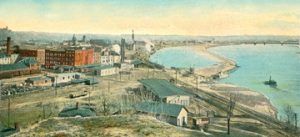
St. Joseph, Missouri, on the Missouri River
After passing the bar, he traveled West to St. Joseph, Missouri, a bustling Missouri River port town. He went to work for his uncle, D.E. Shannon, a partner in the Shannon and Branch legal firm. By 1861, he was working in both the municipal and county criminal courts, and in April, political ambition led to his election as City Attorney. He was re-elected to the post for the next two years.
In 1864, Isaac Parker ran for county prosecutor of the Ninth Missouri Judicial District. In the fall of that same year, he served as a member of the Electoral College, casting his vote for Abraham Lincoln.
In 1868, Parker sought and won a six-year term as the Twelfth Missouri Circuit judge. A new judge, Parker would soon gain the experience that he would later use as the ruling Judge over the Indian Territory.
On September 13, 1870, Parker was nominated on the Republican ticket for the Seventh Congressional District. Parker resigned from his judgeship to pursue his political ambition and devote all his energy to the campaign. The heated campaign ended with Parker’s opponent withdrawing from the race two weeks before the election, and Parker easily defeated the replacement candidate in the November 8, 1870 election.
As a freshman representative, Parker took his seat in the first session of the Forty-second Congress convened on Saturday, March 4, 1871. In November 1872, he easily won a second term and gained national attention for speeches delivered in support of the Bureau of Indian Affairs.
By the fall of 1874, the political tide had shifted in Missouri, and as a Republican, Isaac Parker had no chance of reelection to Congress. Instead, he sought a presidential appointment to public office. He submitted a request for appointment as the federal district court judge for the Western District of Arkansas in Fort Smith. On March 18, 1875, President Ulysses S. Grant nominated Parker as the Western District of Arkansas judge.
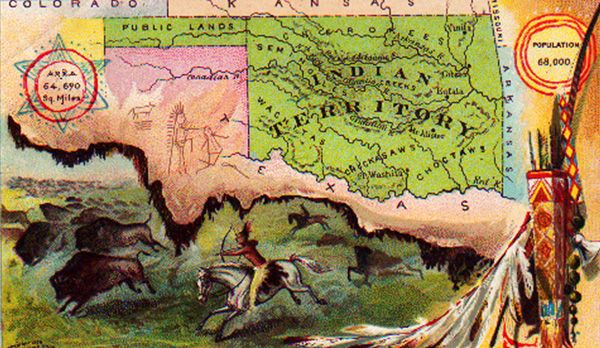
Indian Territory (Oklahoma).
After the Civil War, the number of outlaws had grown, disrupting the relative peace of the five civilized tribes living in the Indian Territory. By the time Parker arrived at Fort Smith, Indian Territory had become known as a very bad place, where outlaws thought the laws did not apply to them and terror reigned.
Replacing Judge William Story, whose tenure had been marred by corruption, Parker arrived in Fort Smith on May 4, 1875. At the age of 36, Judge Parker was the youngest Federal judge in the West. Holding court for the first time on May 10, 1875, eight men were found guilty of murder and sentenced to death. Judge Parker held court six days a week, often up to ten hours daily, and tried 91 defendants on the bench in his first eight weeks. In that first summer, eighteen persons came before him charged with murder, and 15 were convicted. Eight were sentenced to die on the gallows on September 3, 1875. However, only six would be executed, as one was killed trying to escape, and a second had his sentence commuted to life in prison because of his youth.

Fort Smith, Arkansas Gallows
When the fateful day of September 3, 1875, arrived, the hanging became an extraordinary media event when reporters from Little Rock, St. Louis, and Kansas City flocked to the city. Other newspapermen traveled far from eastern and northern cities to catch the “scoop.” A week before the hangings, the city began to fill with strangers from all over the country, anxious to view them. More than 5,000 people watched as the six men marched from the jail to the gallows on the day they were to be hanged.
The Fort Smith Independent was the first newspaper to report the event on September 3, 1875, with the large column heading reading: “Execution Day!!” Other newspapers around the country reported the event a day later. These press reports shocked people throughout the nation. “Cool Destruction of Six Human Lives by Legal Process” screamed the headlines.
Of the six felons, three were white, two were Native American, and one was black. Seated along the back of the gallows, their death warrants were read to them, and each was asked if they had any last words.
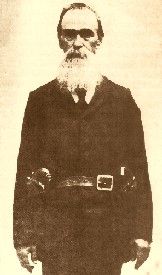
George Maledon, the Prince of Hangmen
When the preliminaries were over, the six were lined up on the scaffold while executioner George Maledon adjusted the nooses around their necks. The trap was sprung; all six died at once at the end of the ropes.
Though the hangings indicated that the once corrupt court was functioning again, Parker’s critics dubbed him the “Hanging Judge” and called his court the “Court of the Damned.” However, most of Parker’s critics didn’t live in the frontier and did not understand the ethics (or lack thereof) of the untamed Indian Territory. Most local people approved of Parker’s judgments, feeling that the utter viciousness of the crimes merited the sentences imposed. From these first six hangings in 1875, there would be 73 more until he died in 1896.
Though Parker was hard on killers and rapists, he was also a fair man. He occasionally granted retrials that sometimes resulted in acquittals or reduced sentences. Though Parker favored the abolition of the death penalty, he strictly adhered to the letter of the law. He once said, “In the uncertainty of punishment following a crime lies the weakness of our halting justice.” However, Parker reserved most of his sympathy for the crime victims and is now seen as one of the first advocates of victims’ rights.
Parker’s jurisdiction began to shrink as more courts were given authority over parts of Indian Territory. The restrictions on the court’s once-vast jurisdiction were sometimes a source of frustration to Parker, but what bothered him most were the Supreme Court reversals of capital cases tried in Fort Smith. Two-thirds of the cases appealed to the higher court were reversed and sent back to Fort Smith for new trials. In 1894, the judge gained national attention in a dispute with the Supreme Court over the case of Lafayette Hudson.
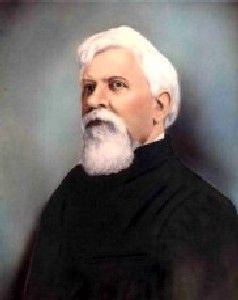
Judge Isaac Parker before he died in 1896
In 1895, a new Courts Act was passed, which would remove the last remaining Indian Territory jurisdiction effective September 1, 1896. Following the escape attempt of Cherokee Bill in the summer of 1895, which resulted in the death of a jail guard, Judge Parker again came into conflict with his superior when he blamed the Justice Department and the Supreme Court for the incident. Cherokee Bill was eventually hanged in Fort Smith on March 17, 1896. However, the debate was not yet over, and a very public argument ensued between Judge Parker and the Assistant Attorney General.
When the August 1896 term began, Judge Parker was at home, too sick to preside over the court. Twenty years of overwork had contributed to various ailments, including Bright’s Disease. When the court’s jurisdiction over lands in the Indian Territory ended on September 1, 1896, the Judge had to be interviewed by reporters at his bedside. Scarcely two months after the jurisdictional change took effect, the Judge died on November 17, 1896.
In twenty-one years on the bench, Judge Parker tried 13,490 cases, 344 of which were capital crimes. Nine thousand four hundred fifty-four cases resulted in guilty pleas or convictions. Over the years, Judge Parker sentenced 160 men to death by hanging, though only 79 were hanged. The rest died in jail, appealed, or were pardoned.
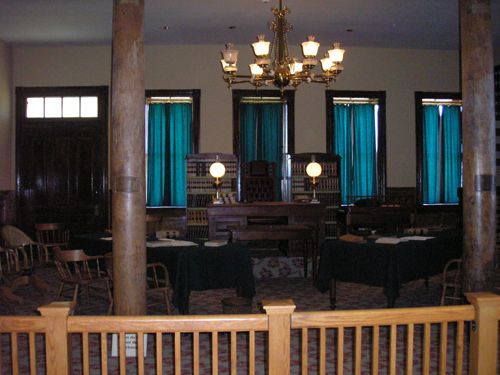
Judge Parker’s courtroom.
Kathy Alexander/Legends of America, updated August 2026.
Also See:
Fort Smith National Historic Site
George Maledon – Prince of Hangmen
See Sources.