
By Tony Derricott
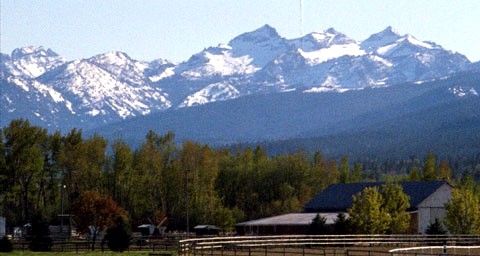
Bitterroot Valley, Montana.
The Bitterroot Valley, in Montana, approximately 96 miles long and 20 miles wide at mid-valley, was the ancestral home of the Salish (Flathead) Indian tribe long before the white man ever set foot in the valley. The Indians gathered and ate the starchy root of the succulent Bitterroot plant. The small pink blossoms of this plant prompted the naming of the Bitterroot River and the surrounding mountains, and it earned further prominence by becoming the Montana State Flower.
The first white men came to the valley on September 4, 1805, when the Lewis & Clark Expedition entered the valley near Lost Trail Pass. Approaching the present-day location of Sula, the expedition met a party of Salish Indians.
Captain Clark wrote, “These people received us friendly. I was the first white man on the water of this river.” The expedition camped at Traveler’s Rest at the mouth of Lolo Creek before venturing over the Bitterroot Mountain Range on their way to the Pacific.
In 1824, the Hudson’s Bay Company sent a party under the command of Alexander Ross into the valley.
In 184,2, Father Pierre, Jean DeSmet, and five associates entered the valley at the request of the Salish Indians. St. Mary’s Mission, the first church in Montana, was built in Stevensville in 1845. Father Ravalli came to the Mission in 1845. He was the first doctor in the area, and the county is named after him today. Fort Owen, the first white settlement in Montana, was established at Stevensville in 1850. The Catholic priests called the river “St. Mary’s.” However, the valley, river, and mountain range are now named after Montana’s state flower, the Bitterroot. The flower has a fleshy root and provided a steady food supply for the Indians long ago.
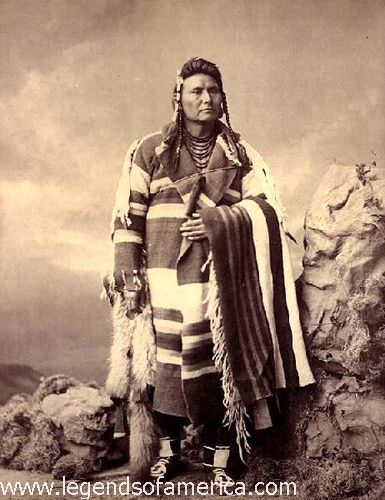
Chief Joseph of the Nez Perce tribe.
Chief Joseph and 250-400 Nez Perce warriors and their families passed through the valley in their futile flight to freedom in Canada during the Nez Perce Indian War of 1877. Their attempt to maintain their freedom and avoid the reservation was the only time the Nez Perce fought the whites.
Marcus Daly, one of Montana’s famous copper kings, came to the Bitterroot in 1888, lured by timber needed for his Butte mines and our mild climate. He purchased 22,000 acres, established the Bitterroot Stock Farm, and built the now-famous Daly Mansion east of Hamilton. In 1890, Daly brought James Hamilton and Robert O’Hara from Minnesota to develop a planned community. The town was named after Hamilton, and O’Hara was the first mayor. Hamilton was incorporated in 1894.
In 1891, Chief Charlo and the Salish Indians, who had befriended the white settlers for 86 years, were forced from their ancestral home. They were one of the few tribes never to fight the white man. In October of 1891, the Salish tribe traveled 66 miles north of Stevensville and was settled on the Flathead Reservation in the Jocko Valley north of Missoula. The valley now belonged solely to the white settlers. The Salish people still come to the valley on a religious pilgrimage to visit the “Medicine Tree,” an important religious symbol for their people, located along Hwy 93, south of Conner.
About the Author: Tony Derricott is a computer consultant in Hamilton, Montana. Updated November 2025. Article provided by: Go Articles
Also See: