
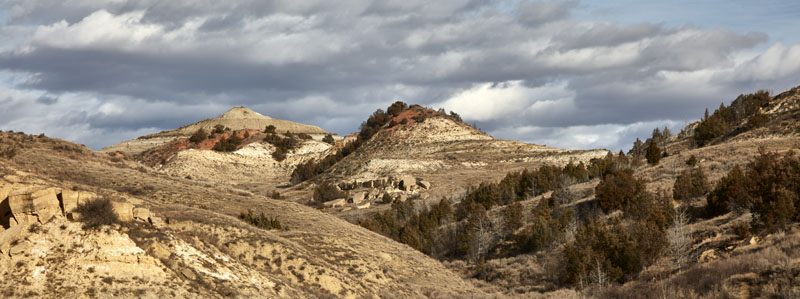
Theodore Roosevelt National Park in North Dakota by Carol Highsmith.
Ellendale’s oldest attraction is the Opera House. Built in 1909, it seats 1,000 patrons.
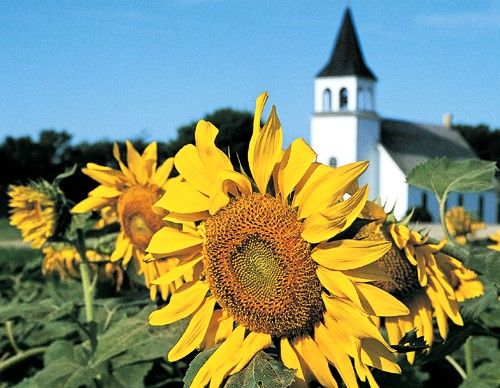
North Dakota Sunflowers.
North Dakota grows more sunflowers than any other state.
Kenmare is the Goose Capital of North Dakota. Kenmare is the hunting haven of the North, with an annual snow goose count of over 400,000 birds.
If you are in a covered wagon, it is legal to shoot an Indian on horseback.
The town of Rugby is the geographical center of North America. A tall stone obelisk marks the location.
North Dakota is the only state in the nation that has never had an earthquake.
In North Dakota, it is illegal to lie down and fall asleep with your shoes on.
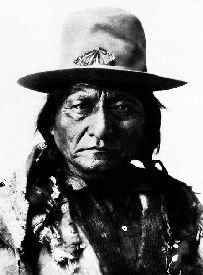
Sitting Bull.
Sitting Bull Burial State Historic Site, located on the western edge of Fort Yates, marks the original grave of the Hunkpapa Sioux leader. During the Ghost Dance unrest of 1890, an attempt was made to arrest him at his home on the Grand River in South Dakota, and a skirmish ensued in which Sitting Bull was killed.
According to FBI data, North Dakota was the safest place in the nation in 2004 and 2005.
Flickertail refers to the Richardson’s ground squirrels, which are abundant in North Dakota. The animal flicks or jerks its tail characteristically while running or just before entering its burrow.
In North Dakota, it is unlawful to serve beer and pretzels at the same time in any bar or restaurant.
North Dakota has more registered vehicles than it has residents.
Theodore Roosevelt was sent to live in North Dakota for health reasons. He fell in love with the West and wrote a book titled Ranch Life and the Hunting Trail before becoming the US president. Famous Western artist Frederick Remington illustrated the book.
Milk is North Dakota’s official state beverage.
In 1947 and again in 1989, North Dakota attempted to change its name to “Dakota,” but the Legislature rejected the idea.
In 1982, Rutland hosted what was considered the granddaddy of all celebrations when the town went into the “Guinness Book of World Records” with the cooking and eating of the World’s Largest Hamburger. That year, between 8,000 and 10,000 people came to sample the tasty 3,591-pound burger.
The Killdeer Mountain Roundup Rodeo is home to North Dakota’s oldest PRCA rodeo.
The name “Roughrider State” originated in a state-supported tourism promotion of the 1960s and 1970s. It refers to the First U.S. Cavalry, which Theodore Roosevelt organized to fight in the Spanish-American War.
The Dakota Dinosaur Museum in Dickinson houses twelve full-scale dinosaurs, thousands of rock, mineral, and fossil specimens, and a complete real Triceratops and Edmontosaurus.
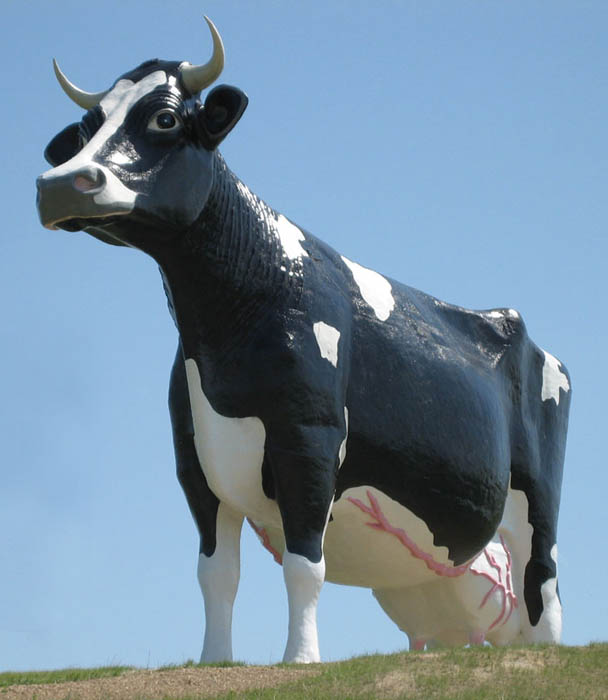
Salem Sue is the world’s largest Holstein Cow in North Dakota.
New Salem, North Dakota, is home to Salem Sue, the world’s largest Holstein Cow. Standing 38 feet tall, Sue is 50 feet long and weighs some six tons.
When the Dakota Territory was created in 1861, it was named for the Dakota Indian tribe. Dakota is a Sioux word meaning friends or allies.
Max G. Taubert of Casselton built a 50-foot-high pyramid of empty oil cans in 1933. Believed to be the world’s highest oil can structure, it was built on a site that once housed a Sinclair gas station. The “attraction” is located northwest of Casselton on exit I-94.
North Dakota was the first state to complete its Interstate highway system.
North Dakota hosts almost fifty local and regional rodeos, attracting hundreds of cowboys yearly.
The coastline around Lake Sakakawea in North Dakota is longer than the California coastline along the Pacific Ocean.
North Dakota didn’t pass a law making English the official state language until 1987.
Dakota Gasification Company in Beulah is the nation’s only producer of synthetic natural gas.
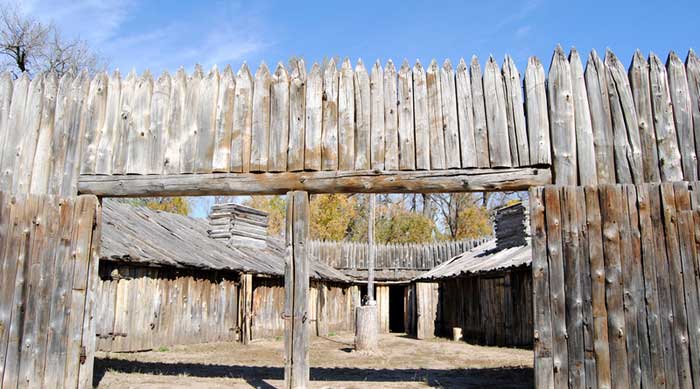
Fort Mandan, North Dakota.
During the Lewis and Clark expedition, each man ate 9-12 pounds of meat per day while staying at Fort Mandan to stay warm.
Two granite boulders inscribed with thunderbird figures are exhibited at the Writing Rock State Historic Site, 12 miles northeast of Grenora. The drawings likely represent the Thunderbird, a mythological figure revered by Late Prehistoric Plains Indians.
Devils Lake is the largest natural lake in North Dakota. Deriving its name from the Native American word “Miniwaukan,” early explorers incorrectly translated the word to mean “Bad Spirit.”
Ten thousand years ago, the state’s eastern edge was a vast glacial lake bed.
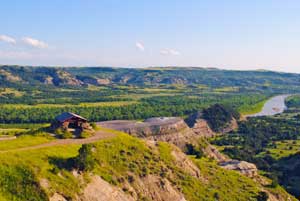
Theodore Roosevelt National Park, North Dakota.
Theodore Roosevelt National Park in western North Dakota is the only national park named for a person. As president, Theodore Roosevelt played a pivotal role in establishing the national park system. North Dakota has six national sites, 56 state historic sites, 18 state parks, and more than 150 museums. 5 of the 150 museums are Dinosaur museums.
Jamestown boasts the world’s largest buffalo, 26 feet tall and 36 feet long. Weighing in at some sixty tons, the concrete bison located at Frontier Village guards the grain elevator with its unblinking eyes.
Turtle Lake celebrates turtles, hard-shelled reptiles often found in the water. Turtle Lake has erected a two-ton turtle sculpture near the city’s entrance. The town hosts the annual United States Turtle Racing Championship.
The Lewis and Clark expedition encountered their first grizzly bears in North Dakota.
The piles of rock on White Butte, North Dakota’s highest point, are known as rock johnnies or sheepherders’ monuments and, according to legend, sheepherders piled them there to pass the time while tending their flocks.
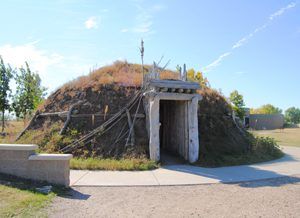
Hidatsa Lodge, Knife River, North Dakota, by Kathy Alexander.
The Big Hidatsa village site was occupied from about 1740 to 1850 and is the largest of three Hidatsa communities near the mouth of the Knife River. It is believed to contain the best-defined earth lodge depressions of any major Native American site in the Great Plains.
Lawrence Welk, Angie Dickinson, and Dorothy Stickney are from North Dakota.
North Dakota has 60 wildlife refuges, more than any other state, and all are managed for waterfowl production.
More ducks reproduce in North Dakota wetlands than anywhere in the nation.
North Dakota has more miles of road per capita than any other state, approximately 166 miles of road for every 1,000 people.
North Dakota would be the world’s third-strongest nuclear power if it seceded from the Union.
President Theodore Roosevelt first came to the Dakota Territory in September 1883 to hunt buffalo. Before returning home to New York, he became interested in the cattle business and established the Maltese Cross and Elkhorn Ranches.
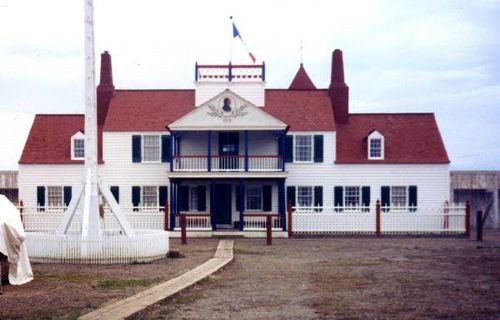
Fort Union, North Dakota.
You can be jailed for wearing a hat while dancing in Fargo. If you even wear a hat where dancing occurs, you are tempting the law.
On the Lewis and Clark expedition, the men spent most of their time in what is now North Dakota.
Fort Union Trading Post was the principal fur trading depot in the Upper Missouri River region from 1829 to 1867.
Compiled and edited by Kathy Alexander/Legends of America, updated October 2026.
Also See:
Corps of Discovery – The Lewis & Clark Expedition
The Hidatsa Tribe – North Dakota Pioneers
North Dakota – Rough Rider Country
See Sources.