
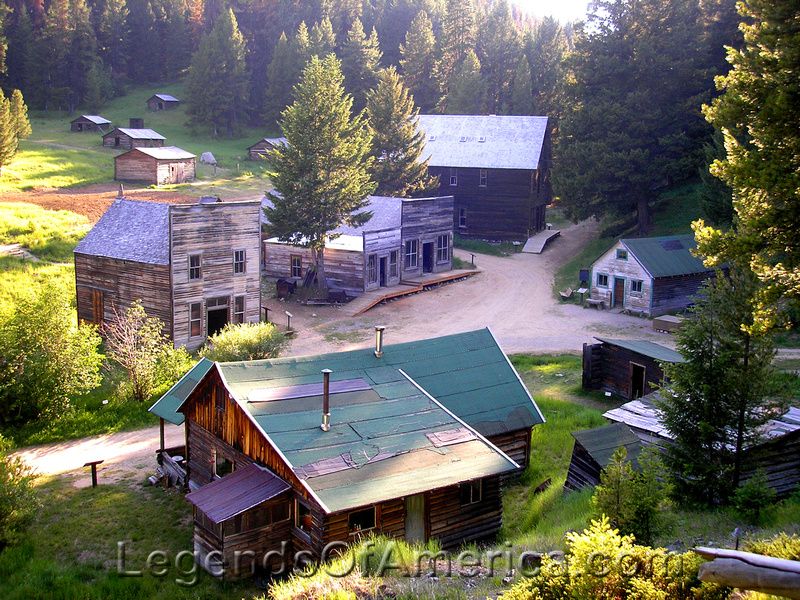
Town view of Garnet in 2008. Photo by Kathy Alexander.
By Valerie Mellema.
Exploring ghost towns is a fun, entertaining way to relive aspects of the American West. Some ghost towns in the American West, such as Oatman, Arizona, are not only inhabited but make the most of their opportunity to capitalize on their town’s former glory. In other cases, ghost towns are truly empty and uninhabited, aside from archaeologists and occasional tourists passing through. Such is the case high in the hills of west-central Montana, where the historic ghost town of Garnet is located.
If you’ve been to any of Montana’s other well-known ghost towns like Virginia City or Bannack, you’ll find Garnet just as intriguing, if not even more so.
It sits in a remote valley at the head of First Chance Creek, 6,000 feet up in the green, pine-forested mountains East of Missoula. Garnet feels isolated and isn’t heavily touristy or commercialized. As you might expect (especially once you see it), Garnet has a reputation as a haunted ghost town.
Garnet dates back to the turn of the 20th Century. It was named for the semi-precious garnet rock first mined there before gold was found. Like most mining towns, Garnet wasn’t built to last, yet over a century later, buildings lacking foundations still stand.
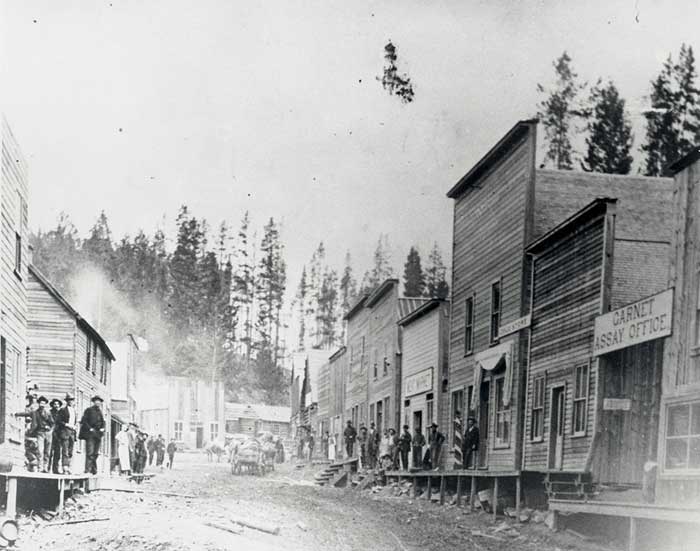
Garnet Montana circa 1895.
Placer mining was practiced in the area that would later become Garnet in the 1860s, and gold was found at First Chance Gulch in 1865. Miners worked about 50 mines nearby. Garnet dates back to 1895, but it didn’t begin to boom until an abundant strike at the Nancy Hanks Mine. In 1896, the Nancy Hanks Mine produced $690,000, and the boom continued throughout the 1890s as mining companies rolled into Garnet.
Based on the wealth it produced, you can get a good idea of what life must have been like when Garnet was thriving. Garnet had four hotels, four stores, two barbershops, a butcher shop, a doctor’s office, laundry facilities, and thirteen saloons.
Despite its remote location, Garnet had a school, and unlike other mining towns, many families lived there. Stagecoach transportation ran daily between Bearmouth and Coloma, and supplies were available in Missoula and Deer Lodge, just a three-day’s journey from Garnet. Garnet’s population grew, and it became more of a community than a typical mining town. The population swelled to as many as 1,200 in its prime.
Residents of Garnet did more than mine for garnets and gold and support the miners’ efforts. Residents enjoyed dances and parties, picnics and fishing trips, and a genuine social life. Saloons and the drinking, gambling, and prostitution that typified many mining camp towns were present but controlled to a great degree. The jail was available as an incentive to keep rowdy drunkenness at a minimum, or at least a tolerable level.
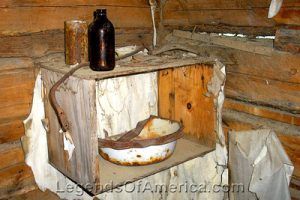
A view of the interior of an old home in Garnet, Montana. Photo by Kathy Alexander
Twenty years after it was established, Garnet’s gold ran out. AS few as 150 people remained in Garnet, and most of the mines were abandoned by 1905. A fire raged through the town in 1912, destroying many commercial establishments. Garnet was never rebuilt, and World War I employment opportunities lured remaining residents away.
Garnet did experience a revival of sorts in 1934 following the rise in gold prices instituted by President Roosevelt. When gold skyrocketed from $16 to $32, miners moved back into Garnet’s abandoned buildings, and mines were worked again. Just as World War I had stripped Garnet of the remnants of its first population, World War II did the town in once again. Mining became more challenging as dynamite use was restricted, and Garnet was abandoned once and for all by 1940.
After it was abandoned, Garnet was looted of its remaining furnishings, and preservation efforts began in 1970. Today, the Bureau of Land Management and the not-for-profit citizens’ group, the Garnet Preservation Association, manage Garnet.
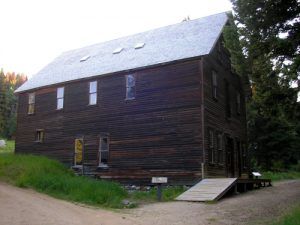
Historic Garnet Hotel by Kathy Alexander.
Today thirty buildings remain, including a log and frame cabin, a store, a saloon, and the remains of the J.K. Wells Hotel. Several miners’ cabins also still stand. A Visitor’s Center is located on-site, featuring books and gift items, and interpretive signs and self-guided trails explain the historic site.
You can visit Garnet year-round, although the road is closed to wheeled vehicles and accessible mainly by snowmobiles or cross-country skis from January 1 through April 30. You can rent cabins in Garnet or hire a guided tour in the summer months.
If you’d like to ghost-hunt in Garnet, one of the most popularly cited haunted buildings is Kelly’s Saloon. People report hearing music and laughter there even in the dead of winter, when only one person oversees the town.
Caretakers also report unexplained footsteps in the old Wells Hotel, as well as doors shutting even where no doors exist. Whether it’s the Saloon or the hotel, those who’ve experienced the unexplained phenomena confirm that as soon as you approach the building, the noises immediately stop.
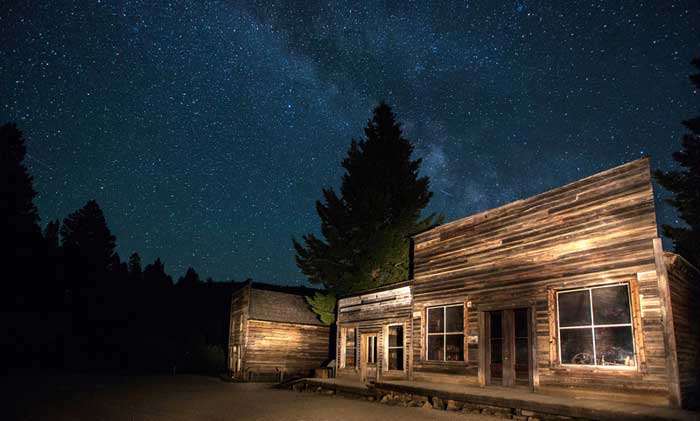
By Bob Wick, Bureau of Land Management.
Whether you see or hear any spirits on your visit to Garnet, your experience will be memorable. It is eerie and impressive to step back in time in a place distinctly lacking the heavy commercialization and tourist trappings typical of other ghost towns and historic sites. A tour of Garnet is a one-of-a-kind adventure.
Contact Information:
Garnet Preservation Association
3255 Fort Missoula Road
Missoula, Montana 59804
406-329-3883
©Valerie Mellema, March 2008, updated October 2026.
About the Author: Valerie Mellema is a freelance writer living in Amarillo, Texas. She loves to travel and is always planning a trip, whether it be a weekend in Dallas, a week in Spain, or a relaxing cruise. Her writing business, Words You Want, offers a variety of writing services, including article writing, eBook writing, and other services on a wide range of topics. She also has the opportunity to write for a variety of different websites and clients, such as HotelsCombined.com.
Also See:
Ghost Towns & Mining Camps of Montana
Montana Ghost Town Photo Galleries