
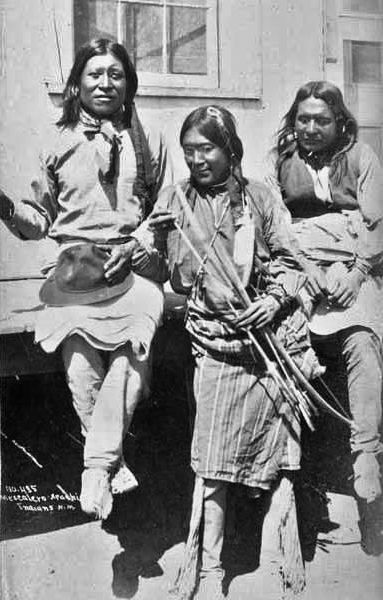
Mescalero Apache Indians
After fleeing from the Fort Sumner Reservation in 1865, the Mescalero Apache sought refuge in the canyons of the Guadalupe and Sacramento Mountains in southern New Mexico. Their warriors emerged from these mountain hideouts in small, fast-moving bands to raid, burn, and kill. Settlers and travelers along the Rio Grande and the Pecos River, stretching from Texas to north-central New Mexico, lived in constant fear of Mescalero attacks. While Fort Stanton, New Mexico, played a key role in addressing the situation, Fort Union conducted one notable offensive against the Mescalero Apache.
In September 1867, a Mescalero war party ran off 150 head of stock near Mora, in the mountains west of Fort Union. With Troop D, 3rd Cavalry, Captain Francis H. Wilson rode out of Fort Union in pursuit. The trail led south toward the Mescalero homeland. Reinforced by another troop of the 3rd Cavalry from Fort Stanton, Wilson now had 107 men. The march led them to the forbidding Dog Canyon of the Sacramento Range, then across the Guadalupe Mountains, and finally south into Texas.
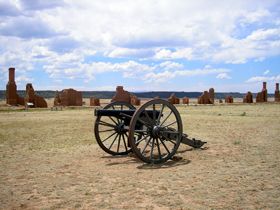
Fort Union, New Mexico.
The rugged peaks of the Sierra Diablo rise sharply from the West Texas desert. On October 18, 1867, Wilson finally caught up with the raiders. He surprised a group of 30 to 40 warriors, taking down six in the initial gunfire. He then galloped off in pursuit of the fleeing survivors. The cavalrymen continued the chase for 15 miles until they unexpectedly encountered a winter camp of 300 to 400 Mescalero Indians. As the women worked frantically to secure the winter food supplies, the warriors fought against their attackers. For three hours, the battle surged back and forth in the canyon. Wilson’s men suffered seven wounded, but they managed to kill or wound 25 to 30 of the Indians before the latter fled into the mountains.
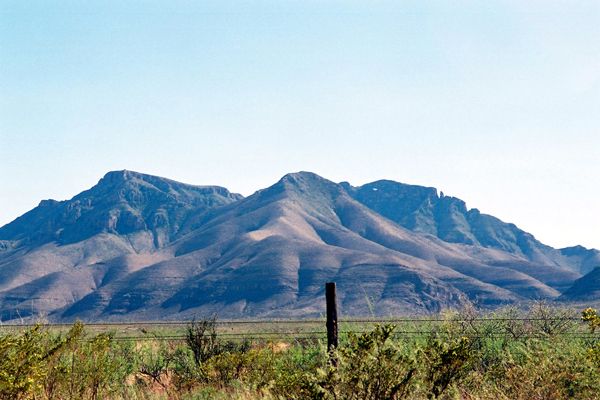
Sierra Diablo Mountains, Texas, courtesy Davis Mountains
Wilson then led his command to Fort Bliss, Texas, to gather supplies and receive medical attention before returning to Fort Union. He arrived on November 12, having covered over 1,000 miles of mountain and desert in less than two months. While he dealt a severe blow to the Mescalero, it would be more than a decade before they were completely subdued.
Compiled and edited by Kathy Alexander/Legends of America, updated March 2026.
Also See:
Fort Union, New Mexico – Protecting the Santa Fe Trail
Indian Wars, Battles & Massacres
Military Campaigns of the Indian Wars
Winning The West: The Army In The Indian Wars
Source: National Park Service