
By Jackie Edwards

It’s almost 200 years since the opening of the Erie Canal, a feat of engineering never before seen in North America that stretched 363 miles across upstate New York from Buffalo in the west to Albany in the east. By expediting the transport of goods, the canal transformed New York City, turning it into a major trading center and America’s main seaport. As well as supporting the commercial transportation of grain, coal, and lumber, canals throughout the US improved the quality of the surrounding land, encouraged migration, and even enabled the spread of ideas. While the man-made canals followed rivers, incorporated lakes, and connected seaports, the network of inland waterways also spurred railroad construction, with trains supplementing the canals’ transportation before replacing them along most routes. This was not before the construction of 3,000 miles of engineered channels during the Canal Era had a significant impact on American development by fueling industrial growth and westward expansion.

A canal boat, the Charlotta, transports lumber on the Ohio & Erie Canal.
Providing Vital Transportation Links
Before the construction of canals in North America, horse trails and coastal routes were the only ways to transport goods. To provide a viable alternative and escalate trade, uninterrupted stretches of man-made channels were introduced along the course of existing waterways, connecting lakes and canalizing meandering rivers. Canals could considerably improve the inland transportation of goods, as a barge could typically transport 30 tons of goods compared to just one-eighth of a ton that a horse could carry. The first canal, the Conewago Canal, was constructed in Pennsylvania in 1797, marking the beginning of the Canal Era, which spanned the first half of the 19th Century. During this time, these highly engineered channels moved goods and people faster and more efficiently, and they came to be viewed as a vital component of the agricultural, industrial, and economic development of North America.
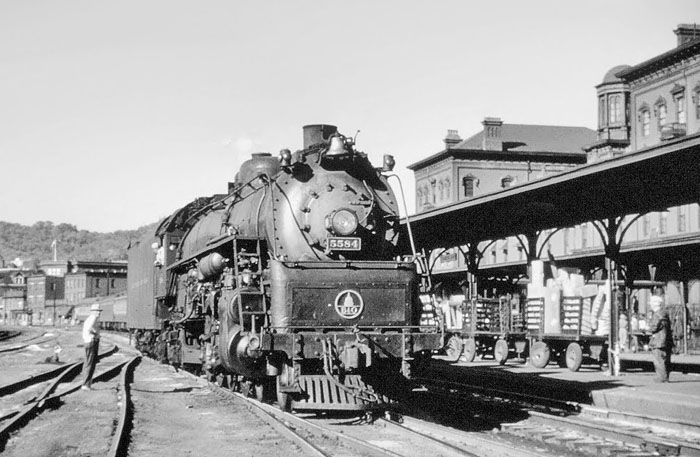
Baltimore and Ohio Railroad Passenger Train.
Giving Rise to Railroad Construction
The positioning of canals also prompted the construction of some of the earliest railroads. Initially, the railway was promoted as a supplement to the canals, offering shortcuts for passengers and connecting segments of the waterways that were unserved. The promoters of New York’s first railroad, the Mohawk and Hudson, assured shareholders that it would not be in competition with the Erie Canal but would supplement its activities. The Baltimore and Ohio Railroad ran alongside the Chesapeake and Ohio Canal. In Pennsylvania, the Philadelphia and Columbia Railroad was constructed to supplement the Schuylkill and Union canals that ran between Philadelphia and Harrisburg.
Controlling Drainage, Irrigation, and Flooding
As well as being commercially significant for transportation and trade, the New Basin Canal in New Orleans also served an important role in draining the surrounding swampy land and controlling flooding. The canal was first opened in 1838, and almost 60 years later, the enlarged system was used to address the city’s drainage needs. By 1915, the New Orleans Sewerage and Water Board oversaw infrastructure comprising 70 miles of inland waterways and three pumping stations. While there is only a small portion of the New Basin Canal channel still in use, the canal system made an indelible mark on the geography of the New Orleans cityscape, which can still be seen today

Family on a Canal Boat.
Enabling the Dissemination of People and Ideas
As the Erie Canal facilitated trade and opened previously inaccessible land, populations and settlements, including the cities of Chicago and Buffalo, grew rapidly in the Midwest. As a result of increased migration, progressive communities, religious movements, and social reform also flourished in the towns bordering the canal. The canal corridor saw the birth of Mormonism in Palmyra, the home of Joseph Smith. At the same time, the suffragist movement was galvanized after a pivotal women’s convention was held in Seneca Falls in 1848.
From the late 18th century onward, canals began to play a crucial role in transporting industrial and agricultural goods across America. In addition, the extensive networks also served to manage water supplies, accompany the expansion of the railways, and even prompt social change by enabling the spread of information and ideas. All these factors contributed significantly to the rapid development and expansion of America during the 19th Century
©Jackie Edwards, for Legends of America, August 2024.
Also See:
The Great Pennsylvania Railroad System
About the Author – Jackie Edwards was a mining engineer before becoming a semi-retired freelance writer.More from Jackie Edwards:
Notable and Historic US Military Bases
How Dearborn Put the World on Wheels
From the Golden Age to Today’s Modern Marvels: The History of America’s Sports Cars
Three of the Most Celebrated Gardens in American History
Revitalizing Abandoned Coal Mining Towns: Exploring Opportunities for Repurposing and Sustainability
The Bell Witch: Tennessee’s Most Haunting Legend
The Significance of Tags, Badges, and Insignia During the American Civil War